Brazil’s scientific story stretches from Amazon field stations to university labs in São Paulo and Rio — a mix of naturalists, geneticists, physicians and engineers whose work has shaped both local practice and international study. That diversity reflects Brazil’s regional cultures and rich ecosystems, and it helps explain why a simple list can reveal so many different careers and eras.
There are 26 Scientists born in Brazil, ranging from Adolfo Lutz to Warwick Estevam Kerr. For each entry the data is organized as Field,Years (birth–death),Birth place — you’ll find below.
How were the people on this list selected?
The list focuses on individuals born in Brazil who made notable contributions to science across disciplines; inclusion is based on historical recognition, published work, or lasting influence rather than on exhaustive metrics. It aims to represent a broad cross-section of fields and eras, not a ranked judgment of importance.
Are living scientists included and how current is the information?
Yes — the list can include living scientists, with years shown accordingly (birth year only if still living); dates and places reflect the best available public records but may not capture very recent changes, so check the entries below for specific sources or updates.
Scientists Born in Brazil
| Name | Field | Years (birth–death) | Birth place |
|---|---|---|---|
| César Lattes | Physics | 1924–2005 | Curitiba, Paraná |
| Alberto Santos-Dumont | Engineering | 1873–1932 | Santos Dumont, Minas Gerais |
| Carlos Chagas | Medicine | 1879–1934 | Oliveira, Minas Gerais |
| Oswaldo Cruz | Medicine | 1872–1917 | São Luís do Paraitinga, São Paulo |
| Miguel Nicolelis | Neuroscience | born 1961 | São Paulo, São Paulo |
| Artur Ávila | Mathematics | born 1979 | Rio de Janeiro, Rio de Janeiro |
| Vital Brazil | Medicine | 1865–1950 | Campanha, Minas Gerais |
| José Leite Lopes | Physics | 1918–2006 | Recife, Pernambuco |
| Mário Schenberg | Physics | 1914–1990 | Recife, Pernambuco |
| Suzana Herculano-Houzel | Neuroscience | born 1972 | Rio de Janeiro, Rio de Janeiro |
| Marcelo Gleiser | Physics | born 1959 | Rio de Janeiro, Rio de Janeiro |
| Jaqueline Goes de Jesus | Biomedical science | born 1989 | Salvador, Bahia |
| Duilia de Mello | Astronomy | born 1963 | Jundiaí, São Paulo |
| Elisa Frota-Pessôa | Physics | 1921–2018 | Rio de Janeiro, Rio de Janeiro |
| Niède Guidon | Archaeology | born 1933 | Jaú, São Paulo |
| Aziz Ab’Saber | Geography | 1924–2012 | São Luís do Paraitinga, São Paulo |
| Warwick Estevam Kerr | Genetics | 1922–2018 | Santana de Parnaíba, São Paulo |
| Carlos Nobre | Climatology | born 1951 | São Paulo, São Paulo |
| Jacob Palis | Mathematics | born 1940 | Uberaba, Minas Gerais |
| Milton Santos | Geography | 1926–2001 | Brotas de Macaúbas, Bahia |
| Adolfo Lutz | Medicine | 1855–1940 | Rio de Janeiro, Rio de Janeiro |
| Bartolomeu de Gusmão | Naturalism | 1685–1724 | Santos, São Paulo |
| Roberto Salmeron | Physics | 1922–2020 | São Paulo, São Paulo |
| Sérgio Mascarenhas | Physics | 1928–2021 | Rio de Janeiro, Rio de Janeiro |
| Vanderlan Bolzani | Chemistry | born 1950 | Santa Rita do Passa Quatro, São Paulo |
| Ozires Silva | Engineering | born 1931 | Bauru, São Paulo |
Images and Descriptions

César Lattes
A brilliant experimental physicist who was a co-discoverer of the pion meson, a subatomic particle. His work was fundamental to the development of particle physics and earned him multiple Nobel Prize nominations.
Alberto Santos-Dumont
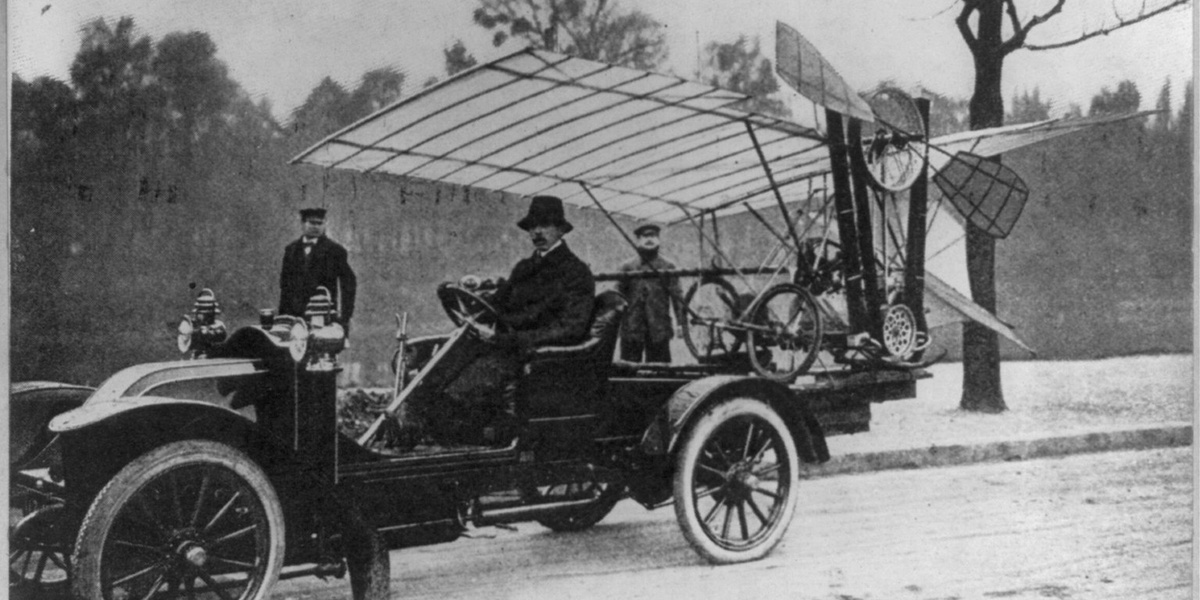
A world-famous aviation pioneer and inventor, celebrated in Brazil as the “Father of Aviation.” He designed, built, and flew the first practical dirigibles and the 14-bis, the first verified powered heavier-than-air aircraft.
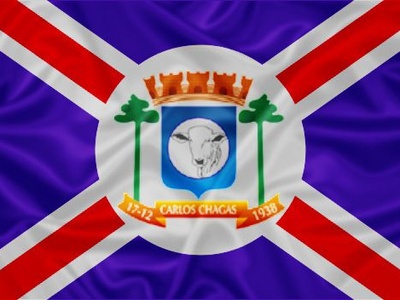
Carlos Chagas
A renowned physician and researcher who identified a new infectious disease in its entirety—the pathogen, vector, host, and clinical manifestations. The condition was named Chagas disease in his honor.
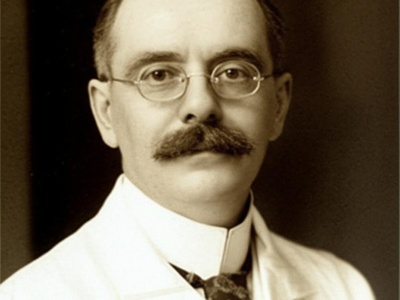
Oswaldo Cruz
A physician, public health pioneer, and bacteriologist. He founded the Oswaldo Cruz Institute and led major campaigns that eradicated yellow fever and smallpox from Rio de Janeiro, transforming sanitation in Brazil.
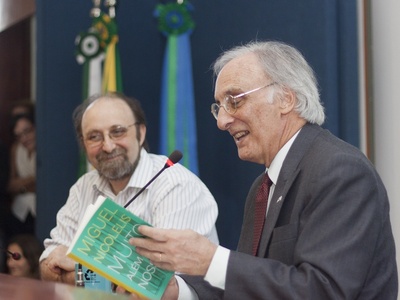
Miguel Nicolelis
A world-leading neuroscientist famous for his pioneering work in brain-machine interfaces. His research on connecting brains to computers and robotic limbs has opened new frontiers for treating paralysis and neurological disorders.
Artur Ávila
An acclaimed mathematician known for his profound contributions to dynamical systems and spectral theory. In 2014, he became the first Latin American to win the Fields Medal, often called the Nobel Prize of mathematics.
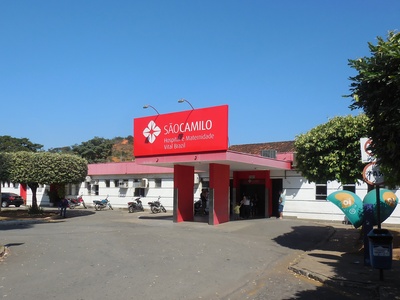
Vital Brazil
A physician and immunologist who founded the Butantan Institute. He is internationally recognized for discovering the specificity of anti-ophidic serum, proving that antivenom must be developed from the specific snake species’ venom.
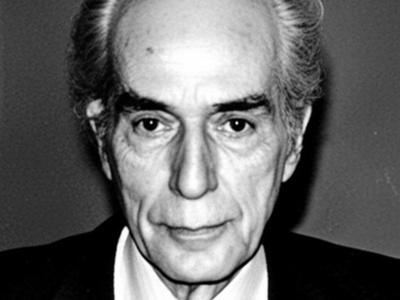
José Leite Lopes
One of Brazil’s most important theoretical physicists. In 1958, his work predicted the existence of the Z boson, a fundamental particle that was later confirmed experimentally at CERN, the European Organization for Nuclear Research.
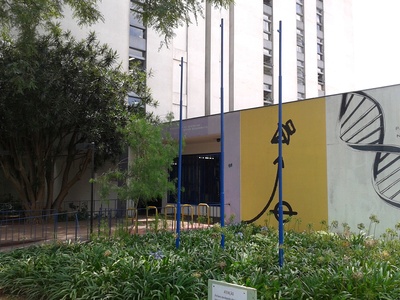
Mário Schenberg
A highly influential theoretical physicist and art critic. In astrophysics, he is known for the Schönberg–Chandrasekhar limit, which describes the maximum mass of a star’s core that can support its outer layers after fusion ceases.
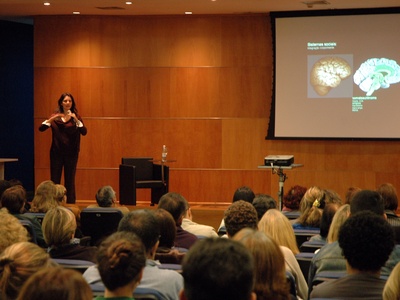
Suzana Herculano-Houzel
A neuroscientist internationally known for her research on the human brain and comparative neuroanatomy. She developed a method for accurately counting neurons, challenging long-held assumptions about the brain’s composition and evolution.
Marcelo Gleiser
A distinguished physicist and astronomer specializing in cosmology and astrobiology. He is a prolific science communicator and the first Latin American to be awarded the prestigious Templeton Prize for his work bridging science and spirituality.
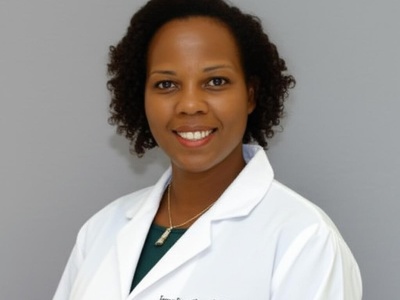
Jaqueline Goes de Jesus
A biomedical researcher who gained prominence for leading the team that sequenced the genome of the first Brazilian case of SARS-CoV-2 just 48 hours after its confirmation, a record time that aided global virus tracking.
Duilia de Mello
An astronomer and astrophysicist known for her research on galaxies and for discovering the supernova SN 1997D. She has worked with NASA on projects involving the Hubble Space Telescope and is a prominent science popularizer.
Elisa Frota-Pessôa
A pioneering experimental physicist and one of the founders of the Brazilian Center for Physics Research (CBPF). She was one of the first women to graduate in physics in Brazil and made significant contributions to nuclear physics.
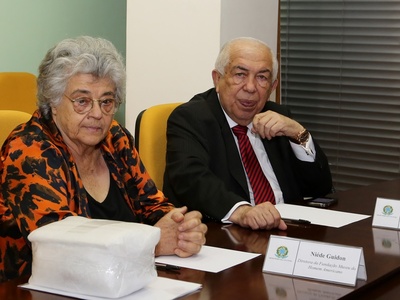
Niède Guidon
An archaeologist whose work in the Serra da Capivara National Park fundamentally challenged theories on the settlement of the Americas. Her findings suggest human presence in South America tens of thousands of years earlier than previously thought.
Aziz Ab’Saber
One of Brazil’s most respected geographers and geologists. He developed the theory of morphoclimatic and phytogeographical domains, a fundamental concept for understanding South America’s complex ecosystems and landscapes.
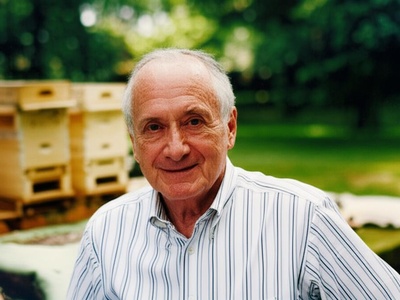
Warwick Estevam Kerr
A geneticist, agricultural engineer, and entomologist renowned for his discoveries in the genetics and sex determination of bees. He is also known for his work on the hybridization that created the Africanized bee.
Carlos Nobre
A leading climatologist and earth system scientist, recognized globally for his pioneering research on the Amazon rainforest’s role in the Earth’s climate system and the devastating impacts of widespread deforestation.
Jacob Palis
A highly influential mathematician specializing in dynamical systems. His work has had a profound impact on the field, and he has served as president of the International Mathematical Union and the Brazilian Academy of Sciences.
Milton Santos
A celebrated geographer whose work on critical urban geography in developing nations earned him international acclaim. In 1994, he received the Vautrin Lud Prize, considered the highest award in the field of geography.
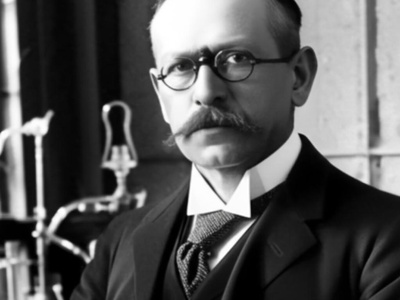
Adolfo Lutz
A physician and pioneering scientist in tropical medicine and medical zoology. He made significant contributions to the study of yellow fever, malaria, and schistosomiasis, and identified the fungus responsible for paracoccidioidomycosis.
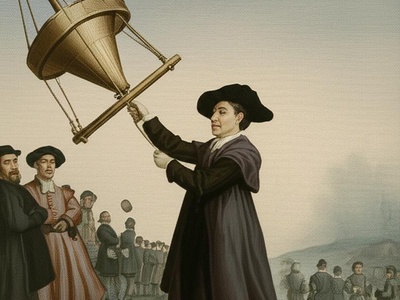
Bartolomeu de Gusmão
A priest, naturalist, and inventor from the colonial era, often called the “Flying Priest.” He is recognized as a pioneer in aerostation for designing and demonstrating a hot-air balloon prototype before the Montgolfier brothers.
Roberto Salmeron
An experimental physicist who had a long and distinguished career at CERN in Geneva. He was a key figure in high-energy particle physics, contributing to studies of quarks and the fundamental forces of nature.
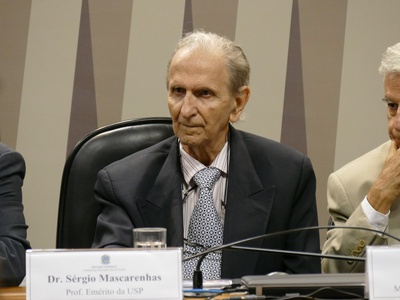
Sérgio Mascarenhas
An experimental physicist and educator who founded a medical instrumentation group at Embrapa. His work in biophysics led to developing a non-invasive sensor for measuring intracranial pressure, a major medical innovation.
Vanderlan Bolzani
A distinguished chemist known for her research in the phytochemistry and natural products of Brazilian biodiversity. She is a major advocate for scientific development and innovation, with a focus on sustainable use of natural resources.
Ozires Silva
An aeronautical engineer and former Air Force officer who led the team that designed the Bandeirante aircraft. He was the visionary founder and first president of Embraer, transforming it into one of the world’s largest aircraft manufacturers.