Table of contents
- TL;DR
- Rare earth elements-producing countries, ranked
- Mining vs. refining: the part most lists skip
- Why China dominates
- The countries to watch next
- Why the supply chain stays fragile
- Summary
TL;DR
China is the biggest rare earth elements-producing country by a wide margin, and it also controls a huge share of separation and refining. The United States, Australia, Myanmar, Thailand, India, Russia, and Vietnam also produce rare earths, but most of them do not control the full chain from ore to finished oxides and metals.
That distinction matters. Mining rare earth ore is one thing. Turning it into usable separated materials is the bottleneck.
Rare earth elements-producing countries, ranked
Rare earth elements are a group of 17 metals used in magnets, batteries, catalysts, defense systems, wind turbines, and a lot of other modern hardware that quietly depends on obscure chemistry. The countries producing them are not spread evenly across the map.
According to the US Geological Survey’s Mineral Commodity Summaries, global rare earth mine production has been dominated by China for years, with a much smaller set of countries supplying the rest. Exact rankings shift a little from year to year, but the broad picture stays the same.
Here’s the simplest way to think about the current production landscape:
| Country | Role in the rare earth supply chain | Notes |
|---|---|---|
| China | Largest miner, separator, refiner | Dominates both mining and downstream processing |
| United States | Miner, limited processing | Produces from Mountain Pass, but much refining happens elsewhere |
| Myanmar | Major miner | Ore often tied into cross-border processing flows |
| Australia | Major miner | Strong in mining, especially through Lynas-linked supply chains |
| Thailand | Smaller but active producer | Often appears in regional processing and ore flows |
| India | Smaller producer | Has reserves and production, but limited scale |
| Russia | Smaller producer | Produces rare earths, though data can be opaque |
| Vietnam | Developing producer | Reserves are significant; production has been limited |
| Madagascar | Smaller producer | Supplies some ore, but not a global heavyweight |
| Brazil | Emerging producer | More potential than volume at present |
The exact order below the top few can vary depending on whether a source is counting mine output, mineral concentrates, or oxides. That’s not a typo problem. It’s a definition problem.
China remains far ahead of everyone else. In many recent USGS summaries, it accounts for roughly two-thirds or more of global mine output. The next tier — the United States, Myanmar, Australia, and a handful of others — make up the rest.
If you want a more precise annual snapshot, the USGS table is the best public starting point. It’s not glamorous, but it’s the thing people actually use.
Mining vs. refining: the part most lists skip
This is where a lot of “rare earth producing countries” articles get sloppy.
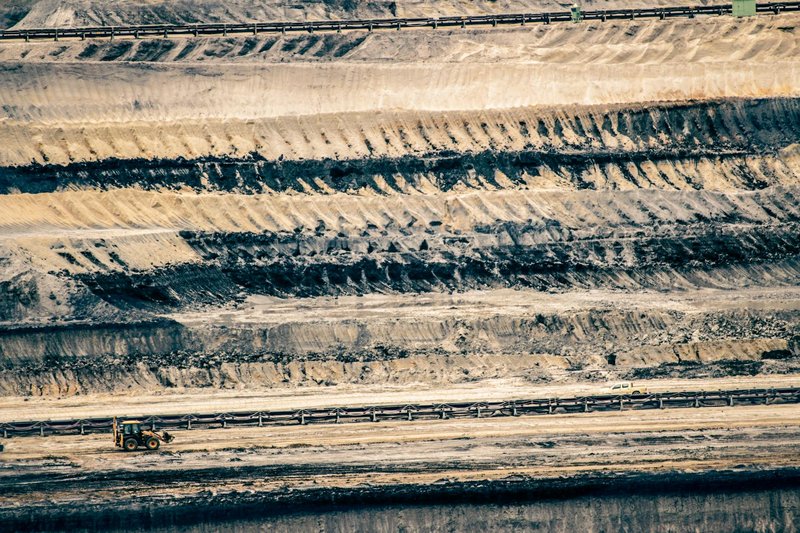
A country can produce rare earth ore and still depend on another country to split it into individual elements. That’s because rare earths don’t usually show up as clean, ready-to-use materials. They come mixed together, and separating them takes specialized chemical processing.
The chain looks roughly like this:
- Mining — ore is extracted from the ground
- Beneficiation — the ore is concentrated
- Separation — individual rare earth elements are split apart
- Refining — usable oxides, metals, and alloys are produced
- Manufacturing — magnets, catalysts, batteries, and other products are made
China leads not just in mining but especially in separation and refining. That downstream control is the real power move. A country with modest ore reserves but strong processing capacity can matter more than a country sitting on a giant deposit it can’t fully exploit.
The United States is the cleanest example. It does mine rare earths, mainly at Mountain Pass in California, but the ore has historically depended on overseas processing capacity. Australia has also pushed hard to build more complete supply chains, which is part of why it keeps showing up in strategic minerals discussions. For a broader primer on the element group itself, the Royal Society of Chemistry’s rare earth overview is a good reference point.
Why China dominates
China’s lead is not an accident and it’s not just geology. It built industrial scale around rare earths decades ago, accepted the environmental mess that came with it, and kept expanding the processing side while other countries let the sector atrophy.
That gave China three advantages:
- Scale — large mine output and huge processing capacity
- Infrastructure — the chemical plants, expertise, and logistics already exist
- Market position — downstream manufacturers depend on Chinese separation and metal supply
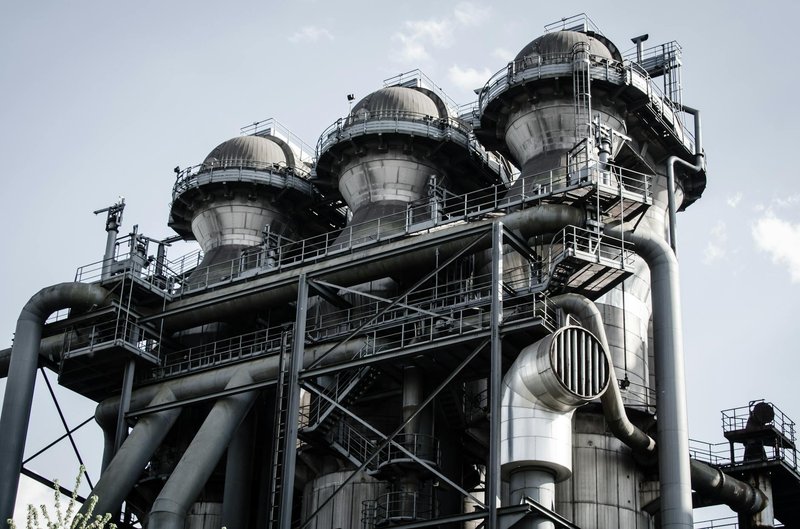
Rare earth processing is messy for a reason. Many deposits contain radioactive byproducts or require aggressive chemical separation. That makes permitting harder, costs higher, and public opposition louder. China tolerated the ugly parts longer than most competitors did.
The result is a supply chain where the ore may come from one country, the refining may happen in another, and the end product may be manufactured somewhere else entirely. It’s globalized, but not in a comforting way.
The countries to watch next
A few countries matter more than their current production numbers suggest.
Australia has become the most important non-Chinese supplier in strategic discussions. It has actual scale, serious investment, and a pathway into processing through companies like Lynas. The country matters because it is one of the few places with both geological resources and political willingness to support the industry.
The United States has rare earth reserves and mining output, but the bigger story is whether it can build a domestic separation and magnet supply chain. Mining alone does not solve the problem.
Myanmar has been an important source of heavy rare earths, though production is politically and environmentally fraught. Its role has also been tied to cross-border flows into China, which makes clean national accounting difficult.
Vietnam and India both have resources and long-term potential, but neither has matched the industrial depth needed to become a true counterweight yet.
Brazil has the kind of geological promise that gets investors excited and planners cautious. There’s potential there, but potential is not supply.
For background on global critical mineral dependence, the International Energy Agency has a useful critical minerals market review that puts rare earths in the broader supply-chain picture.
Why the supply chain stays fragile
Rare earths are not rare in the sense of being scarce in the crust. The problem is concentration, not existence. Many countries have some deposits. Very few have the combination of ore quality, capital, chemical processing, environmental tolerance, and industrial demand needed to turn those deposits into reliable supply.
That’s why the market stays fragile:
- production is concentrated in a small number of countries
- refining is more concentrated than mining
- heavy rare earths are harder to source than light ones
- permitting new projects takes years, sometimes longer
- downstream magnet production is even more concentrated than ore mining
This is also why geopolitics hangs over rare earths like a bad smell. Whoever controls processing can squeeze the rest of the chain.
The U.S. Geological Survey tracks annual mine output, but the deeper strategic story is about processing capacity. That’s where the leverage is.
Summary
Rare earth elements-producing countries are not equal in influence. China leads mining, dominates refining, and sits at the center of the supply chain. The United States, Australia, Myanmar, India, Vietnam, Russia, and a few others contribute mine output, but most still depend on the same narrow downstream system.
So if you’re trying to understand rare earth production, don’t stop at the mine count. Ask who separates the elements, who turns them into metals, and who makes the magnets. That’s where the real map of power lives.