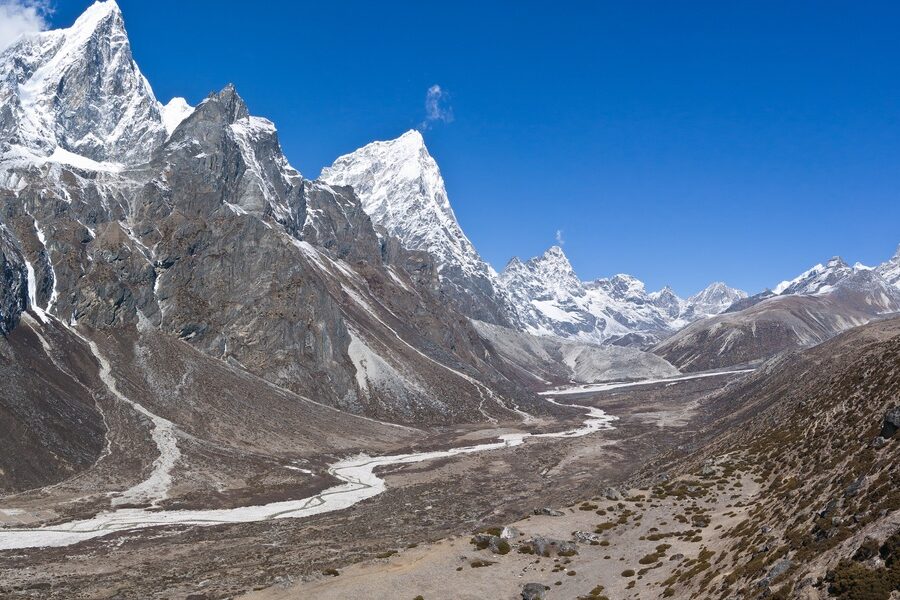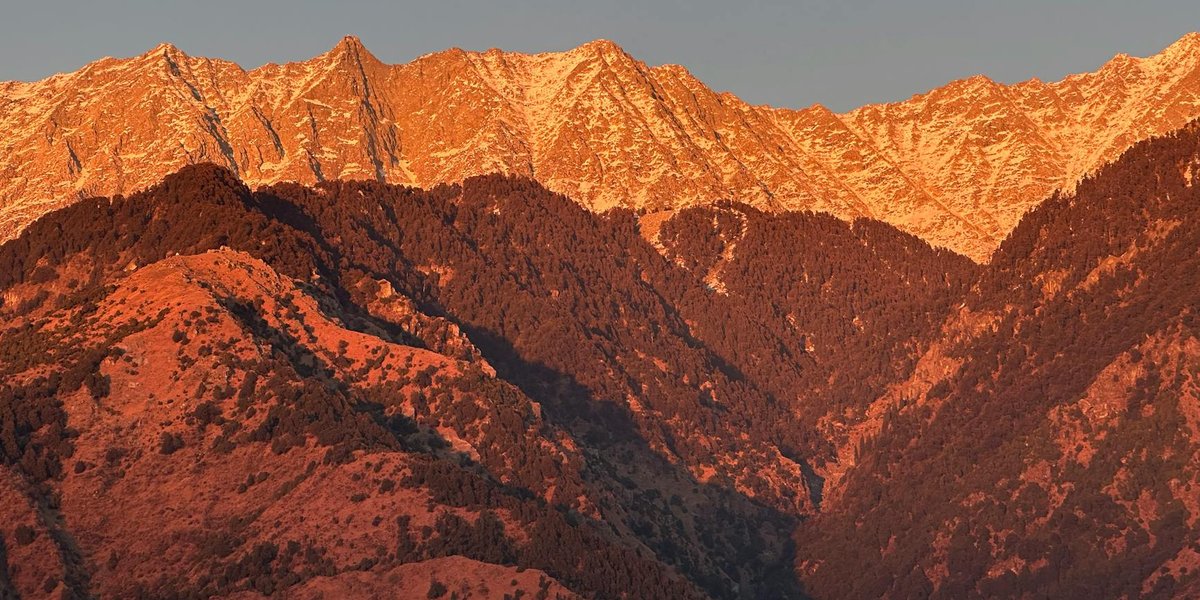
Fold mountains are mountain ranges formed when tectonic plates collide and compress layers of rock into long ridges and peaks. The classic examples are found where the Earth’s crust has been squeezed hard and kept rising for millions of years.
Table of contents
- TL;DR
- What fold mountains are
- Examples of fold mountains by region
- Young vs. old fold mountains
- How fold mountains form
- Quick recap
TL;DR
If you need the short version, the most famous examples of fold mountains are the Himalayas, Alps, Andes, Rockies, Atlas Mountains, and Zagros Mountains. They all formed through compression as plates moved toward each other.
What fold mountains are
Fold mountains are mountains made when rock layers buckle, bend, and uplift under pressure. Instead of being built by volcanic eruptions, they’re shaped like a giant carpet getting shoved from both ends.
The pressure usually comes from plate collision. When two tectonic plates converge, the crust in between gets crumpled and thickened. Over time, that produces long mountain belts such as the ones described by the USGS tectonics overview.
A fold mountain range is often easy to spot on a map because it stretches for hundreds or even thousands of kilometers in a narrow band. That long, curving shape is the giveaway.
If you’re looking for a broader catalog of fold mountains around the world, see Fold Mountains: The Complete List.
Examples of fold mountains by region
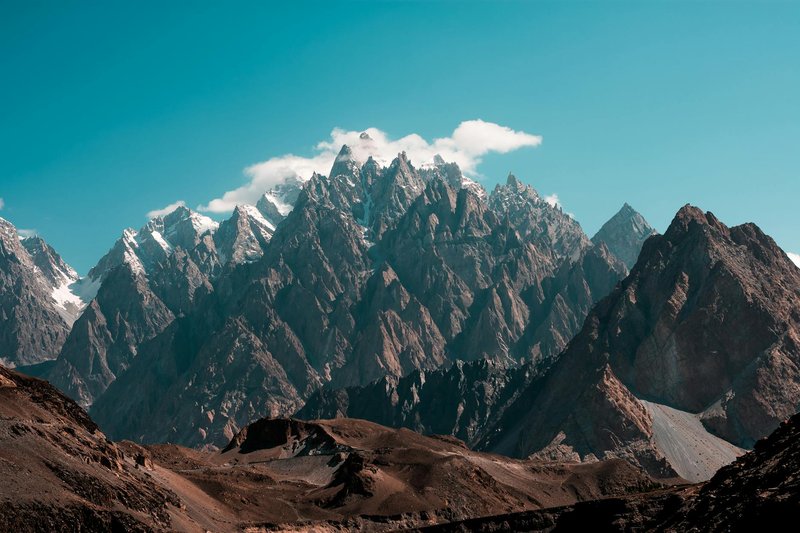
Here are some of the best-known examples of fold mountains in the world, grouped by region for quick reference.
| Fold mountain range | Location | Notes |
|---|---|---|
| Himalayas | Asia | Young fold mountains formed by the collision of the Indian and Eurasian plates |
| Alps | Europe | Classic fold mountains created by Africa–Eurasia compression |
| Andes | South America | One of the longest mountain ranges on Earth, built by subduction along the west coast |
| Rockies | North America | Major fold-and-thrust belt in the west of the continent |
| Atlas Mountains | Northwest Africa | Formed by tectonic compression between Africa and Eurasia |
| Zagros Mountains | Iran and Iraq | A major fold mountain belt created by ongoing plate collision |
| Appalachian Mountains | Eastern North America | Older fold mountains, heavily eroded over time |
| Ural Mountains | Russia and Kazakhstan | Ancient folded range marking a long-lived continental boundary |
1. Himalayas
The Himalayas are the most famous fold mountains on the planet, and for good reason. They’re still rising because the Indian Plate continues to push into the Eurasian Plate. Mount Everest sits inside this system, but the bigger story is the sheer scale of the collision. According to Britannica, the range extends across several countries and contains some of the world’s highest peaks.
2. Alps
The Alps are the textbook European example. They arc across France, Switzerland, Italy, Austria, and neighboring countries. These mountains formed when the African Plate moved north and squeezed against the Eurasian Plate. They’re not as tall as the Himalayas, but they’re a clean example of folded and uplifted crust.
3. Andes
The Andes run along the western edge of South America and are the longest continental mountain range in the world. Their formation is tied to subduction, where one plate sinks beneath another. That process creates intense compression and uplift, which is why the Andes contain so many dramatic peaks and volcanic zones. The National Geographic summary of the Andes gives a solid overview of their scale and geography.
4. Rockies
The Rocky Mountains are a major fold mountain system in North America. They formed through a messy mix of tectonic compression, uplift, and faulting during the Laramide Orogeny. They’re not a single neat ridge, but they absolutely belong in any list of fold mountain examples. For a broader catalog of fold mountains around the world, see Fold Mountains: The Complete List.
5. Atlas Mountains
The Atlas Mountains stretch across Morocco, Algeria, and Tunisia. They formed as Africa and Eurasia came into contact and the crust between them was compressed. Because of that tectonic squeeze, the Atlas range is one of the best fold mountain examples in Africa.
6. Zagros Mountains
The Zagros Mountains in Iran and Iraq are an active fold mountain belt. This is one of the clearest places to see folding caused by plate collision in action. The Arabian Plate is pushing into Eurasia, and the result is a long, rugged range that continues to deform today.
7. Appalachian Mountains
The Appalachians are older fold mountains in eastern North America. They were once much higher, but millions of years of erosion have worn them down. That makes them useful as a contrast: not all fold mountains look jagged and sharp forever. Time changes the shape, even when the original folding was dramatic.
8. Ural Mountains
The Ural Mountains are among the oldest major mountain belts in the world. They formed through ancient folding and collision, and today they mark a natural boundary between Europe and Asia. They’re low compared with young ranges, but they still count as fold mountains because their origin lies in compression and uplift.
Young vs. old fold mountains
Fold mountains are often grouped into young and old ranges.
- Young fold mountains are high, steep, and rugged. Examples include the Himalayas, Alps, Andes, and Rockies.
- Old fold mountains are lower and smoother because erosion has had far longer to work on them. Examples include the Appalachians and Urals.
A simple rule helps here: if a range looks like it still has fresh, sharp peaks, it’s probably younger. If it looks rounded and worn, it’s probably ancient.
How fold mountains form
Fold mountains form when horizontal pressure squeezes rock layers together. The layers bend into folds such as anticlines and synclines, and the crust thickens as the squeezing continues.
The process usually happens at convergent plate boundaries. The National Park Service geology resources explain the basic idea well: plates collide, rock deforms, and mountain belts rise over long periods of time.
In simple terms:
- Tectonic plates move toward each other.
- Rock layers are compressed.
- The crust buckles and folds.
- Uplift builds mountains over millions of years.
That’s why fold mountains tend to come in long chains rather than isolated peaks. Compression doesn’t make a neat cone. It makes a wrinkled crust.
Quick recap
The best examples of fold mountains include the Himalayas, Alps, Andes, Rockies, Atlas Mountains, Zagros Mountains, Appalachians, and Urals. The young ranges are tall and rugged, while the older ones are worn down but still visible evidence of ancient plate collision.
If you remember one thing, make it this: fold mountains are the Earth’s compressed leftovers. The crust gets shoved, buckled, and lifted into ranges that can last for hundreds of millions of years.