Morocco doesn’t just have impressive deserts and mountain scenery. It has a plant world that splits the difference between Europe, the Mediterranean, and the Sahara — and the result is a long list of species found nowhere else on Earth. The endemic plants of Morocco are tied to very specific places: high Atlas slopes, limestone outcrops, cedar forests, coastal cliffs, and dry valleys that look empty until spring turns them into something else entirely.
Table of contents
- What endemic means
- Why Morocco has so many endemic plants
- Endemic plants of Morocco by habitat
- Where to see them responsibly
- Why conservation matters
- Quick summary
What endemic means
An endemic plant is a species that grows naturally in one defined place and nowhere else. That place can be a country, a mountain range, an island, or even a single valley.
So when people talk about the endemic plants of Morocco, they mean plants whose wild range is limited to Morocco. Some are widespread across parts of the Atlas, others hang on in tiny pockets on cliffs or rocky slopes. A few are rare enough that losing one hillside could matter.
That is the whole game with endemism: narrow range, high vulnerability, big conservation stakes.
Why Morocco has so many endemic plants
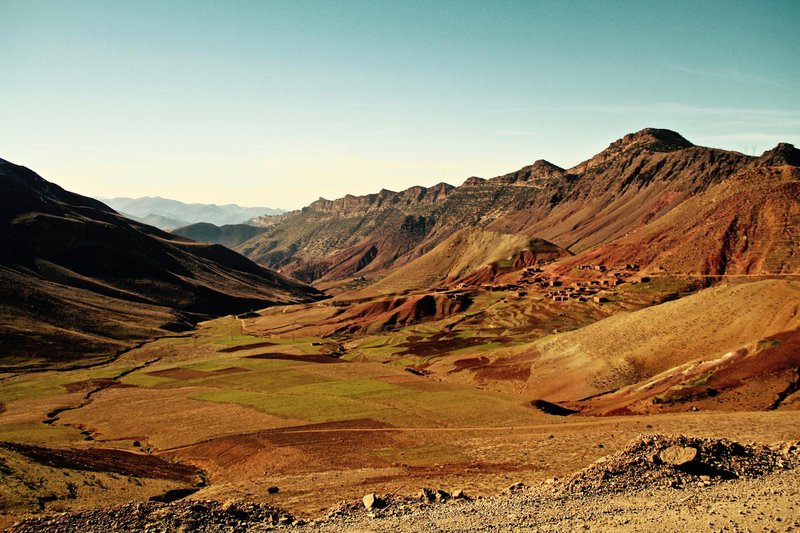
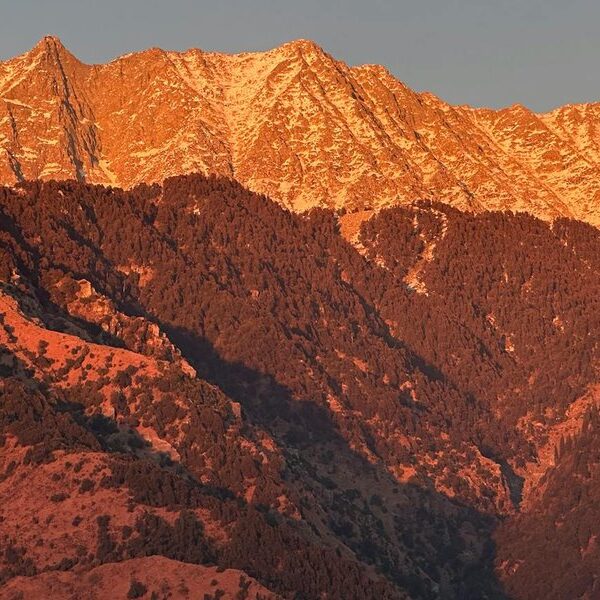
Morocco sits at a botanical crossroads. Mediterranean climates touch mountain systems, Atlantic moisture reaches the coast, and the Sahara pushes in from the south. Then you add sharp elevation changes — from sea level to peaks above 4,000 meters in the High Atlas — and you get habitat fragmentation in the best and worst sense.
That patchwork creates isolated plant populations. Isolation is how endemics happen.
The Atlas Mountains matter most here. Their slopes contain cool, wet refuges, dry rocky exposures, and seasonal streams, all packed close together. The country’s geology also helps: limestone, volcanic rock, granite, and sandstone each support different plant communities. According to the IUCN Red List, many Moroccan endemics are threatened precisely because their habitats are small and highly specialized.
Endemic plants of Morocco by habitat
High Atlas and Middle Atlas specialists
These are the plants most people mean when they talk about Morocco’s endemic flora. Many are adapted to cold winters, intense sun, and thin mountain soils.
1. Moroccan fir (Abies maroccana)
A relic conifer found in the Rif Mountains, not the Atlas, but too important to leave out. It grows in moist mountain forests and is one of Morocco’s most famous endemic trees. Its range is tiny, and pressure from grazing, fire, and climate stress has made it a flagship conservation species.
2. Atlas cedar (Cedrus atlantica)
Strictly speaking, this species is endemic to the Atlas region rather than all of Morocco, and it’s one of the country’s iconic trees. It forms high-elevation forests with a very specific feel: open trunks, blue-green needles, and a skyline that looks almost built rather than grown. Major stands remain in the Middle Atlas, though the species is under heavy pressure from drought, logging history, and overgrazing. The World Resources Institute has documented how Mediterranean ecosystems like these are especially sensitive to climate change.
3. Arenaria montana subsp. marocana
A small mountain plant in the carnation family, usually tucked into rocky places where the soil is thin and drainage is brutal. It’s not showy unless you’re the sort of person who gets excited by precise leaf margins. Botanists do.
4. Centaurea maroccana
A thistle relative with flower heads adapted to dry mountain conditions. Members of this genus often have very restricted ranges in North Africa, and Morocco hosts several localized forms that are easy to overlook until they bloom.
5. Pterocephalus bigoudenae?
A correction worth making here: Moroccan floras include many narrow-range endemics in genera like Pterocephalus, but exact taxonomy changes fast. That’s normal in botany and deeply annoying in the field. The broader point stands — mountain herbs in Morocco are often local endemics, and many are known from only a handful of sites. For current accepted names, botanical databases like Plants of the World Online are the safer reference.
Rif Mountains and northern Morocco
The Rif is wetter than much of inland Morocco, with forested slopes, limestone formations, and pockets of relict vegetation.
6. Moroccan fir (Abies maroccana)
This is the headline endemic of the Rif, growing in the humid, montane forests around limited areas in the northwest. It’s one of the clearest examples of a species trapped in a small ecological island.
7. Silene species endemic to the Rif
Several Silene species or subspecies in northern Morocco have tiny distributions, often limited to limestone ridges or rocky clearings. They’re easy to miss unless you’re looking carefully — which is basically the job.
8. Sideritis endemics
The genus Sideritis includes several Moroccan endemic species adapted to dry, stony habitats. Some are small aromatic herbs that cling to slopes where very little else wants to stay put.
Coastal and lowland endemics
Not all Moroccan endemics live in mountains. Some are tied to coastal cliffs, sandy soils, or rocky lowlands with unusual microclimates.
9. Argania spinosa — argan tree
The argan tree is one of Morocco’s most famous native species and is endemic to the southwest of the country. It’s not just culturally important; it’s ecologically valuable, stabilizing dry landscapes and supporting local biodiversity. Its oil gets all the international attention, but the tree itself is the real story. UNESCO recognizes the Arganeraie Biosphere Reserve for exactly this reason.
10. Tetraclinis articulata — sandarac tree
Also called thuya, this resin-bearing conifer grows in Morocco and a few other places in the western Mediterranean, but Morocco holds key populations. It prefers dry, rocky terrain and has long been valued for timber and resin.
11. Coastal cliff plants in the Limonium group
Sea-lavender species in the genus Limonium often show strong local endemism. Morocco’s Atlantic and Mediterranean coasts provide exactly the kind of salty, wind-beaten habitat where these plants evolve into narrowly distributed specialists.
Sahara margin and arid-zone endemics
The line between semi-arid and desert in Morocco is not a hard border. It’s a gradient, and plants use every patch of shelter they can get.
12. Euphorbia endemics
Several Moroccan Euphorbia species are tied to arid rock faces and dry scrub. These plants survive with thick stems, latex defenses, and forms that look engineered for drought because, basically, they were.
13. Asteriscus and daisy-family endemics
A few Moroccan members of the sunflower family are restricted to dry, rocky habitats near the Sahara margin. They often flower fast after rain and then spend the rest of the year looking like they’ve given up.
14. Localized succulents and geophytes
Morocco also has endemic bulbs, tubers, and fleshy perennials adapted to brief wet seasons. These plants disappear underground or shrink down during drought, which is a very sensible strategy in a country where rain can be brief and rude.
For a broader overview of desert biomes that frame these arid zones, see Desert Biomes: The Complete List.
A few standout Moroccan endemic plants
If you want a shorter shortlist, these are the names that come up again and again in discussions of Moroccan endemic flora:
- Argan tree (Argania spinosa) — southwest Morocco’s signature tree
- Moroccan fir (Abies maroccana) — a rare conifer of the Rif
- Atlas cedar (Cedrus atlantica) — the emblematic mountain tree of the Atlas
- Local Sideritis species — small aromatic herbs with very narrow ranges
- Local Silene species — rock and limestone specialists
- Coastal Limonium species — salt-tolerant cliff and shoreline plants
That’s not a complete flora list. Morocco has far more endemic species than any casual roundup can comfortably hold, especially once you start counting subspecies and narrowly distributed forms.
Where to see them responsibly
Morocco’s endemic plants are easiest to appreciate in the wild if you treat them like living infrastructure, not souvenirs.
The best areas to look are:
- High Atlas and Middle Atlas for mountain endemics and cedar forest species
- Rif Mountains for humid-forest relicts and narrow-range northern taxa
- Southwest Morocco for argan woodland and dryland specialists
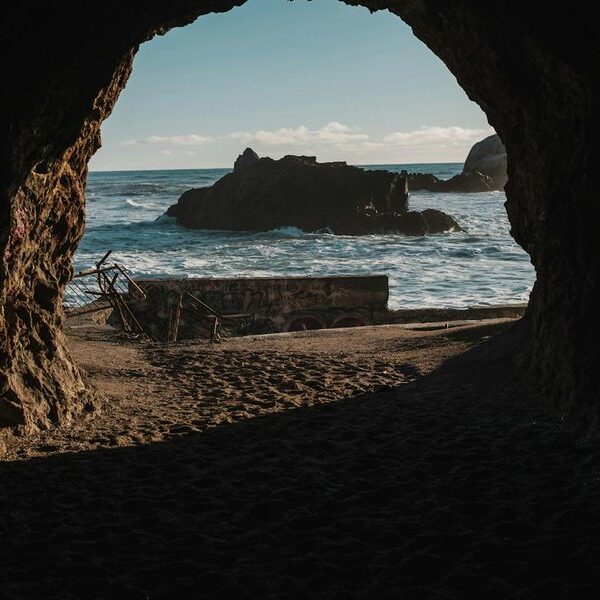
- Coastal cliffs and rocky shores for salt-tolerant endemic flora
Stay on trails. Don’t pick flowers. Don’t dig up bulbs. And don’t assume a plant is common just because it’s local to the place you’re visiting. In endemic-rich areas, “common” can mean “common on this one slope and nowhere else.”
If you’re serious about observing Moroccan flora, use regional floras, herbarium resources, and conservation park information before you go. Botanical identification in North Africa can get messy fast, especially in groups like Silene, Centaurea, and Euphorbia.
Why conservation matters
Endemic plants are especially fragile because they have nowhere else to go.
That makes Morocco’s plant conservation problem very straightforward and very annoying: if an endemic species loses habitat here, it can disappear globally. Overgrazing, fire, agriculture, road building, quarrying, and climate change all chip away at the small ecological spaces these plants depend on.
The issue is not just losing pretty flowers. It’s losing genetic lineages, ecosystem stability, pollinator relationships, and the long evolutionary history that produced each species in the first place. Morocco is one of North Africa’s most important biodiversity centers, and protecting endemic flora means protecting the mountain forests, dry woodlands, and rocky habitats that support them.
For a broader regional context, the Convention on Biological Diversity has useful background on why endemism and habitat loss are such a dangerous combination.
Quick summary
The endemic plants of Morocco reflect the country’s unusual geography: mountains, coasts, drylands, and Mediterranean-influenced habitats all compressed into one place. The standout species include the argan tree, Moroccan fir, Atlas cedar, and a long list of local herbs and cliff plants that live in highly specific niches.
If Morocco looks like a place of dramatic landscapes, that’s because it is. The plant life is just as dramatic — quieter about it, but no less impressive.