Table of contents
- TL;DR
- How to choose the right physics topic
- Classical mechanics topics
- Thermodynamics topics
- Optics topics
- Electromagnetism topics
- Modern physics topics
- Astrophysics and space topics
- Quantum physics topics
- Summary
TL;DR
If you need physics topics fast, start with the section that matches your goal.
- For schoolwork: pick clear, familiar topics like Newton’s laws, pressure, reflection, or electromagnetism.
- For presentations: choose topics with visuals, like refraction, satellites, black holes, or nuclear energy.
- For projects: go for topics you can demonstrate, measure, or simulate, like pendulums, simple circuits, friction, or solar ovens.
- For research: narrow broad areas such as fluid dynamics, materials physics, quantum computing, or cosmology.
The best topic is usually the one you can explain without sounding like you swallowed a textbook.
How to choose the right physics topic
The phrase physics topics can mean a lot of things. A student might need a topic for a class presentation. A teacher might want discussion ideas. A researcher might want a starting point for a paper. So the trick is not finding “the best physics topic” in some abstract sense. It’s finding the one that fits the job.
A good topic has three things:
- A clear scope — small enough to explain in one sitting.
- A real question — something you can describe, compare, measure, or argue.
- Enough evidence or examples — so you’re not filling space with vague sentences.
For example, “optics” is a subject. “How lenses form images in cameras and eyes” is a topic. That second one actually gives you something to work with.
If you need a topic for a presentation, choose one with a visible effect. Light bending through water, magnetism, planetary motion, and radioactive decay all work because you can point to something concrete. If you need a project topic, choose something you can test with simple equipment. If you need a research topic, start broad and narrow it fast.
For general background reading, the American Physical Society is a useful starting point, and NIST is excellent when you need reliable measurement-related science.

Classical mechanics topics
Classical mechanics is the part of physics that deals with motion, forces, and energy. It’s also the most forgiving place to start because the ideas show up everywhere: cars, balls, bridges, elevators, and roller coasters.
Good physics topics in classical mechanics include:
- Newton’s laws of motion
- Force and acceleration
- Friction and motion
- Work, energy, and power
- Momentum and collisions
- Circular motion
- Projectile motion
- Simple harmonic motion
- Pendulums
- Gravitation
- Torque and rotational motion
- Center of mass
If you need an easy classroom topic, Newton’s laws or projectile motion are solid choices. They’re familiar, visual, and not too abstract. If you want something a little sharper, try conservation of momentum in car crashes or why objects in orbit keep falling without landing. That’s the kind of topic that sounds simple until you try to explain it cleanly.
Projectile motion is also a good example of how physics turns messy reality into a model. In the real world, air resistance ruins the neat parabola. In the classroom, you usually start without it. That gap between ideal and real is where a lot of physics lives.
Thermodynamics topics
Thermodynamics is about heat, energy transfer, temperature, and the rules that govern physical systems as they change. It sounds dry until you realize it explains engines, weather, refrigerators, and why your coffee goes cold.
Useful physics topics in thermodynamics include:
- Temperature vs. heat
- The laws of thermodynamics
- Heat transfer: conduction, convection, radiation
- Thermal expansion
- Specific heat capacity
- Phase changes
- Gas laws
- Entropy
- Heat engines
- Refrigeration and air conditioning
- Renewable energy and thermal systems
Entropy gets thrown around like it means “chaos,” which is sloppy but common. In physics, it’s a measure tied to the number of microscopic arrangements a system can have. That’s why ice melting in a room is easy to understand but hard to reverse in practice.
According to Britannica’s overview of the laws of thermodynamics, the second law is the one that explains why energy spreads out and why no engine can be perfectly efficient. That makes it a strong topic for essays and seminars because it connects theory to everyday machines.
Good project ideas here include insulated containers, heat-loss tests, solar water heaters, and simple comparisons of materials with different thermal conductivities.
Optics topics
Optics is one of the friendliest branches of physics because you can actually see the phenomenon doing its thing. Light bends, splits, reflects, scatters, and gets trapped in materials all the time.
Strong physics topics in optics include:
- Reflection
- Refraction
- Mirrors and image formation
- Lenses
- Dispersion of light
- Total internal reflection
- Fiber optics
- Polarization
- Interference
- Diffraction
- The human eye and vision
- Optical instruments
Refraction is the obvious starter topic, but don’t stop there. Total internal reflection is more interesting because it explains fiber-optic cables and the way light can be trapped in a medium. That gives you a clean bridge from textbook physics to communications technology.
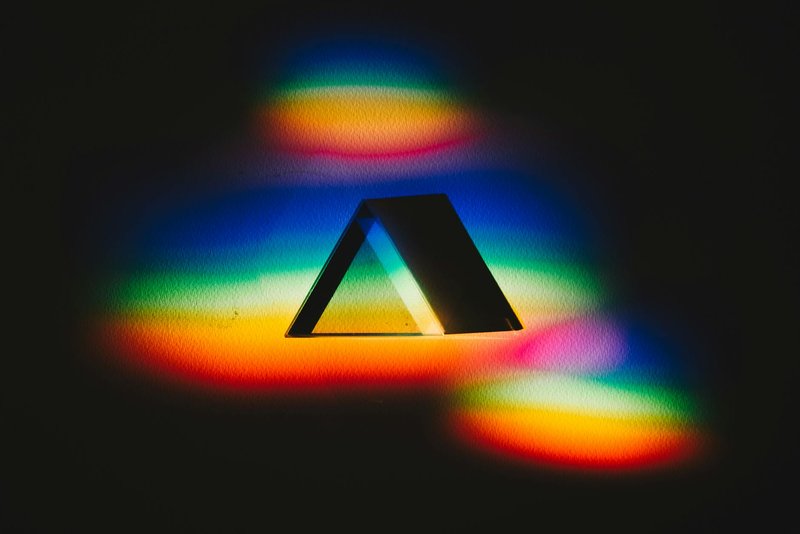
For presentations, optics is a gift. You can use prisms, lenses, water, and even a flashlight to show real effects. If you want a slightly more advanced angle, talk about how cameras, microscopes, and telescopes all depend on image formation.
For a deeper background on light and measurement, the National Institute of Standards and Technology has excellent material on physical standards, including optical measurements.
Electromagnetism topics
Electromagnetism covers electric fields, magnetic fields, and the interaction between them. It’s the branch that makes your phone, your laptop, electric motors, and the power grid possible. So yes, it’s a big deal.
Relevant physics topics in electromagnetism include:
- Electric charge
- Coulomb’s law
- Electric fields
- Electric potential and voltage
- Current and resistance
- Ohm’s law
- Series and parallel circuits
- Magnetic fields
- Electromagnetic induction
- Transformers
- Alternating current
- Electromagnetic waves
This is one of the best areas for practical topics because circuits are easy to build, test, and explain. A simple series-versus-parallel circuit demo can teach more than a page of definitions. Ohm’s law is another dependable option, especially if you want data and graphs.
Electromagnetic induction is where the subject gets more interesting. It explains generators, transformers, and the way changing magnetic fields produce electric current. That’s not just exam material. That’s the backbone of power distribution.
If your topic needs a real-world hook, use electric vehicles, wireless charging, or power transmission. Those are familiar enough to hold attention, but still grounded in core physics.
If you want a bite-size read on electricity fundamentals, see 7 Interesting Facts About Electricity.
Modern physics topics
Modern physics is where the old rules start getting weird. This is the physics of atoms, nuclei, electrons, and relativity — the stuff that made the 20th century stop behaving like Newton had the final word.
Good physics topics in modern physics include:
- Special relativity
- General relativity
- Photoelectric effect
- Atomic models
- Nuclear physics
- Radioactivity
- Particle physics
- Mass-energy equivalence
- Semiconductor physics
- Lasers
- X-rays
- The Standard Model
The photoelectric effect is one of the best seminar topics in all of physics because it’s short, historic, and important. It helped push quantum theory forward and gave us a clean example of light acting like particles. Einstein’s explanation of the effect earned him the Nobel Prize, and it’s still used in discussions of solar cells and detectors.
Nuclear physics is another strong choice, especially if you want a topic that connects to medicine and energy. Radiation therapy, PET scans, and nuclear reactors all make the subject less abstract.
For a reliable factual overview of radioactive decay and radiation, the U.S. Environmental Protection Agency has a solid public resource.
Astrophysics and space topics
Astrophysics is where physics scales up into stars, galaxies, black holes, and the universe itself. These are popular physics topics because they’re naturally dramatic. Gravity, time, and light behave in ways that feel almost unfair.
Useful topics in this area include:
- The life cycle of stars
- Black holes
- Neutron stars
- Supernovae
- Galaxies
- Dark matter
- Dark energy
- Cosmology
- The Big Bang
- Exoplanets
- Telescopes
- Orbital mechanics
Black holes are attention magnets, but they work best if you keep the topic focused. Don’t try to explain everything about them. Pick a narrower angle: how they form, how we detect them, or what happens near the event horizon.
Exoplanets are another strong choice because the science is still expanding. You can discuss detection methods like transit and radial velocity, then connect that to the search for habitable worlds. That gives you a topic with both physics and a little public imagination.
If you want a trustworthy source for astronomy facts and mission data, NASA’s Astrophysics division is the obvious place to start.
If you’re curious about gravity basics in this context, check out 8 Interesting Facts About Gravity.
Quantum physics topics
Quantum physics is the branch that makes people feel like they’ve stepped into a trick mirror. Tiny particles don’t behave like little billiard balls, and that’s the point.
Strong physics topics in quantum physics include:
- Wave-particle duality
- Quantum mechanics basics
- Heisenberg uncertainty principle
- Schrödinger equation
- Quantum states
- Quantum tunneling
- Atomic orbitals
- Quantum entanglement
- Superposition
- Quantum computing
- Bose-Einstein condensates
- Quantum cryptography
Wave-particle duality is the classic starter topic because it’s weird in a teachable way. Light and matter show behavior that depends on how you measure them. That’s the kind of fact students remember because it sounds fake until the math shows up.
Quantum tunneling is a particularly useful topic if you want a real-world example. It explains alpha decay in nuclear physics and plays a role in modern electronics. Quantum computing is popular, but it works better as a topic if you keep the explanation basic and avoid pretending the field is more mature than it is.
For a solid technical reference, the American Physical Society and university physics departments often have good introductory material on quantum concepts.
For a readable primer that clears up common misconceptions about quantum ideas, see 10 Myths and Misconceptions About Quantum Mechanics.
Summary
The best physics topics are the ones that match your goal, your audience, and your time limit. If you need something easy, start with motion, forces, heat, light, or basic circuits. If you need a presentation topic, pick something visual. If you need a research direction, narrow a broad area until it becomes a question you can actually answer.
A good rule: if you can explain the topic in one sentence without hand-waving, you’ve probably got a usable choice. If you can also show a demo, graph, or real-world application, even better.
Physics has plenty of territory. The trick is picking one piece of it and making it earn its keep.