Table of contents
- TLDR
- Haiti’s natural resource base
- Agriculture and arable land
- Minerals and mining
- Forests, water, and fisheries
- Why Haiti’s resources don’t translate into wealth
- Summary
TLDR
Haiti does have natural resources, but not the kind that make for an easy economic story. Its main assets are arable land, agricultural products, small mineral deposits, fisheries, water resources, and limited forest cover. The problem is that many of these resources are underused, degraded, or hard to extract profitably.
Haiti’s real issue isn’t total absence of resources. It’s scarcity of infrastructure, severe deforestation, soil erosion, weak investment, and a long history of political and economic instability. So yes, Haiti has natural resources. No, they’re not currently enough to carry the economy on their own.
Haiti’s natural resource base
The natural resources of Haiti are usually described in broad country-profile terms: farmland, gold, bauxite, copper, calcium carbonate, hydropower potential, and a small fishing sector. That list is true, but it misses the part that matters most. A resource sitting in the ground or on a slope is not the same thing as a resource you can actually use at scale.
Haiti is one of the most environmentally stressed countries in the Caribbean. Repeated hurricanes, steep terrain, heavy pressure on forests, and soil loss have all chipped away at productivity. According to the World Bank, land degradation and disaster exposure are central constraints on Haiti’s development, not side issues.
The country’s resource profile is therefore a mix of real assets and real limitations. The land is there. So are minerals and coastal waters. But the usable version of those resources is much smaller than the map suggests. Broader insights from earth science help explain why geology and resource assessment don’t always translate into immediate wealth.
Agriculture and arable land
For most Haitians, the most important natural resource is still land that can be farmed. Agriculture employs a large share of the population and remains a major source of food and income. The catch is that Haiti’s farmland is under intense pressure.
A large portion of the country is mountainous, which limits flat, mechanized farming. Much of the cultivation happens on small plots, often on steep slopes where topsoil washes away quickly. That makes erosion one of the country’s biggest agricultural problems. The FAO has long identified soil degradation and deforestation as major threats to agricultural productivity in Haiti.
Common crops include corn, rice, beans, plantains, cassava, sugarcane, coffee, and mangoes. Coffee and mangoes are among the better-known export crops, though production is often inconsistent because of weather shocks, weak transport networks, and limited access to irrigation.
The frustrating part is that Haiti’s agricultural potential is real. It just isn’t being realized at a scale that matches the need. The country imports a substantial share of the food it consumes, which tells you everything about how strained domestic production is.
What limits agriculture most?
- Soil erosion: Rainfall strips away fertile topsoil faster than it can be replaced.
- Deforestation: Fewer trees means less soil stability and less moisture retention.
- Small-scale farming: Most farms are tiny, which makes investment and mechanization difficult.
- Weak infrastructure: Bad roads and limited storage mean crops spoil or never reach market.
- Weather vulnerability: Hurricanes and droughts can wipe out harvests in a season.
So when people talk about Haiti’s natural resources, agriculture has to be part of the answer. It’s just not a simple answer.
Minerals and mining
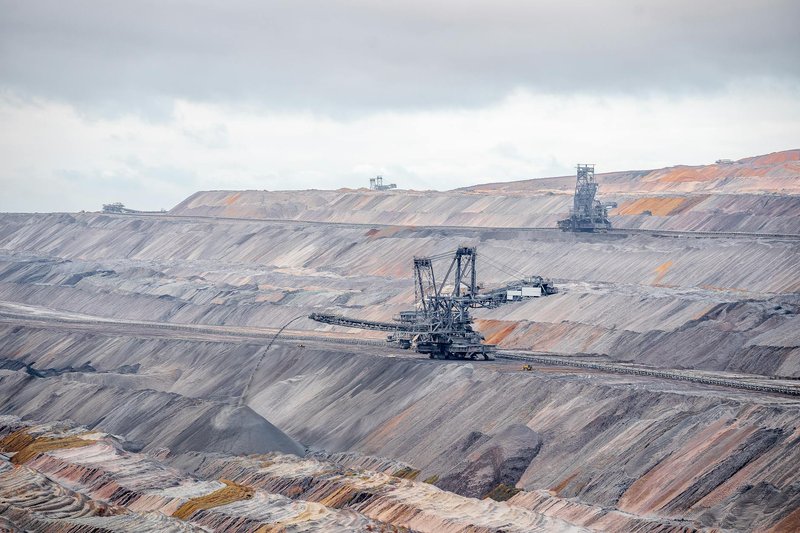
Haiti is known to have several mineral resources, including gold, silver, copper, bauxite, marble, limestone, and calcium carbonate. Geological surveys have suggested meaningful mineral potential, especially in the northern part of the country. In other words, there may be more under Haiti’s ground than many people assume.
That said, mineral potential and mineral production are very different things. Haiti’s mining sector remains limited, and extraction has historically been small compared with the country’s needs and economic size. Political uncertainty, weak regulatory systems, infrastructure gaps, and social concerns have all slowed development.
The U.S. Geological Survey and other technical sources have pointed to Haiti’s mineral prospects, but prospects are not the same as operating mines. Gold may get headlines, but headlines don’t build haul roads, power supply, environmental safeguards, or a functioning legal framework.
Haiti’s mineral picture in plain English
- Gold and copper: Known deposits, but commercial development has been limited.
- Bauxite: Present in some areas, though not a dominant sector.
- Limestone and marble: More practical for local construction and industrial use.
- Calcium carbonate: Useful as an industrial mineral, but again, scale matters.
Haiti’s minerals are real natural resources, but they are not currently the backbone of the economy. At most, they represent a future opportunity that depends on governance, investment, and environmental protections that have not yet been fully put in place.
Forests, water, and fisheries
This is where Haiti’s natural resource story gets more complicated, because these resources exist in a damaged state.
Forests
Haiti is famously deforested. That reputation is not exaggerated. Forest cover has shrunk dramatically over the decades due to fuelwood use, charcoal production, land clearing, and population pressure. The result is less biodiversity, more erosion, and weaker water retention in the soil.
Trees matter here for more than scenery. They stabilize hillsides, protect watersheds, and help farms survive dry periods. The UN Environment Programme has repeatedly highlighted how land degradation and forest loss amplify Haiti’s vulnerability to floods and droughts.
Water resources
Haiti has rivers and watershed systems, and in theory that means hydropower potential and irrigation opportunities. In practice, water management is uneven. Sedimentation, deforestation, and infrastructure weakness make it hard to store and distribute water effectively.
Clean water access is also a public health issue, not just an agricultural one. When watersheds are degraded, communities feel it through flooding, contaminated supplies, and unreliable irrigation.
Fisheries
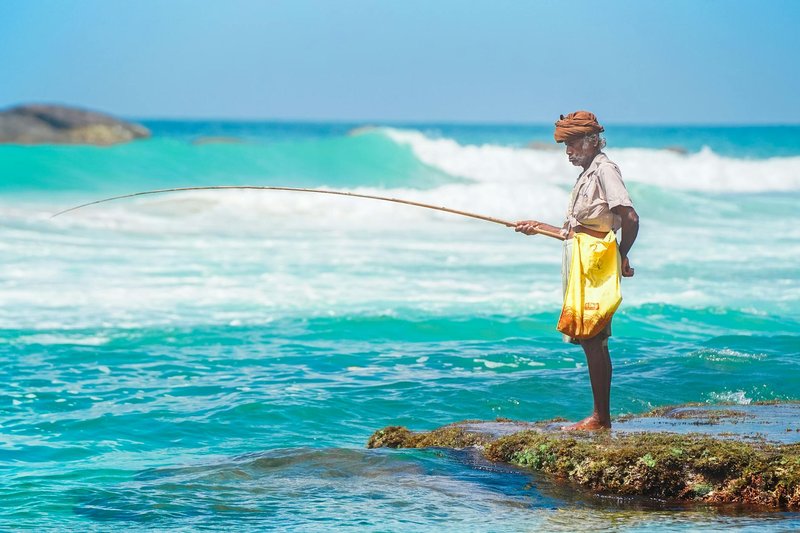
Haiti’s coastline gives it access to marine resources, but fisheries remain underdeveloped. Coastal fish stocks, reef ecosystems, and nearshore fishing all have value, yet they are constrained by limited equipment, overfishing in some areas, and environmental damage to marine habitats.
Fishing is important in local livelihoods, but it is not a high-output sector. Still, it remains one of Haiti’s more visible renewable resources.
Why Haiti’s resources don’t translate into wealth
This is the core issue. Haiti’s natural resources exist, but they don’t add up to broad prosperity because the system around them is broken or weak.
A country can have farmland, minerals, fish, and water and still struggle economically if it lacks:
- roads and ports
- electricity
- irrigation and storage
- stable property rights
- functioning environmental regulation
- investment capital
- disaster resilience
Haiti has all the classic constraints at once. That is why its economy depends heavily on imports, remittances, and outside aid rather than domestic resource wealth. A resource economy needs more than geology and soil. It needs institutions.
There’s also a feedback loop worth pointing out. Environmental damage reduces economic output, and weak economic output increases pressure on the environment. If families rely on charcoal because other energy options are expensive, forests shrink further. If farms are too poor to invest in terraces or erosion control, soil loss gets worse. It’s a nasty spiral, and Haiti has been trapped in it for years.
For a broader overview of the country’s development challenges, the CIA World Factbook and World Bank country data are useful starting points.
Summary
The natural resources of Haiti include arable land, agricultural crops, mineral deposits, forests, water systems, and fisheries. That sounds like a solid list, and in a different context it might be. But Haiti’s resources are constrained by deforestation, erosion, weak infrastructure, and persistent instability.
So the real story is not that Haiti has nothing. It’s that Haiti has resources that are hard to protect, hard to extract, and hard to turn into lasting prosperity. The land can produce. The rocks can hold minerals. The coast can support fisheries. But until the environmental and economic foundations improve, those resources will keep underperforming.