TL;DR
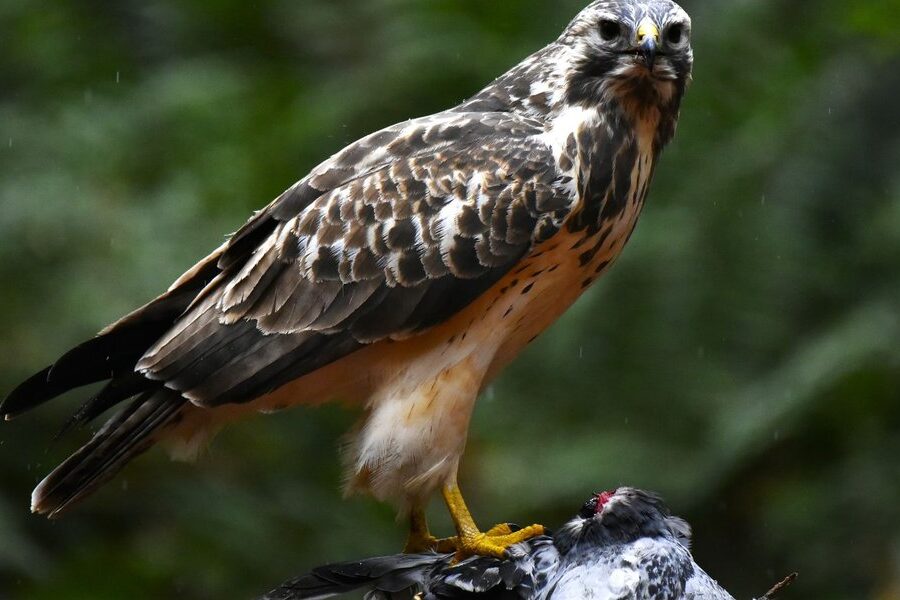
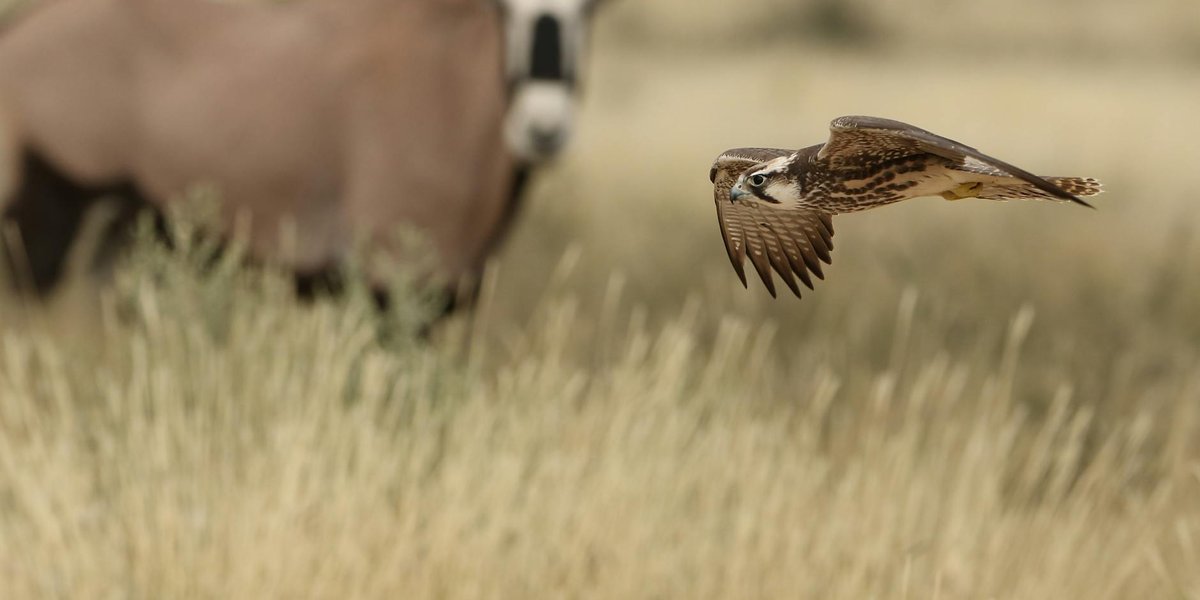
Birds of prey are carnivorous birds built for hunting. They usually have hooked beaks, sharp talons, and excellent eyesight. Common examples of birds of prey include hawks, eagles, owls, falcons, and vultures.
A quick rule: if a bird catches, kills, or tears apart other animals with obvious hunting gear, it’s probably a raptor. Owls count. Vultures count too, even though they’re more scavengers than active hunters.
Table of Contents
- What counts as a bird of prey?
- Examples of birds of prey
- Birds of prey by group
- How to identify birds of prey
- Quick comparison chart
- Fun facts
What counts as a bird of prey?
Birds of prey are also called raptors. The word comes from the Latin rapere, meaning “to seize.” That’s a pretty good summary of the lifestyle.
They share a few key traits:
- Hooked beaks for tearing meat
- Sharp talons for catching or gripping prey
- Forward-facing eyes with very strong vision
- Carnivorous diets, though some also scavenge
According to the Cornell Lab of Ornithology, these birds are defined more by hunting adaptations than by one single family. That’s why owls, hawks, eagles, falcons, and vultures all get lumped into the raptor club.
For a broader look at how animals obtain energy, see Examples of Consumers in Biology.
Examples of birds of prey
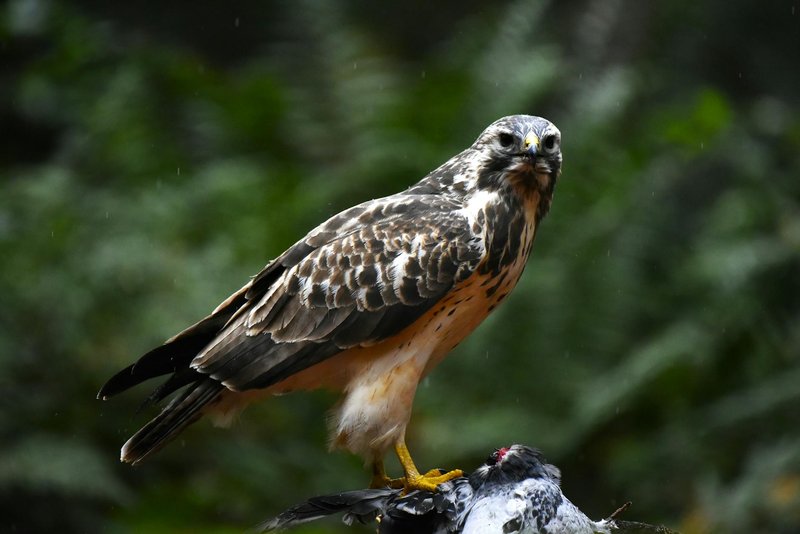
Here are some of the best-known examples of birds of prey, along with the kind of bird each one is and what makes it recognizable.
1. Red-tailed Hawk
One of the most common hawks in North America, the red-tailed hawk is a classic raptor with broad wings and, yes, a rusty red tail in adults. It often circles high above roadsides and open fields, scanning for mice, rabbits, and snakes.
2. Bald Eagle
The bald eagle is the heavyweight celebrity of North American raptors. It’s a fish specialist, with a huge hooked bill and massive talons built for grabbing slippery prey. Despite the name, it isn’t bald; the white head just makes it look that way from a distance.
3. Golden Eagle
The golden eagle is larger and more powerful-looking than many hawks, with long wings and a dark body marked by a golden-brown patch on the back of the head and neck. It hunts mammals such as rabbits and ground squirrels and can take surprisingly large prey.
4. Peregrine Falcon
The peregrine falcon is the speed freak of the bird world. It hunts other birds in midair and can stoop, or dive, at astonishing speeds. This is the bird people love to quote as “the fastest animal on Earth,” though speed records can get messy depending on how they’re measured.
For background on its recovery after DDT nearly wiped it out in parts of North America, the U.S. Fish & Wildlife Service has a solid overview.
For a quick primer on birds, check 10 Interesting Facts About Birds.
5. Barn Owl
The barn owl is a ghost-faced hunter with a heart-shaped face and pale plumage. It hunts mostly at night, using silent flight and pinpoint hearing to catch mice and other small rodents. If hawks are the daytime patrol, barn owls are the quiet nighttime cleanup crew.
6. Great Horned Owl
The great horned owl is a tough, adaptable predator found across much of the Americas. It has ear tufts that look like horns, yellow eyes, and a call that sounds more like a deep hoot than a bird song. It can take prey ranging from rats to skunks, which says a lot about its attitude.
7. Snowy Owl
The snowy owl is built for Arctic life, with pale plumage and a bulky body that helps it handle freezing conditions. It mostly feeds on lemmings and other small mammals. Adult males can look nearly all white, while females usually have darker markings.
8. Cooper’s Hawk
The Cooper’s hawk is a fast, agile woodland predator that specializes in chasing birds through trees and shrubs. It has a long tail and rounded wings, which help it weave through dense cover. Backyard bird feeders sometimes attract them for the same reason they attract songbirds.
9. Osprey
The osprey is sometimes called the fish hawk, and for good reason: fish make up almost its entire diet. It has long wings, a white underside, and feet with reversible outer toes that help it grab fish more securely. According to National Geographic, it’s one of the most specialized raptors on the planet.
For a broader look at vertebrate diversity, see Examples of Vertebrates.
10. Turkey Vulture
The turkey vulture looks a little ungainly on the ground, but in the air it’s a superb soaring scavenger. It uses an excellent sense of smell to locate carrion, which is rare among birds. It’s not out there hunting live prey so much as cleaning up what’s already dead.
Birds of prey by group
Birds of prey are easier to remember if you group them by type.
Hawks
Hawks are medium-sized raptors with broad wings and strong eyesight. They’re usually generalists, which means they’ll eat whatever small animal is available. Red-tailed hawks and Cooper’s hawks are good examples.
Eagles
Eagles are generally larger, heavier-bodied raptors with powerful talons and bills. They often hunt larger prey or fish. Bald eagles and golden eagles are the usual poster birds here.
Falcons
Falcons are built for speed. They have pointed wings, streamlined bodies, and a notched beak that helps them kill prey efficiently. Peregrine falcons are the star example, but kestrels belong here too.
Owls
Owls are mostly nocturnal predators with specialized hearing and soft feathers that muffle flight noise. Barn owls and great horned owls are two of the best-known examples.
Vultures
Vultures are scavengers, not hunters in the usual sense, but they still count as birds of prey in many classifications because of their anatomy and feeding behavior. Turkey vultures and condors belong in this camp.
For a broader taxonomic breakdown, the Audubon Society has a useful explainer on what makes a bird a raptor.
How to identify birds of prey
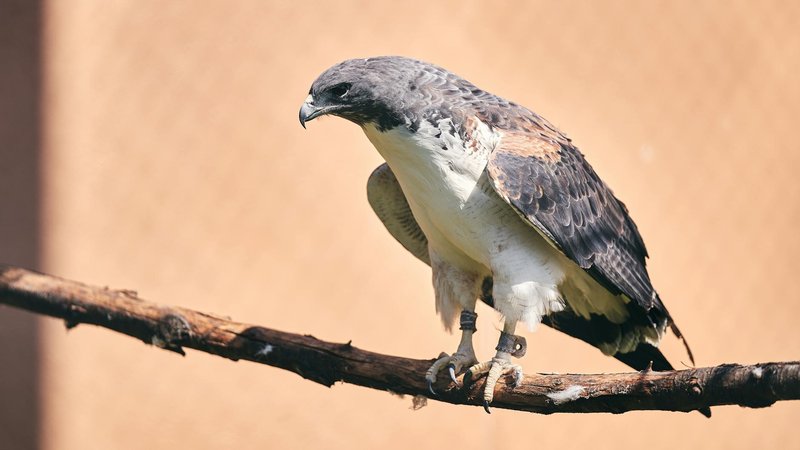
You usually don’t need binoculars and a field guide to spot a raptor. A few clues do most of the work.
- Hooked beak: built for tearing meat, not nibbling seeds
- Sharp talons: feet that look like they were designed by a tiny weapons department
- Perched posture: often upright, alert, and scanning
- Flight style: hawks and eagles soar on broad wings; falcons flap more sharply and dive faster; owls fly more silently
- Behavior: watch for hunting, circling, perching on fence posts, or scanning open ground
If a bird is riding thermals over a field with its wings held in a slight V or flat plane, you’re probably looking at a hawk or eagle. If it’s low and silent near dusk, owl is a good bet. If it’s a rocket with pointed wings, think falcon.
Quick comparison chart

| Bird | Group | Main prey | Easy ID clue |
|---|---|---|---|
| Red-tailed hawk | Hawk | Small mammals | Rusty tail, broad wings |
| Bald eagle | Eagle | Fish | White head, huge bill |
| Golden eagle | Eagle | Mammals | Dark body, powerful build |
| Peregrine falcon | Falcon | Birds | Fast dive, pointed wings |
| Barn owl | Owl | Rodents | Heart-shaped face |
| Great horned owl | Owl | Rabbits, birds | Ear tufts, deep hoot |
| Snowy owl | Owl | Lemmings | White plumage |
| Cooper’s hawk | Hawk | Birds | Long tail, forest agility |
| Osprey | Raptor | Fish | Osprey’s crooked wings and fish-catching feet |
| Turkey vulture | Vulture | Carrion | Bald red head, soaring circles |
Fun facts
- A peregrine falcon can strike prey in midair with enough force to stun or kill it.
- Owls have asymmetrical ear openings, which help them pinpoint prey in the dark.
- Ospreys can rotate their outer toes to get a better grip on fish.
- Vultures often eat carcasses that could spread disease if left alone.
- Some raptors, like the red-tailed hawk, are so widespread that their call is used in movies to represent almost any bird of prey. Hollywood has a type, and it’s basically this hawk.
Birds of prey are built for the job
The best examples of birds of prey all share the same basic toolkit: sharp talons, hooked beaks, and serious hunting instincts. Hawks patrol fields, eagles dominate open skies, owls rule the night, falcons bring the speed, and vultures handle cleanup.
If you can spot those traits, you can usually tell a raptor from an ordinary bird pretty quickly. And once you start noticing them, they’re everywhere.