April tends to be a month of renewal, and that extends to the calendar of great minds: several influential scientists share April birthdays, spanning centuries and specialties. This list highlights who they are and gives a quick snapshot of their backgrounds so you can browse by date or discipline.
There are 14 Scientists born in April, ranging from Carl Friedrich Gauss to Samuel Morse. For each person you’ll find below Birthdate (YYYY-MM-DD),Field,Nationality to make comparisons easy and consistent — you’ll find below.
How were the names chosen for this list?
The selection focuses on scientists with verifiable birthdates and notable contributions in their fields; it aims to represent a range of eras and disciplines rather than exhaustive inclusion, so entries are chosen for historical significance and reliable sources.
Can I sort or filter the list by birthdate, field, or nationality?
Yes — the data is organized so you can sort by Birthdate (YYYY-MM-DD),Field,Nationality in a spreadsheet or table view to group by chronological order, area of study, or country for easier browsing.
Scientists Born in April
| Name | Birthdate (YYYY-MM-DD) | Field | Nationality |
|---|---|---|---|
| Leonardo da Vinci | 1452-04-15 | Engineering | Italy |
| Christiaan Huygens | 1629-04-14 | Physics | Netherlands |
| Joseph Lister | 1827-04-05 | Medicine | United Kingdom |
| Samuel Morse | 1791-04-27 | Engineering | United States |
| Guglielmo Marconi | 1874-04-25 | Engineering | Italy |
| Max Planck | 1858-04-23 | Physics | Germany |
| Carl Friedrich Gauss | 1777-04-30 | Mathematics | Germany |
| J. Robert Oppenheimer | 1904-04-22 | Physics | United States |
| James D. Watson | 1928-04-06 | Biology | United States |
| Rita Levi-Montalcini | 1909-04-22 | Biology | Italy |
| Percy Julian | 1899-04-11 | Chemistry | United States |
| John James Audubon | 1785-04-26 | Biology | United States |
| Jean-Baptiste Biot | 1774-04-21 | Physics | France |
| Patrick Manson | 1844-04-03 | Medicine | United Kingdom |
Images and Descriptions

Leonardo da Vinci
Renaissance Italian polymath known for art and inventive science; Leonardo da Vinci blended anatomy, engineering, optics, and observational studies. His meticulous sketches of human anatomy, machine designs, and natural phenomena influenced later scientific methods and engineering thought.

Christiaan Huygens
Christiaan Huygens was a Dutch physicist and mathematician who proposed the wave theory of light, invented the pendulum clock, and discovered Saturn’s ring structure and its moon Titan. His work shaped classical mechanics and early optics.
Joseph Lister
Joseph Lister was an English surgeon who introduced antiseptic surgical methods using carbolic acid, dramatically reducing infections and surgical mortality. Lister’s promotion of sterilization transformed surgical practice and laid foundations for modern aseptic technique.
Samuel Morse
Samuel Morse was an American inventor and painter who co-developed electric telegraphy and Morse code, revolutionizing long-distance communication in the 19th century and accelerating information exchange across continents. His inventions enabled near-instant messaging, transforming commerce, journalism, and diplomacy worldwide.
Guglielmo Marconi
Guglielmo Marconi was an Italian inventor and electrical engineer who pioneered long-distance radio transmission and wireless telegraphy; his work led to practical radio systems and earned him a Nobel Prize, reshaping global communication and naval signaling.
Max Planck
Max Planck was a German theoretical physicist who originated quantum theory by introducing energy quanta, a breakthrough that reshaped physics in the 20th century and laid groundwork for quantum mechanics and later atomic and solid-state physics.
Carl Friedrich Gauss
Carl Friedrich Gauss was a German mathematician whose work spanned number theory, statistics, differential geometry, and astronomy. Known as the “prince of mathematicians,” his theorems and methods remain foundational across mathematics and physical sciences.
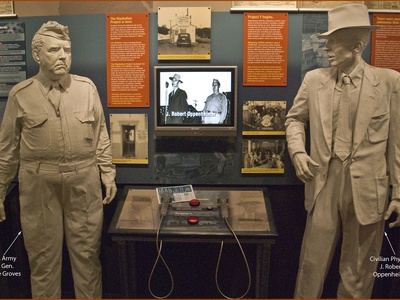
J. Robert Oppenheimer
J. Robert Oppenheimer was an American theoretical physicist who led the Manhattan Project’s Los Alamos laboratory, coordinating scientific efforts to develop the first atomic bombs. His leadership and later reflections shaped science policy and ethics debates about nuclear weapons.

James D. Watson
James D. Watson is an American molecular biologist best known as co-discoverer of DNA’s double-helix structure with Francis Crick; their work transformed genetics and molecular biology, earning a Nobel Prize and launching modern DNA research.
Rita Levi-Montalcini
Rita Levi-Montalcini was an Italian neurologist who discovered nerve growth factor, a key protein in neural development, and shared the Nobel Prize in Physiology or Medicine. She combined lab research with advocacy for science education and women in science.

Percy Julian
Percy Julian was an American chemist who pioneered industrial-scale synthesis of medicinal steroids from plant sterols, enabling affordable hormone therapies and cortisone production. He broke racial barriers in chemistry and led significant pharmaceutical research.

John James Audubon
John James Audubon was an American naturalist and artist whose monumental Birds of America recorded detailed illustrations and field observations of North American birds; his work combined art and natural history and influenced early ornithology and conservation awareness.
Jean-Baptiste Biot
Jean-Baptiste Biot was a French physicist and mathematician known for studies of magnetism, optics, and terrestrial magnetism; he co-formulated the Biot–Savart law relating magnetic fields to electric currents and contributed to meteorite studies and polarization of light.
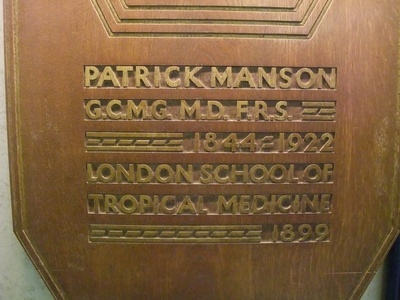
Patrick Manson
Patrick Manson was a Scottish physician and parasitologist who founded tropical medicine as a field, discovered the role of mosquitoes in transmitting filarial parasites, and mentored discoveries that later identified mosquito transmission of malaria and other diseases.