- Karoo and Drakensberg geology overviews (regional geological surveys and summaries).
- Lubombo (Lebombo) Mountains geology.
- Pilanesberg igneous complex — Britannica overview. https://www.britannica.com/place/Pilanesberg [4]
- Lubombo (Lebombo) Mountains geology.
Explore these links and maps next to plan a trip or to read detailed geological reports.
- USGS — Karoo-Ferrar large igneous province summaries and background on flood basalts. https://pubs.usgs.gov/ [search: Karoo-Ferrar] [1]
- Karoo and Drakensberg geology overviews (regional geological surveys and summaries). Mountains”>https://en.wikipedia.org/wiki/LubomboMountains [3]
- Pilanesberg igneous complex — Britannica overview. https://www.britannica.com/place/Pilanesberg [4]
- Visit Pilanesberg to view a dramatic igneous ring complex and wildlife reserve.
- Study the Lubombo range for rift-related volcanic rocks near Eswatini’s border.
- USGS — Karoo-Ferrar large igneous province summaries and background on flood basalts. https://pubs.usgs.gov/ [search: Karoo-Ferrar] [1]
- Karoo and Drakensberg geology overviews (regional geological surveys and summaries). Mountains”>https://en.wikipedia.org/wiki/LubomboMountains [3]
- Pilanesberg igneous complex — Britannica overview. https://www.britannica.com/place/Pilanesberg [4]
- Hike Drakensberg escarpments to see ancient basalt cliffs and lava flow remnants.
- Visit Pilanesberg to view a dramatic igneous ring complex and wildlife reserve.
- Study the Lubombo range for rift-related volcanic rocks near Eswatini’s border.
- USGS — Karoo-Ferrar large igneous province summaries and background on flood basalts. https://pubs.usgs.gov/ [search: Karoo-Ferrar] [1]
- Karoo and Drakensberg geology overviews (regional geological surveys and summaries). Mountains”>https://en.wikipedia.org/wiki/LubomboMountains [3]
- Pilanesberg igneous complex — Britannica overview. https://www.britannica.com/place/Pilanesberg [4]
- Hike Drakensberg escarpments to see ancient basalt cliffs and lava flow remnants.
- Visit Pilanesberg to view a dramatic igneous ring complex and wildlife reserve.
- Study the Lubombo range for rift-related volcanic rocks near Eswatini’s border.
- USGS — Karoo-Ferrar large igneous province summaries and background on flood basalts. https://pubs.usgs.gov/ [search: Karoo-Ferrar] [1]
- Karoo and Drakensberg geology overviews (regional geological surveys and summaries). Mountains”>https://en.wikipedia.org/wiki/LubomboMountains [3]
- Pilanesberg igneous complex — Britannica overview. https://www.britannica.com/place/Pilanesberg [4]
- Rock age: Much of the region consists of old sedimentary and metamorphic rocks with scattered Jurassic igneous intrusions from the Karoo event.
- Volcanic type: Nearby features are flood basalts or deeply eroded intrusions. They are extinct and very old.
- Hike Drakensberg escarpments to see ancient basalt cliffs and lava flow remnants.
- Visit Pilanesberg to view a dramatic igneous ring complex and wildlife reserve.
- Study the Lubombo range for rift-related volcanic rocks near Eswatini’s border.
- USGS — Karoo-Ferrar large igneous province summaries and background on flood basalts. https://pubs.usgs.gov/ [search: Karoo-Ferrar] [1]
- Karoo and Drakensberg geology overviews (regional geological surveys and summaries). Mountains”>https://en.wikipedia.org/wiki/LubomboMountains [3]
- Pilanesberg igneous complex — Britannica overview. https://www.britannica.com/place/Pilanesberg [4]
- Plate setting: Eswatini lies within the African Plate interior. Interior areas are less likely to have recent volcanism.
- Rock age: Much of the region consists of old sedimentary and metamorphic rocks with scattered Jurassic igneous intrusions from the Karoo event.
- Volcanic type: Nearby features are flood basalts or deeply eroded intrusions. They are extinct and very old.
- Hike Drakensberg escarpments to see ancient basalt cliffs and lava flow remnants.
- Visit Pilanesberg to view a dramatic igneous ring complex and wildlife reserve.
- Study the Lubombo range for rift-related volcanic rocks near Eswatini’s border.
- USGS — Karoo-Ferrar large igneous province summaries and background on flood basalts. https://pubs.usgs.gov/ [search: Karoo-Ferrar] [1]
- Karoo and Drakensberg geology overviews (regional geological surveys and summaries). Mountains”>https://en.wikipedia.org/wiki/LubomboMountains [3]
- Pilanesberg igneous complex — Britannica overview. https://www.britannica.com/place/Pilanesberg [4]
- Plate setting: Eswatini lies within the African Plate interior. Interior areas are less likely to have recent volcanism.
- Rock age: Much of the region consists of old sedimentary and metamorphic rocks with scattered Jurassic igneous intrusions from the Karoo event.
- Volcanic type: Nearby features are flood basalts or deeply eroded intrusions. They are extinct and very old.
- Hike Drakensberg escarpments to see ancient basalt cliffs and lava flow remnants.
- Visit Pilanesberg to view a dramatic igneous ring complex and wildlife reserve.
- Study the Lubombo range for rift-related volcanic rocks near Eswatini’s border.
- USGS — Karoo-Ferrar large igneous province summaries and background on flood basalts. https://pubs.usgs.gov/ [search: Karoo-Ferrar] [1]
- Karoo and Drakensberg geology overviews (regional geological surveys and summaries). Mountains”>https://en.wikipedia.org/wiki/LubomboMountains [3]
- Pilanesberg igneous complex — Britannica overview. https://www.britannica.com/place/Pilanesberg [4]
- Drakensberg / Karoo flood basalts — Age: ~183 million years (Jurassic). Location: west of Eswatini across KwaZulu‑Natal and Lesotho. Notes: massive continental flood basalts from the Karoo-Ferrar event. Distance: roughly 100–250 km from central Eswatini depending on the pass or peak cited. (See USGS and Karoo-Ferrar summaries.)[1][2]
- Lebombo (Lubombo) volcanic sequence — Age: Jurassic rift-related volcanism tied to Karoo magmatism (~180–190 Ma). Location: the Lubombo/Lebombo range runs near Eswatini’s eastern margin and extends into Mozambique and South Africa. Notes: an ancient rift volcanic-sedimentary belt; not an active volcanic field. Distance: touches or lies very close to eastern Eswatini in places.[3]
- Pilanesberg igneous complex — Age: roughly 1.0–1.2 billion years (Proterozoic). Location: northwest of Johannesburg, South Africa. Notes: a large, deeply eroded alkaline ring complex. Distance: ~300–400 km from Eswatini (approximate driving distance). This is an ancient intrusive feature, not a modern volcano.[4]
- Plate setting: Eswatini lies within the African Plate interior. Interior areas are less likely to have recent volcanism.
- Rock age: Much of the region consists of old sedimentary and metamorphic rocks with scattered Jurassic igneous intrusions from the Karoo event.
- Volcanic type: Nearby features are flood basalts or deeply eroded intrusions. They are extinct and very old.
- Hike Drakensberg escarpments to see ancient basalt cliffs and lava flow remnants.
- Visit Pilanesberg to view a dramatic igneous ring complex and wildlife reserve.
- Study the Lubombo range for rift-related volcanic rocks near Eswatini’s border.
- USGS — Karoo-Ferrar large igneous province summaries and background on flood basalts. https://pubs.usgs.gov/ [search: Karoo-Ferrar] [1]
- Karoo and Drakensberg geology overviews (regional geological surveys and summaries). Mountains”>https://en.wikipedia.org/wiki/LubomboMountains [3]
- Pilanesberg igneous complex — Britannica overview. https://www.britannica.com/place/Pilanesberg [4]
- Drakensberg / Karoo flood basalts — Age: ~183 million years (Jurassic). Location: west of Eswatini across KwaZulu‑Natal and Lesotho. Notes: massive continental flood basalts from the Karoo-Ferrar event. Distance: roughly 100–250 km from central Eswatini depending on the pass or peak cited. (See USGS and Karoo-Ferrar summaries.)[1][2]
- Lebombo (Lubombo) volcanic sequence — Age: Jurassic rift-related volcanism tied to Karoo magmatism (~180–190 Ma). Location: the Lubombo/Lebombo range runs near Eswatini’s eastern margin and extends into Mozambique and South Africa. Notes: an ancient rift volcanic-sedimentary belt; not an active volcanic field. Distance: touches or lies very close to eastern Eswatini in places.[3]
- Pilanesberg igneous complex — Age: roughly 1.0–1.2 billion years (Proterozoic). Location: northwest of Johannesburg, South Africa. Notes: a large, deeply eroded alkaline ring complex. Distance: ~300–400 km from Eswatini (approximate driving distance). This is an ancient intrusive feature, not a modern volcano.[4]
- Plate setting: Eswatini lies within the African Plate interior. Interior areas are less likely to have recent volcanism.
- Rock age: Much of the region consists of old sedimentary and metamorphic rocks with scattered Jurassic igneous intrusions from the Karoo event.
- Volcanic type: Nearby features are flood basalts or deeply eroded intrusions. They are extinct and very old.
- Hike Drakensberg escarpments to see ancient basalt cliffs and lava flow remnants.
- Visit Pilanesberg to view a dramatic igneous ring complex and wildlife reserve.
- Study the Lubombo range for rift-related volcanic rocks near Eswatini’s border.
- USGS — Karoo-Ferrar large igneous province summaries and background on flood basalts. https://pubs.usgs.gov/ [search: Karoo-Ferrar] [1]
- Karoo and Drakensberg geology overviews (regional geological surveys and summaries). Mountains”>https://en.wikipedia.org/wiki/LubomboMountains [3]
- Pilanesberg igneous complex — Britannica overview. https://www.britannica.com/place/Pilanesberg [4]
- Drakensberg / Karoo flood basalts — Age: ~183 million years (Jurassic). Location: west of Eswatini across KwaZulu‑Natal and Lesotho. Notes: massive continental flood basalts from the Karoo-Ferrar event. Distance: roughly 100–250 km from central Eswatini depending on the pass or peak cited. (See USGS and Karoo-Ferrar summaries.)[1][2]
- Lebombo (Lubombo) volcanic sequence — Age: Jurassic rift-related volcanism tied to Karoo magmatism (~180–190 Ma). Location: the Lubombo/Lebombo range runs near Eswatini’s eastern margin and extends into Mozambique and South Africa. Notes: an ancient rift volcanic-sedimentary belt; not an active volcanic field. Distance: touches or lies very close to eastern Eswatini in places.[3]
- Pilanesberg igneous complex — Age: roughly 1.0–1.2 billion years (Proterozoic). Location: northwest of Johannesburg, South Africa. Notes: a large, deeply eroded alkaline ring complex. Distance: ~300–400 km from Eswatini (approximate driving distance). This is an ancient intrusive feature, not a modern volcano.[4]
- Plate setting: Eswatini lies within the African Plate interior. Interior areas are less likely to have recent volcanism.
- Rock age: Much of the region consists of old sedimentary and metamorphic rocks with scattered Jurassic igneous intrusions from the Karoo event.
- Volcanic type: Nearby features are flood basalts or deeply eroded intrusions. They are extinct and very old.
- Hike Drakensberg escarpments to see ancient basalt cliffs and lava flow remnants.
- Visit Pilanesberg to view a dramatic igneous ring complex and wildlife reserve.
- Study the Lubombo range for rift-related volcanic rocks near Eswatini’s border.
- USGS — Karoo-Ferrar large igneous province summaries and background on flood basalts. https://pubs.usgs.gov/ [search: Karoo-Ferrar] [1]
- Karoo and Drakensberg geology overviews (regional geological surveys and summaries). Mountains”>https://en.wikipedia.org/wiki/LubomboMountains [3]
- Pilanesberg igneous complex — Britannica overview. https://www.britannica.com/place/Pilanesberg [4]
Explore these links and maps next to plan a trip or to read detailed geological reports.
FAQ
Q: Are there any extinct volcanoes inside Eswatini?
A: No confirmed volcanic cones or calderas are recorded inside Eswatini. Only distant and ancient igneous rocks are present.
Q: How far is the nearest volcanic rock from Eswatini?
A: Very near — the Lubombo (Lebombo) volcanic-sedimentary belt runs close to or along Eswatini’s eastern edge. Major flood basalt outcrops (Drakensberg/Karoo) begin about 100–200 km to the west.[2][3]
Q: Can I see volcanic features while visiting Eswatini?
A: Yes. You can see igneous rock outcrops and related landforms nearby in South Africa and Mozambique. These are ancient, not active, but they make striking landscapes.
Sources
Explore these links and maps next to plan a trip or to read detailed geological reports.
FAQ
Q: Are there any extinct volcanoes inside Eswatini?
A: No confirmed volcanic cones or calderas are recorded inside Eswatini. Only distant and ancient igneous rocks are present.
Q: How far is the nearest volcanic rock from Eswatini?
A: Very near — the Lubombo (Lebombo) volcanic-sedimentary belt runs close to or along Eswatini’s eastern edge. Major flood basalt outcrops (Drakensberg/Karoo) begin about 100–200 km to the west.[2][3]
Q: Can I see volcanic features while visiting Eswatini?
A: Yes. You can see igneous rock outcrops and related landforms nearby in South Africa and Mozambique. These are ancient, not active, but they make striking landscapes.
Sources
Explore these links and maps next to plan a trip or to read detailed geological reports.
FAQ
Q: Are there any extinct volcanoes inside Eswatini?
A: No confirmed volcanic cones or calderas are recorded inside Eswatini. Only distant and ancient igneous rocks are present.
Q: How far is the nearest volcanic rock from Eswatini?
A: Very near — the Lubombo (Lebombo) volcanic-sedimentary belt runs close to or along Eswatini’s eastern edge. Major flood basalt outcrops (Drakensberg/Karoo) begin about 100–200 km to the west.[2][3]
Q: Can I see volcanic features while visiting Eswatini?
A: Yes. You can see igneous rock outcrops and related landforms nearby in South Africa and Mozambique. These are ancient, not active, but they make striking landscapes.
Sources
Explore these links and maps next to plan a trip or to read detailed geological reports.
What to explore instead
FAQ
Q: Are there any extinct volcanoes inside Eswatini?
A: No confirmed volcanic cones or calderas are recorded inside Eswatini. Only distant and ancient igneous rocks are present.
Q: How far is the nearest volcanic rock from Eswatini?
A: Very near — the Lubombo (Lebombo) volcanic-sedimentary belt runs close to or along Eswatini’s eastern edge. Major flood basalt outcrops (Drakensberg/Karoo) begin about 100–200 km to the west.[2][3]
Q: Can I see volcanic features while visiting Eswatini?
A: Yes. You can see igneous rock outcrops and related landforms nearby in South Africa and Mozambique. These are ancient, not active, but they make striking landscapes.
Sources
Explore these links and maps next to plan a trip or to read detailed geological reports.
What to explore instead
FAQ
Q: Are there any extinct volcanoes inside Eswatini?
A: No confirmed volcanic cones or calderas are recorded inside Eswatini. Only distant and ancient igneous rocks are present.
Q: How far is the nearest volcanic rock from Eswatini?
A: Very near — the Lubombo (Lebombo) volcanic-sedimentary belt runs close to or along Eswatini’s eastern edge. Major flood basalt outcrops (Drakensberg/Karoo) begin about 100–200 km to the west.[2][3]
Q: Can I see volcanic features while visiting Eswatini?
A: Yes. You can see igneous rock outcrops and related landforms nearby in South Africa and Mozambique. These are ancient, not active, but they make striking landscapes.
Sources
Explore these links and maps next to plan a trip or to read detailed geological reports.
What to explore instead
FAQ
Q: Are there any extinct volcanoes inside Eswatini?
A: No confirmed volcanic cones or calderas are recorded inside Eswatini. Only distant and ancient igneous rocks are present.
Q: How far is the nearest volcanic rock from Eswatini?
A: Very near — the Lubombo (Lebombo) volcanic-sedimentary belt runs close to or along Eswatini’s eastern edge. Major flood basalt outcrops (Drakensberg/Karoo) begin about 100–200 km to the west.[2][3]
Q: Can I see volcanic features while visiting Eswatini?
A: Yes. You can see igneous rock outcrops and related landforms nearby in South Africa and Mozambique. These are ancient, not active, but they make striking landscapes.
Sources
Explore these links and maps next to plan a trip or to read detailed geological reports.
Map: View Eswatini and the nearby igneous provinces on a regional map: https://www.google.com/maps/place/Eswatini and compare with Drakensberg and Pilanesberg locations via linked pages above.
Quick geology notes
What to explore instead
FAQ
Q: Are there any extinct volcanoes inside Eswatini?
A: No confirmed volcanic cones or calderas are recorded inside Eswatini. Only distant and ancient igneous rocks are present.
Q: How far is the nearest volcanic rock from Eswatini?
A: Very near — the Lubombo (Lebombo) volcanic-sedimentary belt runs close to or along Eswatini’s eastern edge. Major flood basalt outcrops (Drakensberg/Karoo) begin about 100–200 km to the west.[2][3]
Q: Can I see volcanic features while visiting Eswatini?
A: Yes. You can see igneous rock outcrops and related landforms nearby in South Africa and Mozambique. These are ancient, not active, but they make striking landscapes.
Sources
Explore these links and maps next to plan a trip or to read detailed geological reports.
Map: View Eswatini and the nearby igneous provinces on a regional map: https://www.google.com/maps/place/Eswatini and compare with Drakensberg and Pilanesberg locations via linked pages above.
Quick geology notes
What to explore instead
FAQ
Q: Are there any extinct volcanoes inside Eswatini?
A: No confirmed volcanic cones or calderas are recorded inside Eswatini. Only distant and ancient igneous rocks are present.
Q: How far is the nearest volcanic rock from Eswatini?
A: Very near — the Lubombo (Lebombo) volcanic-sedimentary belt runs close to or along Eswatini’s eastern edge. Major flood basalt outcrops (Drakensberg/Karoo) begin about 100–200 km to the west.[2][3]
Q: Can I see volcanic features while visiting Eswatini?
A: Yes. You can see igneous rock outcrops and related landforms nearby in South Africa and Mozambique. These are ancient, not active, but they make striking landscapes.
Sources
Explore these links and maps next to plan a trip or to read detailed geological reports.
Volcanoes in Eswatini
There are no known volcanoes in Eswatini.
Eswatini sits on stable continental crust. It does not lie on a plate boundary or a modern hotspot. So volcanic cones, vents, or active volcanic fields do not form there today. Look for a clear answer first: none exist inside Eswatini’s borders.
This empty result happens for a few reasons. Plate tectonics controls where volcanoes form. Most volcanoes appear on plate edges or above mantle plumes. Eswatini is inside the African plate, away from those zones. The rocks under Eswatini are mostly old, worn, and not the right type for recent volcanism. That makes local volcanoes very unlikely.
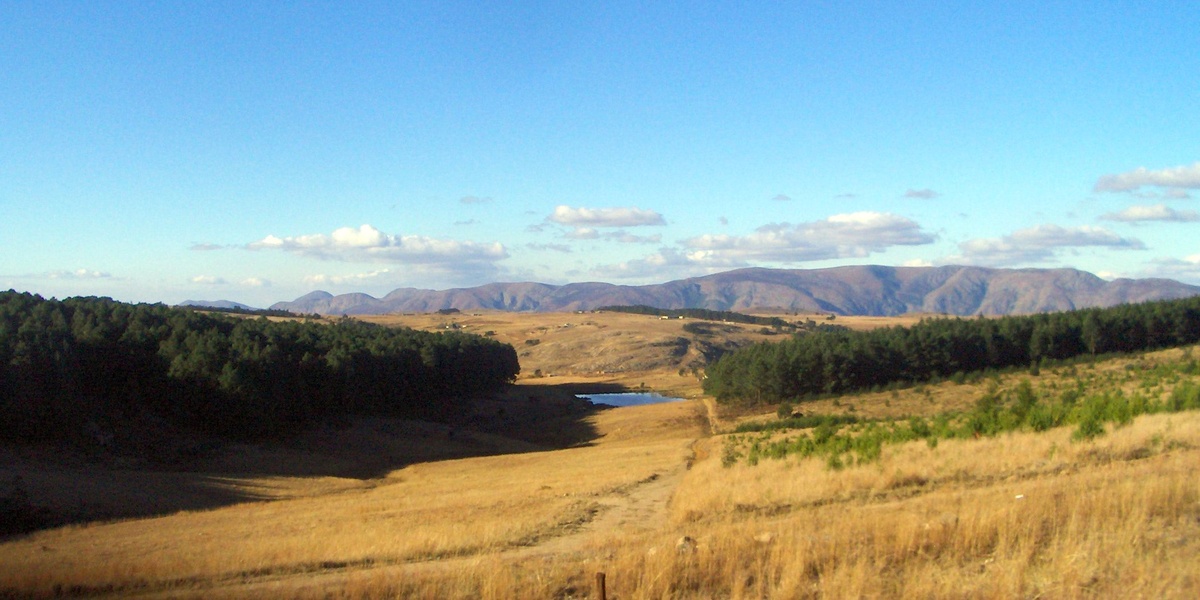
Still, the region has ancient volcanic rocks and nearby volcanic provinces. These are long extinct or formed deep in Earth’s past. They include Jurassic flood basalts and much older igneous complexes in neighboring South Africa and Mozambique. These features are useful for study and travel, but they are not active volcanoes you can visit as eruptions.
Nearby volcanic and igneous provinces (close alternatives)
Map: View Eswatini and the nearby igneous provinces on a regional map: https://www.google.com/maps/place/Eswatini and compare with Drakensberg and Pilanesberg locations via linked pages above.
Quick geology notes
What to explore instead
FAQ
Q: Are there any extinct volcanoes inside Eswatini?
A: No confirmed volcanic cones or calderas are recorded inside Eswatini. Only distant and ancient igneous rocks are present.
Q: How far is the nearest volcanic rock from Eswatini?
A: Very near — the Lubombo (Lebombo) volcanic-sedimentary belt runs close to or along Eswatini’s eastern edge. Major flood basalt outcrops (Drakensberg/Karoo) begin about 100–200 km to the west.[2][3]
Q: Can I see volcanic features while visiting Eswatini?
A: Yes. You can see igneous rock outcrops and related landforms nearby in South Africa and Mozambique. These are ancient, not active, but they make striking landscapes.
Sources
Explore these links and maps next to plan a trip or to read detailed geological reports.