In 1977 scientists discovered thriving ecosystems around hydrothermal vents on the Galápagos Rift — a finding that completely changed how we think about life on Earth and in extreme environments.
That surprise mattered because the ocean touches nearly every part of human life: it stores heat, feeds billions, fuels weather systems, and hides chemical and biological treasures that can become medicines. Oceans cover roughly 71% of the planet (NOAA), so what happens at sea has direct consequences on land.
Put simply, oceanography is essential because studying the ocean unlocks knowledge and tools that sustain life, protect communities, drive economies, and spur scientific and medical breakthroughs. This piece lays out eight concrete reasons—grouped into four thematic categories—to show how marine science underpins climate prediction, food security, public safety, and innovation.
Climate and Earth System Services
The ocean moderates Earth’s climate by storing vast amounts of heat, absorbing carbon dioxide, and producing oxygen through microscopic life. It acts as the planet’s thermal battery and a chemical sink—roles that make marine observation central to understanding global change.
Quantitatively, the ocean absorbs roughly 25–30% of human CO₂ emissions and stores the majority of excess heat from warming (IPCC). Marine phytoplankton produce about half of the planet’s oxygen. Systems like the global Argo float array (about 3,800 profiling floats) and satellite altimeters feed the models that translate those processes into actionable forecasts.
Those measurements matter to people: they improve regional sea-level forecasts, help anticipate extreme weather, and inform coastal planning. Without continuous ocean observations, climate projections and adaptation strategies would be far less reliable.
1. Understanding and Predicting Climate
Studying the ocean is essential to understanding and predicting climate because the seas store most of the planet’s excess heat and absorb a significant portion of emitted CO₂ (about 25–30%).
Ocean heat content and circulation drive large-scale patterns such as El Niño, which in turn affect global rainfall, agriculture, and hurricane seasons. Data from Argo floats and satellite sea-surface temperature products are integrated into models used by meteorological services and cited in IPCC assessments.
Practical outcomes include better seasonal hurricane forecasts and improved projections of multi-decadal climate trends that inform mitigation and adaptation policy—reducing economic losses and protecting livelihoods (NOAA).
2. Tracking Sea-Level Rise and Extreme Events
Oceanography provides the measurements and models needed to track global and regional sea-level rise and extreme marine events. Satellite altimetry shows average global sea level has risen about 3.3 mm per year since 1993, while tide gauges and local surveys reveal regional variations driven by currents and land motion (IPCC, NOAA).
These data support coastal planning, managed retreat, insurance risk models, and early-warning systems for storm surge. Satellite missions like TOPEX/Poseidon and the Jason series, paired with dense tide-gauge networks, give planners the evidence they need to map flood risk for cities such as Miami and to validate local models.
Accurate, region-specific sea-level projections allow communities to prioritize defenses, update building codes, and design evacuation routes informed by oceanographic science.
Food Security, Economy, and Coastal Livelihoods
Ocean science supports food systems, jobs, and a wide range of economic activities—from fisheries and aquaculture to shipping and tourism. Hundreds of millions of people depend directly on fisheries for protein and income, and the global blue economy contributes trillions of dollars in value (World Bank/UN Blue Economy reports).
Marine observations guide sustainable catch limits, help choose safe sites for aquaculture, and inform navigation and port operations. That makes marine research a practical tool for protecting livelihoods and growing local economies.
In short, healthy seas mean resilient coastal communities and more predictable supply chains for food and commerce.
3. Sustaining Fisheries and Food Supplies
Oceanography is central to sustainable fisheries and food security because stock assessments and population models rely on ocean temperature, productivity, and circulation data. About 3 billion people obtain at least 20% of their animal protein from fish (FAO).
Scientists combine oceanographic surveys with biological sampling to identify productivity hotspots—upwelling zones, for example—that sustain high yields. Those insights allow fisheries managers to set quotas and seasonal closures that prevent collapse and protect fishermen’s livelihoods.
Sea-surface temperature and plankton forecasts also help fishing communities anticipate where target species will be, reducing wasted effort and improving safety at sea.
4. Supporting Coastal Economies and the Blue Economy
Maritime industries depend on accurate oceanographic information. The blue economy—covering shipping, offshore energy, tourism, and aquaculture—generates large economic value, and governments use marine surveys to plan investments and reduce risk (World Bank, UN).
Bathymetric mapping prevents shipping accidents, oceanographic site assessments guide offshore wind and wave-energy projects, and habitat surveys inform eco-tourism development. Community aquaculture projects also use local current and water-quality data to choose productive, low-risk sites.
By lowering operational risk and improving siting decisions, marine science helps sustain jobs and strengthens coastal economies.
Health, Biodiversity, and Scientific Discovery

Exploring the ocean expands biological knowledge, yields new compounds for medicine, and guides conservation. From sunlit coral reefs to the 1977 hydrothermal vent discoveries, marine habitats host species and biochemical pathways not found on land.
That diversity feeds drug discovery pipelines and informs the design of marine protected areas, helping preserve ecosystem services that sustain fisheries, tourism, and coastal protection (UNESCO, NOAA).
Oceanographic mapping and monitoring translate biodiversity data into conservation action and potential medical breakthroughs.
5. Fueling Medical and Biotechnological Breakthroughs
Organisms from the sea provide compounds and enzymes used in medicine and biotechnology. A notable example is ziconotide (Prialt), derived from cone snail venom and approved for severe chronic pain in 2004.
Researchers continue to advance marine-derived anticancer agents and enzymes from extremophiles that aid lab techniques and industrial processes. Those discoveries feed drug-development pipelines and create commercial opportunities for biotech firms.
Marine bioprospecting, grounded in oceanographic exploration, is therefore a direct source of clinical and commercial innovation.
6. Conserving Biodiversity and Ecosystem Services
Oceanographic research identifies critical habitats, tracks biodiversity trends, and guides the design of marine protected areas. Mapping coral-reef health with satellite imagery and in-water surveys helps managers prioritize conservation where it will have the most impact.
Tagging studies reveal larval dispersal and migration routes that determine reserve placement and scaling. These science-based reserves improve resilience of fisheries and coastal protection, supporting millions who rely on healthy marine ecosystems (UNESCO, World Bank).
Early detection of invasive species and disease outbreaks through monitoring also limits ecological and economic damage.
Technology, Exploration, and Safety
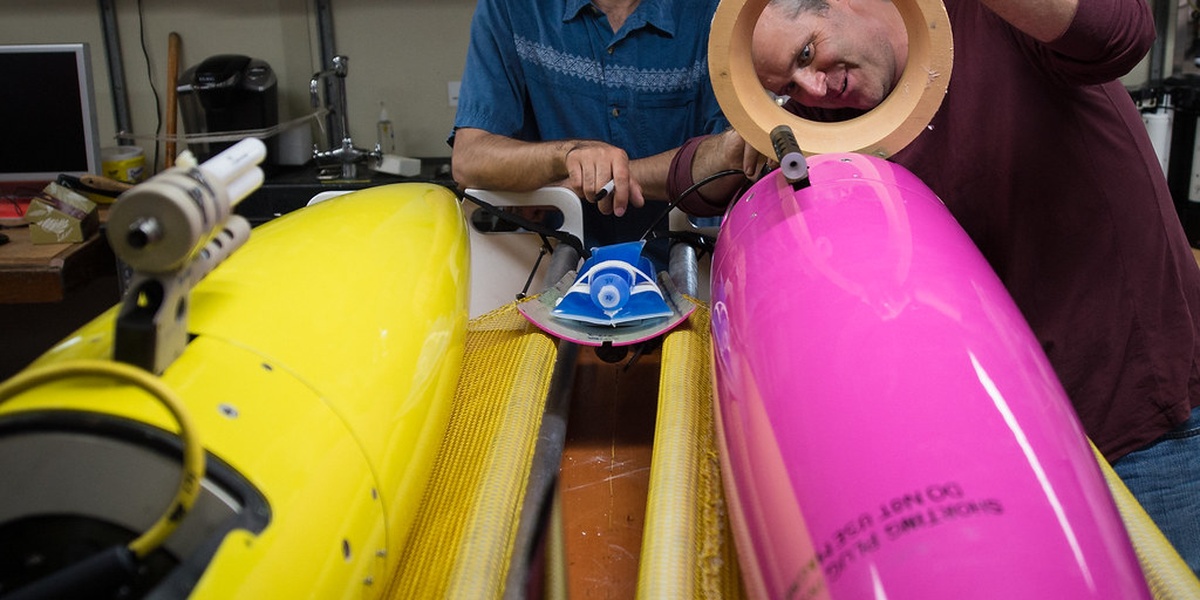
Oceanography drives tools and methods—ROVs, AUVs, satellites, gliders, and seafloor mapping—that expand human reach and improve safety. Many technologies developed for marine science now support industry, search-and-rescue, and environmental monitoring.
Thousands of autonomous floats and gliders operate globally, while remote sensing provides continuous, synoptic views of ocean state. Institutions such as WHOI and Scripps have been pivotal in instrument development that other sectors now use.
Those capabilities make exploration possible and lower the risk of offshore operations and maritime transport.
7. Driving Technological Innovation
Challenges at sea spawned technologies that have broad applications. Remotely operated vehicles and deep-sea sensors enable scientific discovery and subsea infrastructure inspections, while satellite ocean color sensors inform fisheries and ecosystem studies.
AUVs and ROVs are now used for pipeline and cable surveys, reducing downtime and improving safety. Instrumentation developed at WHOI and Scripps has translated into commercial products, creating an ocean-tech industry and new jobs.
That cross-sector innovation demonstrates how investment in marine research yields tools that benefit society beyond academia.
8. Protecting Lives and Coastal Communities
Oceanography underpins warning systems and response tools that save lives. After the 2004 Indian Ocean tsunami, global and regional tsunami warning capabilities were greatly strengthened (UNESCO/IOC), improving lead time and coordination for alerts.
Storm-surge models, real-time buoy networks, and coastal radar help emergency managers plan evacuations and support first responders. NOAA and regional services use ocean observations to refine forecasts and reduce maritime risk.
In short, continuous marine monitoring turns environmental signals into actionable warnings that protect people and property.
Summary
- Oceanography informs climate predictions and sea-level projections that protect communities and economies.
- Marine science supports food security, sustainable fisheries, and coastal livelihoods.
- Research into marine biodiversity yields medical compounds, biotech tools, and conservation strategies.
- Technological advances from ocean research improve offshore safety, navigation, and emergency warnings (for example, Argo floats and satellite altimetry).
- The 1977 hydrothermal vent discovery is a reminder that exploring the sea produces unexpected value—so continued support for oceanography is an investment in health, prosperity, and safety.