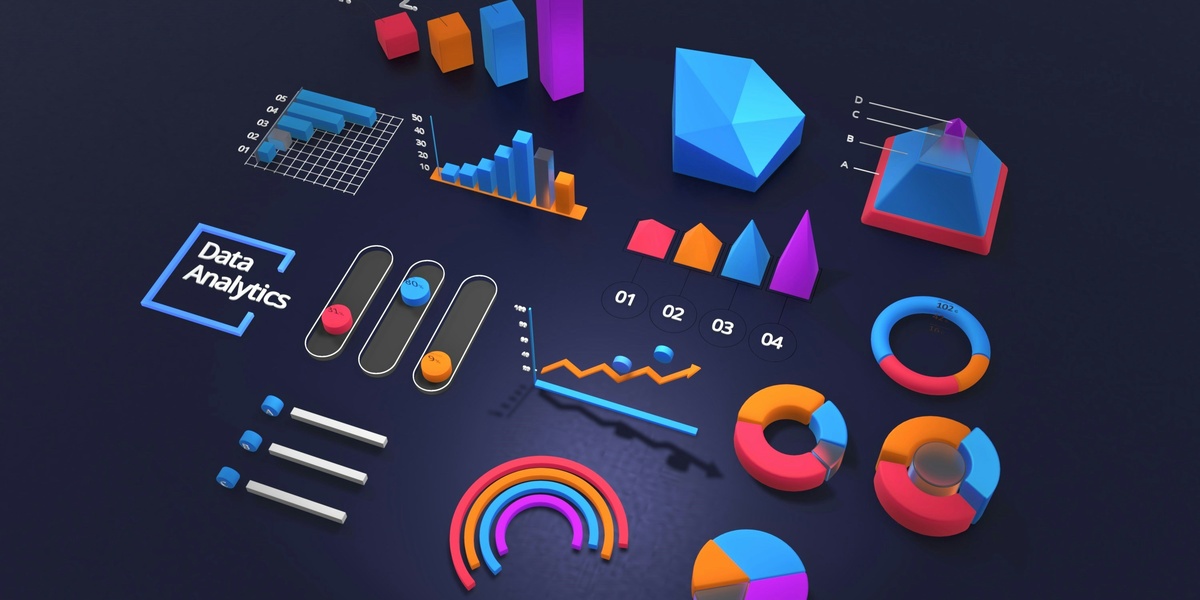
In 1858 Florence Nightingale used polar-area diagrams to change how hospitals tracked and reduced mortality — an early example of data guiding decisions.
Hospitals, businesses and labs now face far larger and messier streams of information. Storage, formats and real-time demands complicate simple analysis. Teams need reliable methods to convert raw signals into verified actions.
Data science blends statistics, computing and domain knowledge to turn massive, messy data into real-world decisions and measurable impact.
Below are eight concise, evidence-backed facts about data science that span history, industry impact and the tools and skills practitioners use today.
Foundations and History of Data Science

1. Origins: From statistics to modern data science
Data-driven practice predates electronic computers. In 1858 Nightingale’s polar-area diagrams turned raw patient counts into persuasive public-health action.
In 2001 William S. Cleveland argued for expanding statistics into a broader “data science” agenda. That paper nudged research and training toward applied, computational work.
By 2012 a Harvard Business Review piece popularized the job title “data scientist,” sending demand and formal hiring into a new phase. Early charts and modern A/B tests share the same intent: evidence-based choices.
2. Interdisciplinary roots: statistics, CS, and domain expertise
Data science rests on three pillars: statistical reasoning, software and domain knowledge. Each contributes distinct value.
Typical skill sets include probability and inference, programming (Python or R), query languages (SQL), and subject-matter understanding. Common tools are R, Python libraries, and SQL databases.
Putting these skills together matters. A clinician who understands model limitations prevents misinterpretation. Tasks like feature engineering and model evaluation need both math and context.
3. Data volume growth: welcome to the Big Data era
Global data volumes have exploded. IDC projected roughly 175 zettabytes of data by 2025, driven by sensors, logs and genomic sequences.
That scale changes engineering choices. Storage moves to the cloud, processing becomes distributed, and streaming pipelines enable near-real-time analytics.
Examples include IoT sensor networks, high-velocity web logs, and genomics. Tech firms such as Google and Amazon routinely manage petabytes of data and the systems to analyze them.
Impact Across Industries

4. Transforming healthcare: predictive analytics and diagnostics
Data science speeds detection and helps allocate scarce medical resources. Predictive models inform triage and personalized treatment pathways.
A regulatory milestone came in 2018 when IDx-DR received FDA approval for autonomous diabetic retinopathy detection. Many diagnostic models now report sensitivities above 90% for specific tasks.
Companies such as PathAI and Tempus apply machine learning to pathology and oncology, and clinics use genomic risk scores to tailor screening intervals. Those changes affect patient workflows and wait times.
5. Driving business value: personalization, fraud detection, and revenue uplift
Data science often maps directly to revenue and reduced risk. Recommendation systems and personalization increase engagement and sales.
Widely cited estimates attribute roughly 35% of Amazon’s sales to its recommendation engine. Netflix has publicly suggested personalization contributes about a billion dollars a year in value.
On the risk side, banks and payment networks use models to detect fraud and cut false positives. That saves money and reduces customer friction when alerts are more accurate.
6. Accelerating science: from discovery to deployment
Computational models shrink research cycles and expand what labs can test. They turn expensive experiments into targeted, faster studies.
DeepMind’s AlphaFold published on the order of 350,000+ predicted protein structures in 2021, massively enlarging available structural data for researchers.
Startups such as Atomwise use machine learning to screen molecules, reducing initial lab time and focusing experiments on the most promising candidates.
Methods, Tools, and the Data Science Workforce

7. Open-source tools and frameworks dominate workflows
Open-source libraries power most experimentation and many production systems. They speed prototyping and encourage reproducibility.
Notable launches include TensorFlow (open-sourced in 2015) and PyTorch (2016). For classic machine learning, scikit-learn is common; pandas handles tabular data wrangling.
Cloud services (AWS SageMaker, Google Cloud AI, Azure ML) and containerization make it practical to move models from notebooks into production at scale.
8. Skills and jobs: demand, teams, and what employers want
Demand for data skills has grown strongly over the last decade. Titles vary—data analyst, machine learning engineer, research scientist—but many roles blend code, stats and communication.
In major U.S. tech markets, experienced data scientists often command six-figure salaries, though pay varies by region, industry and seniority. Employers look for Python, SQL, statistical modeling, and the ability to productionize models.
Practical advice: build projects that solve domain problems, document assumptions, and practice explaining results to non-technical stakeholders. That combination stands out more than isolated toy models.
Summary
- Data-driven practice stretches back to the 19th century, but the modern field coalesced in the 2000s and gained mainstream attention around 2012.
- Across healthcare, commerce and science, specific models (IDx-DR, Amazon recommendations, AlphaFold) show measurable outcomes: faster diagnoses, higher revenue, and massive increases in research data.
- Open-source libraries (TensorFlow, PyTorch, scikit-learn, pandas) plus cloud services form the practical backbone of most workflows; infrastructure and MLOps matter as much as algorithms.
- Focus on practical projects, domain knowledge and clear communication. Try exploring a public dataset or an open resource such as the AlphaFold database to apply these facts about data science firsthand.