If you’ve wandered a woodlot, park or farmers’ stall, you’ve probably noticed a surprising variety of fungi tucked under leaves or on logs. Identifying common forms and understanding where they grow makes walks more interesting and helps separate edible finds from look‑alikes.
There are 20 Examples of Mushrooms, ranging from Button mushroom to Turkey tail. For each entry you’ll find below the Scientific name,Edibility,Habitat / season to make comparison easy and practical while you read through the list you’ll find below.
How can I tell if a mushroom on the list is safe to eat?
Use the Edibility column as a starting point but never rely on a single source: confirm the Scientific name, compare photos, check habitat and season, and consult an up‑to‑date regional field guide or local mycological club. If identification is uncertain, do not taste or eat—the risk from misidentification can be severe.
How should I use the Scientific name,Edibility,Habitat / season columns when foraging?
Read the Scientific name to avoid ambiguous common names, use Edibility to flag which species need extra caution, and match Habitat / season to where and when you found the mushroom; together these columns narrow options and speed up safe identification, especially when cross‑checking with photos or expert advice.
Examples of Mushrooms
| Name | Scientific name | Edibility | Habitat / season |
|---|---|---|---|
| Button mushroom | Agaricus bisporus | Choice edible | Cultivated/grasslands, year-round |
| Porcini (King bolete) | Boletus edulis | Choice edible | Conifer and deciduous woodlands, summer–fall |
| Morel | Morchella esculenta | Choice edible | Woodlands and disturbed ground, spring (often after fires) |
| Chanterelle | Cantharellus cibarius | Choice edible | Mossy mixed woods, summer–fall |
| Oyster mushroom | Pleurotus ostreatus | Edible | Decaying hardwood, year-round (milder climates) |
| Shaggy mane | Coprinus comatus | Edible | Lawns and disturbed ground, spring–fall |
| Chicken of the woods | Laetiporus sulphureus | Choice edible | Hardwood trunks and stumps, summer–fall |
| Lion’s mane | Hericium erinaceus | Medicinal | Dead hardwood, late summer–fall |
| Giant puffball | Calvatia gigantea | Edible | Meadows and open woods, summer–fall |
| Fly agaric | Amanita muscaria | Poisonous | Mycorrhizal in woods, summer–fall |
| Death cap | Amanita phalloides | Poisonous | Woodlands near oaks and broadleaf trees, summer–fall |
| Destroying angel | Amanita bisporigera | Poisonous | Woodlands, summer–fall |
| Turkey tail | Trametes versicolor | Medicinal | Dead hardwood, year-round |
| False morel | Gyromitra esculenta | Poisonous | Sandy soils and burnt ground, spring |
| Enoki | Flammulina velutipes | Edible | Dead wood, winter (and cultivated) |
| King trumpet | Pleurotus eryngii | Choice edible | Grassland edges, roots of umbellifers, cultivated |
| Hedgehog mushroom | Hydnum repandum | Choice edible | Mixed woodlands, summer–fall |
| Inky cap | Coprinopsis atramentaria | Poisonous | Lawns and wood chips, spring–fall |
| Honey fungus | Armillaria mellea | Edible | At tree bases and stumps, autumn |
| Matsutake | Tricholoma matsutake | Choice edible | Pine forests, autumn |
Images and Descriptions
Button mushroom
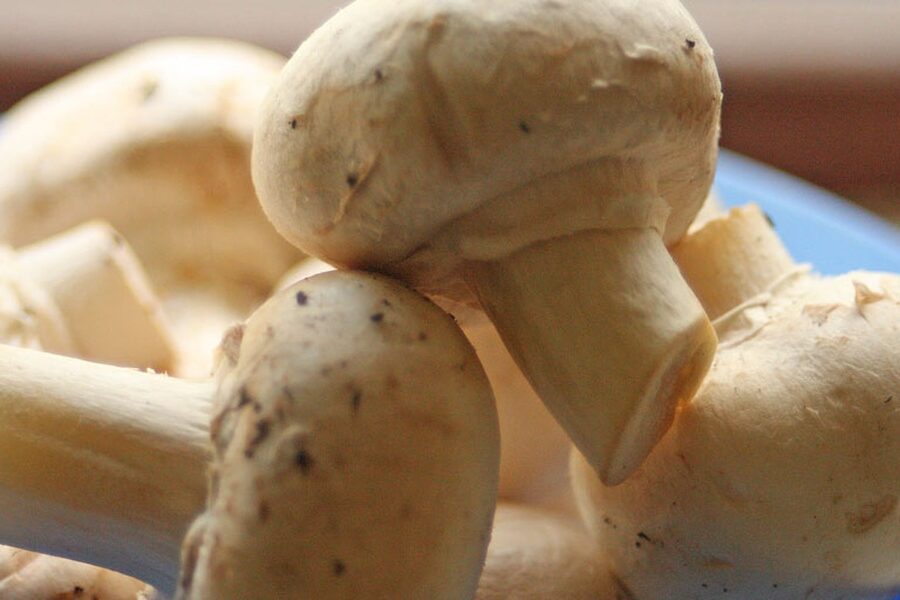
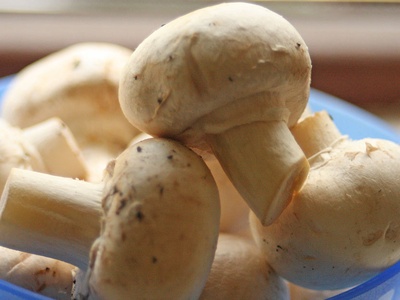
Common supermarket mushroom with smooth white to brown cap 2–8 cm. Short squat stem, pink-to-brown gills when mature. Cultivated widely and versatile for cooking; bland flavor. Easy to ID but similar Agaricus species include some browner, less desirable varieties.
Porcini (King bolete)
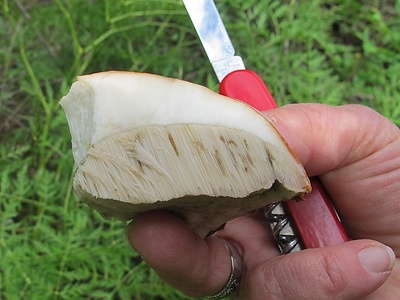
Large, thick-fleshed cap 7–25 cm and stout bulbous stem. Spongy pores under cap instead of gills, brownish cap, white to yellow tubes. Grows with conifers and oaks in late summer to fall. Highly prized and meaty; avoid pore-blue staining boletes.
Morel
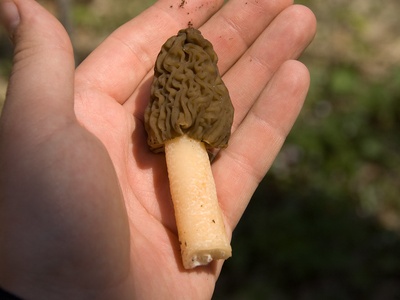
Honeycomb, conical cap 4–10 cm with deep pits and ridges, hollow interior from cap to stem. Appears in spring in woodlands, sometimes after fires. Highly sought edible with nutty flavor; cook well. Beware poisonous lookalikes like Gyromitra (false morels).

Chanterelle
Funnel-shaped, 2–10 cm golden to orange fruit bodies with blunt ridged “false gills” running down the stem and apricot-like scent. Found in mossy mixed woods summer–fall. Choice edible prized for aroma; avoid orange jack‑o‑lantern (Omphalotus) lookalikes.
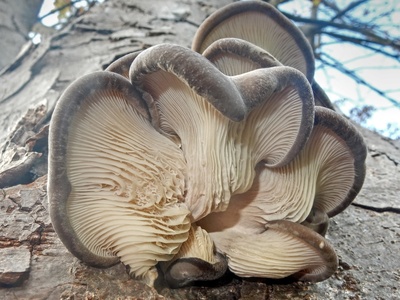
Oyster mushroom
Shelf-like clusters of fan-shaped caps 5–20 cm, white to gray, attached laterally to wood with short or absent stem. Grows on decaying hardwood year-round in mild climates. Mild, tender flesh excellent cooked; many similar Pleurotus species edible.
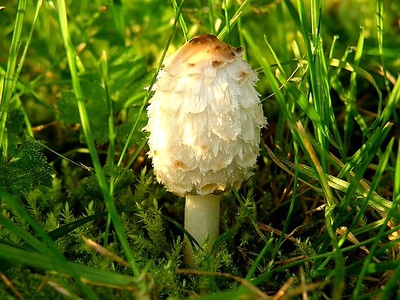
Shaggy mane
Tall cylindrical cap 5–15 cm with shaggy white scales that deliquesce into black ink as they age. Found on lawns and disturbed ground spring–fall. Edible when young and firm; avoid old inky mushrooms and check for lookalikes.
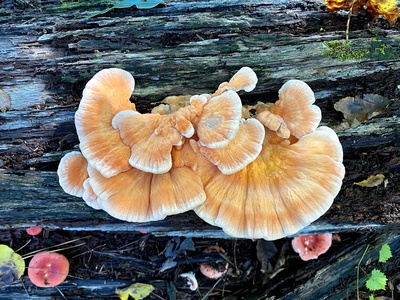
Chicken of the woods
Bright orange-yellow shelf clusters 5–40 cm on living or dead hardwood trunks, summer–fall. Firm, meaty texture often compared to chicken; choice edible and prized by foragers. Some people have allergic GI reactions, especially older specimens.
Lion’s mane
White, pom‑pom like fungus 5–20 cm composed of cascading spines instead of cap and gills. Grows on dead hardwood in late summer–fall. Seafood-like flavor used in cooking and traditional medicine; considered both edible and medicinal.
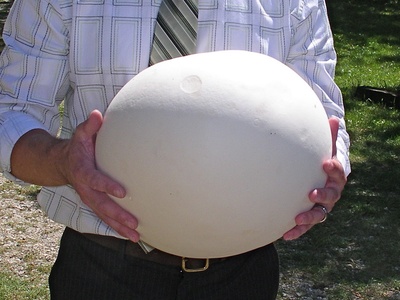
Giant puffball
Round white fruit bodies 10–30 cm (often larger), found in meadows and woods summer–fall. Interior solid and white when edible; cut open to confirm. Mild-flavored when young; avoid mistaking immature Amanita “buttons” before slicing.
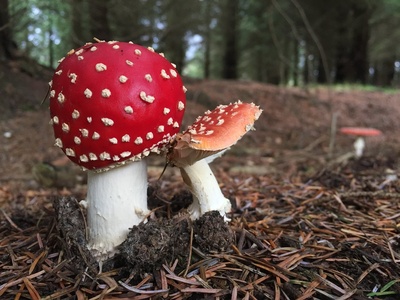
Fly agaric
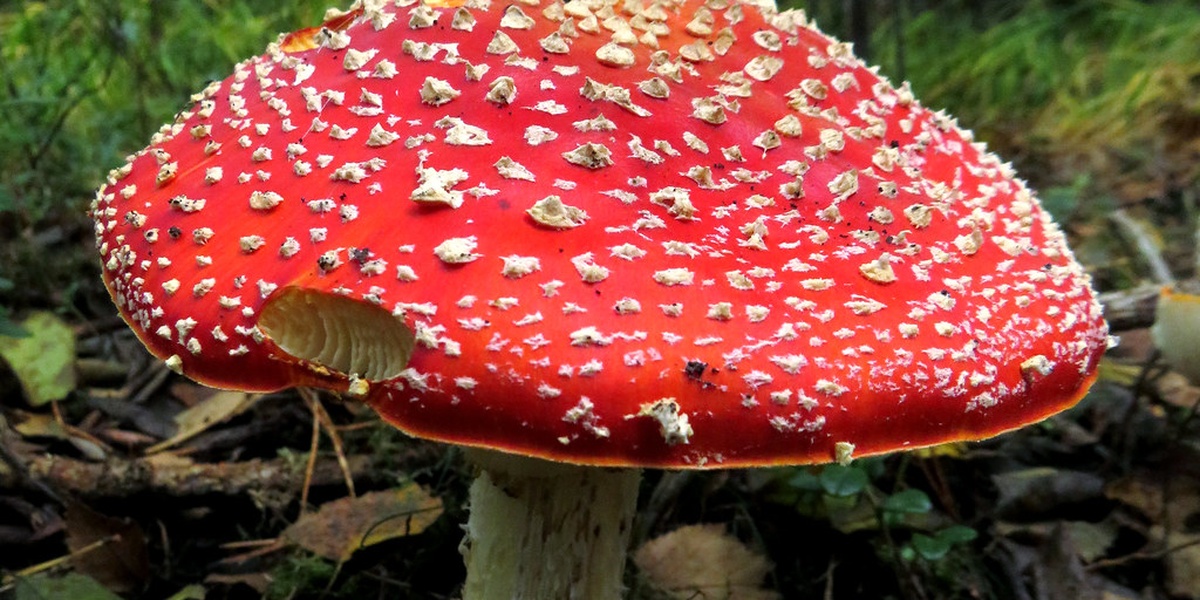
Iconic red cap 5–20 cm with white wart-like spots and white gills. Mycorrhizal with trees in summer–fall. Historically psychoactive and poisonous; causes nausea, delirium, and should not be eaten.
Death cap
Greenish to yellow-brown cap 5–15 cm with white gills, ring, and volva at base. Common near oaks and other trees in summer–fall. Extremely poisonous—contains amatoxins causing delayed, often fatal liver failure; never eat wild greenish Amanitas.
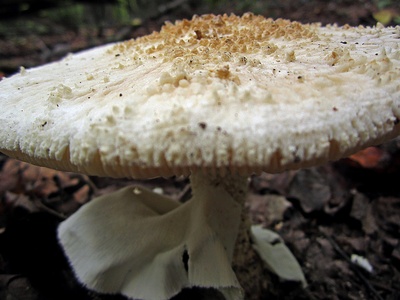
Destroying angel
Pure white cap 5–12 cm, smooth with a skirt-like ring and volva at the base. Found in woodlands summer–fall. Deadly poisonous like other amanitas—causes liver and kidney failure; never sample white gilled mushrooms without expertise.
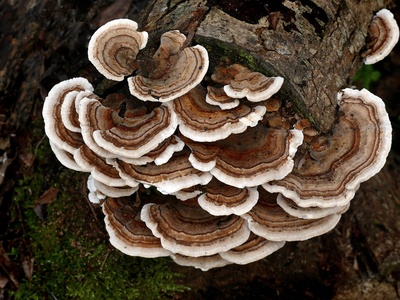
Turkey tail
Thin, 2–8 cm concentric zoned brackets in multicolored bands on dead hardwood, year-round. Tough, leathery texture—inedible raw but widely used in medicinal extracts for immune support. Distinctive thin layers and velvety surface aid ID.
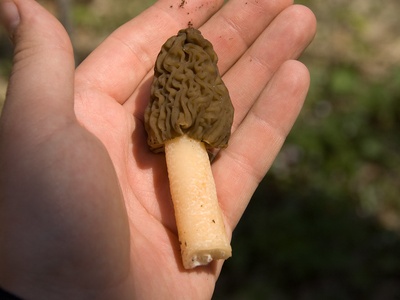
False morel
Irregular, brain-like reddish-brown cap 4–12 cm with chambered interior. Found in sandy soils and burnt areas in spring. Contains gyromitrin toxin; historically eaten cooked in some regions but dangerous and classified poisonous.
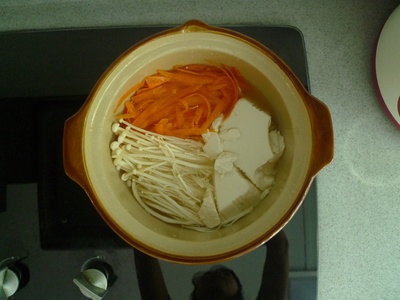
Enoki
Clusters of slender, long-stemmed caps 1–2 cm with stems 3–10 cm; cultivated form is bright white. Grows on dead wood in winter. Mild flavor, popular raw or cooked in Asian cuisine; wild forms darker and more robust.
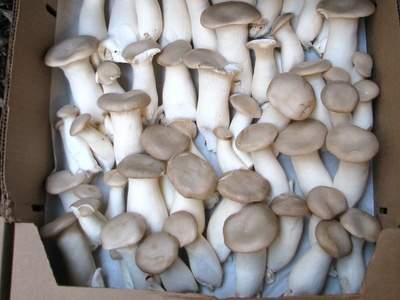
King trumpet
Thick, meaty stem 3–10 cm with small tan cap 3–8 cm, forms singly or small clusters on roots and grassland. Cultivated and prized for texture; versatile in cooking and pan‑frying.
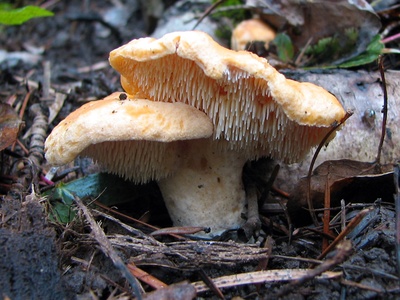
Hedgehog mushroom
Irregular cap 3–12 cm with pale spines (teeth) instead of gills under the cap. Found in mixed woodlands summer–fall. Firm, nutty-flavored edible; spines and spiny hymenium separate it from lookalikes.
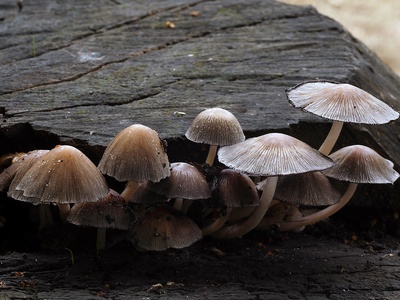
Inky cap
Grayish to brown conical caps 2–6 cm that autodigest to black ink; commonly found on lawns and wood chips spring–fall. Contains coprine which causes illness when combined with alcohol; edible if alcohol-free and very young.
Honey fungus
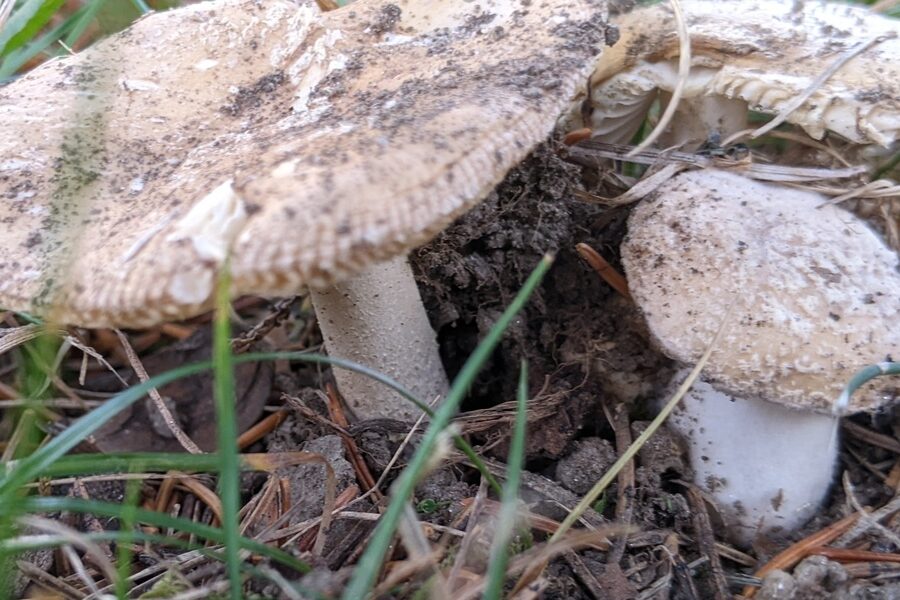
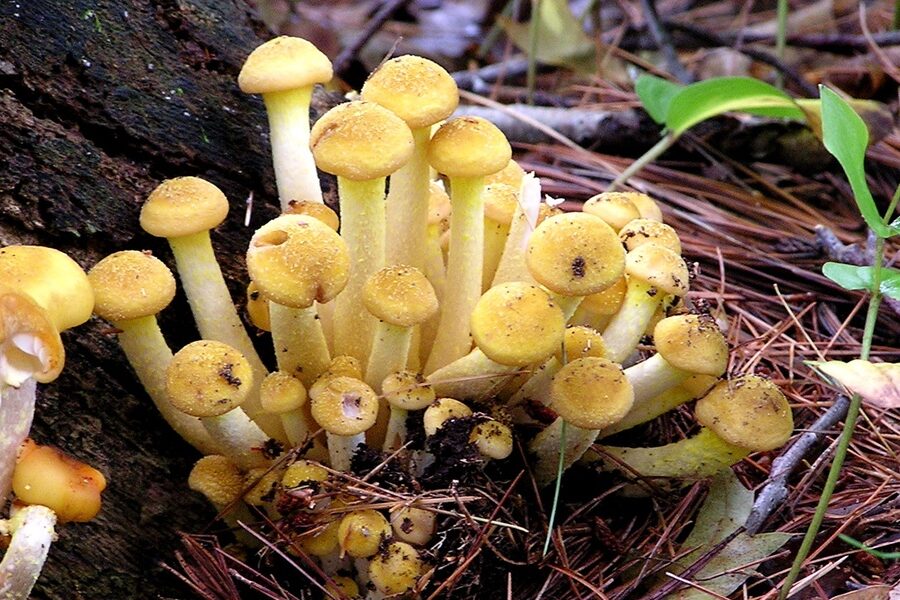
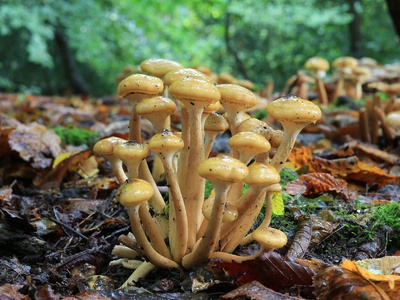
Clusters of yellow-brown caps 2–8 cm at tree bases and stumps in autumn; often with a ring on the stem. Parasitic, causing root rot in trees. Edible after thorough cooking for many but can cause stomach upset in some.
Matsutake
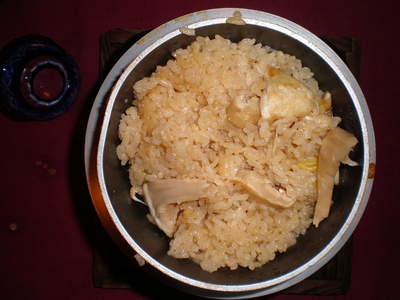
Aromatic, stout white to brownish cap 5–15 cm with a strongly spicy-resinous scent. Ectomycorrhizal under pines in fall, prized in Japanese cuisine and expensive. Difficult to confuse due to distinctive aroma.