Stereochemistry quietly shapes how molecules behave in the lab and in life — from scent and flavor to drug activity and crystallization. When you look at stereoisomers on paper or in a chromatogram, it’s the arrangement of centers and resulting physical properties that tell the practical story.
There are 20 Examples of Diastereomers, ranging from (-)-menthol vs (+)-neomenthol to α-D-glucose vs β-D-glucose. The list below organizes each entry with the columns Stereocenters changed, Type, Key property (°C or deg), and you’ll find the full table below.
How are diastereomers different from enantiomers in practice?
Diastereomers are stereoisomers that are not mirror images; unlike enantiomers, they usually have different physical properties (melting point, boiling point, solubility, optical rotation) and can be separated and characterized by those differences, which makes them easier to distinguish experimentally.
Why list Stereocenters changed, Type, and Key property when comparing examples?
Recording which stereocenters change, the type of diastereomeric relationship, and a key physical property (°C or optical rotation in degrees) lets you quickly predict separation difficulty, likely behavior in biological systems, and which analytical method will best confirm identity — practical info you’ll use when working with the compounds you’ll find below.
Examples of Diastereomers
| Name | Stereocenters changed | Type | Key property (°C or deg) |
|---|---|---|---|
| α-D-glucose vs β-D-glucose | C1 (anomer) α↔β | Anomer (epimer) | [α]D +112° vs +18.7° (deg) |
| D-Glucose vs D-Mannose | C2 epimer | Epimer | mp differs (°C) |
| D-Glucose vs D-Galactose | C4 epimer | Epimer | mp differs (°C) |
| D-Ribose vs D-Arabinose | C2 epimer | Epimer | mp differs (°C) |
| D-Glucose vs D-Allose | Multiple stereocenters differ | Multiple stereocenters | mp differs (°C) |
| D-erythrose vs D-threose | C2 or C3 epimer | Epimer | mp differs (°C) |
| cis-2-butene vs trans-2-butene | C=C geometry (cis↔trans) | Geometric (cis/trans) | bp differs (°C) |
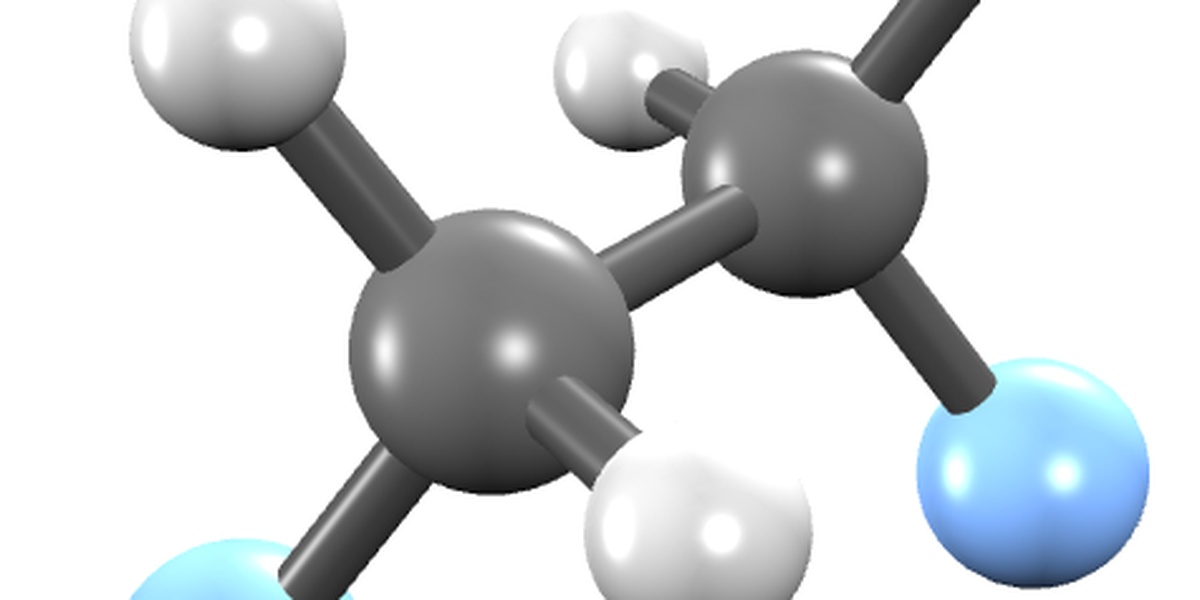
| cis-1,2-dichloroethene vs trans-1,2-dichloroethene | C=C geometry (cis↔trans) | Geometric (cis/trans) | bp differs (°C) |
| cis- and trans-stilbene | C=C geometry (cis↔trans) | Geometric (E/Z) | mp/bp differs (°C) |
| cis-1,2-dimethylcyclohexane vs trans-1,2-dimethylcyclohexane | C1,C2 relative configuration | Cis/trans (ring) | mp differs (°C) |
| cis- and trans-1,2-dichlorocyclohexane | C1,C2 relative configuration | Cis/trans (ring) | mp differs (°C) |
| cis- vs trans-1,2-diaminocyclohexane | C1,C2 relative configuration | Cis/trans diamine | mp differs (°C) |
| (R,R)-tartaric acid vs meso-tartaric acid | C2,C3 R,R→R,S | Meso vs chiral | [α]D 0° vs +13° (deg) |
| meso-2,3-butanediol vs (R,R)-2,3-butanediol | C2,C3 R,S vs R,R | Meso vs chiral | [α]D 0° vs nonzero (deg) |
| ephedrine vs pseudoephedrine | C1,C2 configuration differs | Diastereomers (epimers) | mp differs (°C) |
| (-)-menthol vs (+)-neomenthol | One of three stereocenters differs | Diastereomeric terpenes | mp differs (°C) |
| borneol vs isoborneol | C1 epimer | Epimer | mp differs (°C) |
| cis- vs trans-1,3-dimethylcyclohexane | C1,C3 relative configuration | Cis/trans (ring) | mp differs (°C) |
| isomenthol vs neoisomenthol | One stereocenter among three differs | Diastereomeric terpenes | mp differs (°C) |
| 1,2-dibromocyclohexane cis vs trans | C1,C2 relative configuration | Cis/trans (ring) | mp differs (°C) |
Images and Descriptions

α-D-glucose vs β-D-glucose
The classic sugar anomer pair differs only at the anomeric center; α and β glucose have different optical rotations, solubilities and crystalline forms and explain mutarotation and different enzyme specificities in biology and food chemistry.
D-Glucose vs D-Mannose
Glucose and mannose differ only at C2 — a textbook epimer example. Their diastereomerism changes taste, reactivity in enzymes, and physical properties like melting point and chromatographic behavior.
D-Glucose vs D-Galactose
Glucose and galactose differ at C4; this small stereochemical change alters recognition by metabolic enzymes and sugar-binding proteins and leads to measurable differences in solubility, sweetness and melting behavior.
D-Ribose vs D-Arabinose
Ribose and arabinose illustrate how a single center in a five-carbon sugar controls stereochemistry for nucleosides and impacts biochemical roles; diastereomerism gives different enzymatic handling and physical properties.
D-Glucose vs D-Allose
Glucose and allose differ at several stereocenters, making them diastereomers. Such multi-center differences change molecular shape, solubility and enzyme interactions; useful when teaching cumulative stereochemical effects.
D-erythrose vs D-threose
These four-carbon sugars (erythrose and threose) differ at one stereocenter and serve as simple, instructive diastereomers; they show how small configuration changes alter physical properties and reactivity.
cis-2-butene vs trans-2-butene
A simple alkene pair: cis and trans-2-butene are diastereomers with different dipoles and boiling points. They exemplify geometric stereochemistry and how shape affects stability and physical properties.
cis-1,2-dichloroethene vs trans-1,2-dichloroethene
Chlorinated alkene isomers show dramatic physical differences despite identical formulas. The cis isomer is more polar and has distinct boiling behavior and environmental fate compared with its trans diastereomer.
cis- and trans-stilbene
Stilbene demonstrates how E/Z geometry affects stability and reactivity: trans-stilbene is more stable and has different melting/boiling behavior and photochemistry than the cis isomer, important in material and photoresponsive chemistry.
cis-1,2-dimethylcyclohexane vs trans-1,2-dimethylcyclohexane
Substituted cyclohexane stereochemistry shows ring-conformation effects: cis and trans isomers adopt different chair conformations, altering steric strain, melting points and chemical behavior — a staple example in organic teaching.
cis- and trans-1,2-dichlorocyclohexane
Dichlorocyclohexane isomers illustrate how relative stereochemistry on a ring changes molecular shape, polarity and melting points; used to teach conformational preference and stereochemical analysis.
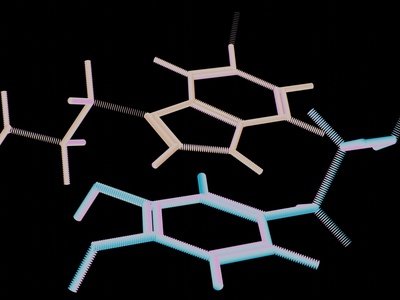
cis- vs trans-1,2-diaminocyclohexane
This diamine pair serves in coordination chemistry as ligands with very different chelation geometries and properties; cis and trans forms show distinct reactivity, solubility and melting points.
(R,R)-tartaric acid vs meso-tartaric acid
Tartaric acid offers a famous meso example: meso-tartaric is achiral while (R,R)-tartaric is chiral. They are diastereomers with different optical activity, crystallization behavior and industrial separation strategies.
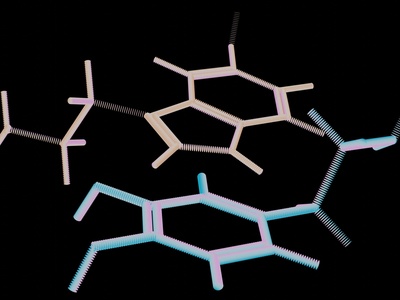
meso-2,3-butanediol vs (R,R)-2,3-butanediol
2,3-Butanediol illustrates meso versus chiral diastereomers: the meso compound is achiral and shows different boiling points, solubilities and reactivity compared with the chiral R,R form.
ephedrine vs pseudoephedrine
Ephedrine and pseudoephedrine are medically important diastereomers differing at one stereocenter; they have distinct pharmacology, physical properties and legal/regulatory profiles despite very similar structures.
(-)-menthol vs (+)-neomenthol
Menthol stereoisomers show how small stereochemical changes alter smell, cooling sensation and melting point. Different isomers are common in flavor and fragrance chemistry with distinct sensory profiles.
borneol vs isoborneol
Borneol and isoborneol are bicyclic alcohol epimers with different stereochemistry at the bridgehead. They smell different, have distinct reactivity in oxidation and reduction, and show measurable melting point differences.
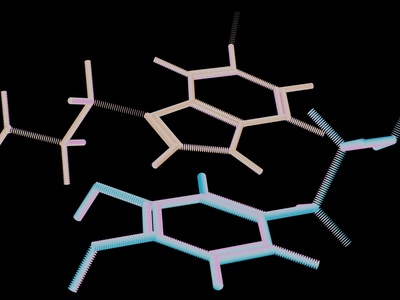
cis- vs trans-1,3-dimethylcyclohexane
1,3-Dimethylcyclohexane isomers are useful examples of how substituent relationships on a ring affect steric interactions, stability and physical properties, with cis and trans forms displaying different melting behavior.
isomenthol vs neoisomenthol
Isomenthol vs neoisomenthol provide further terpene examples where changing a single stereocenter alters odor, taste and melting point; common discussion points in natural product stereochemistry.
1,2-dibromocyclohexane cis vs trans
This dibromocyclohexane pair highlights how halogen substituent relationships on rings affect conformation, dipole moments and physical properties; cis and trans diastereomers differ in melting points and reactivity.