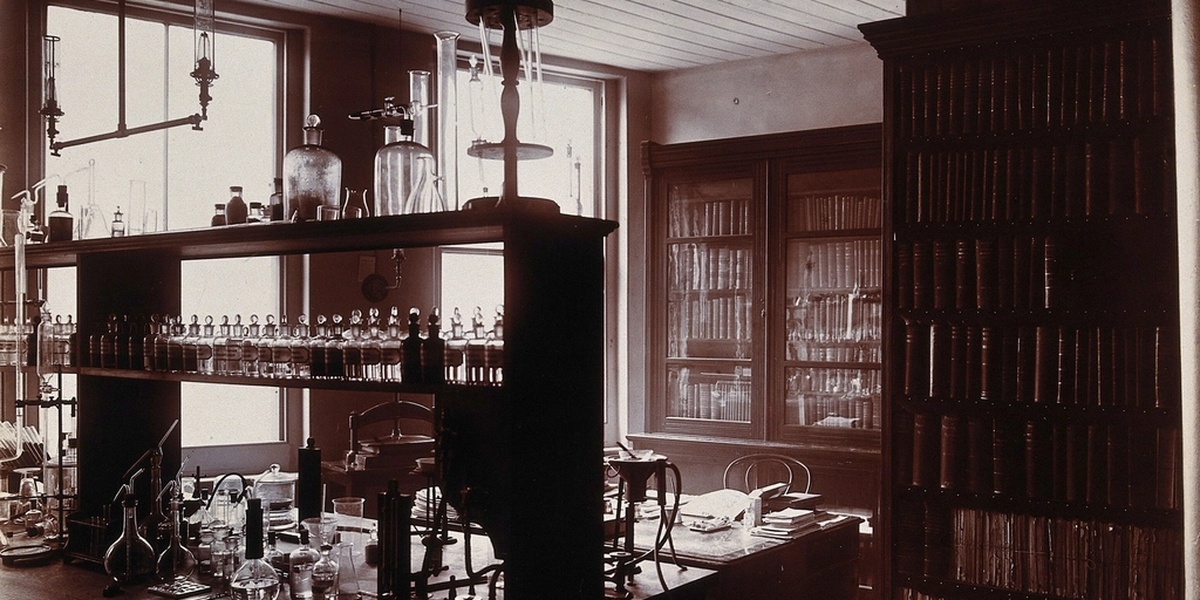
In 1897 J.J. Thomson discovered the electron using cathode-ray apparatus, a breakthrough that launched a century of instrument-driven discoveries in chemistry.
Laboratory instruments matter because they turn invisible, microscopic events into reliable numbers that drive decisions in medicine, manufacturing, and environmental protection.
Most people use pharmaceuticals, fuels, and foods whose safety and performance depended on specialized tools that few have ever seen in person.
The thesis is simple: modern chemical knowledge depends less on intuition and more on precision devices that identify, separate, measure, and manipulate matter at tiny scales (sometimes down to parts per billion).
This article explains eight essential instruments, how each works at a high level, and why each matters in analytics, separation/purification, and measurement/synthesis.
Below are eight instruments you’ll commonly find in analytical, process, and research labs: mass spectrometer, gas chromatograph, UV–Vis spectrophotometer, HPLC, rotary evaporator, centrifuge, analytical balance, and pH meter.
Analytical Instruments for Identifying Substances
Analytical instruments tell chemists what molecules are present and in what amounts, often down to parts-per-million or parts-per-billion sensitivity.
The stakes are high: drug purity, environmental monitoring, and food safety all depend on accurate identification and quantification.
1. Mass Spectrometer (MS)
A mass spectrometer measures mass-to-charge ratios to identify molecules by ionizing a sample, separating ions by mass in an analyzer, and detecting the resulting signal.
In plain terms: you turn molecules into charged fragments, sort them so heavier and lighter pieces land in different places, and read the pattern to infer identity and abundance.
High-resolution instruments (for example, Orbitrap-class systems) can distinguish masses to about 0.001 dalton, which matters when two compounds differ by tiny mass changes.
MS is routine in pharmaceutical quality control to confirm impurities, and in forensic toxicology to identify unexpected contaminants (used in responses to events such as the 2018 Novichok poisonings).
Thermo Scientific Orbitrap platforms are common in labs, and MS is often coupled to chromatography (GC–MS or LC–MS) to handle complex mixtures.
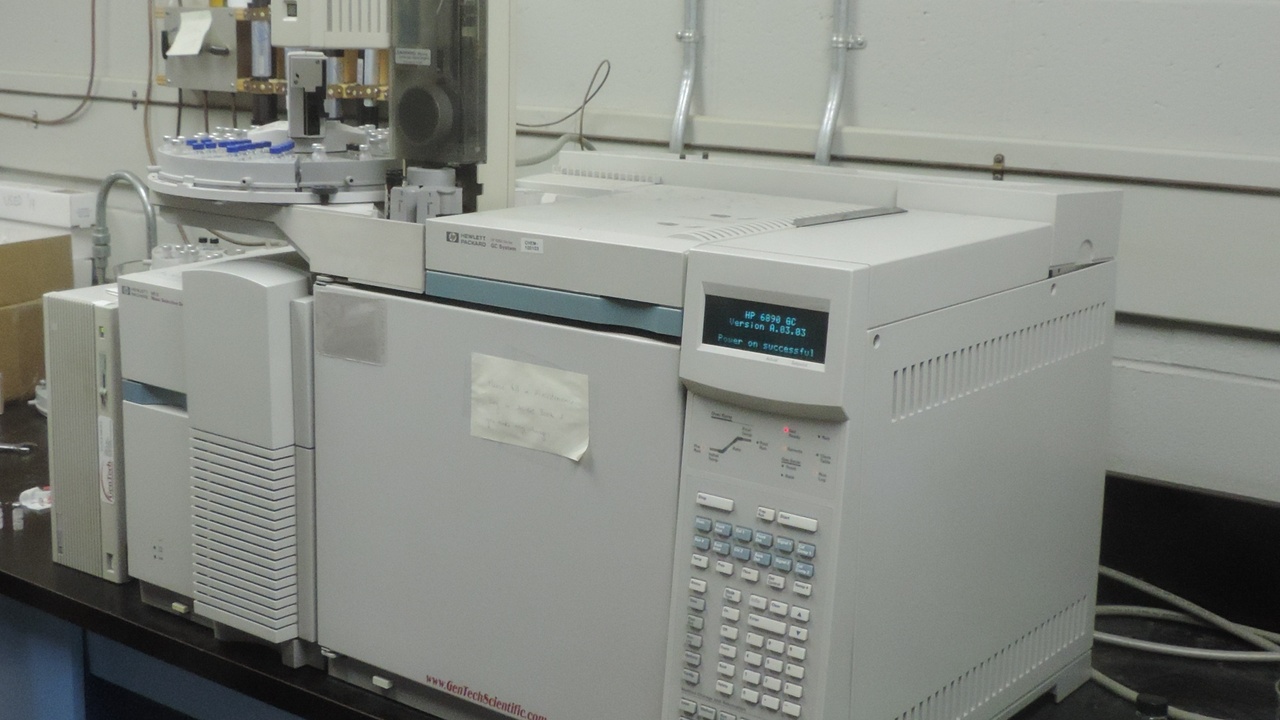
2. Gas Chromatograph (GC)
Gas chromatography separates volatile compounds so each can be measured individually by a detector downstream.
A GC vaporizes the sample, carries it through a coated column where compounds separate by volatility and column interaction, then sends fractions to detectors such as a flame ionization detector (FID) or a mass spectrometer.
Typical retention times range from seconds to minutes, and a busy lab can run tens of analyses per day on a single instrument.
GC is used to analyze gasoline blends, monitor environmental VOCs under EPA methods, and profile flavor compounds in food science.
A widely used bench model is the Agilent 7890 GC, often paired with MS for identification and quantification.
3. UV–Visible Spectrophotometer (UV–Vis)
UV–Vis instruments measure how molecules absorb light at specific wavelengths to estimate concentration.
The Beer–Lambert relation links absorbance to concentration, so a measured absorbance can be converted into molarity; depending on the chromophore, detection can reach micromolar levels.
Common uses include measuring nucleic acids or proteins in biotech labs, quick water-quality checks, and purity checks during organic synthesis.
Shimadzu UV‑1800 is a standard lab instrument, and portable UV–Vis devices are used for field water testing and routine PCR prep quantification.
Separation and Purification Equipment
Separation and purification are central because chemists need pure compounds for meaningful analysis, formulations, and safe drugs.
Different tools exploit polarity, boiling point, or density to remove impurities; a single contaminant can derail a drug batch worth hundreds of millions.
Alt text guidance for images in this group: “High-performance liquid chromatography system with solvent bottles and pump tubing.”
4. High-Performance Liquid Chromatography (HPLC)
HPLC separates soluble compounds by how strongly they interact with a stationary phase versus a mobile solvent stream.
Columns vary in length and particle size; run times commonly span a few minutes up to an hour depending on the method, and detectors include UV and MS for complementary quantification and ID.
HPLC is indispensable for active pharmaceutical ingredient (API) quality control and for measuring pesticide residues in food matrices.
Waters Acquity systems are typical in industry, and depending on detector and method HPLC can reach detection in the ng–µg range for many analytes.
5. Rotary Evaporator (Rotavap)
A rotary evaporator removes solvents gently by combining reduced pressure, mild heat, and sample rotation to increase surface area and speed evaporation.
Typical water-bath temperatures run 30–60°C and pressures are reduced enough to boil common solvents at much lower temperatures, protecting heat-sensitive products.
Lab chemists use rotavaps to concentrate crude reaction mixtures, recover solvents during method development, and prepare samples for further purification.
Büchi Rotavapor models are common; safe operation requires cold traps, proper glassware, and vacuum protection to avoid bumping and solvent loss.
6. Centrifuge
Centrifuges separate components by density using centrifugal force so solids, cells, or phases pellet or separate from supernatant.
Types range from benchtop microcentrifuges to ultracentrifuges; ultracentrifuges routinely exceed 100,000 g while benchtop units operate in the thousands of g.
Applications span clinical labs separating blood components, biotech labs pelleting cells for DNA/RNA work, and chemical labs clearing solids from reaction mixtures.
Eppendorf models (for example the 5430R) are common for benchtop tasks; always balance tubes and follow rotor-speed limits for safety.
Measurement and Synthesis Tools
Precise measurement and controlled conditions are the difference between a working synthesis and a failed experiment.
Bench tools require routine calibration because small errors in mass, pH, or volume can scale into big problems for product quality and safety.
Alt text suggestion for images here: “Analytical balance with a weighed sample and a pH meter with electrode in a chemistry lab.”
7. Analytical Balance
Analytical balances measure mass with sub-milligram precision; common readabilities are 0.1 mg or better for high-precision work.
Calibration with traceable weights (Class E2 or better) ensures that weighing 10 mg of catalyst carries a realistic ±0.1 mg uncertainty rather than an unknown bias.
Balances are essential for stoichiometry in reactions, dosing active ingredients in pharmaceutical labs, and preparing samples for spectroscopy.
Mettler Toledo analytical balances are widely used and labs commonly document calibration and use of certified weights for audits and reproducibility.
8. pH Meter and Electrodes
pH meters measure acidity or basicity by sensing hydrogen‑ion activity with a glass electrode; pH often controls reaction rates and product stability.
Proper use includes two- or three-point calibration with standard buffers (pH 4.01, 7.00, 10.01); accuracy commonly ranges from ±0.01 to ±0.1 pH unit depending on electrode condition and calibration.
Applications include pH control in fermentation, setting titration endpoints, and monitoring wastewater discharge to meet regulatory limits.
Bench meters from Hanna Instruments or Metrohm are typical; store electrodes in recommended storage solution (often KCl) to preserve response time and lifetime.
Summary
- Instruments convert tiny signals into actionable data—mass specs, GCs, and HPLCs can detect contaminants at ppm to ppb levels, which affects drug safety and environmental policy.
- Small measurements matter: balances with 0.1 mg readabilities and pH accuracy to ±0.01 can change reaction outcomes and product quality in measurable ways.
- These eight tools span identification, separation, and measurement: together they enable reproducible science, safer products, and regulatory compliance.
- Understanding instruments used in chemistry helps you interpret news about drug recalls, contamination events, and environmental tests; check manufacturer application notes (Thermo, Waters) or attend a university lab open day to learn more.