Across labs, classrooms and policy offices, scientific models turn messy, real-world phenomena into testable ideas that guide experiments and decisions. They help teams ask sharper questions, set up simulations, and communicate findings to stakeholders.
There are 20 Examples of Scientific Models, ranging from Agent-based model to Standard Model. Each entry is organized with Category,Scale / scope,Key application so you can quickly compare purpose, typical scale and common uses — you’ll find below.
How do I choose the right scientific model for my problem?
Start by clarifying your goal (prediction, explanation, or design), the scale you need, and the data you can access. Match model type to those constraints: for example, pick agent-based approaches for individual-level behavior and aggregated or theoretical frameworks like the Standard Model for fundamental particle interactions. Favor the simplest model that captures the phenomena you care about and plan how you’ll validate it.
How should I use the Category,Scale / scope,Key application columns when comparing models?
Use Category to spot the modeling approach (statistical, mechanistic, computational), Scale / scope to see spatial or temporal extent and granularity, and Key application to judge typical use cases. These columns help you filter candidates before diving into technical details or implementation.
Examples of Scientific Models
| Name | Category | Scale / scope | Key application |
|---|---|---|---|
| Newtonian mechanics | Mathematical/Physical | Macroscopic/planetary | Predicting motion of planets, rockets and everyday objects |
| Ideal Gas Law | Mathematical/Physical | Molecular to macroscopic | Relating pressure, volume and temperature of gases in engineering |
| Schrödinger equation | Mathematical/Physical | Atomic and molecular | Predicting quantum states of electrons and atoms |
| Standard Model | Conceptual/Mathematical | Subatomic | Describing fundamental particles and forces in high-energy physics |
| General Circulation Model (GCM) | Computational/Hybrid | Planetary | Simulating climate and large-scale atmospheric circulation for climate projections |
| Lotka-Volterra model | Mathematical | Population/ecosystem | Modeling predator–prey population cycles in ecology |
| SIR model | Mathematical/Computational | Population/societal | Modeling infectious disease spread and outbreak dynamics |
| Logistic growth model | Mathematical | Population/organism | Modeling population growth with carrying capacity limits |
| Linear regression | Statistical | Varied | Estimating linear relationships between variables in experiments |
| Generalized linear model (GLM) | Statistical | Varied | Modeling non-normal response variables like counts or binary outcomes |
| Bayesian hierarchical model | Statistical/Computational | Varied | Pooling information across groups while accounting for uncertainty |
| Agent-based model | Computational/Hybrid | Individual to societal | Modeling interactions of autonomous agents to study emergent behavior |
| Cellular automaton | Computational/Conceptual | Local to emergent patterns | Studying pattern formation and discrete dynamical systems |
| Monte Carlo simulation | Computational/Statistical | Varied | Quantifying uncertainty through random sampling simulations |
| Markov chain | Mathematical/Statistical | Varied | Modeling stochastic processes with memoryless transitions |
| Ising model | Statistical/Mathematical | Microscopic to macroscopic | Modeling magnetism and phase transitions in materials |
| Finite element model (FEM) | Computational/Physical | Component to structural | Simulating stresses, deformations and heat transfer in engineered materials |
| Michaelis–Menten kinetics | Mathematical/Biochemical | Molecular/cellular | Modeling enzyme-catalyzed reaction rates as a function of substrate |
| Coalescent model | Mathematical/Statistical | Population/genetic | Reconstructing genealogies and ancestral population dynamics |
| Hardy–Weinberg equilibrium | Conceptual/Mathematical | Population/genetic | Predicting genotype frequencies under random mating and no evolution |
Images and Descriptions

Newtonian mechanics
Newtonian mechanics uses Newton’s laws to model forces, motion and energy at everyday and planetary scales. It predicts trajectories, orbits and engineering dynamics, remaining accurate where relativistic or quantum effects are negligible.
Ideal Gas Law
The Ideal Gas Law PV=nRT predicts gas behavior by linking pressure, volume and temperature under idealized conditions. Useful for thermodynamics, chemistry and engineering when gas interactions are weak and densities are low.
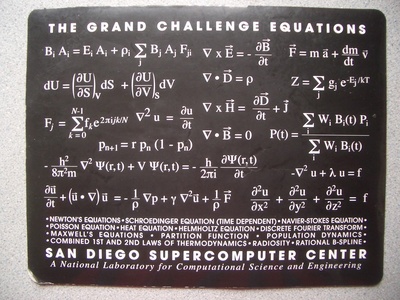
Schrödinger equation
The Schrödinger equation is a core quantum-mechanical model describing how a system’s wavefunction evolves. It predicts energy levels, chemical bonding and spectroscopy for atoms and molecules, forming the basis of quantum chemistry and nanophysics.
Standard Model
The Standard Model organizes elementary particles and three fundamental forces (electromagnetic, weak, strong). It successfully predicts particle interactions and collider results, while omitting gravity and motivating searches for new physics beyond the model.
General Circulation Model (GCM)
GCMs numerically solve fluid dynamics, radiation and chemistry on a rotating planet to simulate Earth’s climate. They operate on grids, include oceans and atmosphere, and underpin projections of temperature, precipitation and sea-level changes.
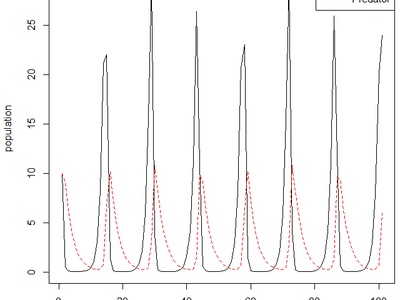
Lotka-Volterra model
Lotka–Volterra equations are coupled differential equations describing interactions between predators and prey. They capture oscillatory population dynamics, informing ecological studies, fisheries management and theoretical explorations of species coexistence and stability.
SIR model
The SIR model divides a population into susceptible, infected and recovered compartments and uses differential equations to track transitions. It estimates outbreak size, peak timing and effects of interventions like vaccination and social distancing.
Logistic growth model
The logistic model describes population growth that slows as it approaches a carrying capacity, producing an S-shaped curve. It’s applied in ecology, resource management and tumor growth modeling where growth is density-dependent.
Linear regression
Linear regression fits a straight line relating predictor(s) to an outcome, estimating effect sizes and prediction. Widely used across sciences for hypothesis testing, trend estimation and simple forecasting when relationships are approximately linear.
Generalized linear model (GLM)
GLMs extend linear regression using link functions and error distributions (e.g., logistic, Poisson) to model binary, count or skewed data. Common in ecology, epidemiology and social sciences for appropriate inference.
Bayesian hierarchical model
Hierarchical Bayesian models structure parameters at multiple levels, sharing strength among groups and propagating uncertainty via probability distributions. They’re used in meta-analysis, ecology, and clinical trials for robust, multilevel inference.
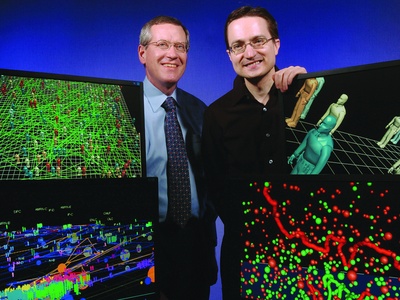
Agent-based model
Agent-based models simulate many individual actors with rules and interactions to observe system-level patterns such as crowd dynamics, market behaviors or epidemic spread, highlighting emergence from heterogeneous agents.
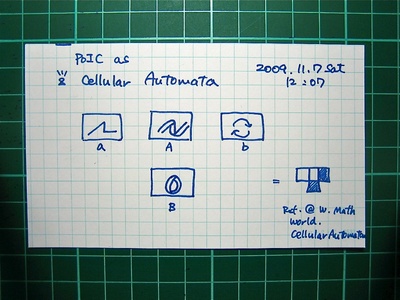
Cellular automaton
Cellular automata are grid-based models with simple local update rules producing complex global patterns. Used to model morphogenesis, traffic flow, percolation and theoretical aspects of computation and emergence.
Monte Carlo simulation
Monte Carlo methods use repeated random sampling to estimate probabilistic outcomes, integrals, or risk. They’re central in statistical physics, finance, radiative transfer and uncertainty quantification where analytic solutions are intractable.
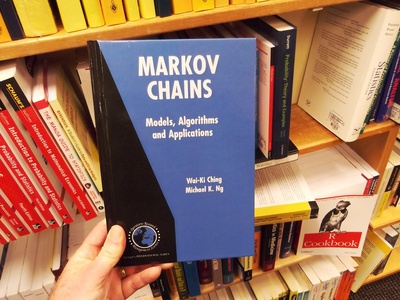
Markov chain
Markov chains model systems that move between states with probabilities depending only on the current state. They’re used for molecular kinetics, language models, population genetics and queueing systems.
Ising model
The Ising model represents spins on a lattice interacting with neighbors, exhibiting phase transitions and collective behavior. It’s a paradigmatic model for statistical mechanics, critical phenomena and complex systems.
Finite element model (FEM)
FEM discretizes structures into elements and solves governing equations numerically. Widely used in structural engineering, biomechanics and geophysics to predict stress, strain and dynamic responses.
Michaelis–Menten kinetics
Michaelis–Menten describes how enzyme reaction velocity depends on substrate concentration with characteristic parameters Vmax and Km. It’s fundamental in enzymology, drug metabolism and metabolic pathway modeling.
Coalescent model
The coalescent models the ancestry of gene copies backward in time, estimating demographic history, migration and selection. It’s foundational in population genetics and molecular evolution for inferring past population sizes and relationships.
Hardy–Weinberg equilibrium
Hardy–Weinberg provides expected genotype proportions from allele frequencies under ideal conditions. It’s a null model in genetics used to detect evolution, inbreeding or population structure.