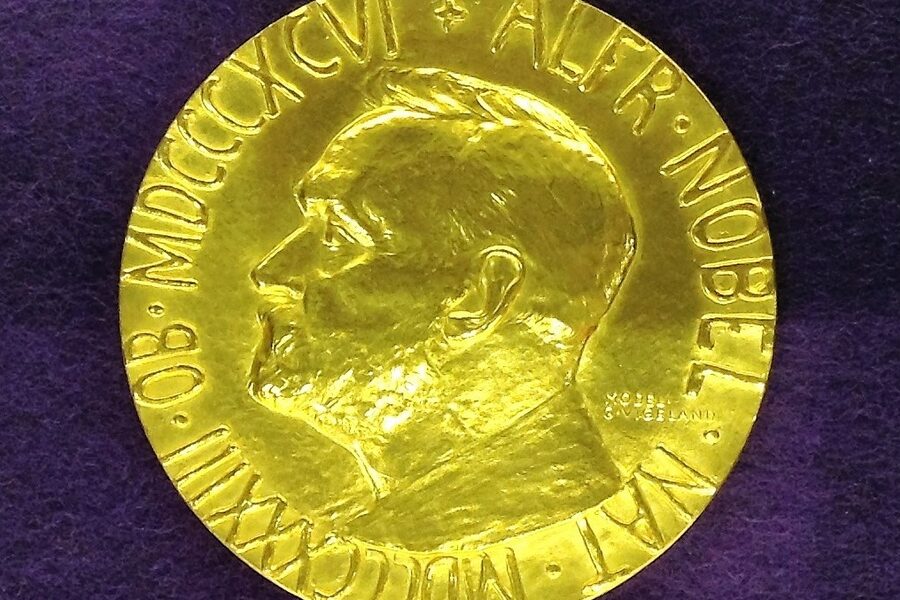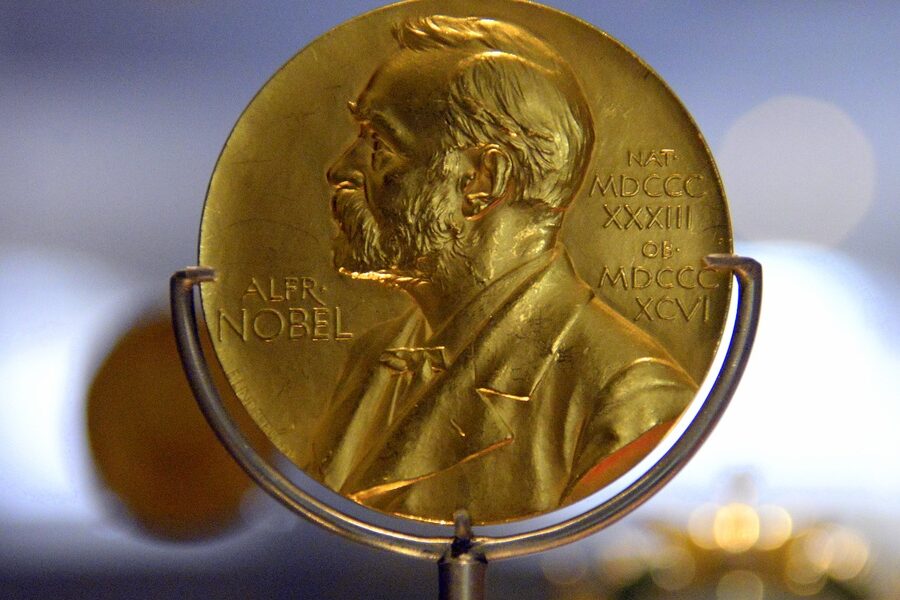
At the turn of the 20th century, breakthroughs in science, literature and peace efforts were reshaping societies across Europe and beyond, prompting a global spotlight on individual achievement. That era’s laureates reflect both pioneering research and early international cooperation.
There are 55 1900s Nobel Prize Winners, ranging from Adolf von Baeyer to Élie Ducommun. Each entry is organized with Year,Category,Country so you can quickly sort by date, field or nationality—you’ll find below.
How was this list compiled and how reliable is the information?
The list is drawn from official Nobel records and well-established historical references; each row shows Year,Category,Country to make verification straightforward—consult the Nobel Foundation archives or national archives linked in source notes for primary confirmation.
Which fields dominated the 1900s winners and how can I spot patterns?
Science categories (Physics, Chemistry, Medicine) make up a large portion of early laureates, while Literature and Peace reflect cultural and diplomatic trends; use the Category column below to tally winners by field and spot time-based shifts.
1900s Nobel Prize Winners
| Laureate | Year | Category | Country |
|---|---|---|---|
| Wilhelm Conrad Röntgen | 1901 | Physics | Germany |
| Jacobus Henricus van ‘t Hoff | 1901 | Chemistry | Netherlands |
| Emil von Behring | 1901 | Medicine | Germany |
| Sully Prudhomme | 1901 | Literature | France |
| Henry Dunant | 1901 | Peace | Switzerland |
| Frédéric Passy | 1901 | Peace | France |
| Hendrik Antoon Lorentz | 1902 | Physics | Netherlands |
| Pieter Zeeman | 1902 | Physics | Netherlands |
| Hermann Emil Fischer | 1902 | Chemistry | Germany |
| Ronald Ross | 1902 | Medicine | United Kingdom |
| Theodor Mommsen | 1902 | Literature | Germany |
| Élie Ducommun | 1902 | Peace | Switzerland |
| Charles Albert Gobat | 1902 | Peace | Switzerland |
| Henri Becquerel | 1903 | Physics | France |
| Pierre Curie | 1903 | Physics | France |
| Marie Curie | 1903 | Physics | France |
| Svante Arrhenius | 1903 | Chemistry | Sweden |
| Niels Finsen | 1903 | Medicine | Denmark |
| Bjørnstjerne Bjørnson | 1903 | Literature | Norway |
| William Randal Cremer | 1903 | Peace | United Kingdom |
| Lord Rayleigh | 1904 | Physics | United Kingdom |
| William Ramsay | 1904 | Chemistry | United Kingdom |
| Ivan Pavlov | 1904 | Medicine | Russia |
| Frédéric Mistral | 1904 | Literature | France |
| José Echegaray | 1904 | Literature | Spain |
| Institut de Droit International | 1904 | Peace | Belgium |
| Philipp Lenard | 1905 | Physics | Germany |
| Adolf von Baeyer | 1905 | Chemistry | Germany |
| Robert Koch | 1905 | Medicine | Germany |
| Henryk Sienkiewicz | 1905 | Literature | Poland |
| Bertha von Suttner | 1905 | Peace | Austria |
| J.J. Thomson | 1906 | Physics | United Kingdom |
| Henri Moissan | 1906 | Chemistry | France |
| Camillo Golgi | 1906 | Medicine | Italy |
| Santiago Ramón y Cajal | 1906 | Medicine | Spain |
| Giosuè Carducci | 1906 | Literature | Italy |
| Theodore Roosevelt | 1906 | Peace | United States |
| Albert A. Michelson | 1907 | Physics | United States |
| Eduard Buchner | 1907 | Chemistry | Germany |
| Charles Laveran | 1907 | Medicine | France |
| Rudyard Kipling | 1907 | Literature | United Kingdom |
| Ernesto Teodoro Moneta | 1907 | Peace | Italy |
| Gabriel Lippmann | 1908 | Physics | France |
| Ernest Rutherford | 1908 | Chemistry | United Kingdom |
| Ilya Mechnikov | 1908 | Medicine | Russia |
| Paul Ehrlich | 1908 | Medicine | Germany |
| Rudolf Christoph Eucken | 1908 | Literature | Germany |
| Klas Pontus Arnoldson | 1908 | Peace | Sweden |
| Guglielmo Marconi | 1909 | Physics | Italy |
| Karl Ferdinand Braun | 1909 | Physics | Germany |
| Wilhelm Ostwald | 1909 | Chemistry | Germany |
| Emil Theodor Kocher | 1909 | Medicine | Switzerland |
| Selma Lagerlöf | 1909 | Literature | Sweden |
| Auguste Beernaert | 1909 | Peace | Belgium |
| Paul Henri d’Estournelles de Constant | 1909 | Peace | France |
Images and Descriptions
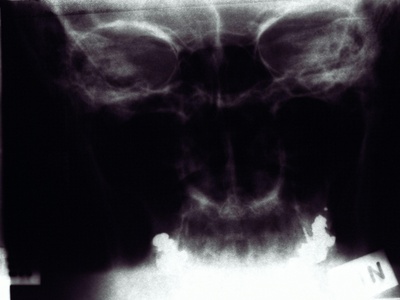
Wilhelm Conrad Röntgen
German physicist who discovered X-rays in 1895, revolutionizing medical imaging and physics. Awarded the first Nobel Prize in Physics for this groundbreaking discovery and its immediate significance for science and medicine.

Jacobus Henricus van ‘t Hoff
Dutch chemist who founded physical chemistry, explaining chemical equilibrium, reaction rates and osmotic pressure. Received the inaugural Nobel Prize in Chemistry for his work connecting thermodynamics to chemical processes and for pioneering molecular theory.
Emil von Behring
German physician and immunologist who developed diphtheria antitoxin and serum therapy, dramatically reducing deaths from infectious disease. Awarded the first Nobel Prize in Physiology or Medicine for creating practical, lifesaving treatments.
Sully Prudhomme
French poet and essayist recognized for refined, philosophical poetry that fused classical form with modern reflection. Awarded the first Nobel Prize in Literature for the emotional depth and intellectual dignity of his verse.
Henry Dunant
Swiss humanitarian who inspired the Geneva Conventions and co-founded the International Committee of the Red Cross. Awarded the inaugural Nobel Peace Prize for his lifelong work promoting aid to wounded soldiers and international humanitarian law.
Frédéric Passy
French economist and leading pacifist who founded peace societies and campaigned for arbitration between nations. Honored with the first Nobel Peace Prize for decades of advocacy for peaceful dispute resolution and international cooperation.
Hendrik Antoon Lorentz
Dutch physicist whose theoretical work on the electron and the electromagnetic theory clarified light-matter interactions. Awarded the Nobel Prize in Physics jointly with Zeeman for foundational contributions to understanding electromagnetic phenomena.
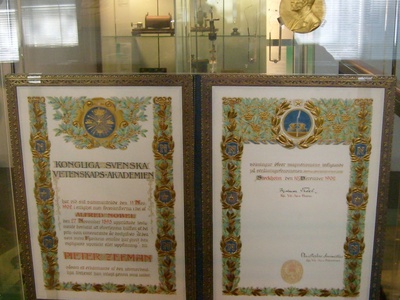
Pieter Zeeman
Dutch experimental physicist who discovered the Zeeman effect — splitting of spectral lines in magnetic fields — confirming electromagnetic theory predictions. Shared the 1902 Nobel Prize in Physics with Lorentz for this decisive experimental proof.
Hermann Emil Fischer
German chemist renowned for work on sugars, purines and synthesis of complex organic molecules. Awarded the 1902 Nobel Prize in Chemistry for advancing understanding of chemical structure and synthesis with long-lasting impact on biochemistry and medicine.
Ronald Ross
British physician who proved that malaria parasites are transmitted by mosquitoes, transforming understanding of disease transmission and public health. Awarded the 1902 Nobel Prize in Physiology or Medicine for this landmark discovery that guided malaria control.
Theodor Mommsen
German historian and legal scholar best known for a monumental multi-volume history of Rome. Awarded the Nobel Prize in Literature for his brilliant scholarship and literary style that brought ancient history vividly to modern readers.
Élie Ducommun
Swiss peace activist and secretary-general of several international peace organizations, dedicated to arbitration and conciliation. Co-recipient of the 1902 Nobel Peace Prize for sustained efforts promoting peaceful settlement of international disputes.
Charles Albert Gobat
Swiss jurist and politician who led international arbitration and educational reform movements. Shared the 1902 Nobel Peace Prize with Ducommun for long-term leadership in organizations that advanced peaceful dispute resolution.
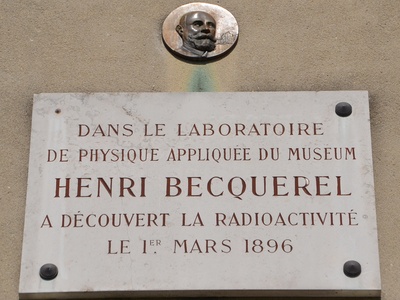
Henri Becquerel
French physicist who discovered natural radioactivity through studies of uranium salts, revealing spontaneous emission of radiation. Awarded the 1903 Nobel Prize in Physics for opening a new field of atomic physics with profound scientific implications.
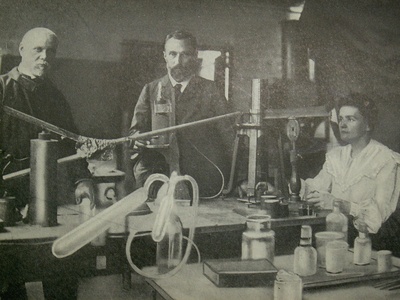
Pierre Curie
French physicist celebrated for pioneering studies of radioactivity and the properties of radioactive materials. Co-recipient of the 1903 Nobel Prize in Physics for joint research that expanded understanding of atomic structure and radiation.
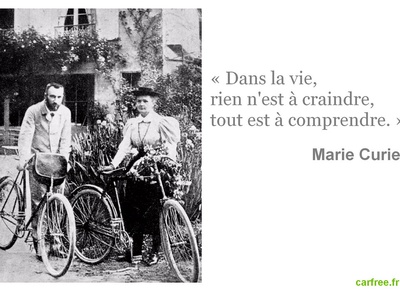
Marie Curie
Polish-born French scientist who, with her husband Pierre, isolated radioactive elements and advanced the study of radioactivity. Co-winner of the 1903 Nobel Prize in Physics for groundbreaking experimental work on radioactive substances.
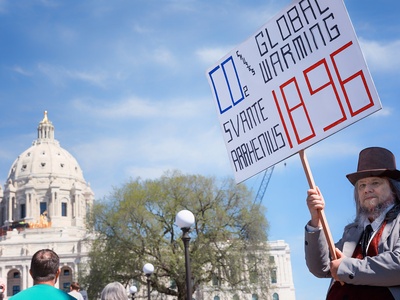
Svante Arrhenius
Swedish chemist who explained electrolytic dissociation and developed theories linking chemistry and physics, including activation energy concepts. Awarded the 1903 Nobel Prize in Chemistry for fundamental contributions to physical chemistry and ionic theory.
Niels Finsen
Danish physician who pioneered phototherapy using concentrated light radiation to treat skin diseases like lupus vulgaris. Awarded the 1903 Nobel Prize in Physiology or Medicine for introducing light-based medical treatments.
Bjørnstjerne Bjørnson
Norwegian writer and public figure known for powerful poetry, novels and plays celebrating national identity. Awarded the 1903 Nobel Prize in Literature for his noble and versatile contributions to modern Norwegian letters and civic life.
William Randal Cremer
British pacifist and parliamentarian who promoted international arbitration and peace societies. Awarded the 1903 Nobel Peace Prize for tireless campaigning to replace war with legal methods of dispute settlement between nations.
Lord Rayleigh
British physicist who discovered argon and elucidated gases’ densities, advancing atomic and atmospheric science. Awarded the 1904 Nobel Prize in Physics for investigations into the densities of gases and related discoveries.
William Ramsay
British chemist who discovered the noble gases and isolated several inert elements, reshaping the periodic table. Awarded the 1904 Nobel Prize in Chemistry for the discovery and study of these previously unknown atmospheric elements.
Ivan Pavlov
Russian physiologist famed for experiments on conditioned reflexes using dogs, laying foundations for behavioral science. Awarded the 1904 Nobel Prize in Physiology or Medicine for his research on digestive physiology and conditioned responses.
Frédéric Mistral
Provençal poet who revived and celebrated Provençal language and regional culture through epic verse. Shared the 1904 Nobel Prize in Literature for preserving regional literary tradition and composing powerful, culturally rooted poetry.
José Echegaray
Spanish dramatist, mathematician and statesman noted for emotionally charged plays blending social themes with moral questions. Co-recipient of the 1904 Nobel Prize in Literature for distinguished dramatic works that influenced Spanish theater.
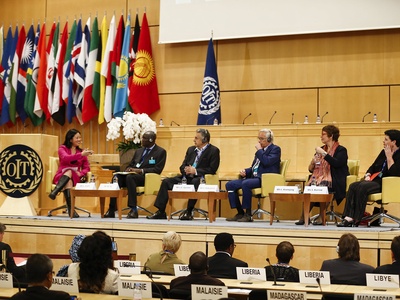
Institut de Droit International
An international society of jurists founded to develop and codify international law, promoting arbitration and legal solutions to conflicts. Awarded the 1904 Nobel Peace Prize for sustained efforts to civilize relations among states through law.
Philipp Lenard
German physicist who studied cathode rays and photoelectric effects, contributing to electron science. Awarded the 1905 Nobel Prize in Physics for innovative experimental work on cathode rays and insight into electronic phenomena.
Adolf von Baeyer
German chemist noted for synthesizing organic dyes and for work on organic compounds such as indigo. Awarded the 1905 Nobel Prize in Chemistry for contributions to organic chemistry and synthetic methods used in industry and research.
Robert Koch
German physician and microbiologist who identified tuberculosis bacterium and developed Koch’s postulates, transforming infectious disease research. Awarded the 1905 Nobel Prize in Physiology or Medicine for advances in bacteriology and public health.
Henryk Sienkiewicz
Polish novelist celebrated for historical epics like ‘Quo Vadis’ that combined adventure with national themes. Awarded the 1905 Nobel Prize in Literature for outstanding storytelling and contributions to Polish cultural identity.
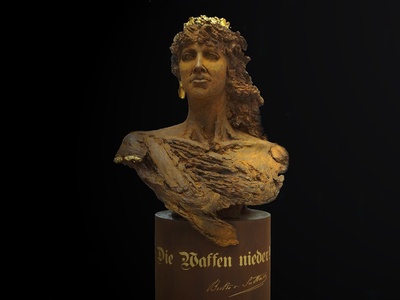
Bertha von Suttner
Austrian pacifist and author of ‘Lay Down Your Arms’, she campaigned tirelessly for disarmament and arbitration. Awarded the 1905 Nobel Peace Prize for influential advocacy that shaped early international peace movements.
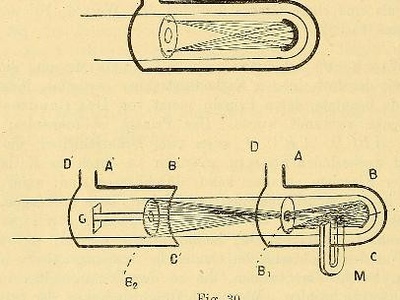
J.J. Thomson
British physicist who discovered the electron and measured its charge-to-mass ratio, laying groundwork for atomic physics. Awarded the 1906 Nobel Prize in Physics for his theoretical and experimental work on the conduction of electricity in gases.
Henri Moissan
French chemist who isolated elemental fluorine and invented the electric furnace, enabling high-temperature chemistry. Awarded the 1906 Nobel Prize in Chemistry for work on fluorine and development of methods to study reactive elements.
Camillo Golgi
Italian physician and histologist who developed the ‘black reaction’ staining method and described nerve cell structures. Co-awarded the 1906 Nobel Prize in Physiology or Medicine for discoveries concerning the structure of the nervous system.
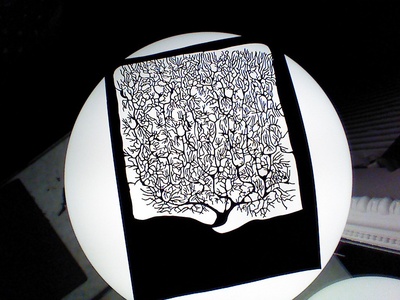
Santiago Ramón y Cajal
Spanish neuroscientist who mapped neurons and proposed the neuron doctrine, showing the nervous system is composed of individual cells. Shared the 1906 Nobel Prize in Physiology or Medicine for fundamental discoveries about nervous tissue structure.
Giosuè Carducci
Italian poet and classical scholar known for vigorous, patriotic verse and mastery of Italian literary forms. Awarded the 1906 Nobel Prize in Literature for his deep learning, stylistic brilliance and influence on modern Italian poetry.
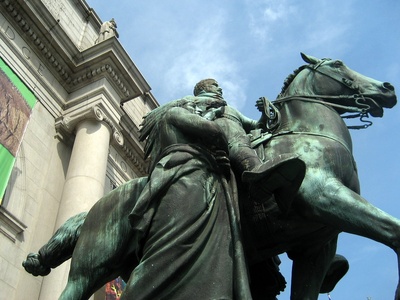
Theodore Roosevelt
U.S. president recognized for mediating the Russo-Japanese War and promoting international arbitration. Awarded the 1906 Nobel Peace Prize for energetic diplomacy that secured the Treaty of Portsmouth and advanced peaceful conflict resolution.
Albert A. Michelson
American physicist famed for precise measurements of the speed of light and the Michelson–Morley experiment that challenged ether theory. Awarded the 1907 Nobel Prize in Physics for precision optical instruments and spectroscopic investigations.
Eduard Buchner
German chemist who demonstrated cell-free fermentation by extracting enzymes from yeast, overturning ideas that only living cells catalyzed biochemical reactions. Awarded the 1907 Nobel Prize in Chemistry for this landmark experimental proof.
Charles Laveran
French physician who discovered the malaria parasite in human blood, proving a protozoan cause of the disease and guiding control measures. Awarded the 1907 Nobel Prize in Physiology or Medicine for this decisive parasitological discovery.
Rudyard Kipling
British writer known for vivid storytelling, poems and short stories capturing imperial-era life and adventure. Awarded the 1907 Nobel Prize in Literature for his power of observation, originality of imagination and consummate narrative skill.
Ernesto Teodoro Moneta
Italian journalist and activist who campaigned for peace and arbitration across Europe, promoting nonviolent solutions. Awarded the 1907 Nobel Peace Prize for persistent efforts to foster international understanding and peaceful dispute settlement.
Gabriel Lippmann
French physicist who invented an interferential method for reproducing colors photographically, pioneering true color photography and influencing art and science. Awarded the 1908 Nobel Prize in Physics for enabling accurate, faithful color imaging.
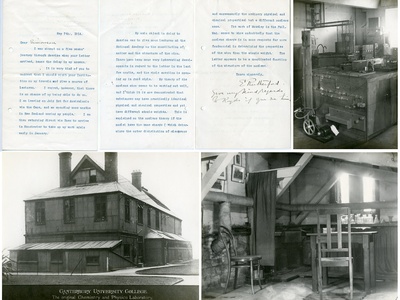
Ernest Rutherford
New Zealand-born British physicist who explained radioactive decay and nuclear transformations, shaping atomic theory. Awarded the 1908 Nobel Prize in Chemistry for investigations into disintegration of elements and chemistry of radioactive substances.
Ilya Mechnikov
Russian zoologist and immunologist who discovered phagocytosis, explaining how certain white blood cells ingest pathogens. Co-recipient of the 1908 Nobel Prize in Physiology or Medicine for fundamental advances in immunity and cellular defense mechanisms.
Paul Ehrlich
German physician and researcher who developed the concept of a ‘magic bullet’ and pioneered chemotherapy and immunology techniques. Shared the 1908 Nobel Prize in Physiology or Medicine for breakthroughs in immunity and staining methods.
Rudolf Christoph Eucken
German philosopher and writer who reflected on ethical idealism and spiritual life, influencing cultural debates. Awarded the 1908 Nobel Prize in Literature for his earnest search for truth and spiritual insight in philosophical works.
Klas Pontus Arnoldson
Swedish writer and politician who championed peaceful arbitration and international conciliation, founding peace associations. Awarded the 1908 Nobel Peace Prize for persistent advocacy of nonviolent solutions and civic engagement in peace work.
Guglielmo Marconi
Italian inventor who developed practical wireless telegraphy and long-distance radio transmission, enabling transatlantic wireless communication. Shared the 1909 Nobel Prize in Physics for pioneering work in wireless telegraphy and communication technology.
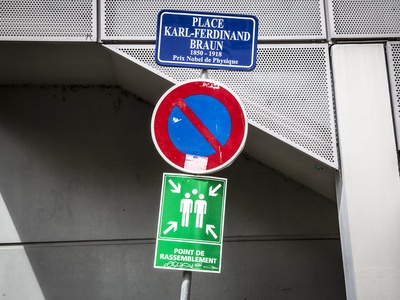
Karl Ferdinand Braun
German physicist and engineer who improved wireless signaling and developed the cathode-ray oscilloscope and crystal detectors. Co-recipient of the 1909 Nobel Prize in Physics for contributions to wireless telegraphy and radio technology.
Wilhelm Ostwald
Baltic German chemist (working in Germany) known for work on catalysis, chemical equilibria and reaction rates, founding physical chemistry. Awarded the 1909 Nobel Prize in Chemistry for his work on catalysis and chemical dynamics.
Emil Theodor Kocher
Swiss surgeon who transformed thyroid surgery and advanced surgical techniques, reducing mortality and improving outcomes. Awarded the 1909 Nobel Prize in Physiology or Medicine for his work on the physiology, pathology and surgery of the thyroid gland.
Selma Lagerlöf
Swedish novelist and storyteller whose vivid narratives evoked folklore, moral imagination and national character, including ‘The Wonderful Adventures of Nils’. Awarded the 1909 Nobel Prize in Literature for her rich storytelling and idealism.
Auguste Beernaert
Belgian statesman and jurist who promoted international arbitration and social reform, leading efforts to settle disputes peacefully. Co-recipient of the 1909 Nobel Peace Prize for work advancing arbitration and humanitarian law.
Paul Henri d’Estournelles de Constant
French diplomat and senator devoted to international law, arbitration and the League of Nations precursor ideas. Shared the 1909 Nobel Peace Prize for lifelong commitment to peaceful diplomacy and building institutions to resolve conflicts.