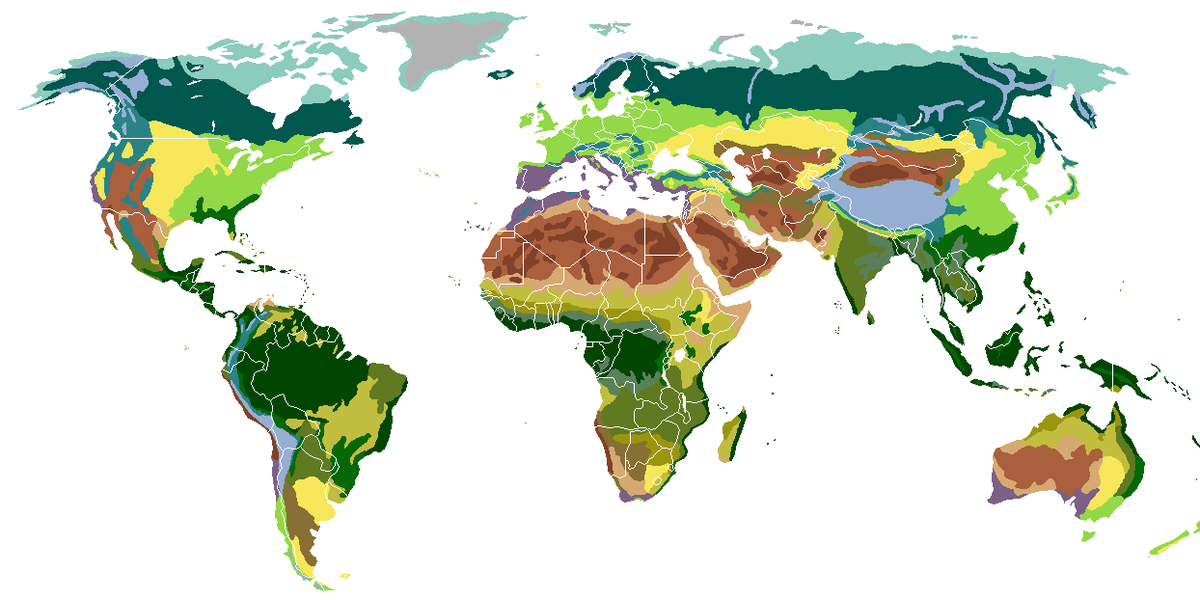
Tropical rainforests cover roughly 6% of Earth’s land surface yet host more than half of the planet’s terrestrial species — a startling contrast with savannas, which dominate vast open landscapes and support another suite of life adapted to dry seasons and fire. Comparing these landscapes matters because they differ in how they regulate climate, store carbon, supply water, and sustain livelihoods. How we treat one biome versus the other changes regional rainfall, food security, and conservation priorities. This piece lays out eight clear, evidence-backed differences between rainforest and savanna ecosystems — from rainfall and soils to biodiversity, fire regimes, and human uses — to clarify why their management and policy responses must also differ.
Climate and Physical Differences
Broad physical drivers — precipitation, temperature, and soils — set the template for rainforest and savanna. Rainfall amount and timing, along with soil depth and drainage, determine whether trees form closed canopies or grasses dominate, and these factors in turn shape water availability for people and agriculture.
1. Rainfall and seasonality
Rainforests receive heavy, year-round precipitation while savannas have lower annual rainfall concentrated in a short wet season. Tropical rainforests commonly get roughly 1,800–3,000+ mm of rain per year; the Amazon Basin averages about 2,000–3,000 mm/yr in many places. Savannas typically range from ≈500–1,200 mm/yr and commonly experience several consecutive dry months.
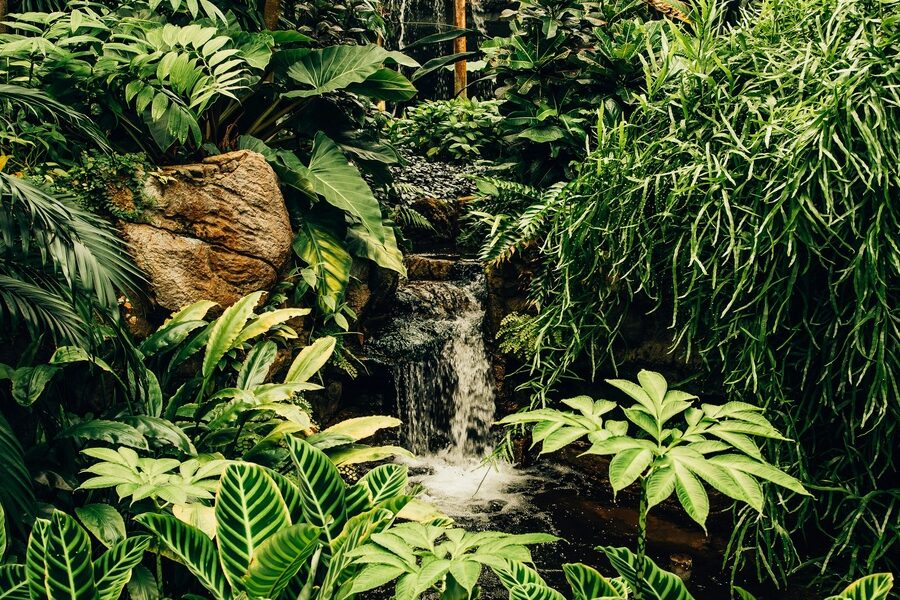
Those differences determine plant water availability and hydrology. Continuous rain in rainforests supports shallow-rooted trees, abundant epiphytes, and permanent streams. In savannas, plants face seasonal droughts so many species develop deeper roots or grow rapidly in the wet season; streams may be intermittent or ephemeral. For agriculture, that means rainforests can support continuous, high-biomass systems but often require careful soil management, while savannas are better suited to seasonal crops, grazing, and practices that conserve soil moisture.
2. Temperature and humidity
Both biomes are largely tropical, with mean temperatures often between 20–30°C, but humidity and microclimates diverge. Rainforests maintain persistently high relative humidity and small diurnal temperature swings because the closed canopy traps moisture and reduces heating. By contrast, savannas are drier overall: daytime heating is more intense under open skies and nights cool more sharply.
Lower humidity in savannas increases evapotranspiration rates during the wet season and magnifies heat stress on animals and people during hot spells. Cooler nights can reduce parasite pressure for some species but also limit crop options. For human comfort and livestock, shaded, humid forest environments feel milder, whereas savannas require strategies for heat mitigation and water storage.
3. Soil type and drainage
Many tropical rainforests grow on deeply weathered, often nutrient-poor soils such as Oxisols and Ultisols. Those soils are highly leached but support productivity because live biomass and litter rapidly cycle nutrients in the surface layer. Savannas commonly sit on a wider range of soils — including Alfisols, Entisols, and seasonal clays — that may hold more mineral nutrients in the topsoil and can experience seasonal waterlogging.
Rapid nutrient cycling in rainforests means that clearing soil often leads to quick fertility losses; slash-and-burn can yield a few years of crops but fails long-term without inputs. Savanna soils are often more amenable to grazing and seasonal cropping, though compaction and erosion from overuse can degrade them. Drainage differences also affect restoration: poorly drained savanna patches require species tolerant of seasonal flooding, while many rainforest species cannot tolerate extended dry or waterlogged periods.
Biodiversity and Ecosystem Function
Vegetation structure and disturbance regimes produce contrasting patterns of biodiversity and ecosystem processes. Rainforests concentrate enormous numbers of species in vertically layered habitats; savannas support fewer tree species but high functional diversity tied to fire, grazing, and seasonality.
4. Species richness and endemism
Rainforests host substantially higher species richness and many local endemics per unit area. Tropical rainforests occupy about 6% of land yet account for roughly half of terrestrial species. For example, regional surveys estimate more than 16,000 tree species across the Amazon Basin. This high diversity produces complex mutualisms among plants, pollinators, and seed dispersers.
Savannas have lower species richness per hectare but include remarkable assemblages of large mammals, migratory herbivores, and grass specialists. The Serengeti illustrates this: comparatively fewer tree species but extraordinarily dense populations of wildebeest, zebra, and their predators, which drive nutrient redistribution and ecosystem dynamics. Conservation priorities therefore differ: protecting small-range endemics in forests versus maintaining landscape connectivity and disturbance regimes in savannas.
5. Vegetation structure and biomass
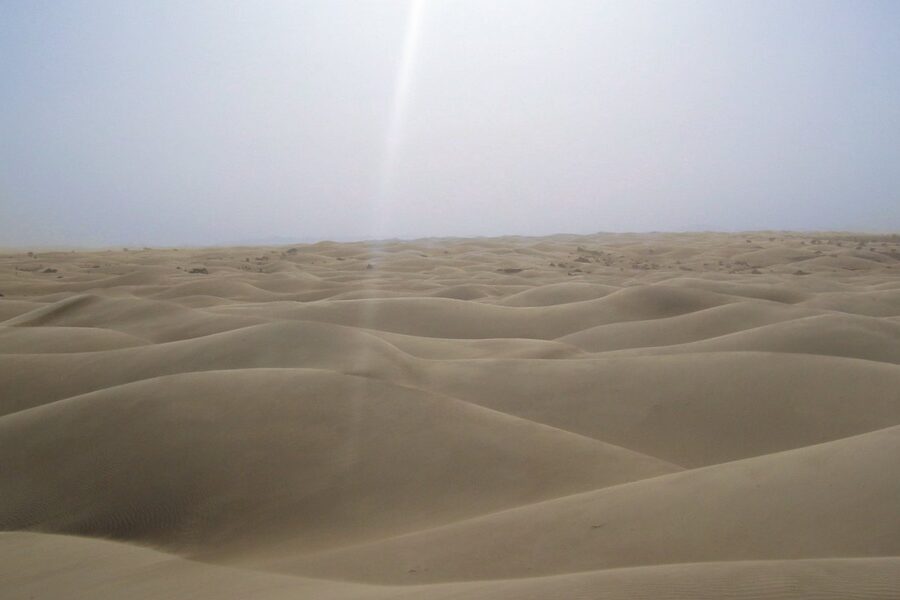
Rainforests display clear vertical stratification — emergent trees, main canopy, sub-canopy, understory and forest floor — while savannas are horizontally open with a dominant grass layer and widely spaced trees. Typical closed-canopy rainforest trees reach 30–50 m; savanna trees are much shorter and less dense.
That structural contrast drives very different biomass and carbon profiles. Intact tropical rainforests often store large amounts of aboveground carbon — rough estimates place many forests in the range of ~150–300 tonnes of carbon per hectare aboveground. Savannas generally store much less per hectare aboveground, often well under 100 tC/ha, though soils and roots can hold significant carbon. Structurally complex rainforests also create diverse microhabitats for epiphytes, insects, and understory species; savannas provide expansive foraging grounds and predictable fire-mediated habitat mosaics.
6. Fire regimes and plant adaptations
Fire is a frequent and formative process in savannas but is rare under intact rainforest canopies. Typical savanna fire return intervals vary by region and management, often recurring every 1–10 years where grasses provide fuel and burning is common. Many savanna grasses resprout quickly after fire, and trees often evolve thick bark, deep roots, or coppicing abilities to survive surface fires.
Rainforest trees generally lack those fire adaptations and are vulnerable to crown fires if the canopy opens. Human changes — fragmentation, logging, or drought — can increase fire risk at forest edges and potentially shift landscapes from closed forest to grassy states. Regions such as northern Australia and parts of Africa demonstrate how managed burning sustains savanna systems, while altered fire regimes can lead to shrub encroachment or biome transitions.
Human Use, Conservation, and Ecosystem Services
People derive very different services from rainforests and savannas: forests supply timber, non-timber forest products, and climate regulation, while savannas support grazing, pastoral livelihoods, and wildlife-based tourism. These differences drive distinct management needs and conservation challenges.
7. Ecosystem services and carbon storage
Rainforests are major carbon sinks and contribute strongly to regional rainfall recycling through high rates of evapotranspiration. For example, moisture recycled within the Amazon helps sustain rainfall far inland. The high per-hectare carbon stocks in intact forest make them prime targets for programs like REDD+ that seek to reduce emissions from deforestation and forest degradation.
Savannas, meanwhile, provide services such as grazing land for livestock, cultural values for pastoralists, and wildlife populations that underpin tourism economies. While per-hectare carbon storage is lower than in closed forests, savannas offer large-area provisioning services and sequester carbon in soils and belowground biomass. Payment-for-ecosystem-services schemes and community-based grazing management have been used to balance livelihood needs with conservation in savanna regions.
8. Land use, livelihoods, and conservation challenges
Both biomes face conversion pressures but from different drivers. Rainforests are often cleared for logging, cattle ranching and commodity crops — the Brazilian Amazon has seen large areas converted to pasture and soy. Savannas face degradation through overgrazing, inappropriate fire regimes, shrub encroachment, and fragmentation from agricultural expansion in some regions.
Conservation responses must reflect those realities: in forests, protected areas, sustainable harvest rules, and market mechanisms like REDD+ can slow loss; in savannas, supporting pastoral mobility, prescribed burning, community fire management (as practiced in parts of Australia and Africa), and sustainable ranching help maintain ecosystem function. Trade-offs are inevitable: protecting carbon-rich forest often conflicts with local needs for land, while savanna conservation must reconcile grazing livelihoods with biodiversity goals. Practical policy emphasizes locally tailored strategies, secure tenure, and incentives that align conservation with community well-being.
Summary
- Rainfall regimes versus fire regimes are the primary forces shaping rainforest and savanna structure and species — continuous heavy rain favors closed-canopy forests, while seasonal rain plus fire favors open grasslands.
- Rainforests concentrate species richness and store more aboveground carbon per hectare, whereas savannas provide grazing, cultural services, and fire-adapted biodiversity across large areas.
- Soils and nutrient cycling differ: many rainforests sit on deeply weathered Oxisols with tight nutrient recycling, while savannas often have more mineral-rich topsoils but remain vulnerable to erosion and shrub encroachment.
- Effective policy and management diverge: REDD+ and forest protection target carbon-rich forests; community fire management and sustainable pastoralism sustain savannas.