Ireland has a long history of scientific curiosity, from observatories and laboratories to inventive individuals who shaped physics, chemistry and engineering. The island’s universities and industrial towns provided fertile ground for thinkers whose work crossed borders and eras.
There are 16 Scientists born in Ireland, ranging from Ernest Walton to William Thomson, Lord Kelvin. Each entry is presented with Birth–death (years),Field,Place born so you can quickly scan dates, specialties and origins — you’ll find below.
Which fields did these Irish-born scientists work in?
The list covers a broad span of disciplines — physics, mathematics, engineering, medicine, chemistry and natural history are all represented — so you can spot clusters by era or specialty at a glance using the Birth–death (years),Field,Place born columns.
How can I use this list for research or teaching?
Use it as a starting point: sort or filter by field or birthplace to build timelines, classroom case studies or local-history projects, then follow the individual names to primary sources and biographies for deeper, citable information.
Scientists Born in Ireland
| Name | Birth–death (years) | Field | Place born |
|---|---|---|---|
| Robert Boyle | 1627–1691 | chemistry | Lismore, County Waterford |
| William Rowan Hamilton | 1805–1865 | mathematics | Dublin, County Dublin |
| William Thomson, Lord Kelvin | 1824–1907 | physics | Belfast, County Antrim |
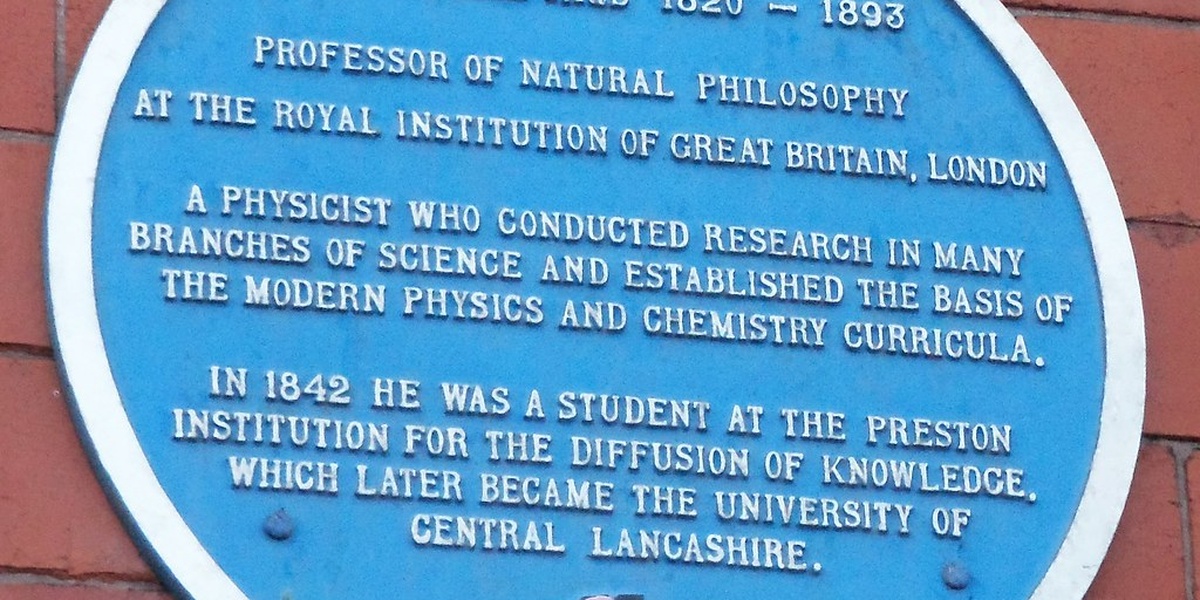
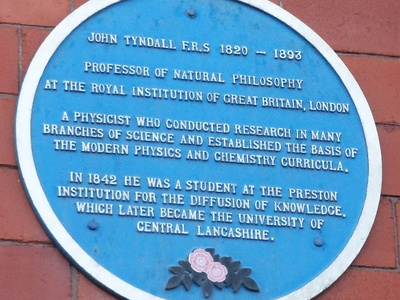
| John Tyndall | 1820–1893 | physics | Leighlinbridge, County Carlow |
| George Gabriel Stokes | 1819–1903 | mathematics | Skreen, County Sligo |
| George Francis FitzGerald | 1851–1901 | physics | Dublin, County Dublin |
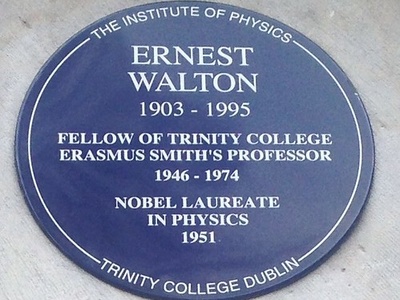
| Ernest Walton | 1903–1995 | physics | Duncannon, County Wexford |
| Jocelyn Bell Burnell | born 1943 | astrophysics | Lurgan, County Armagh |
| John Stewart Bell | 1928–1990 | physics | Belfast, County Antrim |
| Kathleen Lonsdale | 1903–1971 | chemistry | Newbridge, County Kildare |
| Francis Beaufort | 1774–1857 | earth sciences | Navan, County Meath |
| George Johnstone Stoney | 1826–1911 | physics | Birr, County Offaly |
| Robert Mallet | 1810–1881 | geophysics | Dublin, County Dublin |
| Robert Lloyd Praeger | 1865–1953 | natural sciences | Holywood, County Down |
| Sir Robert Ball | 1840–1913 | astronomy | Strabane, County Tyrone |
| Thomas Andrews | 1813–1885 | chemistry | Belfast, County Antrim |
Images and Descriptions

Robert Boyle
A founding figure of modern chemistry, Boyle combined careful experiments with clear theory, formulated Boyle’s law for gases, and helped move scientific practice away from alchemy toward reproducible laboratory methods and quantitative chemical study.
William Rowan Hamilton
Renowned mathematical physicist who founded Hamiltonian mechanics and invented quaternions; his work reshaped classical dynamics and influenced quantum mechanics, making him one of the most important 19th-century mathematicians, celebrated for deep algebraic and geometric insights.
William Thomson, Lord Kelvin
A leading physicist and engineer, Kelvin established the absolute temperature scale, made fundamental contributions to thermodynamics and electricity, and applied scientific principles to engineering projects like telegraphy and ship design, shaping Victorian-era physical science.
John Tyndall
An experimental physicist who studied atmospheric optics and magnetism, Tyndall explained the scattering of light by particles (the Tyndall effect), advanced understanding of the greenhouse effect, and popularized science through public lectures and clear writing.
George Gabriel Stokes
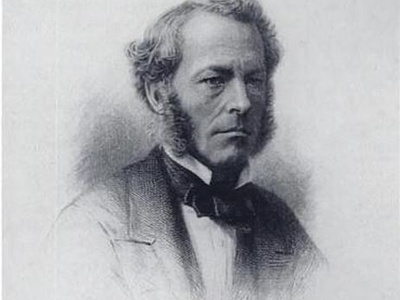
A mathematician and physicist whose work on fluid dynamics produced the famous Navier–Stokes equations, Stokes also made major contributions to optics and mathematical physics and served as a central figure in Victorian scientific institutions.
George Francis FitzGerald
A theoretical physicist best known for proposing the Lorentz–FitzGerald contraction to explain electromagnetic experiments before relativity; FitzGerald contributed to electrodynamics and electromagnetic theory, influencing later developments in special relativity.
Ernest Walton
Co-recipient of the 1951 Nobel Prize in Physics for constructing a particle accelerator that first split the atomic nucleus experimentally with John Cockcroft; Walton’s work launched practical high-energy experimental nuclear physics.
Jocelyn Bell Burnell
An observational astrophysicist who discovered pulsars as a graduate student in 1967, Bell Burnell’s careful data analysis revealed a new class of neutron-star objects; she is also a prominent advocate for diversity in science and education.
John Stewart Bell
A theoretical physicist who formulated Bell’s theorem, demonstrating that no local hidden-variable theory can reproduce all quantum mechanics predictions; his work clarified foundations of quantum entanglement and remains central to quantum information science.
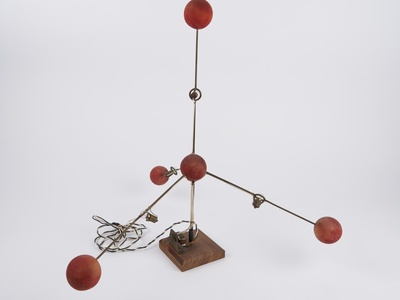
Kathleen Lonsdale
A pioneering crystallographer who used X-ray diffraction to determine benzene’s flat ring structure, Lonsdale became one of the first female science professors in Britain and a leader in establishing modern structural chemistry methods.
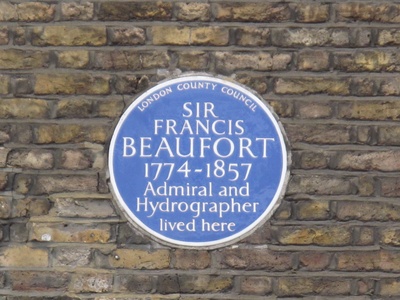
Francis Beaufort
A naval hydrographer and scientist best known for creating the Beaufort wind force scale; Beaufort’s systematic observations and charting improved maritime safety and helped professionalize hydrography and meteorology in the nineteenth century.
George Johnstone Stoney
A physicist who introduced the term “electron” to describe the fundamental unit of electric charge and made early estimates of its magnitude; Stoney’s conceptual work anticipated later developments in atomic and electrical theory.
Robert Mallet
An engineer and geophysicist often called the “father of seismology,” Mallet conducted early systematic studies of earthquakes, measured seismic waves, and applied engineering techniques to geological surveying and earthquake analysis.
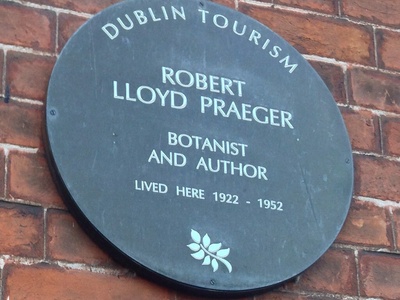
Robert Lloyd Praeger
A leading Irish naturalist and botanist who promoted field study, mapped Irish flora, and helped found scientific societies; Praeger’s surveys and writings laid foundations for modern Irish natural history and conservation.
Sir Robert Ball
An influential astronomer and popular science communicator who directed Dublin’s Dunsink Observatory, Ball wrote widely read astronomy books and contributed to celestial mechanics and public engagement with science in the late nineteenth century.
Thomas Andrews
A physical chemist notable for experimental studies of phase changes and the critical point, Andrews characterized the behaviour of gases and vapours and clarified the continuity between liquids and gases, foundational to thermodynamics and physical chemistry.