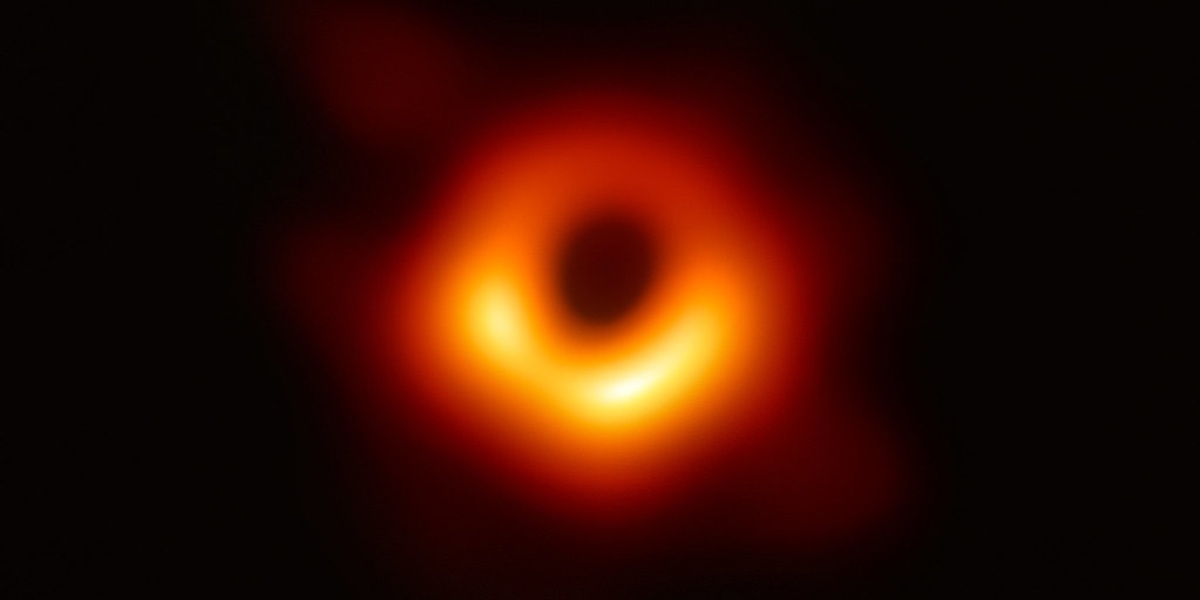
From the cores of nearby galaxies to bright quasars seen across the sky, central black holes influence galaxy structure and the distribution of stars and gas. This list gathers well-studied central objects so you can see how mass, distance and detection techniques vary across different environments.
There are 18 Supermassive Black Holes, ranging from the luminous quasar 3C 273 to the nearby Sombrero Galaxy. For each entry the data are organized as Host galaxy,Mass (M☉),Distance (Mpc),Detection method — you’ll find below.
How are the masses and distances of these black holes measured?
Masses are typically inferred from the motion of nearby stars or gas (stellar/gas dynamics), maser emission where available, or reverberation mapping for active nuclei; distances come from redshift-based measures or direct methods for nearby galaxies, so the table pairs each mass in M☉ with distance in Mpc and the observational technique used.
Which detection methods work best for nearby versus distant objects?
Nearby black holes are best constrained with spatially resolved stellar or gas dynamics and masers, while distant or bright AGN rely on reverberation mapping, broad-line scaling relations, or VLBI imaging; each method has trade-offs in precision and applicability, which the table makes easy to compare.
Supermassive Black Holes
| Name | Host galaxy | Mass (M☉) | Distance (Mpc) | Detection method |
|---|---|---|---|---|
| Sgr A* | Milky Way | 4,100,000 | 0.01 | Stellar orbital dynamics |
| M87* | M87 | 6,500,000,000 | 16.8 | Event Horizon Telescope imaging and kinematics |
| NGC 4258 | NGC 4258 (M106) | 39,000,000 | 7.6 | Water megamaser disk mapping |
| NGC 4889 | NGC 4889 | 21,000,000,000 | 103 | Stellar kinematics |
| NGC 3842 | NGC 3842 | 9,700,000,000 | 98 | Stellar kinematics |
| NGC 1600 | NGC 1600 | 17,000,000,000 | 64 | Stellar dynamical modeling |
| NGC 1277 | NGC 1277 | 4,900,000,000 | 71 | Stellar kinematics |
| NGC 3115 | NGC 3115 | 960,000,000 | 9.7 | Stellar dynamics |
| NGC 4261 | NGC 4261 | 500,000,000 | 31.6 | Gas and stellar kinematics |
| Centaurus A | NGC 5128 | 55,000,000 | 3.8 | Gas and stellar kinematics |
| NGC 1068 | NGC 1068 (M77) | 10,000,000 | 14.4 | Maser mapping and gas kinematics |
| Sombrero Galaxy | M104 (Sombrero) | 660,000,000 | 9.0 | Stellar kinematics |
| NGC 4151 | NGC 4151 | 46,000,000 | 19 | Reverberation mapping and kinematics |
| NGC 5548 | NGC 5548 | 60,000,000 | 74 | Reverberation mapping |
| 3C 273 | 3C 273 | 890,000,000 | 750 | Reverberation mapping and broad-line kinematics |
| NGC 3783 | NGC 3783 | 29,000,000 | 42 | Reverberation mapping |
| NGC 3227 | NGC 3227 | 40,000,000 | 20.3 | Reverberation mapping and stellar kinematics |
| NGC 7469 | NGC 7469 | 12,000,000 | 66 | Reverberation mapping |
Images and Descriptions

Sgr A*
The Milky Way’s central black hole is famous for resolved stellar orbits that map its mass and compactness. Precise decades-long tracking of stars like S2 gives robust dynamical confirmation and a well-measured mass of about four million suns.
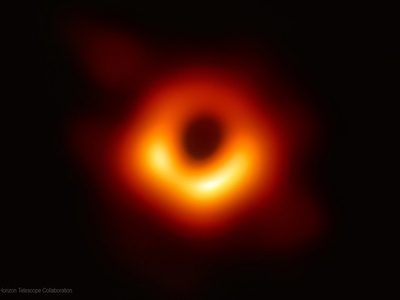
M87*
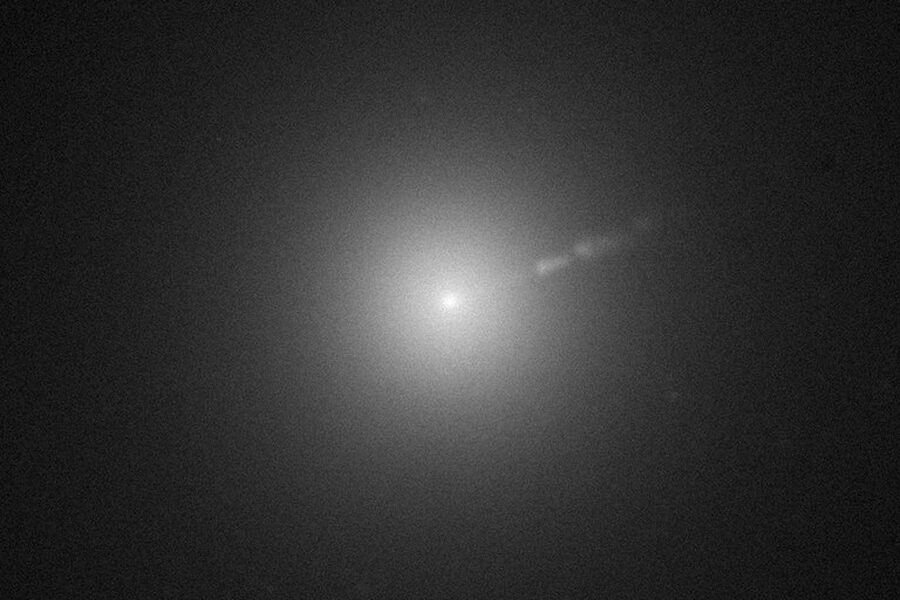
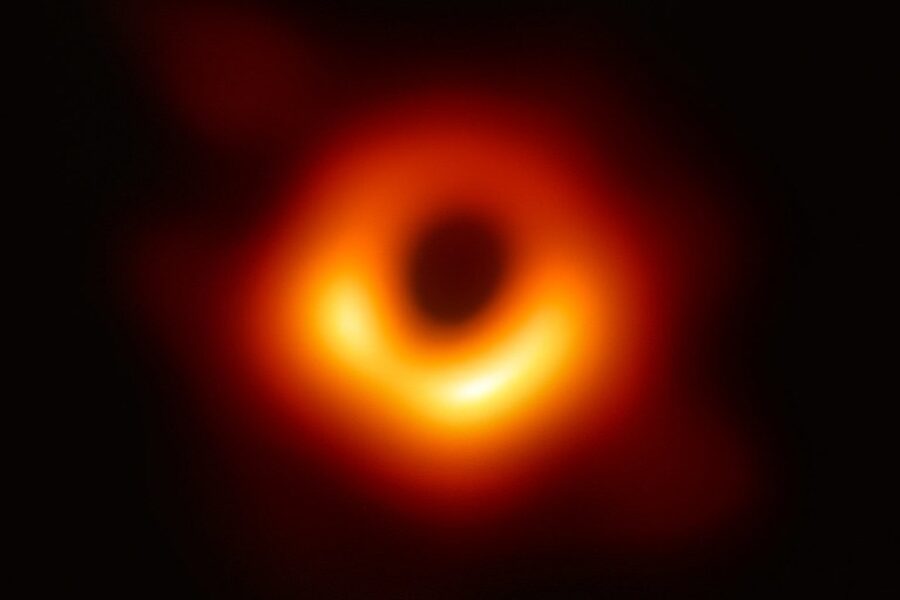
M87’s black hole was the first to be directly imaged by the EHT, showing the shadow of the event horizon. Combined with stellar and gas kinematics, the six-billion-solar-mass measurement is among the best confirmed for any galaxy.
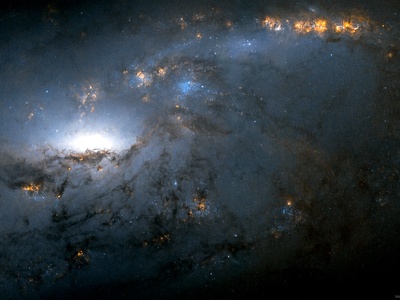
NGC 4258
NGC 4258 hosts a precise maser-emitting accretion disk seen in radio that traces Keplerian rotation. Maser mapping yields an accurate dynamical mass around 39 million suns and provides a geometric distance to the galaxy.
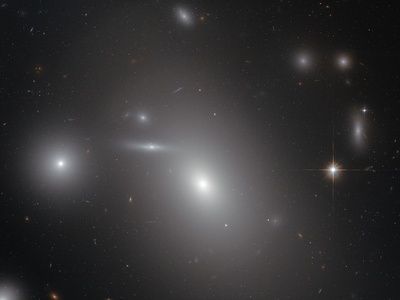
NGC 4889
One of the most massive confirmed SMBHs, NGC 4889’s central dynamics reveal a mass of order twenty billion suns. Detailed stellar velocity mapping of this Coma-cluster giant gives strong dynamical evidence for its extreme black hole.
NGC 3842
NGC 3842, a brightest cluster galaxy, hosts a black hole near ten billion solar masses. High-resolution stellar-velocity measurements of the galaxy core provided dynamical confirmation of this very large SMBH.
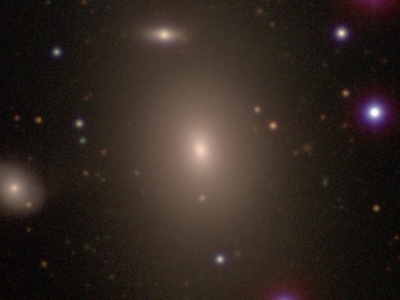
NGC 1600
NGC 1600 surprised astronomers by hosting a ~17-billion-solar-mass black hole in an isolated elliptical. Detailed modeling of central stellar motions revealed its extreme mass and offered insights into rare, massive black hole formation.
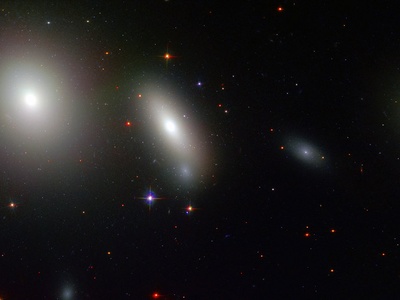
NGC 1277
Originally reported as an ultramassive object, NGC 1277 still contains a multi-billion-solar-mass black hole confirmed by stellar dynamical studies. Its compact galaxy and central velocity measurements made it notable in black hole demographics.
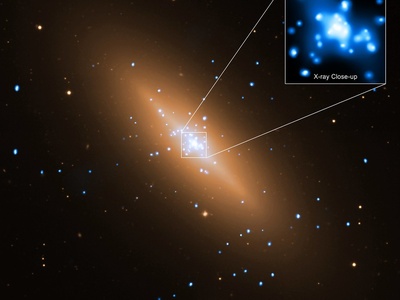
NGC 3115
NGC 3115, a nearby lenticular galaxy, hosts a nearly billion-solar-mass black hole measured through high-resolution stellar kinematics. Its proximity and clear dynamical signature make it a cornerstone for studying massive, quiescent SMBHs.
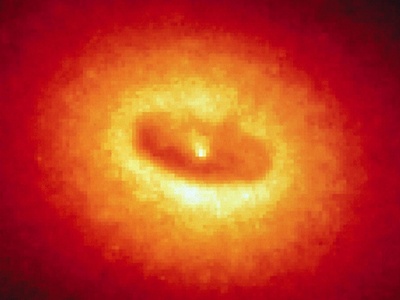
NGC 4261
NGC 4261’s central black hole, revealed by gas disk rotation and stellar motions, is a well-studied half-billion-solar-mass SMBH. Prominent radio jets and resolved kinematics provide direct evidence of its active nucleus.
Centaurus A
Nearby radio galaxy Centaurus A hosts a firmly measured central black hole around fifty-five million suns. Gas and stellar dynamical studies of the dusty, active nucleus link the SMBH to pronounced jets and lobes.
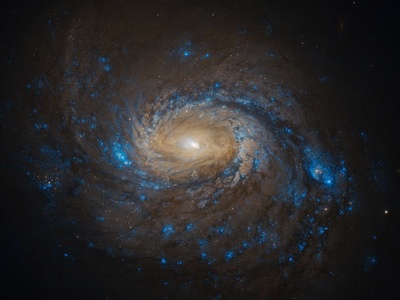
NGC 1068
The Seyfert galaxy NGC 1068 shows maser emission and resolved gas motions in its nucleus, yielding a dynamical black hole mass near ten million solar masses and powering one of the best-studied obscured AGN.
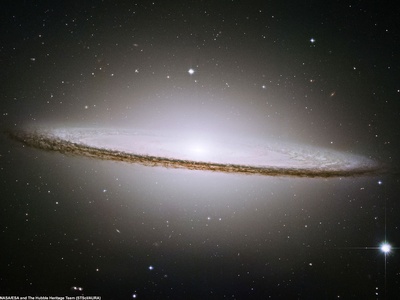
Sombrero Galaxy
The Sombrero Galaxy’s prominent bulge contains a well-measured black hole of roughly six to seven hundred million suns. High-resolution stellar velocity profiles in the central region provide dynamical confirmation of this massive SMBH.
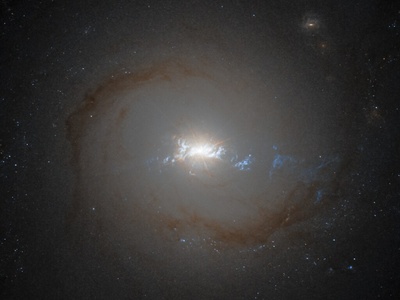
NGC 4151
NGC 4151, a nearby Seyfert galaxy, has a black hole mass constrained by reverberation mapping of its broad-line region and stellar kinematics. The combined methods give a robust mass around a few times ten million suns.
NGC 5548
NGC 5548 is a classic reverberation-mapped AGN, where time delays between continuum and emission-line variations yield a reliable SMBH mass near sixty million solar masses and a wealth of variability-based measurements.
3C 273
As the first identified quasar, 3C 273’s SMBH mass comes from reverberation and broad-line region studies, giving roughly nine hundred million suns. Its brightness and historical importance make it a benchmark active nucleus.
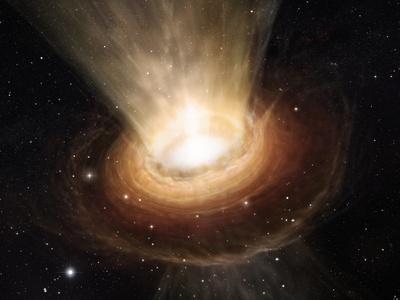
NGC 3783
NGC 3783 is a Seyfert galaxy with a well-measured black hole via reverberation mapping, yielding a mass near thirty million suns. Time-delay studies of emission lines give direct constraints on the central engine.
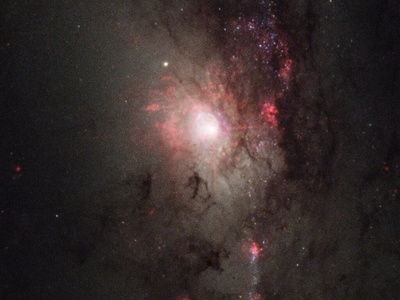
NGC 3227
NGC 3227’s black hole mass is supported by reverberation mapping and spatially resolved stellar motions, giving a robust estimate near forty million solar masses in this nearby interacting Seyfert galaxy.
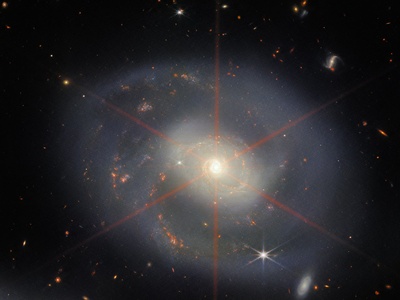
NGC 7469
The active nucleus of NGC 7469 has a reverberation-mapped black hole around twelve million suns. Monitoring of continuum and emission-line lags provides direct measurements tying variability to black hole mass and accretion.