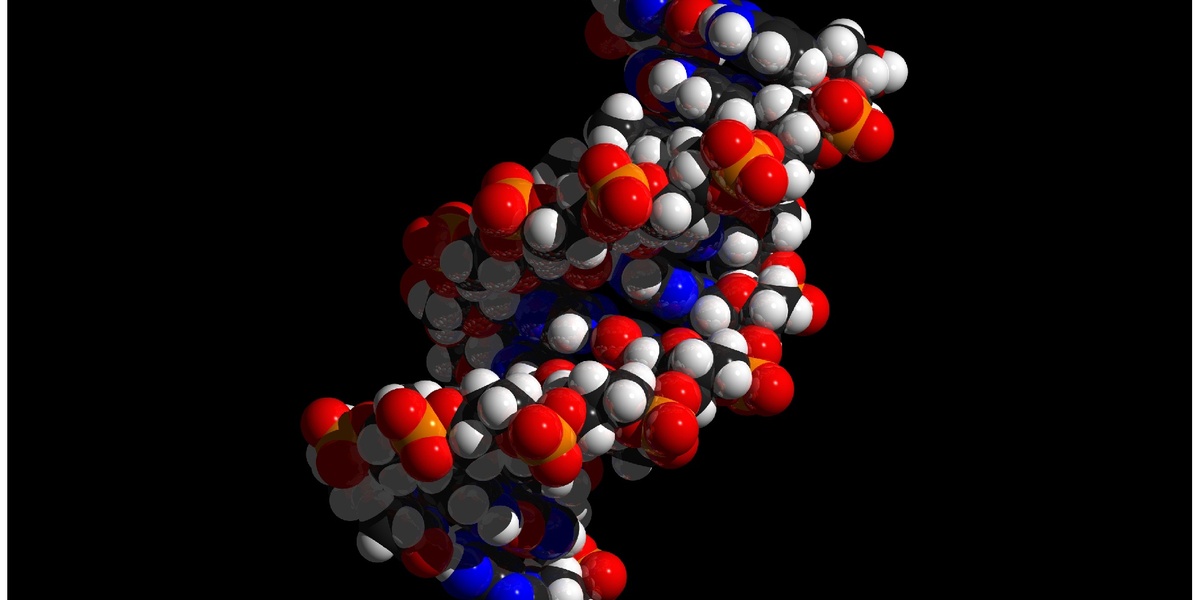
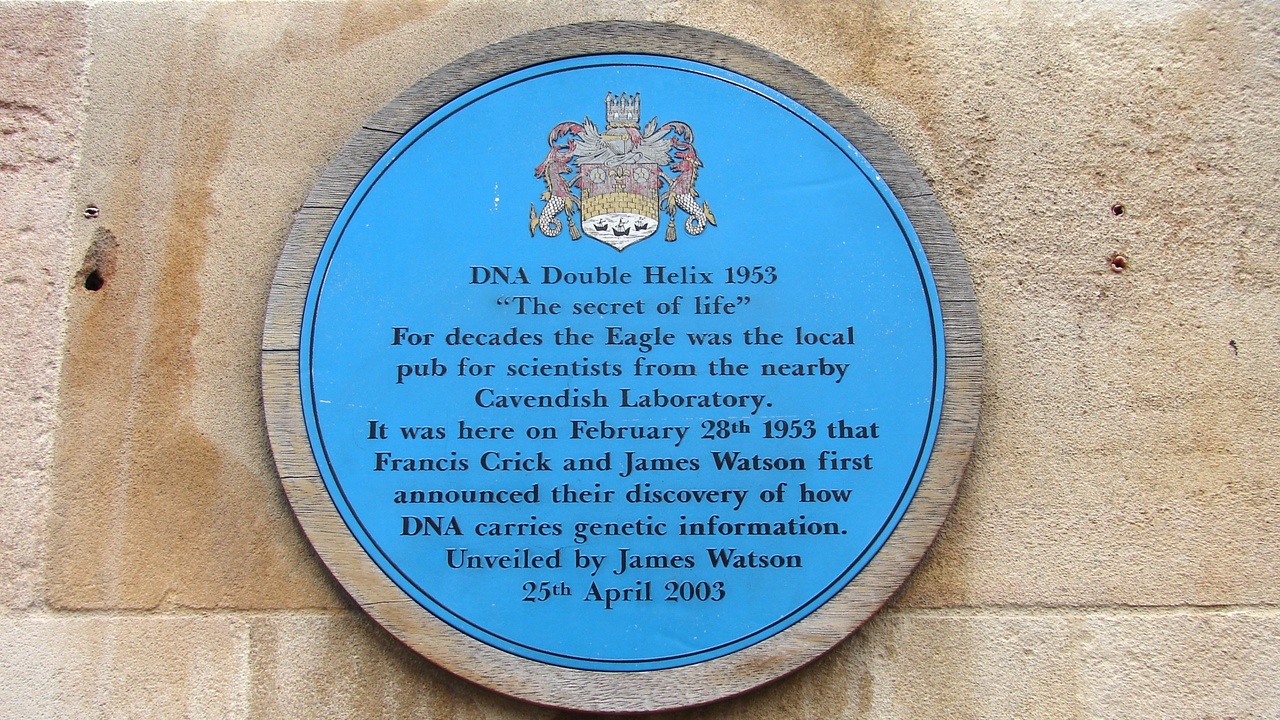
In 1953 James Watson and Francis Crick published a short paper describing DNA’s double helix, a moment that reshaped biology and launched molecular genetics as a modern science. Rosalind Franklin’s X‑ray image — famously called Photo 51 — provided critical evidence for the helix and deserves equal billing in that story. The human genome contains roughly 3 billion base pairs of A, C, G and T, and those letters encode everything from eye color to enzyme function. Today DNA touches medicine, ancestry research, forensics and biotechnology, making what once seemed microscopic into a practical force affecting health and identity. This piece presents ten clear, well‑explained genetic facts with dates, numbers and examples to show how that molecule changed science and society.
The journey from a 1953 insight to routine genomic tests underlies much of modern biology; now let’s move from history to fundamentals.
Fundamentals of DNA
Understanding DNA’s basic properties helps explain why sequencing, editing and forensic uses work. The next four facts cover structure, genome size, human similarity and the near‑universality of the genetic code with dates, numbers and concrete examples.
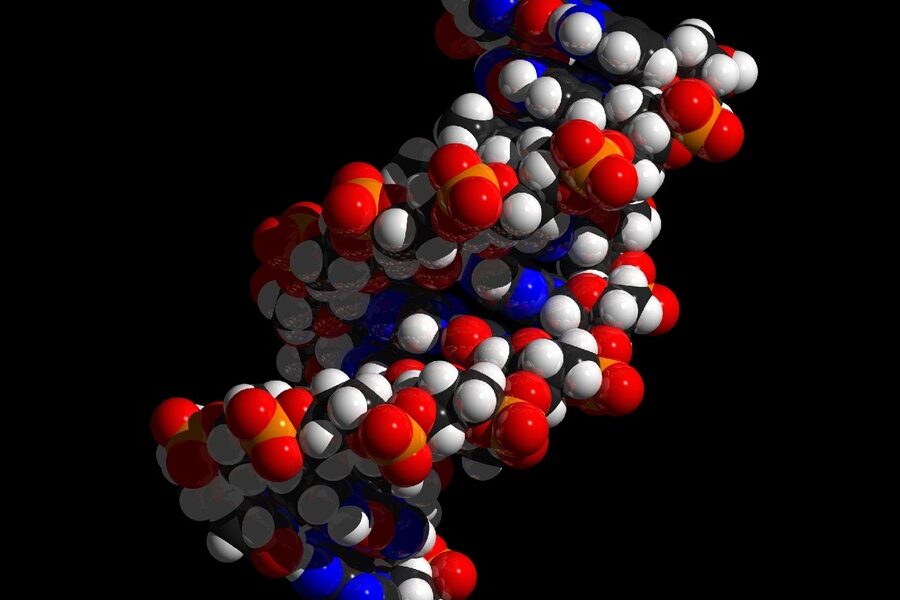
1. DNA’s double-helix structure was described in 1953
In April 1953 Watson and Crick published the double‑helix model in Nature, a brief paper that changed biology. That model relied on Rosalind Franklin’s X‑ray diffraction images — Photo 51 — and on Chargaff’s rules about base pairing. Knowing that two complementary strands pair A–T and C–G explained how DNA could be copied: each strand serves as a template for a new partner.
The 1953 Nature paper is often cited as the start of molecular biology because structure revealed a clear mechanism for heredity and mutation, paving the way for later techniques such as DNA sequencing and recombinant DNA. (See Nature, 1953.)
2. The human genome contains about 3 billion base pairs
The human genome is roughly 3 billion base pairs long; a base pair is one matched A–T or C–G in the two DNA strands. That “3 billion” number is a simple way to grasp scale: a single human cell packs meters of DNA coiled into the nucleus.
The Human Genome Project declared a largely finished reference sequence in 2003, after a multinational effort that cost roughly $3 billion. Since then technology improvements have driven sequencing costs from billions to a few hundred dollars for a whole genome, enabling clinical and research use. (See the NIH summary.)
3. Humans share about 99.9% of DNA with each other
On average people are 99.9% identical at the DNA letter level. That 0.1% difference sounds tiny but over ~3 billion bases it represents roughly 3 million variable sites across the genome.
Those millions of differences include single‑nucleotide polymorphisms (SNPs) that influence traits and disease risk, and rare variants that cause single‑gene disorders such as cystic fibrosis. Small genetic differences therefore explain much of human variation while the shared 99.9% reflects our common biology.
4. DNA is a nearly universal genetic code across life
Life on Earth uses the same four bases (A, C, G, T) and translates triplet codons into amino acids in remarkably consistent ways. That near‑universality is why a gene from one species can often work in another.
Practical consequences include recombinant production of human insulin in E. coli and genetically modified crops that express pest‑resistant proteins. The universality of the genetic code underpins genetic engineering and synthetic biology efforts. For authoritative background see NIH resources.
DNA in Medicine and Health
Genetics now shapes diagnostics, therapies and consumer health tools. The three facts below show how gene editing, clinical genomic testing and direct‑to‑consumer services have moved DNA from research labs into clinics and living rooms, along with their limits and ethical issues.
5. CRISPR turned gene editing into a practical tool (major milestone: 2012)
Key papers in 2012 by Jennifer Doudna and Emmanuelle Charpentier described CRISPR‑Cas9 as a programmable DNA‑cutting system. The approach earned them the 2020 Nobel Prize in Chemistry and quickly became widely adopted in labs.
CRISPR is now used in clinical trials for genetic diseases and cancer, and in agricultural research to introduce desired traits. Companies such as CRISPR Therapeutics and Intellia are developing therapies, though these efforts operate under strict regulatory review and ethical debate about germline editing and safety.
6. DNA testing transformed diagnostics and personalized medicine
Clinical DNA tests identify hereditary risk (for example BRCA1/BRCA2), confirm rare disease diagnoses, and guide drug choice through pharmacogenomics. Newborn screening programs and clinical gene panels detect many conditions early, enabling treatment or monitoring.
Tumor sequencing can reveal targetable mutations that influence therapy—for instance using PARP inhibitors for BRCA‑mutated cancers. Regulatory bodies such as the FDA and resources at the NCBI provide guidance on clinical use and test validation.
7. Direct-to-consumer genetic tests popularized ancestry and health insights
Companies such as 23andMe and AncestryDNA have brought genetic reports to millions of customers, popularizing ancestry matching and basic health reports. Relative matching relies on shared segments of DNA and SNP arrays rather than full genomes.
These tests offer convenience but also limitations: ancestry estimates vary by reference datasets, and predictions for complex traits are probabilistic. Privacy discussions and regulatory oversight—most notably the FDA review of health reports—remain central to consumer genetics.
DNA in Technology, Forensics, and Evolution

Beyond medicine, DNA has reshaped how societies solve crimes, how researchers read evolutionary history, and how engineers build biological systems. The next three facts show technology, forensic breakthroughs and ancient DNA discoveries with real‑world effects and ethical questions.
8. Forensic DNA and genetic genealogy have solved cold cases
Investigative use of genetic genealogy led to the 2018 arrest of Joseph James DeAngelo in the Golden State Killer case, when investigators matched crime‑scene DNA to distant relatives in public databases and built family trees.
Tools like GEDmatch enabled that match and sparked policy changes and debate about privacy, consent and law enforcement access to consumer databases. Many jurisdictions now balance public safety with stricter rules on how genetic data may be used.
9. DNA sequencing technology advanced rapidly and dropped in cost
The first draft of the human genome cost roughly $3 billion and finished in 2003; today whole‑genome sequencing can cost a few hundred dollars. That cost decline reflects a shift from Sanger methods to next‑generation sequencing platforms such as Illumina, and newer portable devices from Oxford Nanopore.
Faster, cheaper sequencing enabled routine pathogen surveillance—exemplified by SARS‑CoV‑2 genomic monitoring during the COVID‑19 pandemic—and expanded research into population genomics, cancer and microbial ecology.
10. DNA preserves an evolutionary record — from Neanderthals to modern humans
Sequenced ancient genomes have rewritten parts of human history. Neanderthal genomes show that non‑African modern humans carry about 1–2% Neanderthal DNA, evidence of interbreeding tens of thousands of years ago.
Ancient DNA also informs migration models and biodiversity work; conservationists use genetic data to track population declines and manage breeding programs. Landmark ancient DNA papers in recent decades have transformed archaeology and evolutionary biology.
Summary
Key takeaways from these ten accessible genetic facts that span history, medicine and society.
- The double‑helix model (1953) and Rosalind Franklin’s Photo 51 provided the structural insight that made molecular genetics possible.
- The human genome’s ~3 billion base pairs and ~20,000 protein‑coding genes set the scale for sequencing and personalized medicine.
- Humans share ~99.9% of DNA with one another; the 0.1% variation (≈3 million sites) drives traits, disease risk and ancestry signals.
- CRISPR (key papers 2012) and falling sequencing costs since the 2003 Human Genome Project turned research tools into clinical and industrial capabilities.
- Applied uses—from the 2018 Golden State Killer forensic breakthrough to recombinant insulin—deliver benefits while raising privacy, ethical and regulatory questions.