Borneo’s forests and mangroves host a remarkable variety of birdlife across lowland swamps, hill forests and mountain slopes, making the island one of Southeast Asia’s richest places for birdwatching. From river edges to canopy towers, species change with elevation and habitat, so a short trip can yield very different encounters.
There are 32 Birds of Borneo, ranging from Asian Glossy Starling to Wrinkled Hornbill; for each entry you’ll find below the Scientific name, Status, Habitat & range.
When is the best time and place in Borneo to see many species from this list?
The drier months (roughly March–October) are generally easier for birding because trails are more accessible and birds are active at dawn; key sites include lowland reserves like Danum Valley and Sepilok, montane areas around Kinabalu, and intact forest blocks such as Maliau Basin—visit early morning with a local guide and use canopy or river spots to maximize sightings.
Are any species on the list threatened, and what can visitors do to help?
Yes—several species face pressure from habitat loss and hunting; check each bird’s conservation Status in the list to see IUCN categories, support trips that fund protected areas, follow local regulations, avoid buying wildlife products, and choose ethical guides who practice low-impact birding.
Birds of Borneo
| Common name | Scientific name | Status | Habitat & range |
|---|---|---|---|
| Rhinoceros Hornbill | Buceros rhinoceros | Resident; VU | Lowland and hill forest; widespread across Borneo |
| Helmeted Hornbill | Rhinoplax vigil | Resident; CR | Primary lowland forest; scattered lowland strongholds |
| Oriental Pied Hornbill | Anthracoceros albirostris | Resident; LC | Forest edge, farmland and towns; widespread lowlands |
| Black Hornbill | Anthracoceros malayanus | Resident; NT | Lowland and hill forest; patchy but widespread |
| Wrinkled Hornbill | Rhabdotorrhinus corrugatus | Resident; NT | Lowland and hill forest, fruiting trees; widespread |
| Great Argus | Argusianus argus | Resident; LC | Primary lowland forest and foothills; widespread but secretive |
| Bornean Ground-Cuckoo | Carpococcyx radiceus | Endemic; EN | Dense lowland forest; rare and localized in Borneo |
| Blue-eared Kingfisher | Alcedo meninting | Resident; LC | Shaded streams and forest rivers; widespread in lowlands |
| Common Kingfisher | Alcedo atthis | Resident; LC | Rivers, streams, coasts and mangroves across island |
| Collared Kingfisher | Todiramphus chloris | Resident; LC | Coasts, mangroves, plantations and gardens; widespread |
| White-throated Kingfisher | Halcyon smyrnensis | Resident; LC | Open country, rivers, mangroves and gardens; widespread |
| Banded Kingfisher | Lacedo pulchella | Resident; LC | Lowland and hill forest; uncommon but regular |
| Banded Pitta | Hydrornis guajana | Resident; NT | Lowland and hill forest floor; shaded forest across Borneo |
| Blue-winged Pitta | Pitta moluccensis | Regular migrant; LC | Forest and gardens; passage and winter visitor in Borneo |
| Olive-backed Sunbird | Cinnyris jugularis | Resident; LC | Gardens, forest edge, mangroves; ubiquitous across island |
| Crimson Sunbird | Aethopyga siparaja | Resident; LC | Forest edge, gardens and secondary growth; widespread lowlands |
| Little Spiderhunter | Arachnothera longirostra | Resident; LC | Forest edge, plantations and gardens; common in lowlands |
| Asian Koel | Eudynamys scolopaceus | Resident; LC | Woodland, forest edge and towns; widespread |
| Brown-backed Needletail | Hirundapus giganteus | Regular migrant; LC | High-flying over forests and coasts; passage migrant |
| Pied Fantail | Rhipidura javanica | Resident; LC | Forest edges, gardens and scrub; widespread in lowlands |
| Asian Glossy Starling | Aplonis panayensis | Resident; LC | Open forest, plantations and towns; widespread |
| Common Myna | Acridotheres tristis | Resident; LC | Open country, villages and towns; widespread |
| Dollarbird | Eurystomus orientalis | Resident; LC | Open forest, forest edge and river corridors; common lowlands |
| Brahminy Kite | Haliastur indus | Resident; LC | Coasts, rivers and mangroves; common across island |
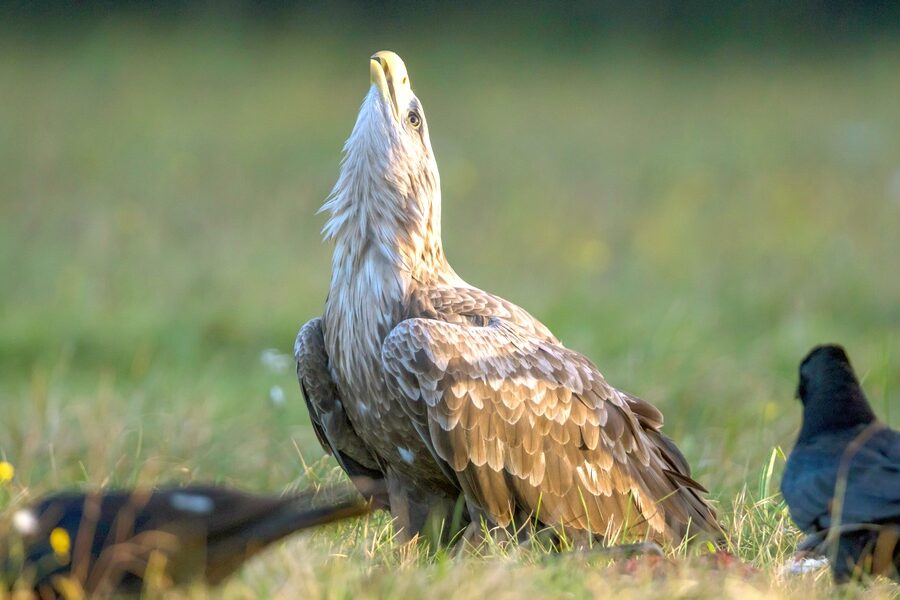
| White-bellied Sea Eagle | Haliaeetus leucogaster | Resident; LC | Coasts, large rivers and mangroves; widespread |
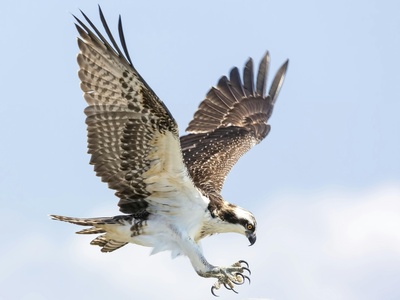
| Osprey | Pandion haliaetus | Resident; LC | Coasts, large rivers and reservoirs; regular near open water |
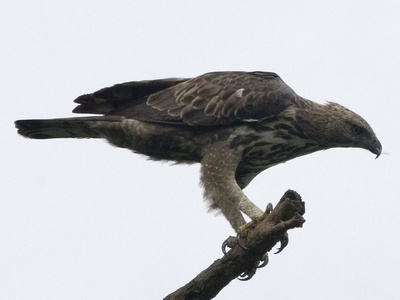
| Changeable Hawk-Eagle | Nisaetus cirrhatus | Resident; LC | Forest, forest edge and clearings; widespread in hills and lowlands |
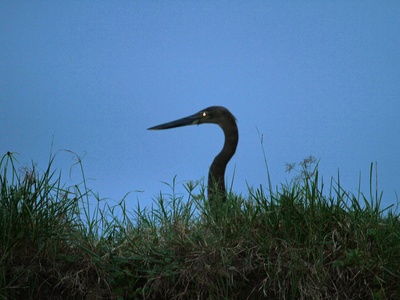
| Great-billed Heron | Ardea sumatrana | Resident; NT | Mangroves, tidal creeks and coastal wetlands; scattered |
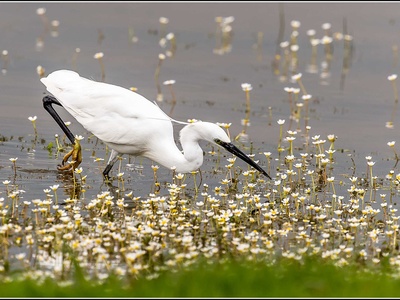
| Little Egret | Egretta garzetta | Resident; LC | Mangroves, wetlands, rivers and ricefields; widespread |
| Grey Heron | Ardea cinerea | Regular migrant; LC | Rivers, reservoirs, coasts and wetlands; widespread |
| Common Sandpiper | Actitis hypoleucos | Regular migrant; LC | Riverbanks, coasts and mudflats; common passage visitor |
| Pacific Golden Plover | Pluvialis fulva | Regular migrant; NT | Coastal mudflats, open fields and beaches during migration |
Images and Descriptions
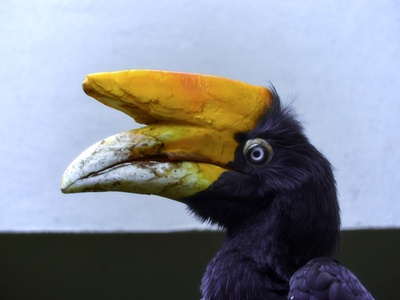
Rhinoceros Hornbill
Iconic large hornbill with black body, white tail and impressive casque. Seen in Danum Valley, Kinabalu foothills and many reserves. Eats fruit and small animals; loud, far-carrying calls make it easy to detect in canopy.
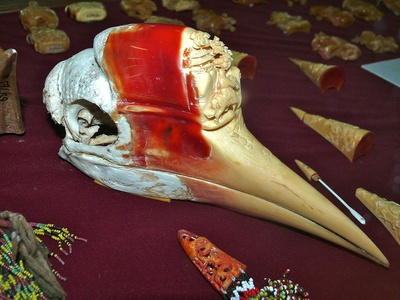
Helmeted Hornbill
Huge black hornbill with distinctive solid casque historically carved as “hornbill ivory.” Extremely rare from poaching and habitat loss; best chances in vast intact forests like remote parts of Sabah and Kalimantan. Spectacular aerial displays when present.
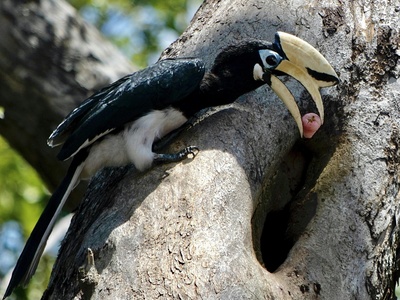
Oriental Pied Hornbill
Smaller hornbill often seen near villages and forest edges. Black-and-white plumage, loud cackling calls and fruit-eating habit. Common in Kinabatangan and lowland reserves; nests in tree cavities and adapts well to degraded habitats.
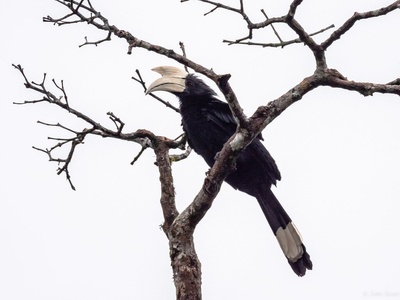
Black Hornbill
Stocky hornbill with large bill and contrasting head pattern. Prefers forest interior and fruiting trees; sighted in mixed-species flocks. Vulnerable to logging pressure but still regularly seen in protected areas like Danum and Maliau Basin.
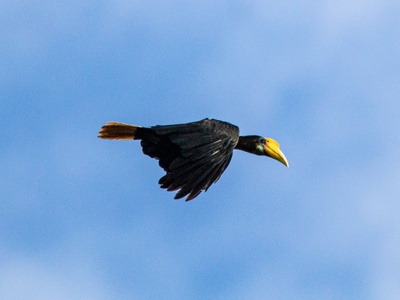
Wrinkled Hornbill
Medium-sized hornbill with wrinkled casque and strong banana-like calls. Favors primary and mature secondary forest; often attracted to fruiting figs. A prized sighting on guided walks in protected forests across Borneo.
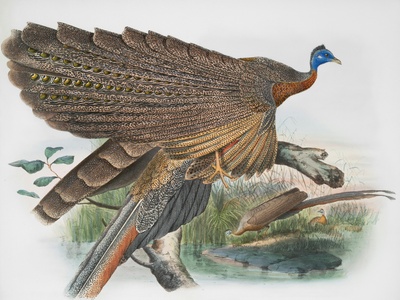
Great Argus
Large pheasant-like bird with spectacular eye-spotted wing and long train in males. Males perform elaborate displays on forest floor; best seen at dawn in primary forests such as Danum or Kinabalu lowlands.
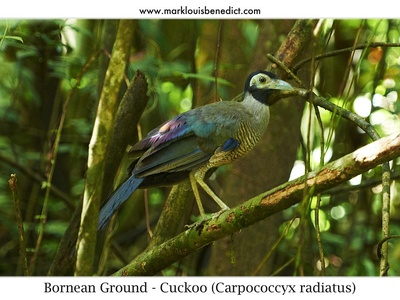
Bornean Ground-Cuckoo
Elusive, terrestrial cuckoo endemic to Borneo with streaked underparts and heavy bill. Extremely shy and rarely seen; listen for soft booming calls on the forest floor. One of Borneo’s most sought-after endemic birds.
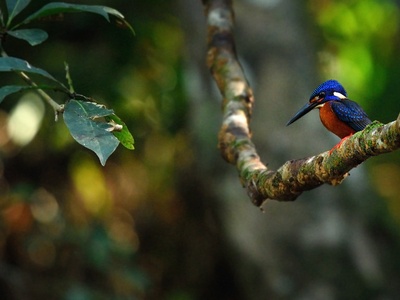
Blue-eared Kingfisher
Tiny electric-blue kingfisher that favors forest streams. Look for flashes along shaded banks in Bornean lowlands and foothills. Perches low and dives for small fish and aquatic insects; a delightful, colorful species.
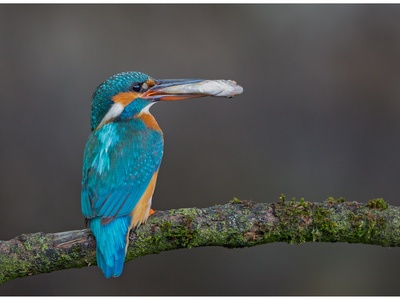
Common Kingfisher
Compact blue-and-orange kingfisher often seen along clear streams and mangroves. Hunts from low perches, diving for small fish. Common in many accessible sites including river walks and coastal mudflats around Borneo.
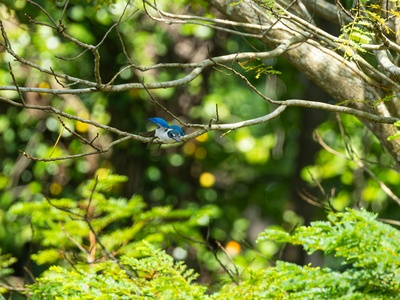
Collared Kingfisher
Coastal kingfisher with blue-green upperparts and pale underparts. Frequently seen along mangrove edges, beaches and village coasts. Eats crabs, fish and large insects; often perches conspicuously for easy viewing.
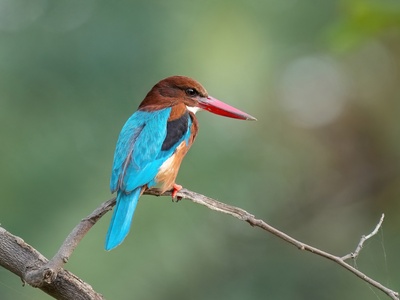
White-throated Kingfisher
Bold, large kingfisher with blue wings and bright red bill. Hunts in open areas, fields and coasts as well as river edges. Common in lowland Borneo; vocal and easy to spot from roadside perches.
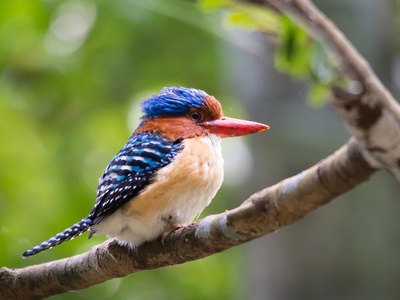
Banded Kingfisher
Striking small kingfisher with bold banding and sexual dimorphism; prefers dense forest interior. Often heard before seen; specialist of intact forests. Best chances along quiet forest trails and river corridors.
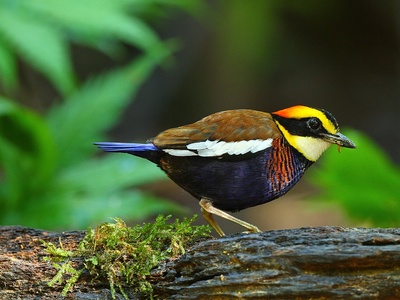
Banded Pitta
Vivid ground-dwelling pitta with bright bands and earthy head pattern. Walk quietly on forest trails near leaf litter to encounter this secretive species. Forages for insects and worms; a colorful forest-denizen.
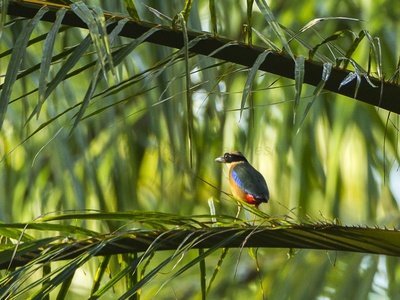
Blue-winged Pitta
Bright migrant pitta arriving in non-breeding season with blue wings and chestnut back. Found in damp forests and gardens during migration and winter months. Ground-feeding and conspicuous when calling at dawn.
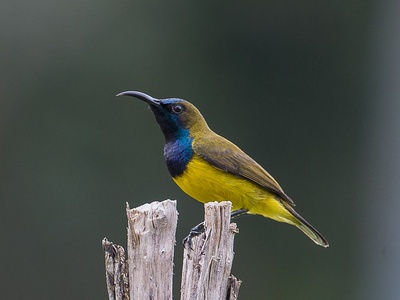
Olive-backed Sunbird
Small, active nectar-feeder with metallic male plumage. Common in gardens, plantations and forest edges; easy to observe at flowering trees. Agile and vocal, a frequent companion on lowland birding walks.
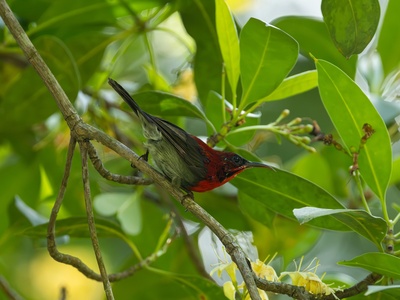
Crimson Sunbird
Tiny, brilliant red-and-green sunbird often visiting blossoms. Males flash color in sunlight; quick-moving and best seen in forest edges and clearings. A favorite subject for photographers.
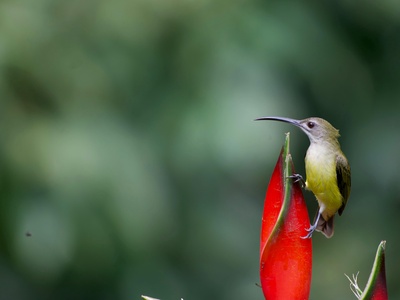
Little Spiderhunter
Long, curved bill specialized for nectar and spiders. Active and loud, visiting banana blossoms and epiphytes. Frequently encountered in gardens and agroforest, making it an accessible rainforest specialist.
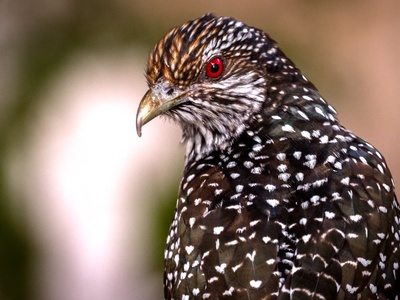
Asian Koel
Large parasitic cuckoo with unmistakable loud “koo-EL” call. Female spotted plumage and male glossy black are unmistakable. Often heard more than seen; common around villages and forest margins.
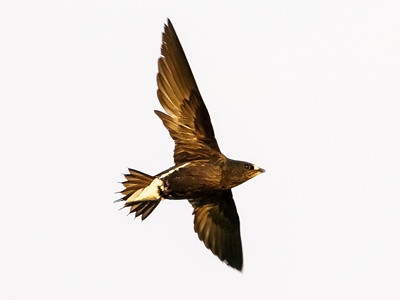
Brown-backed Needletail
Fast, cigar-shaped swift that screams over forest canopy; seen in passage periods. Nests in cliffs away from observers; watch the skies above clearings and rivers for rapid aerial displays.
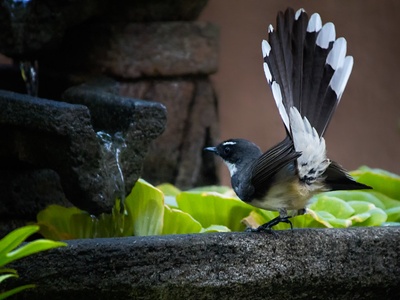
Pied Fantail
Energetic, tail-fanning flycatcher that flicks and flutters near people. Bold and curious, often joins mixed flocks and follows walkers to catch disturbed insects. Easy to see in most lowland habitats.
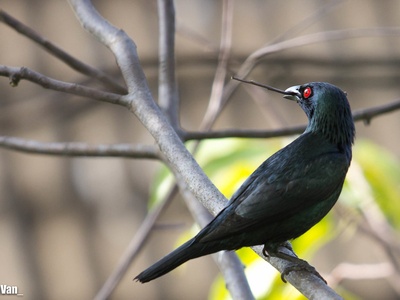
Asian Glossy Starling
Glossy metallic starling often in noisy flocks. Feeds on fruit and insects; readily seen in towns, along rivers and at fruiting trees. Highly social and conspicuous with chattering calls.
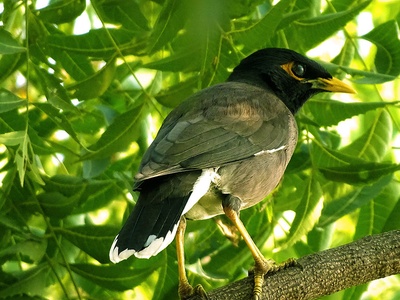
Common Myna
Bold, adaptable myna with yellow eye-patch; often found around human habitations. Omnivorous and territorial, frequently seen perched on wires or scavenging in markets and gardens.
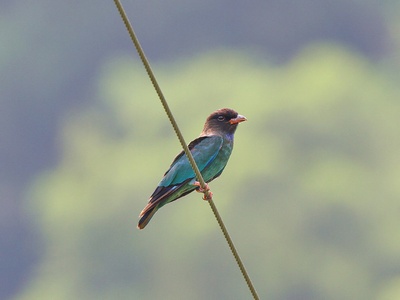
Dollarbird
Colorful roller-like bird with blue wings and large bill; perches prominently to hawk insects. Named for pale round wing patch visible in flight. Regular at river corridors and forest clearings.
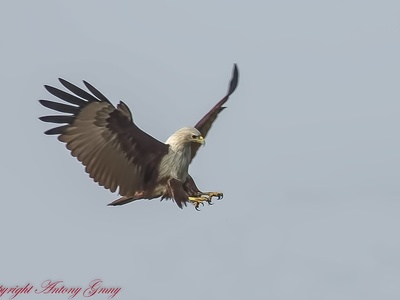
Brahminy Kite
Chestnut-bodied raptor with white head, often seen soaring over waterways and coasts. Scavenges and hunts fish; a familiar sight around river mouths, estuaries and town rivers.
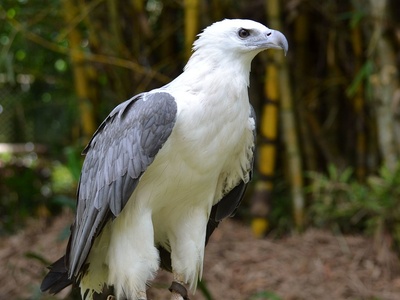
White-bellied Sea Eagle
Powerful coastal raptor with broad wings and distinctive silhouette. Hunts fish and crabs; often seen perched on shoreline trees or soaring above estuaries and offshore islands.
Osprey
Specialist fish-eating raptor that hovers and plunges for prey. Widespread along coastal and large inland waters in Borneo; easily identified by white underparts and crooking call.
Changeable Hawk-Eagle
Medium-sized forest raptor with variable plumage; often seen perched high above canopy or gliding between trees. Hunts birds and small mammals; common in a range of wooded habitats.
Great-billed Heron
Large, shy heron with massive bill; prefers dense mangrove channels and quiet tidal creeks. Often solitary and cryptic, best found at low tides in protected estuaries and coastal reserves.
Little Egret
Slender white heron with black bill and yellow feet patches. Active hunter in shallow water, common in wetlands and coastal mudflats across Borneo; readily observed on lowland birding trips.
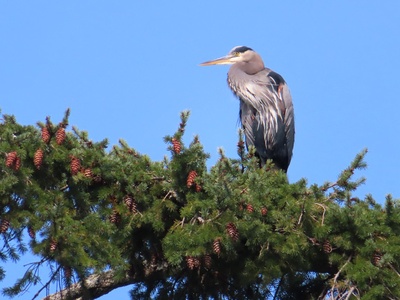
Grey Heron
Tall, long-necked heron found along rivers and wetlands. Some resident, some migratory individuals arrive seasonally. Frequently seen standing motionless while hunting fish and amphibians in open water bodies.
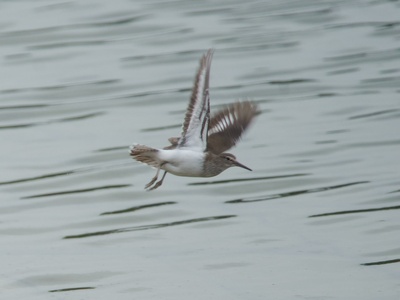
Common Sandpiper
Small, bobbing wader with white underparts and characteristic teetering gait. Regular migrant stopping at rivers and coastal mudflats during passage; easy to spot at low tide along sheltered shores.
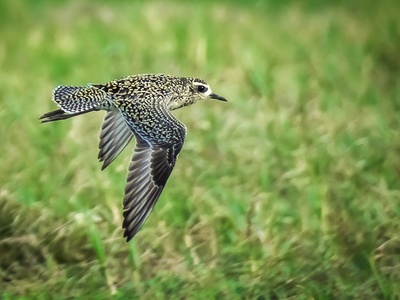
Pacific Golden Plover
Elegant plover with golden-speckled back in non-breeding plumage. Uses coastal mudflats and open inland fields while migrating through Borneo; often seen in flocks at low tide foraging for invertebrates.