Nebraska sits where prairie, river and wetland ecosystems meet, so the state’s birdlife shifts with the seasons and the landscape. From riverside shorebirds to woodland and grassland species, you’ll encounter different communities depending on where and when you look.
There are 98 Birds of Nebraska, ranging from American Avocet to Yellow-billed Cuckoo. For each species you’ll find below the Scientific name, Status, Months seen, which makes it easy to check when a bird is likely to be present and whether it’s a regular resident or a rare visitor.
When is the best time to see the most species in Nebraska?
Spring migration (April–May) and fall migration (September) offer the greatest variety, with many transient shorebirds and songbirds passing through. Target wetlands, river corridors and early-morning watches to maximize sightings.
How do I use the Scientific name, Status, Months seen columns when planning trips?
Use the Scientific name to confirm IDs across guides, the Status column to learn if a species is common, seasonal, or rare, and Months seen to plan visits during peak occurrence—combine locations and timing for the best results.
Birds of Nebraska
| Common name | Scientific name | Status | Months seen |
|---|---|---|---|
| Mallard | Anas platyrhynchos | Resident | Year-round |
| Canada Goose | Branta canadensis | Resident | Year-round |
| Wood Duck | Aix sponsa | Breeder | Mar–Aug |
| Northern Pintail | Anas acuta | Regular migrant | Mar–May, Sep–Nov |
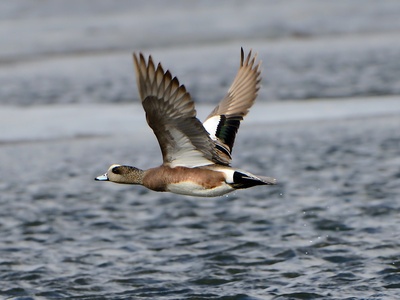
| American Wigeon | Mareca americana | Regular migrant | Mar–May, Sep–Nov |
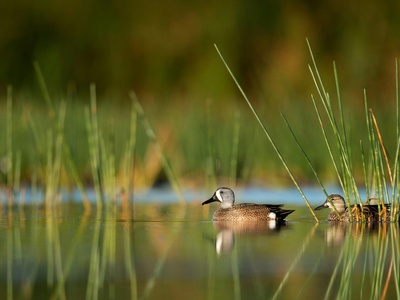
| Green-winged Teal | Anas carolinensis | Regular migrant | Mar–May, Sep–Nov |
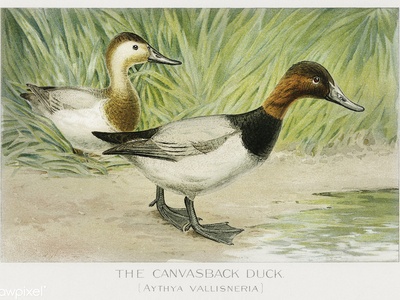
| Canvasback | Aythya valisineria | Regular migrant | Mar–May, Sep–Nov |
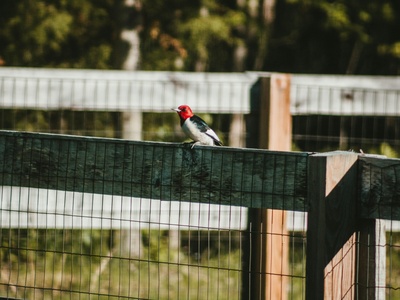
| Redhead | Aythya americana | Regular migrant | Mar–May, Sep–Nov |
| Ring-necked Duck | Aythya collaris | Regular migrant | Mar–May, Sep–Nov |
| Lesser Scaup | Aythya affinis | Regular migrant | Mar–May, Sep–Nov |
| Ruddy Duck | Oxyura jamaicensis | Breeder | Apr–Sep |
| American White Pelican | Pelecanus erythrorhynchos | Breeder | Apr–Sep |
| Double-crested Cormorant | Nannopterum auritum | Regular migrant | Mar–Oct |
| Great Blue Heron | Ardea herodias | Resident | Year-round |
| Great Egret | Ardea alba | Regular migrant | Mar–Oct |
| Snowy Egret | Egretta thula | Regular migrant | Apr–Sep |
| Cattle Egret | Bubulcus ibis | Regular migrant | Apr–Sep |
| Green Heron | Butorides virescens | Regular migrant | Apr–Sep |
| Black-crowned Night-Heron | Nycticorax nycticorax | Regular migrant | Apr–Sep |
| Turkey Vulture | Cathartes aura | Regular migrant | Mar–Nov |
| Osprey | Pandion haliaetus | Regular migrant | Apr–Sep |
| Bald Eagle | Haliaeetus leucocephalus | Winter resident | Nov–Mar |
| Northern Harrier | Circus hudsonius | Regular migrant | Mar–May, Sep–Nov |
| Sharp-shinned Hawk | Accipiter striatus | Regular migrant | Mar–May, Sep–Nov |
| Cooper’s Hawk | Accipiter cooperii | Resident | Year-round |
| Red-tailed Hawk | Buteo jamaicensis | Resident | Year-round |
| Swainson’s Hawk | Buteo swainsoni | Breeder | Apr–Sep |
| Ferruginous Hawk | Buteo regalis | Accidental/rare | Oct–Mar |
| American Kestrel | Falco sparverius | Resident | Year-round |
| Merlin | Falco columbarius | Regular migrant | Sep–Apr |
| Peregrine Falcon | Falco peregrinus | Accidental/rare | Mar–Oct |
| Wild Turkey | Meleagris gallopavo | Resident | Year-round |
| Ring-necked Pheasant | Phasianus colchicus | Resident | Year-round |
| Greater Prairie-Chicken | Tympanuchus cupido | Breeder | Apr–May |
| Sora | Porzana carolina | Breeder | Apr–Sep |
| American Coot | Fulica americana | Regular migrant | Mar–Nov |
| Sandhill Crane | Antigone canadensis | Regular migrant | Mar–Apr |
| Killdeer | Charadrius vociferus | Breeder | Mar–Sep |
| American Avocet | Recurvirostra americana | Breeder | Apr–Sep |
| Wilson’s Phalarope | Phalaropus tricolor | Breeder | May–Aug |
| Spotted Sandpiper | Actitis macularius | Regular migrant | Apr–Sep |
| Least Sandpiper | Calidris minutilla | Regular migrant | Apr–May, Jul–Sep |
| Semipalmated Sandpiper | Calidris pusilla | Regular migrant | May–Jul |
| Black-bellied Plover | Pluvialis squatarola | Regular migrant | May–Sep |
| Dunlin | Calidris alpina | Regular migrant | Apr–May, Aug–Oct |
| Long-billed Dowitcher | Limnodromus scolopaceus | Regular migrant | Apr–May, Aug–Oct |
| Wilson’s Snipe | Gallinago delicata | Regular migrant | Mar–May, Sep–Nov |
| Mourning Dove | Zenaida macroura | Resident | Year-round |
| Yellow-billed Cuckoo | Coccyzus americanus | Regular migrant | May–Aug |
| Eastern Screech-Owl | Megascops asio | Resident | Year-round |
| Great Horned Owl | Bubo virginianus | Resident | Year-round |
| Burrowing Owl | Athene cunicularia | Breeder | Apr–Aug |
| Barn Owl | Tyto alba | Resident | Year-round |
| Barred Owl | Strix varia | Resident | Year-round |
| Common Nighthawk | Chordeiles minor | Regular migrant | May–Sep |
| Chimney Swift | Chaetura pelagica | Regular migrant | May–Sep |
| Ruby-throated Hummingbird | Archilochus colubris | Regular migrant | May–Sep |
| Broad-tailed Hummingbird | Selasphorus platycercus | Accidental/rare | May–Jul |
| Belted Kingfisher | Megaceryle alcyon | Regular migrant | Mar–Nov |
| Red-headed Woodpecker | Melanerpes erythrocephalus | Breeder | Apr–Sep |
| Red-bellied Woodpecker | Melanerpes carolinus | Resident | Year-round |
| Downy Woodpecker | Dryobates pubescens | Resident | Year-round |
| Hairy Woodpecker | Dryobates villosus | Resident | Year-round |
| Northern Flicker | Colaptes auratus | Resident | Year-round |
| Pileated Woodpecker | Dryocopus pileatus | Resident | Year-round |
| Olive-sided Flycatcher | Contopus cooperi | Regular migrant | May–Jun |
| Western Kingbird | Tyrannus verticalis | Breeder | May–Aug |
| Eastern Kingbird | Tyrannus tyrannus | Breeder | May–Aug |
| Scissor-tailed Flycatcher | Tyrannus forficatus | Regular migrant | May–Sep |
| Horned Lark | Eremophila alpestris | Resident | Year-round |
| Purple Martin | Progne subis | Breeder | Apr–Sep |
| Tree Swallow | Tachycineta bicolor | Breeder | Apr–Sep |
| Bank Swallow | Riparia riparia | Breeder | Apr–Sep |
| Cliff Swallow | Petrochelidon pyrrhonota | Breeder | Apr–Sep |
| Barn Swallow | Hirundo rustica | Breeder | Apr–Sep |
| Blue Jay | Cyanocitta cristata | Resident | Year-round |
| American Crow | Corvus brachyrhynchos | Resident | Year-round |
| Common Raven | Corvus corax | Resident | Year-round |
| Horned Grebe | Podiceps auritus | Regular migrant | Apr–May, Sep–Nov |
| Eared Grebe | Podiceps nigricollis | Regular migrant | Mar–Oct |
| Rock Pigeon | Columba livia | Resident | Year-round |
| Eurasian-collared Dove | Streptopelia decaocto | Resident | Year-round |
| White-winged Dove | Zenaida asiatica | Regular migrant | May–Sep |
| Red-breasted Nuthatch | Sitta canadensis | Regular migrant | Nov–Mar |
| White-breasted Nuthatch | Sitta carolinensis | Resident | Year-round |
| Carolina Wren | Thryothorus ludovicianus | Resident | Year-round |
| House Wren | Troglodytes aedon | Breeder | Apr–Aug |
| Marsh Wren | Cistothorus palustris | Breeder | Apr–Aug |
| Blue-gray Gnatcatcher | Polioptila caerulea | Regular migrant | May–Aug |
| Golden-crowned Kinglet | Regulus satrapa | Regular migrant | Sep–Apr |
| Ruby-crowned Kinglet | Corthylio calendula | Regular migrant | Apr–May, Sep–Oct |
| Western Bluebird | Sialia mexicana | Regular migrant | Mar–Sep |
| Eastern Bluebird | Sialia sialis | Breeder | Mar–Oct |
| American Goldfinch | Spinus tristis | Resident | Year-round |
| House Finch | Haemorhous mexicanus | Resident | Year-round |
| Purple Finch | Haemorhous purpureus | Regular migrant | Nov–Mar |
| Pine Siskin | Spinus pinus | Winter resident | Nov–Mar |
| Common Redpoll | Acanthis flammea | Accidental/rare | Nov–Mar |
Images and Descriptions
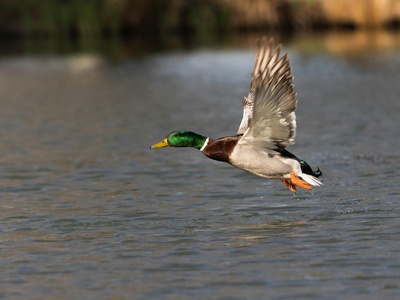
Mallard
Medium dabbling duck common on ponds, rivers and reservoirs statewide. Seen year-round in urban parks and wetlands, abundant in migration and winter. Males’ green heads and loud quack make them easy to spot in flocks.
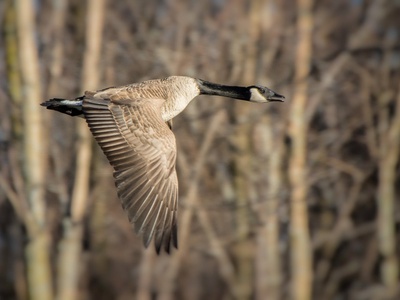
Canada Goose
Large waterfowl found across Nebraska in fields, lakes and rivers. Year-round residents and massive spring/fall migrants along Platte River. Recognizable by black head, white cheek patch and honking V-formations during migration.
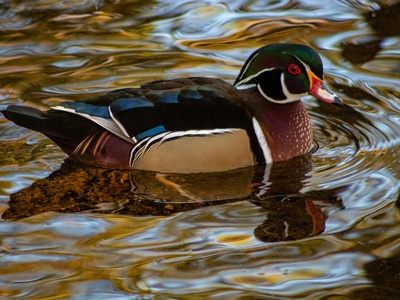
Wood Duck
Colorful medium duck of wooded creeks, oxbows and beaver ponds, especially eastern Nebraska. Breeds in nest boxes and tree cavities in spring–summer. Male’s iridescent head and ornate patterning are unmistakable at close range.
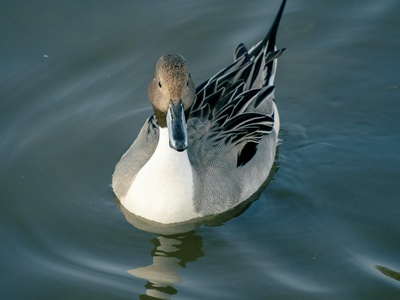
Northern Pintail
Slim, long-necked dabbling duck seen on marshes, wetlands and prairie potholes during migration. Long-pointed tail on males is diagnostic. Common in spring and fall stopovers across the Platte Valley and Sandhills.
American Wigeon
Medium dabbling duck frequenting wetlands, reservoirs and flooded fields during migration. Males show white forehead and green eye stripe. Often seen feeding in mixed flocks with mallards and teal.
Green-winged Teal
Small dabbling duck frequent on shallow marshes, wetlands and river edges during migration. Males have a striking green cheek stripe. Numerous during spring and fall staging in prairie potholes and the Platte Valley.
Canvasback
Large diving duck seen on large lakes and reservoirs during migration. Sloping forehead and long bill give a distinctive profile; males show chestnut head. Common migrant on central Nebraska reservoirs.
Redhead
Medium diving duck on lakes and marshes, recognizable by round rusty head in males. Seen during spring and fall migration throughout Nebraska, especially on large reservoirs and river impoundments.
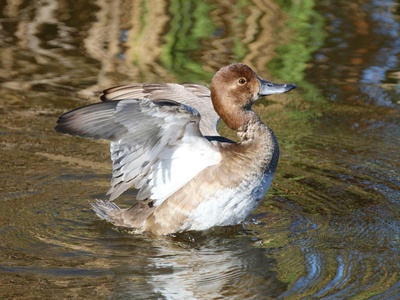
Ring-necked Duck
Medium diving duck of ponds and reservoirs during migration. Noted for peaked head and thin pale ring on bill. Frequently seen in mixed diving-duck flocks statewide during spring and fall.
Lesser Scaup
Medium diving duck common on lakes and river backwaters in migration and winter. Males show glossy head and pale sides. Large numbers stage on Nebraska reservoirs each season.
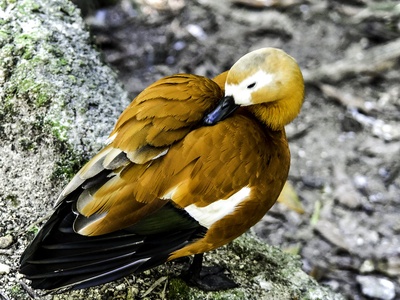
Ruddy Duck
Small, chunky diving duck of marshes, prairie potholes and impoundments. Breeds in summer across Nebraska wetlands; males show bright blue bill in breeding plumage and stiff tail often cocked upward.
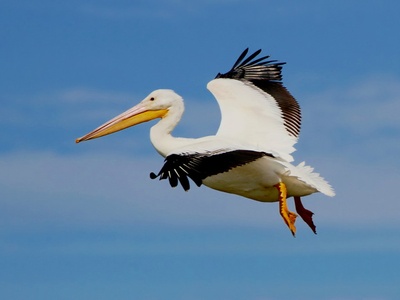
American White Pelican
Very large, long-winged pelican found on inland lakes and reservoirs, notably Lake McConaughy and Sandhills. Breeds in colonies on islands in summer; conspicuous in flight with huge bill and white body.
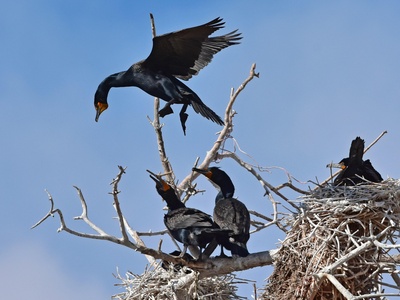
Double-crested Cormorant
Medium–large fish-eating bird seen on rivers, reservoirs and Platte River channel. Perches and dries wings on pilings; nests on rocky islands and trees in summer. Long neck and hooked bill aid fish capture.
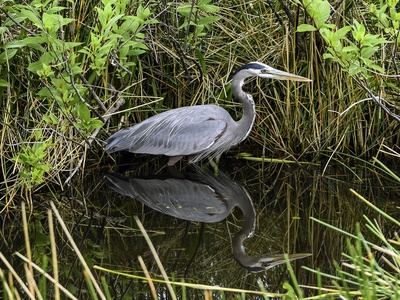
Great Blue Heron
Large heron common in marshes, rivers, reservoirs and lakes statewide. Year-round in many areas; nests in colonies in tall trees. Long neck and daggerlike bill make it a patient hunter of shallow waters.
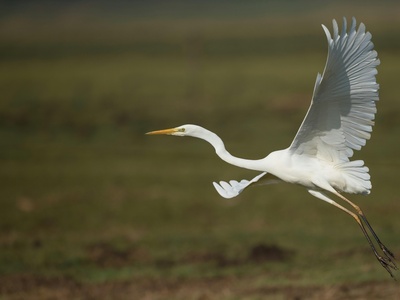
Great Egret
Large white heron that frequents marshes, ponds and river edges in spring and summer. Seen migrating through the Platte Valley and at wetlands statewide. Long black legs and yellow bill are distinguishing features.
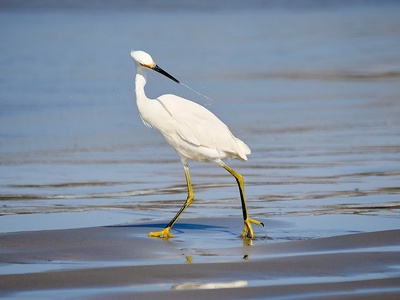
Snowy Egret
Smallish white egret of marshes, mudflats and shallow shorelines during the warmer months. Notable for black legs and yellow feet used while wading; occurs sporadically across Nebraska wetlands in summer.
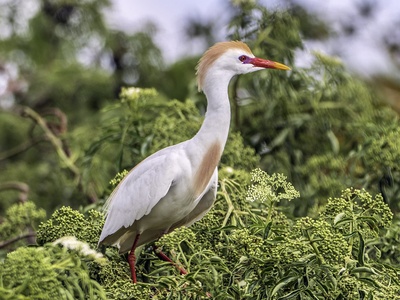
Cattle Egret
Small white heron often seen in agricultural fields, pastures and along roadsides with livestock. Breeds in colonies; common in summer and during migration across Nebraska, especially near wet meadows and hayfields.
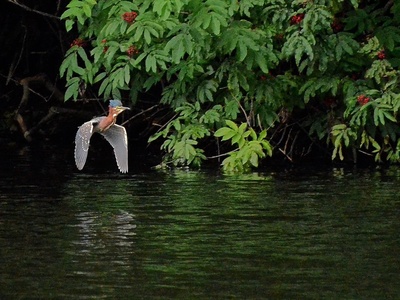
Green Heron
Small, stocky heron of woodlots, marshy streams and oxbow lakes in eastern and central Nebraska. Secretive breeder in cattails and brush; noted for compact silhouette and slow-fishing behavior from perches.
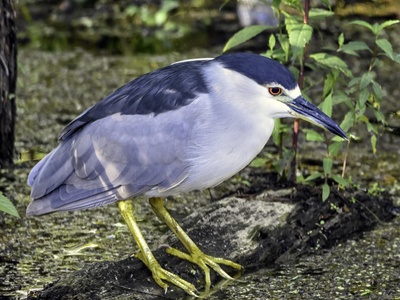
Black-crowned Night-Heron
Chunky, nocturnal heron that nests in colonies in trees near wetlands and rivers. Common at dusk and dawn on reservoirs and marshes; short neck and thick body distinguish it from other herons.
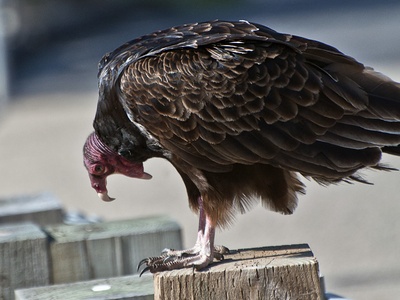
Turkey Vulture
Large scavenging bird seen soaring over prairies, valleys and along highways statewide from spring through fall. Often seen along Platte River corridors; easy identification by wing shape and V-shaped flight silhouette.
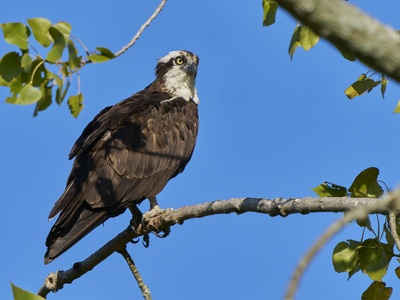
Osprey
Fish-eating raptor found along major rivers and reservoirs, especially Platte River and eastern reservoirs. Nest platforms on poles and channel islands in summer. Distinctive hovering fishing behavior and dark eye stripe.
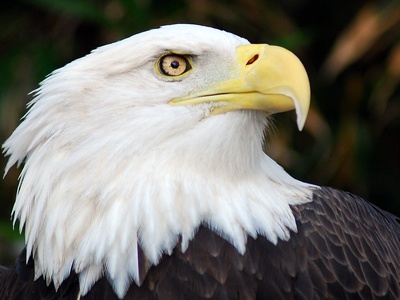
Bald Eagle
Large raptor seen most commonly in winter along Platte River, reservoirs and river valleys feeding on fish and carrion. Occasional summer breeders; unmistakable white head on adult birds and massive yellow bill.
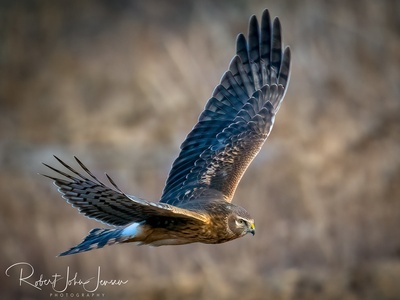
Northern Harrier
Low-gliding raptor of open grasslands, marshes and prairie potholes. Breeds locally in marshes and fields; long tail and owl-like facial disk help detect prey. Common during migration and breeding season.
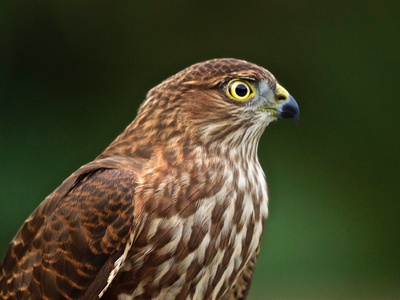
Sharp-shinned Hawk
Small, agile forest hawk that chases songbirds through wooded edges and suburban neighborhoods. Seen migrating through river corridors; long-tailed silhouette and quick wingbeats distinguish it from Cooper’s Hawk.
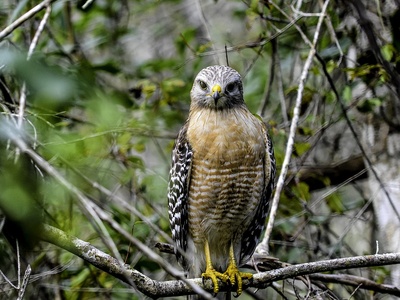
Cooper’s Hawk
Medium accipiter common in woodlands, suburbs and riparian corridors statewide. Resident and breeding in many areas; long tail and rounded wings, often seen hunting at feeders or flying fast between trees.
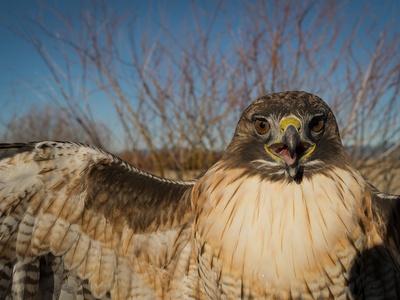
Red-tailed Hawk
Large, widespread hawk of fields, highways and open country across Nebraska. Year-round presence with classic reddish tail in adults; commonly perched on fenceposts and utility poles scanning for rodents.
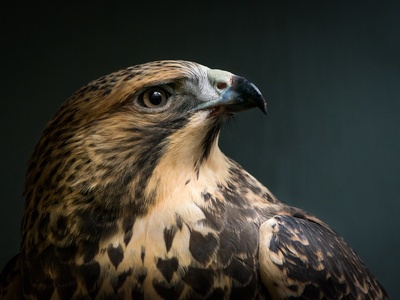
Swainson’s Hawk
Long-winged prairie raptor that breeds in grasslands and agricultural areas across Nebraska in summer. Massively migratory, with spectacular fall migrations. Slim silhouette in flight and dark belly patch on many individuals.
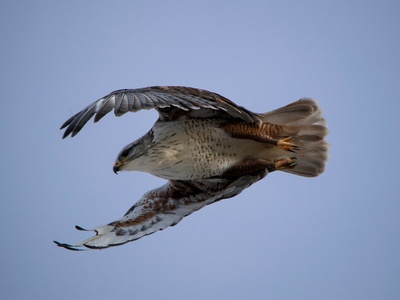
Ferruginous Hawk
Large prairie hawk chiefly of western Nebraska and Panhandle grasslands in winter; uncommon statewide. Pale or rust-colored morphs are distinctive. Seen on open plains and ridgelines during colder months or irregular irruptions.
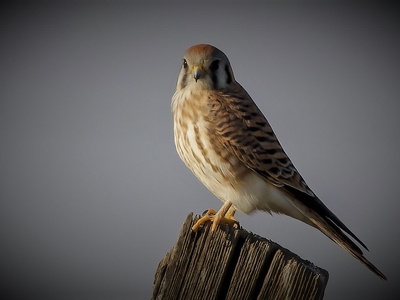
American Kestrel
Small, colorful falcon common in open country, towns and prairies statewide. Year-round residents use nest boxes and cavities. Notable for hovering hunting behavior and rufous back with spotted wings in males.

Merlin
Small, fast falcon of open fields and shorelines during migration and winter. Hunts small birds in flight; compact silhouette with rapid wingbeats. Seen more often in fall through early spring across Nebraska.
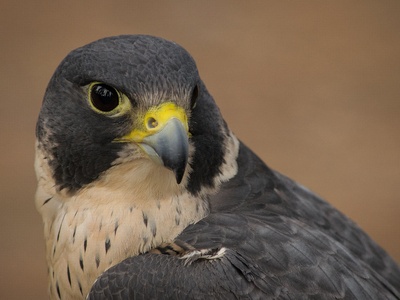
Peregrine Falcon
Powerful, fast falcon recorded in cities and along river cliffs; occasional nesters on bridges in urban centers. Rare but increasing in frequency; long, pointed wings and heavy build set it apart during high-speed stoops.
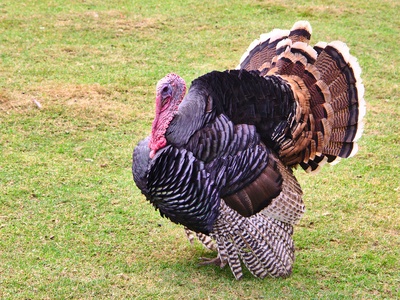
Wild Turkey
Large ground bird of woodlands, riparian areas and agricultural edges across Nebraska. Resident populations roost in trees and are highly visible during breeding and hunting seasons. Males display fan tails and colorful heads.
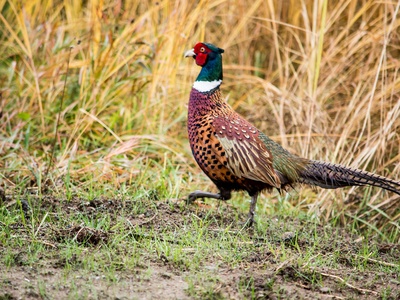
Ring-necked Pheasant
Introduced game bird widespread in agricultural fields, grasslands and wetlands, especially in central and eastern Nebraska. Large, colorful males with long tails are conspicuous. Abundant where grass cover and food crops exist.
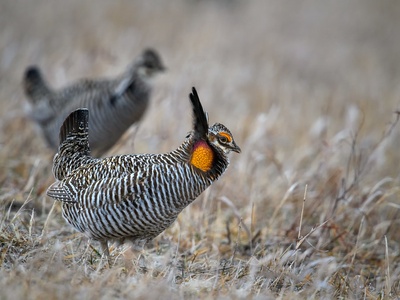
Greater Prairie-Chicken
Grassland specialist of remnant prairies and Sandhills where booming displays occur in spring. Rare but locally significant in western and central Nebraska; notable for striking display plumage and dramatic lekking behavior.
Sora
Small, secretive rail of marshes, wetlands and cattail stands across Nebraska. Breeds in wet meadows and oxbows in spring–summer. Short, chicken-like body and distinctive descending whinny call mark its presence rather than sighting.
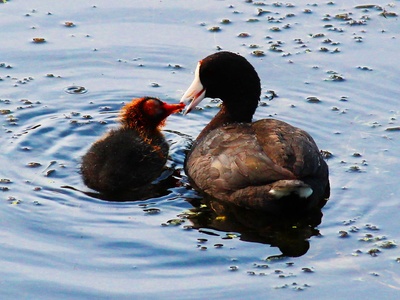
American Coot
Stocky waterbird of lakes, marshes and reservoirs; common during migration and summer. Often in large flocks on open water; dark body and white bill differentiate it from ducks. Forages by diving and dabbling.
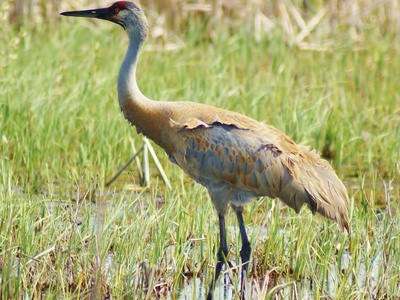
Sandhill Crane
Iconic large crane concentrated at Platte River during massive spring staging in March–April; also breeds in Sandhills. Tall, gray birds with red forehead patch and trumpeting calls; one of Nebraska’s most famous seasonal spectacles.
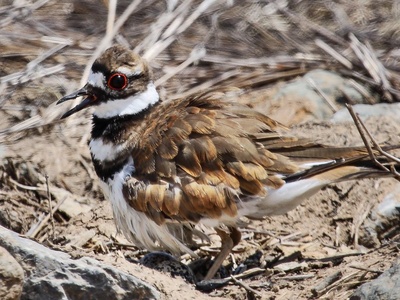
Killdeer
Medium plover of mudflats, shorelines, fields and lawns statewide. Breeds on gravel roofs and open ground; famous broken-wing distraction display. Bold ringed neck markings and loud calls make it familiar in both rural and urban areas.
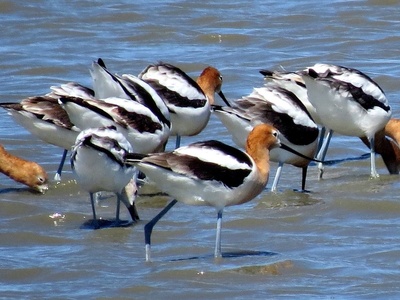
American Avocet
Long-legged shorebird of shallow wetlands, saline lakes and prairie potholes. Breeds in flocks on playa lakes and Sandhills; striking black-and-white pattern with upturned bill in breeding season. Often seen wading in shallow water.
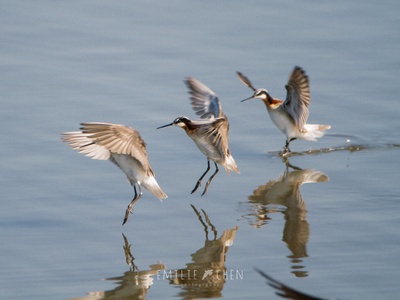
Wilson’s Phalarope
Unique shorebird that breeds on prairie wetlands and shallow saline lakes, especially in Sandhills. Females brighter than males and may lead courtship; spins while feeding on small aquatic invertebrates in shallow water.
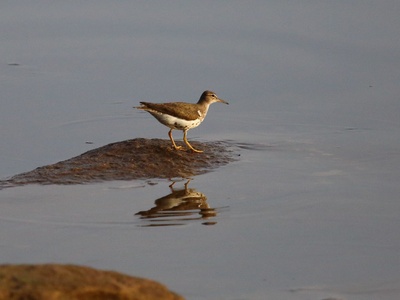
Spotted Sandpiper
Small, bobbing shorebird along streams, lakeshores and riverbanks statewide. Breeds in riparian areas and displays distinctive teetering motion and spotted breeding plumage. Common spring–fall migrant and summer resident in suitable habitat.
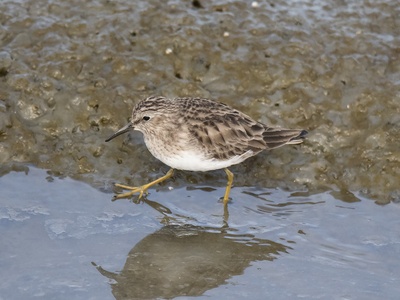
Least Sandpiper
Tiny peep frequenting mudflats, wetlands and shoreline during migration. Breeds farther north but abundant in Nebraska during spring and fall stopovers. Short yellow legs and small size help distinguish it from similar peeps.
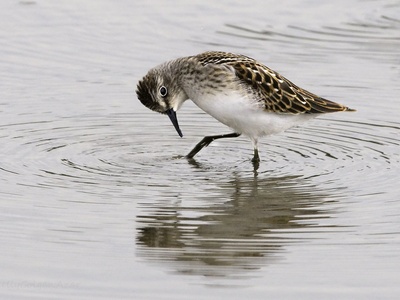
Semipalmated Sandpiper
Small shorebird seen on mudflats and saline lakes during northbound spring migration and southbound fall movement. Often in tight flocks, with short bills and semi-webbed toes; common migrant at Platte Valley wetlands.
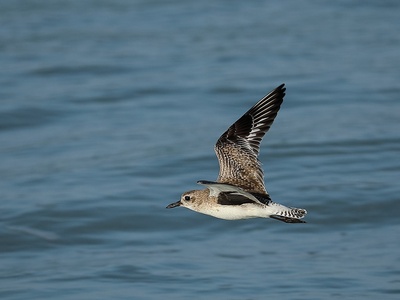
Black-bellied Plover
Large plover of mudflats and shorelines during migration. In breeding plumage shows black belly and face; common in spring and fall along Platte River shorelines and saline lakes statewide.
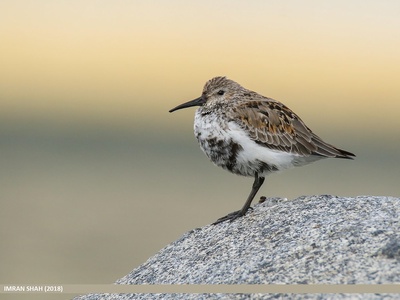
Dunlin
Medium-sized sandpiper occurring on mudflats and wet fields during migration. Breeding plumage shows black belly patch; large migratory flocks gather at reservoirs and saline lakes in spring and fall.
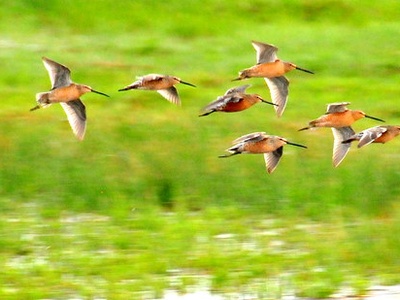
Long-billed Dowitcher
Long-billed shorebird of marshes and flooded fields during migration. Probing feeding action and hen-like short flights characterize it; common on central Nebraska wetlands during spring and fall staging.
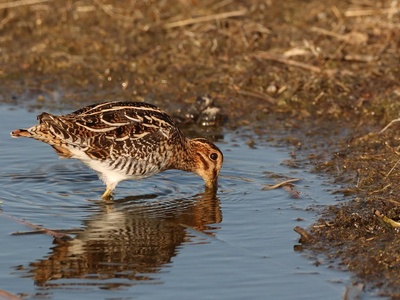
Wilson’s Snipe
Cryptic marsh bird of wet meadows and muddy wetlands, often seen during migration and breeding season. Long, straight bill used to probe for invertebrates; explosive zigzag flight when flushed is distinctive.
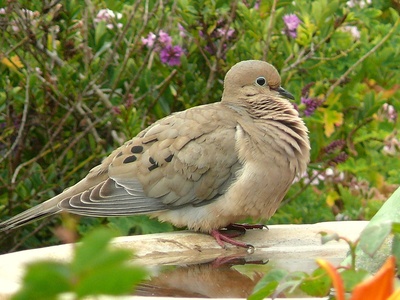
Mourning Dove
Moderate-sized, ubiquitous dove of towns, grasslands and agricultural areas across Nebraska. Year-round residents and common breeders. Soft cooing song, long tail and swift flight are familiar in both urban and rural settings.
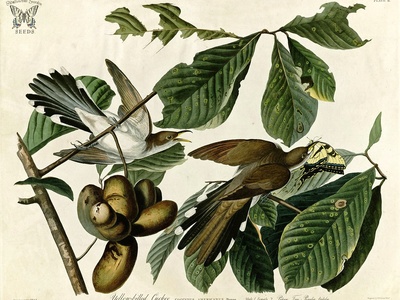
Yellow-billed Cuckoo
Secretive summer visitor to riparian woodlands and tall shrub patches in eastern Nebraska. Breeds locally where cottonwoods and riverine brush occur. Notable for rhythmic “cow-cow” calls and long, graduated tail.
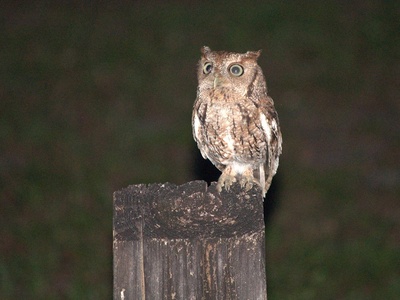
Eastern Screech-Owl
Small cavity-dwelling owl of woodlots, suburbs and riparian forests, mainly eastern Nebraska. Year-round resident that uses nest boxes and tree cavities; small, ear-tufted silhouette and trilling calls reveal presence at night.
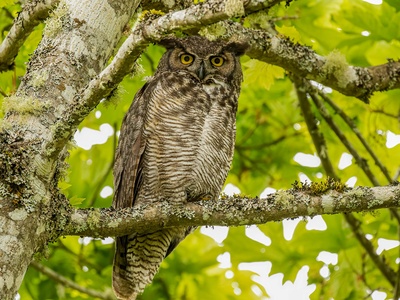
Great Horned Owl
Large, widespread owl of forests, river corridors and rural areas statewide. Year-round resident and versatile predator; nests early in season. Massive ear tufts, deep hooting and stealthy night hunting make it a notable Nebraska raptor.
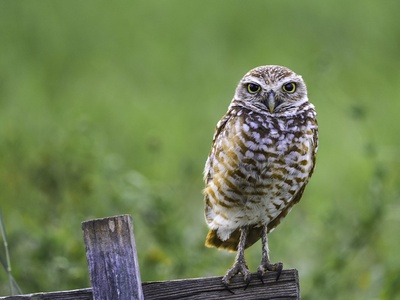
Burrowing Owl
Small, ground-dwelling owl of shortgrass prairies and agricultural edges, especially in western Nebraska and Sandhills. Nests in burrows often dug by mammals; diurnal and conspicuous when perched on fenceposts. Declining but present locally.
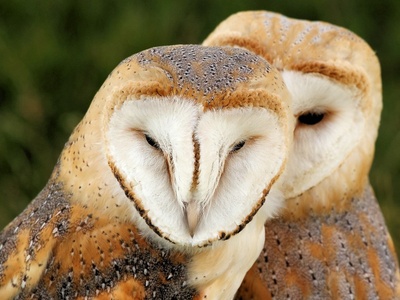
Barn Owl
Ghostly, pale owl of open country, barns and riparian woodlots across Nebraska. Year-round resident in suitable areas; hunts rodents at night. Distinctive heart-shaped face and silent flight make it efficient and often found near farms.
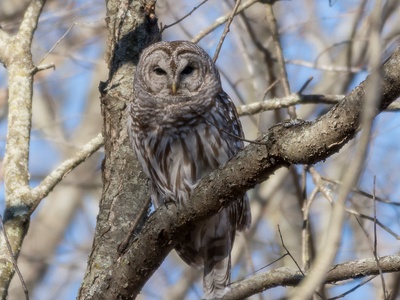
Barred Owl
Large, hooting owl of mature woodlands and bottomlands in eastern Nebraska. Year-round resident, especially along Platte and Missouri river corridors. Dense barring on chest and rounded head with dark eyes distinguish it from other owls.
Common Nighthawk
Aerial insectivore of open skies over towns, grasslands and river corridors at dusk. Flies with strong erratic wingbeats and white throat bar visible in flight. Passage migrant and summer visitor in Nebraska’s open habitats.
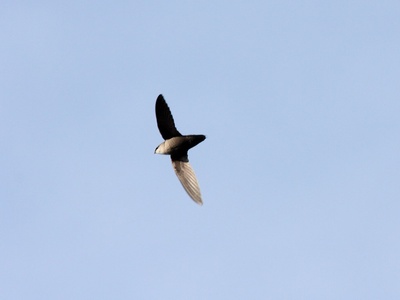
Chimney Swift
Cigar-shaped aerial bird of urban areas and river valleys, nesting in chimneys and hollow trees. Migrates through Nebraska each spring and fall; constant rapid wingbeats and scissor-like flight silhouette are unmistakable.
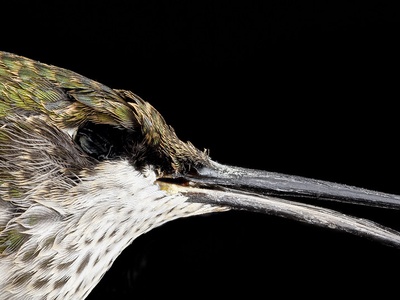
Ruby-throated Hummingbird
Tiny, iridescent hummer that passes through and breeds in eastern Nebraska woodlands and suburbs. Arrives in late spring, frequenting feeders and flowering gardens. Males show ruby throat; quick hovering and territorial behavior common.
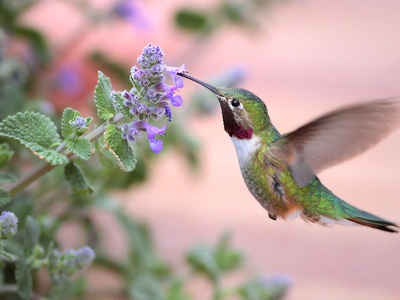
Broad-tailed Hummingbird
Western hummingbird occasionally recorded in Nebraska’s Panhandle and western counties. Small and chunky with stepped tail; rare vagrant that delights observers when spotted at feeders or mountain-like habitats in summer.
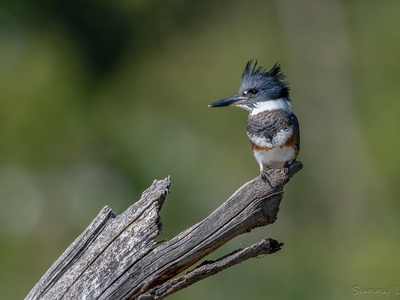
Belted Kingfisher
Medium fish-eating bird found along rivers, reservoirs and pond edges statewide in warmer months. Perches on wires and dives for fish; raucous rattling call and head crest are field marks. Common spring–fall visitor and breeder.
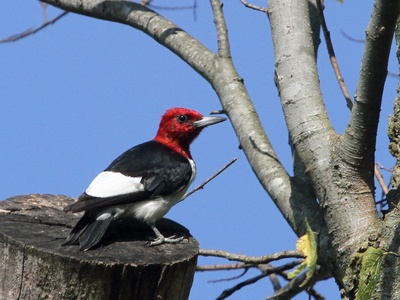
Red-headed Woodpecker
Striking medium woodpecker of woodlots, riparian trees and open oak savannas, mainly in eastern Nebraska. Breeds in tree cavities; bold red head, white belly and black-and-white wing pattern make it unmistakable where present.
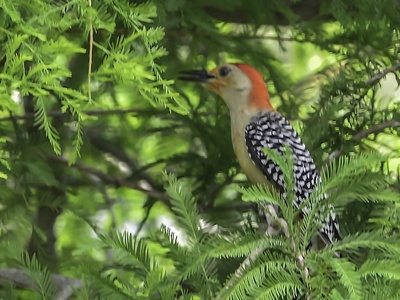
Red-bellied Woodpecker
Medium, common woodpecker expanding across Nebraska’s eastern woodlands and suburbs. Year-round resident, active at suet feeders. Pale red wash on belly, bold black-and-white barred back and red nape in males are identifying traits.
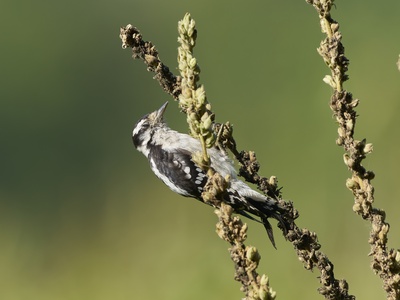
Downy Woodpecker
Small woodpecker of woods, parks and suburban yards statewide. Year-round resident; often seen at feeders. Short bill relative to head, black-and-white pattern and small size distinguish it from similar hairy woodpecker.
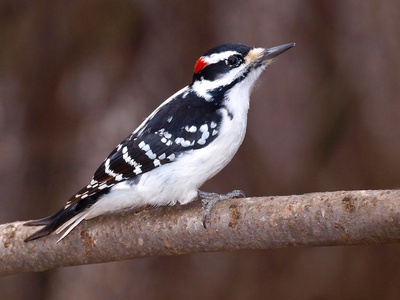
Hairy Woodpecker
Medium woodpecker of mature woodlands and riverine forests, commonly found year-round. Larger bill and size than downy woodpecker; black-and-white pattern and steady drumming on trunks help locate them in wooded areas.
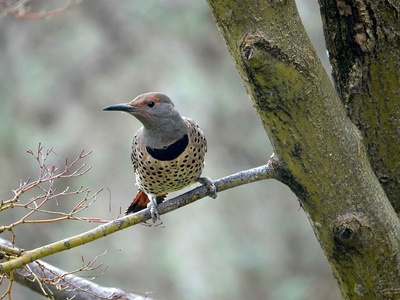
Northern Flicker
Large, ground-feeding woodpecker of open woodlands, parks and grasslands statewide. Year-round resident with spotted belly and prominent white rump in flight; call and floppy flight often reveal presence before sighting.
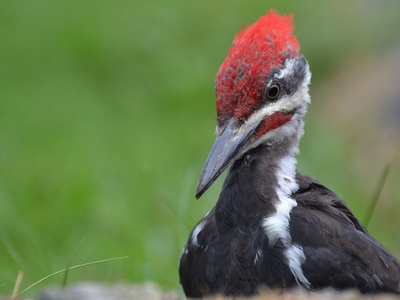
Pileated Woodpecker
Very large, crow-sized woodpecker of mature forests and river corridors, mainly eastern Nebraska. Year-round resident; excavates huge rectangular holes in dead trees. Bold red crest and black body are unmistakable in tall woodlands.
Olive-sided Flycatcher
Treetop flycatcher passing through in late spring to early summer, favoring riparian woodlands and tall trees along rivers. Sits conspicuously on dead tops, hawking large insects; declining but reliably seen in migration windows.
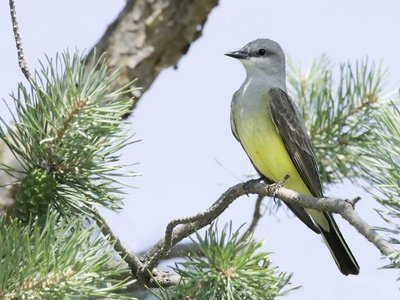
Western Kingbird
Bold, long-tailed flycatcher of open country, fenceposts and highwaysides in western and central Nebraska. Breeds in summer, often perched conspicuously; gray head, yellow belly and black tail end give a distinct profile.
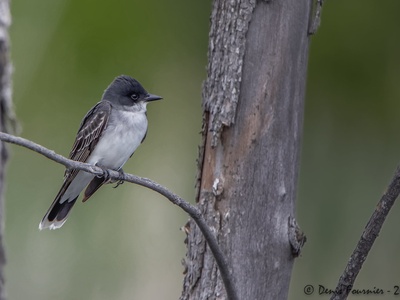
Eastern Kingbird
Common breeding flycatcher of river corridors, grasslands and wetlands across Nebraska. Perches conspicuously and defends territory aggressively; black-and-white head pattern with white tail tip visible in flight.
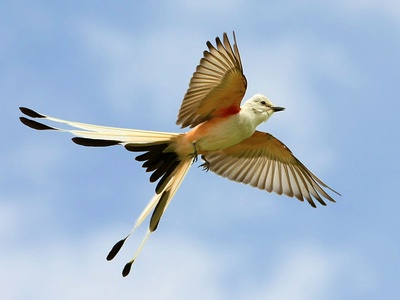
Scissor-tailed Flycatcher
Elegant long-tailed flycatcher seen in open prairies, towns and roadsides, especially in central and southern Nebraska during summer. Noted for spectacularly long forked tail in males and aerial insect-catching displays.
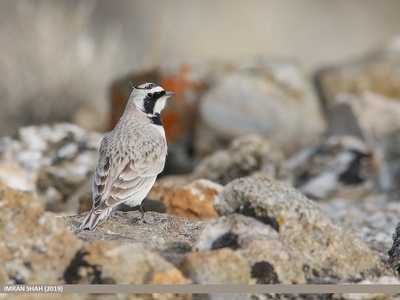
Horned Lark
Small ground-dwelling songbird of open fields, roadsides and agricultural lands across Nebraska. Year-round resident, especially on prairies and shortgrass areas. Distinctive black face pattern and skylarking song flights on breezy days.
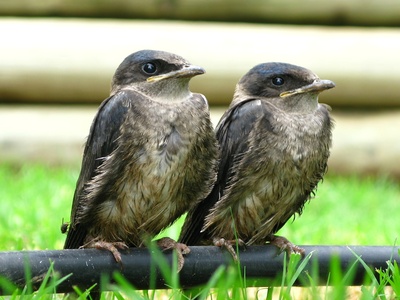
Purple Martin
Large swallow that nests in colonies in houses and gourds in towns and river valleys. Breeds statewide where nest structures are provided; aerial feeder on insects, noted for boisterous communal behavior and glossy blue-black adults.
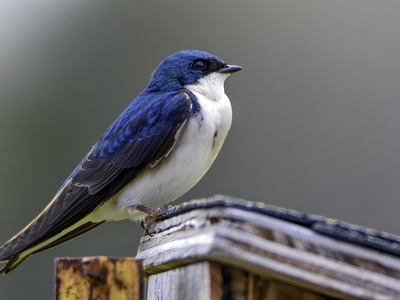
Tree Swallow
Sleek, iridescent swallow that nests in boxes and tree cavities near wetlands, ponds and rivers. Common breeder in Nebraska with graceful flight and bubbly twittering; often among first swallows to return in spring.
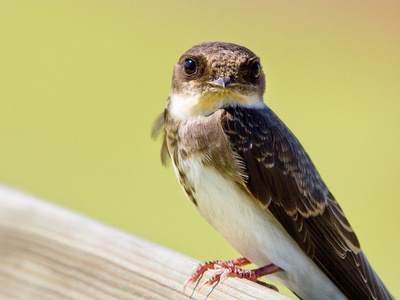
Bank Swallow
Small, social swallow that nests in colonies in sandy banks and bluffs along rivers, particularly Platte River. Forages over water and fields; brown back and distinct breast band in flight help identification during breeding season.
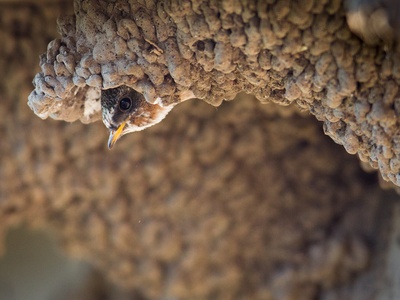
Cliff Swallow
Gregarious colonial nester on bridges, cliffs and buildings across Nebraska, notably along river corridors. Builds gourd-like mud nests in large colonies; pale rump and squared tail in flight are distinguishing features.
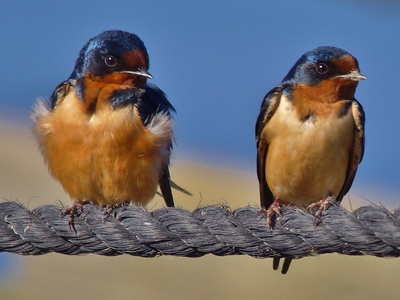
Barn Swallow
Common, fork-tailed swallow nesting on barns, bridges and structures statewide. Breeds across Nebraska in summer; gleaming blue upperparts and cinnamon underparts with deeply forked tail make it unmistakable over fields.
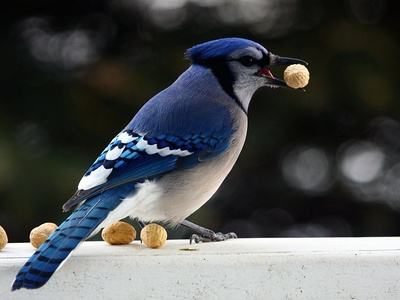
Blue Jay
Loud, crested passerine of woodlots, suburbs and riparian corridors in eastern Nebraska. Year-round resident with noisy calls and inquisitive behavior. Blue crest and bold white and black markings are easily visible at feeders and in trees.
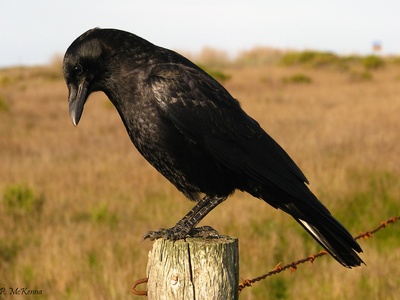
American Crow
Ubiquitous, intelligent corvid of towns, farmland and river valleys across Nebraska. Year-round resident forming large communal roosts in winter. Robust black plumage and loud, familiar caw mark them in urban and rural settings.
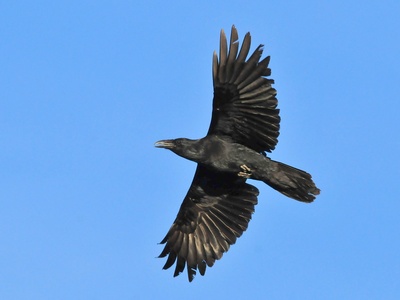
Common Raven
Large, shaggy-throated corvid more common in western Nebraska and Panhandle. Year-round resident on cliffs, badlands and open country; deep croak and soaring flight contrast with crows, with larger bill and wedge-shaped tail.
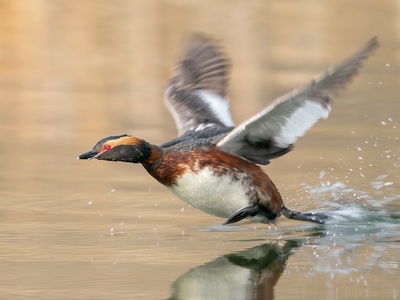
Horned Grebe
Small diving grebe seen on lakes and wetlands during migration. Breeding plumage shows ornate head plumes and red eyes. Stages on reservoirs during spring and fall as it moves between breeding grounds and wintering areas.
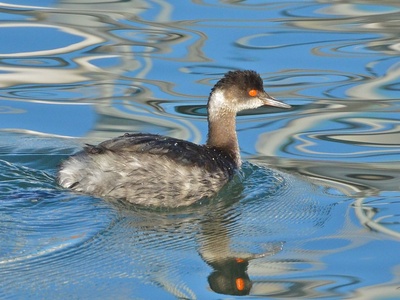
Eared Grebe
Medium grebe that stages in huge numbers on saline and alkaline lakes, especially in fall migration across the Sandhills and reservoirs. Breeding plumage dramatic with golden ear tufts and dark body; abundant in migration.
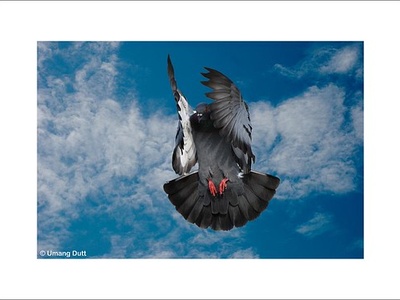
Rock Pigeon
Urban-adapted dove in cities, towns and farmsteads statewide. Year-round resident descended from feral origins. Variable plumage, but often gray with iridescent neck and two dark wing bars; common at parks and downtown roosts.
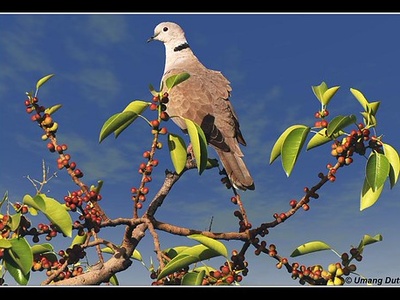
Eurasian-collared Dove
Large dove common in towns, suburbs and agricultural areas across Nebraska since its expansion. Year-round resident with distinctive cooing and black neck crescent. Often seen on power lines and at backyard feeders.
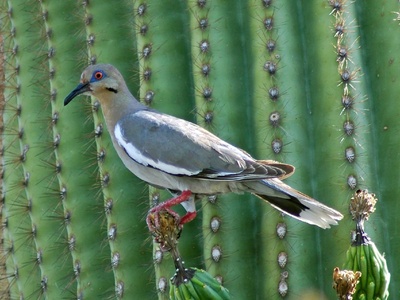
White-winged Dove
Increasingly regular migrant and local summer visitor in eastern and central Nebraska. Prefers woodland edges, towns and riparian areas; large dove with distinctive wing patch in flight and mournful cooing calls.
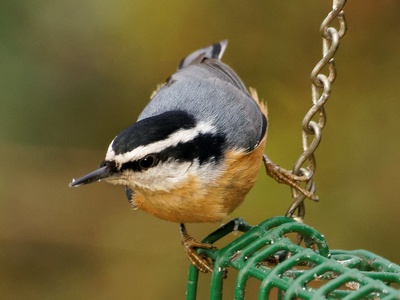
Red-breasted Nuthatch
Tiny, acrobatic nuthatch that irrupts into Nebraska in winter, especially in conifer plantings and river valleys. Climbs tree trunks headfirst and emits nasal calls; red wash on underparts and blue-gray back characterize it.
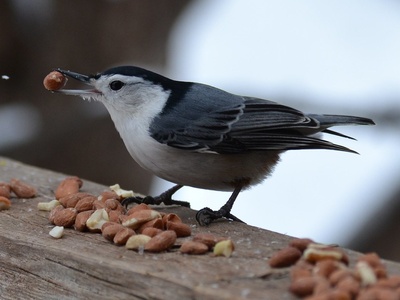
White-breasted Nuthatch
Bold, stout nuthatch of mature woodlands and suburban trees across Nebraska. Year-round resident; often found at feeders. White face and underparts with bluish-gray back and habit of walking headfirst down tree trunks.
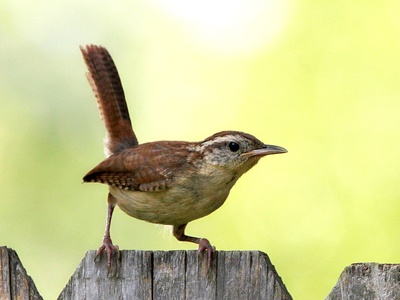
Carolina Wren
Vocal, cinnamon-brown wren of thickets, brushy edges and suburban yards, primarily in eastern Nebraska. Year-round resident with loud, repeating song; bold behavior and curved bill make it easy to find in dense cover.
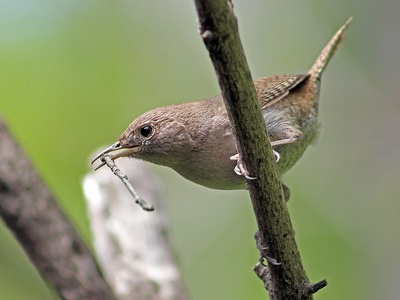
House Wren
Tiny, energetic wren of fence lines, brush piles and suburban yards across Nebraska. Breeds in nest boxes and cavities; loud, bubbling song and habit of investigating nooks and boxes make it a familiar summer resident.
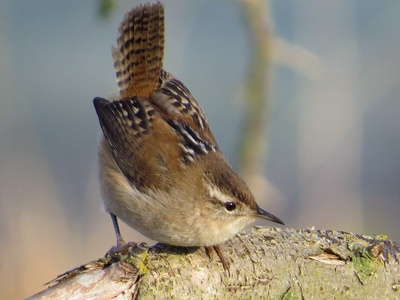
Marsh Wren
Secretive, buzzy-singing wren of cattail marshes and wet meadows statewide. Breeds in dense emergent vegetation, often heard more than seen. Fluttering display flights and repetitive songs reveal presence in spring and summer.
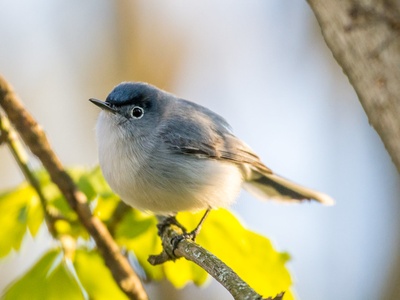
Blue-gray Gnatcatcher
Tiny, active insect-eating bird of riparian woodlands and shrubby edges, primarily in eastern Nebraska. Breeds locally; small size, long tail and constant flicking movements help separate it from other small warblers and flycatchers.
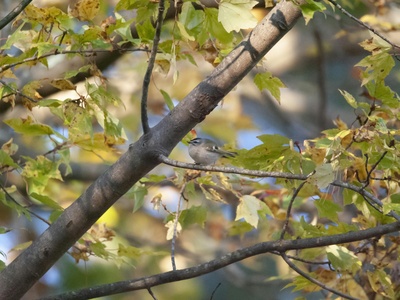
Golden-crowned Kinglet
Tiny, high-energy songbird of conifer stands and riparian woodlands during migration and winter. Often found in mixed flocks; bright golden crown stripe is diagnostic. Appears across Nebraska during colder months and passage periods.
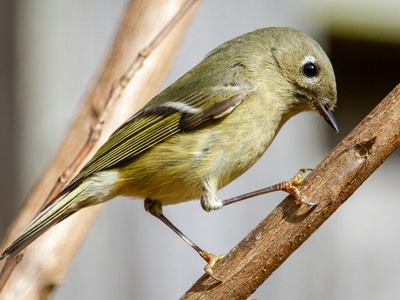
Ruby-crowned Kinglet
Small, perky warbler-like bird that passes through woodlands and shrubby habitats. Migratory and common in spring and fall; males show a hidden red crown when excited. Active gleaner in foliage.
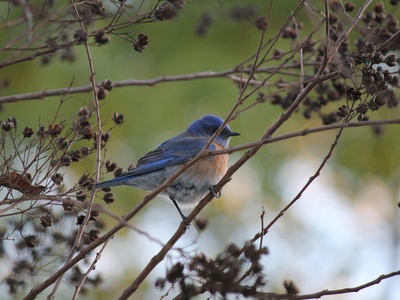
Western Bluebird
Attractive, sky-blue and rusty-bellied thrush of open woodlands and grassland edges in western Nebraska and Panhandle. Breeds in cavities and boxes in spring–summer. Seen in small flocks on fenceposts and field edges.
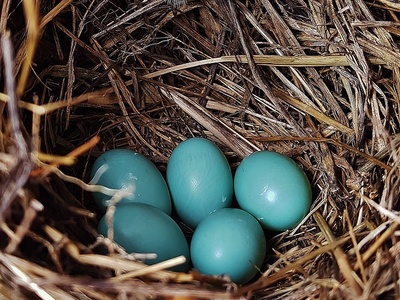
Eastern Bluebird
Beloved thrush of orchards, open woodlands and fence lines in eastern Nebraska. Breeds in nest boxes and cavities; bright blue back and orange throat/breast are striking in spring and summer territories.
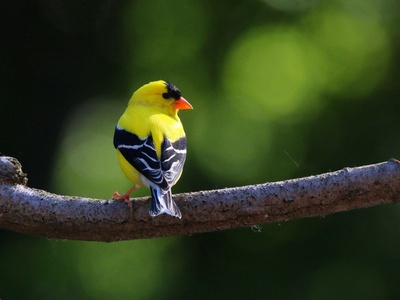
American Goldfinch
Small, bright yellow finch frequenting weedy fields, riparian edges and backyards across Nebraska. Year-round residents where food persists; brilliant breeding plumage and undulating flight make them common at thistle and nyjer feeders.
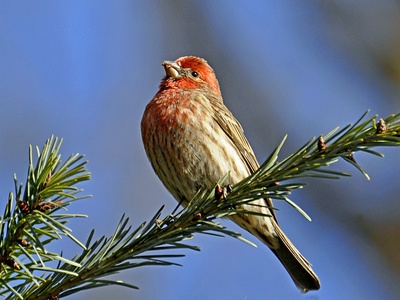
House Finch
Small, familiar finch of towns, suburbs and agricultural edges statewide. Year-round resident; males show variable red head and breast. Frequent at backyard feeders and in weedy fields, often in small flocks.
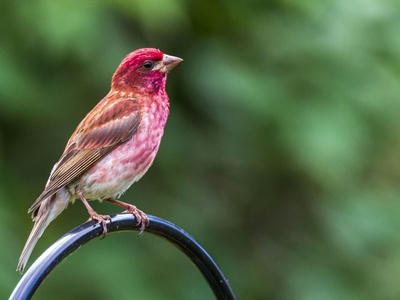
Purple Finch
Colorful finch that irrupts into Nebraska in winter some years, favoring conifer stands and feeders. Males show raspberry-red wash; less common than house finch but noticeable during winter invasions.
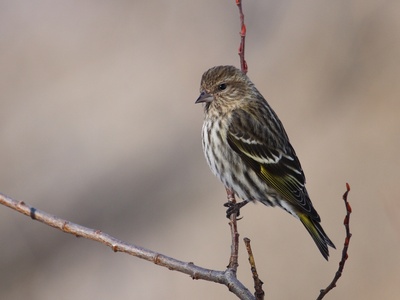
Pine Siskin
Small streaked finch that irrupts across Nebraska in winter, visiting thistle and sunflower feeders and conifer plantings. Highly nomadic; numbers vary annually. Pointed bill and notched tail visible in flight and at feeders.
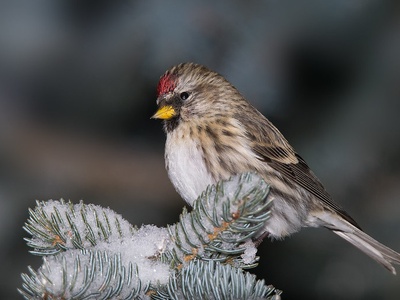
Common Redpoll
Tiny, high-latitude finch that appears irregularly in Nebraska during strong winter irruptions. Found at thistle feeders and weedy fields; red forehead spot and black chin help identify this rare winter visitor.