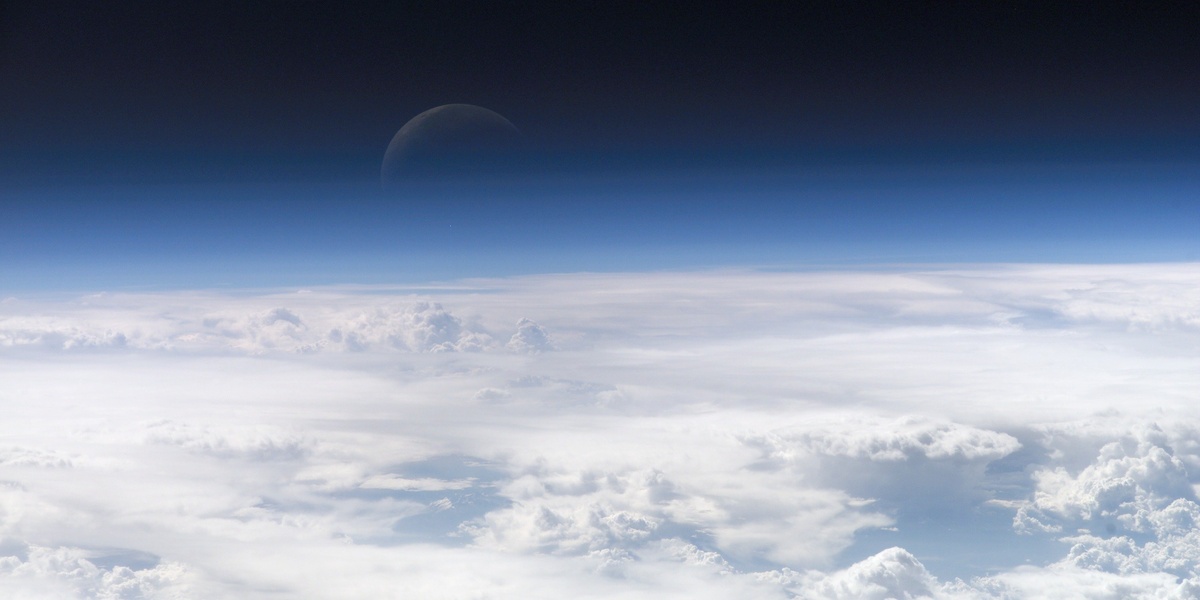
Whether you’re watching a sunrise from the shore or checking satellite passes at night, the sky above is arranged in distinct zones that influence weather, communications, and radiation. Understanding that vertical structure helps make sense of clouds, radio signals, and where aircraft and satellites operate.
There are 17 Atmospheric Layers, ranging from the D layer to the Troposphere. For each layer, you’ll find below entries organized by Altitude range (km), Typical temperature (°C), and Notable phenomena, and you’ll find below.
How are the layers defined and separated?
Layers are typically distinguished by changes in temperature profile, composition, and ionization—measured as shifts in lapse rate or sudden temperature inversions with altitude. Scientists use radiosonde data, satellite remote sensing, and ionospheric observations to mark boundaries and assign typical altitude ranges.
How do these layers affect everyday life and technology?
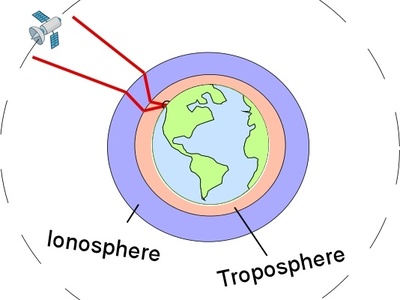
Different layers control weather (cloud formation in the Troposphere), radio propagation (ionized D, E, F regions), and satellite drag or communication links (upper atmosphere). Knowing which layer affects a phenomenon helps with forecasting, aviation planning, and designing reliable communications.
Atmospheric Layers
| Name | Altitude range (km) | Typical temperature (°C) | Notable phenomena |
|---|---|---|---|
| Troposphere | 0–12 km | -60–20°C | weather, convection, clouds, aviation |
| Planetary Boundary Layer | 0–2 km | -20–35°C | turbulence, mixing, pollution dispersion, surface fluxes |
| Tropopause | 8–18 km | -80–-40°C | convection cap, jet stream base |
| Stratosphere | 12–50 km | -60–0°C | ozone heating, stable layers, high-altitude flight |
| Ozonosphere | 15–35 km | -60–0°C | UV absorption, ozone chemistry, warming |
| Stratopause | 48–52 km | -5–10°C | temperature maximum, circulation transition |
| Mesosphere | 50–85 km | -90–0°C | meteors burning, gravity waves, airglow |
| Mesopause | 85–90 km | -100–-80°C | cold temperature minimum, noctilucent clouds |
| Thermosphere | 85–600 km | 200–2,000°C | aurora, satellite orbits, ionization |
| Ionosphere | 60–1,000 km | -90–2,000°C | radio propagation, auroras, GPS effects |
| D layer | 60–90 km | -80–0°C | HF radio absorption (daytime) |
| E layer | 90–150 km | -60–200°C | radio reflection, sporadic-E events |
| F region | 150–500 km | 200–2,000°C | long-distance HF reflection, peak electron density |
| Homosphere | 0–80 km | -60–20°C | well-mixed composition, N2/O2 dominated |
| Heterosphere | 100–600 km | -90–2,000°C | diffusive separation, light gases dominate |
| Exobase | 500–700 km | 500–1,500°C | collision rarity, particle escape boundary |
| Exosphere | 600–10,000 km | 500–2,000°C | satellite region, atmospheric escape |
Images and Descriptions
Troposphere
The lowest atmospheric layer containing nearly all weather, water vapor, and life. Extends from the surface to about 12 km with temperature falling rapidly with height. It drives climate, supports ecosystems, and is crucial for aviation and daily weather forecasts.

Planetary Boundary Layer
A turbulent sublayer of the troposphere directly influenced by the Earth’s surface. Height varies from hundreds of meters to a few kilometers and controls near-surface wind, temperature, pollution dispersion, and morning/evening mixing important for weather and air quality.
Tropopause
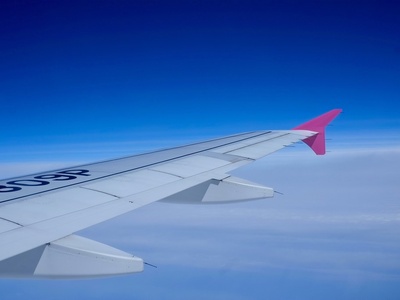
A thin transition layer between troposphere and stratosphere that caps vertical weather convection. Located roughly 8–18 km high, the tropopause marks where temperature stops decreasing with height and influences jet stream placement and storm tops.
Stratosphere
Layer above the troposphere extending to about 50 km where temperature increases with altitude due to ozone absorbing UV. The stratosphere is stable and layered, contains the ozone layer, and influences jet streams and high-altitude aviation.
Ozonosphere
The ozone-rich region within the stratosphere (roughly 15–35 km) that absorbs harmful ultraviolet radiation. This absorption heats the surrounding air, shapes stratospheric temperature structure, and protects life by reducing surface UV exposure.
Stratopause
A narrow boundary near about 50 km marking the top of the stratosphere where temperatures peak before falling in the mesosphere. The stratopause signals a transition in atmospheric dynamics and temperature trends.
Mesosphere
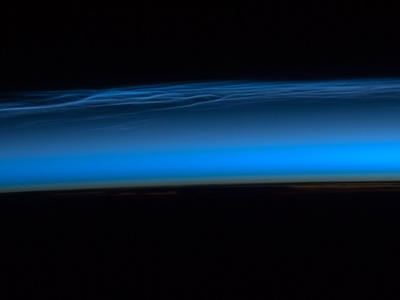
The middle atmospheric layer where temperatures fall again to the coldest values, around -90°C at the top. Meteors typically burn up here; gravity waves and airglow are common, making this region scientifically interesting but hard to study from the ground.
Mesopause
The mesopause is the coldest atmospheric boundary near 85–90 km separating mesosphere and thermosphere. Temperatures reach minima around -90 to -100°C here and it influences noctilucent clouds and upper-atmosphere wave-driven circulation.
Thermosphere
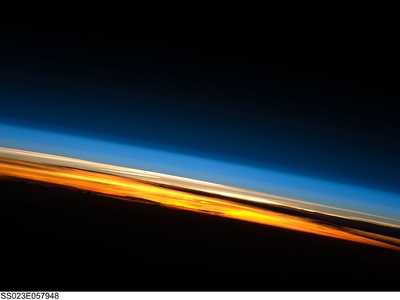
A high, thin layer from roughly 85 to 600 km where temperatures rise sharply with altitude due to solar UV absorption; air density is extremely low. It contains the ionosphere, hosts auroras, and is where many low-Earth satellites orbit.
Ionosphere
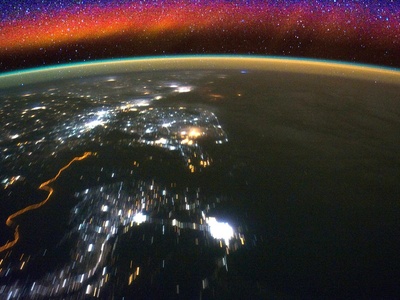
An electrically charged, overlapping region from about 60 to 1,000 km created by solar radiation ionizing atoms and molecules. Critical for radio communications, GPS accuracy, and auroras; its layers vary with solar activity and day–night cycles.
D layer
The lowest ionospheric layer (about 60–90 km) that mainly absorbs high-frequency radio waves during daytime, weakening long-distance HF communication. It largely disappears at night and is produced by solar X-ray and UV ionization.
E layer
A mid-ionospheric region (about 90–150 km) that can reflect medium-frequency radio waves and produce sporadic-E patches. It plays a role in medium-range radio propagation and contributes to ionospheric currents and auroral activity.
F region
The upper ionosphere, often split into F1 and F2 layers by daytime solar heating, with the F2 layer persisting at night. Electron densities peak here, enabling long-distance HF radio reflection and strongly responding to solar activity.
Homosphere
The lower atmospheric zone up to roughly 80–100 km where turbulent mixing keeps gas composition nearly uniform (primarily nitrogen and oxygen). This region contains weather, life, and most human activity; above it composition begins to separate by weight.
Heterosphere
The upper atmospheric region above roughly 100 km where molecular diffusion separates gases by weight, so composition changes with altitude. Lighter gases like helium and hydrogen become increasingly common, affecting satellite drag and upper-atmosphere chemistry.
Exobase
A thin transition layer near about 500–700 km marking the lower limit of the exosphere; above this altitude collisions become rare and particles can follow ballistic trajectories or escape to space. Important for atmospheric loss studies and satellite environment models.
Exosphere
The outermost atmospheric layer, roughly 600 to 10,000 km, where particle densities are extremely low and atoms can escape to space. It is where many satellites orbit and where atmospheric particles travel long distances between collisions.