Across labs, kitchens, and construction sites, units shape how we measure and compare the world around us. Practical knowledge of common and obscure measures helps whether you’re checking a recipe, sizing a beam, or reading a data sheet.
There are 98 Units of Measurement, ranging from British thermal unit to zetta. For each entry, Symbol,Quantity measured,SI equivalent are listed to make conversions and comparisons straightforward — you’ll find below.
How can I convert values between the units listed?
Use the SI equivalent column as your starting point: convert the original amount to the SI value (usually by multiplying or dividing by the given factor), then convert from SI to your target unit. For non-SI units like the British thermal unit you may need a fixed conversion constant; the SI equivalent provided eliminates guesswork.
Are all the items on this list part of the SI system?
No — the list mixes SI units and widely used non-SI units and prefixes (for example, zetta is an SI prefix while the British thermal unit is non-SI). The SI equivalent column clarifies how each relates to the SI system so you can compare and convert consistently.
Units of Measurement
| Name | Symbol | Quantity measured | SI equivalent |
|---|---|---|---|
| metre | m | length | 1 m |
| kilogram | kg | mass | 1 kg |
| second | s | time | 1 s |
| ampere | A | electric current | 1 A |
| kelvin | K | thermodynamic temperature | 1 K |
| mole | mol | amount of substance | 1 mol |
| candela | cd | luminous intensity | 1 cd |
| radian | rad | plane angle | 1 rad |
| steradian | sr | solid angle | 1 sr |
| hertz | Hz | frequency | 1 s^-1 |
| newton | N | force | 1 kg·m/s^2 |
| pascal | Pa | pressure | 1 N/m^2 |
| joule | J | energy/work | 1 N·m |
| watt | W | power | 1 J/s |
| coulomb | C | electric charge | 1 A·s |
| volt | V | electric potential | 1 J/C |
| ohm | Ω | electrical resistance | 1 V/A |
| siemens | S | electrical conductance | 1 A/V |
| farad | F | capacitance | 1 C/V |
| henry | H | inductance | 1 Wb/A |
| tesla | T | magnetic flux density | 1 Wb/m^2 |
| weber | Wb | magnetic flux | 1 V·s |
| lumen | lm | luminous flux | 1 cd·sr |
| lux | lx | illuminance | 1 lm/m^2 |
| becquerel | Bq | radioactivity (decays/s) | 1 s^-1 |
| gray | Gy | absorbed dose | 1 J/kg |
| sievert | Sv | dose equivalent | 1 J/kg |
| katal | kat | catalytic activity | 1 mol/s |
| degree Celsius | °C | temperature | T(K)=T(°C)+273.15; 1 °C=1 K |
| degree (angle) | ° | plane angle | π/180 rad |
| minute | min | time | 60 s |
| hour | h | time | 3,600 s |
| day | d | time | 86,400 s |
| yotta | Y | prefix (multiplier) | 10^24 (dimensionless) |
| zetta | Z | prefix (multiplier) | 10^21 (dimensionless) |
| exa | E | prefix (multiplier) | 10^18 (dimensionless) |
| peta | P | prefix (multiplier) | 10^15 (dimensionless) |
| tera | T | prefix (multiplier) | 10^12 (dimensionless) |
| giga | G | prefix (multiplier) | 10^9 (dimensionless) |
| mega | M | prefix (multiplier) | 10^6 (dimensionless) |
| kilo | k | prefix (multiplier) | 1,000 (dimensionless) |
| hecto | h | prefix (multiplier) | 10^2 (100) (dimensionless) |
| deca | da | prefix (multiplier) | 10^1 (10) (dimensionless) |
| deci | d | prefix (multiplier) | 10^-1 (dimensionless) |
| centi | c | prefix (multiplier) | 10^-2 (dimensionless) |
| milli | m | prefix (multiplier) | 10^-3 (dimensionless) |
| micro | µ | prefix (multiplier) | 10^-6 (dimensionless) |
| nano | n | prefix (multiplier) | 10^-9 (dimensionless) |
| pico | p | prefix (multiplier) | 10^-12 (dimensionless) |
| femto | f | prefix (multiplier) | 10^-15 (dimensionless) |
| atto | a | prefix (multiplier) | 10^-18 (dimensionless) |
| zepto | z | prefix (multiplier) | 10^-21 (dimensionless) |
| yocto | y | prefix (multiplier) | 10^-24 (dimensionless) |
| inch | in | length | 0.0254 m |
| foot | ft | length | 0.3048 m |
| yard | yd | length | 0.9144 m |
| mile | mi | length | 1,609.34 m |
| chain | ch | length | 20.12 m |
| furlong | fur | length | 201.17 m |
| nautical mile | NM | length | 1,852 m |
| knot | kn | speed | 0.51 m/s |
| acre | ac | area | 4,046.86 m^2 |
| square mile | mi^2 | area | 2.59 km^2 |
| gallon (US) | gal (US) | volume | 3.79 L |
| gallon (UK) | gal (UK) | volume | 4.55 L |
| pint (US) | pt (US) | volume | 0.47 L |
| pint (UK) | pt (UK) | volume | 0.57 L |
| fluid ounce (US) | fl oz (US) | volume | 0.03 L |
| ounce (avoirdupois) | oz | mass | 28.35 g |
| pound | lb | mass | 0.45 kg |
| ton (short) | ton (US) | mass | 907.18 kg |
| stone | st | mass | 6.35 kg |
| barrel (oil) | bbl | volume | 158.99 L |
| liter | L | volume | 0.001 m^3 |
| tonne | t | mass | 1,000 kg |
| hectare | ha | area | 10,000 m^2 |
| electronvolt | eV | energy | 1.60e-19 J |
| atomic mass unit | u | mass | 1.66e-27 kg |
| angstrom | Å | length | 1.00e-10 m |
| barn | b | area | 1.00e-28 m^2 |
| erg | erg | energy | 1.00e-7 J |
| dyne | dyn | force | 1.00e-5 N |
| calorie | cal | energy | 4.18 J |
| kilocalorie | kcal | energy | 4,184 J |
| British thermal unit | BTU | energy | 1,055.06 J |
| horsepower | hp | power | 745.70 W |
| atmosphere | atm | pressure | 101,325 Pa |
| bar | bar | pressure | 100,000 Pa |
| torr | Torr | pressure | 133.32 Pa |
| curie | Ci | radioactivity | 37,000,000,000 Bq |
| rem | rem | radiation dose | 0.01 Sv |
| parsec | pc | length | 3.09e16 m |
| light-year | ly | length | 9.46e15 m |
| astronomical unit | au | length | 149,597,870,700 m |
| slug | slug | mass | 14.59 kg |
| grain | gr | mass | 64.80 mg |
| troy ounce | oz t | mass | 31.10 g |
| carat | ct | mass | 0.20 g |
Images and Descriptions
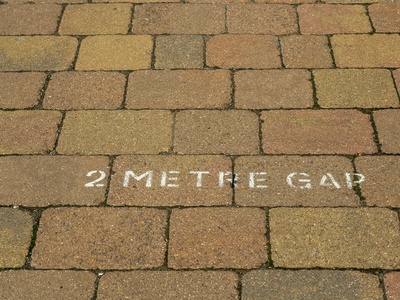
metre
The metre is the SI base unit of length, defined by the distance light travels in a vacuum in 1/299,792,458 s. It’s the global standard for measuring distances from everyday lengths to scientific experiments.

kilogram
The kilogram is the SI base unit of mass, now defined by the Planck constant. It’s used worldwide for commerce, science and engineering; common reference for body mass and packaged goods.

second
The second is the SI base unit of time, defined by vibrations of a cesium atom. It underpins clocks, timing systems, and scientific measurements from electronics to astronomy.
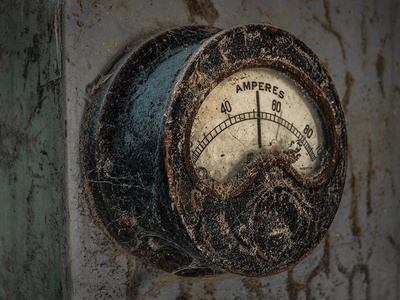
ampere
The ampere is the SI base unit of electric current, defined by the elementary charge and quantum standards. It’s the basic measure for electrical circuits, power systems and device specifications.

kelvin
The kelvin is the SI base unit for thermodynamic temperature, anchored to fixed physical constants. Used in science and engineering to describe absolute temperature and thermal behavior.
mole
The mole is the SI base unit for amount of substance, exactly 6.02214076×10^23 specified entities. It’s fundamental in chemistry for counting atoms, molecules and reactions.

candela
The candela is the SI base unit for luminous intensity in a given direction. It’s used in lighting, display brightness and photometric specifications to quantify perceived light.
radian
The radian is the SI derived unit of plane angle: arc length divided by radius. It’s the natural angular unit in mathematics, physics and engineering for rotational measures.
steradian
The steradian is the SI derived unit of solid angle, the 3D analogue of the radian. It’s used in radiometry, astronomy and lighting to describe portions of a sphere.
hertz
The hertz measures cycles per second — frequency of periodic events such as waves, AC electricity, or clock ticks. It’s essential in audio, radio, and signal processing.
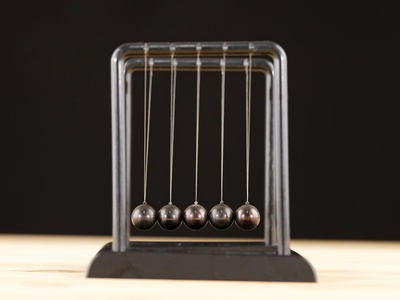
newton
The newton is the SI unit of force: one kilogram accelerated at one metre per second squared. It’s used in mechanics for weight, thrust and structural loads.
pascal
The pascal is the SI unit of pressure: one newton of force per square metre. Common in physics, meteorology, engineering and material stress measurements.
joule
The joule is the SI unit of energy and work: one newton moved through one metre. It measures mechanical, electrical and thermal energy in everyday and scientific contexts.

watt
The watt quantifies power — energy per unit time. One watt is one joule per second and it’s used for lightbulbs, engines, electronics and heat output ratings.
coulomb
The coulomb measures electric charge: one ampere of current over one second. It’s the basic unit for charge in circuits, electrochemistry and particle counts.
volt
The volt is the SI unit of electric potential difference and electromotive force. It describes battery voltages, mains supply and signal levels in electronics.
ohm
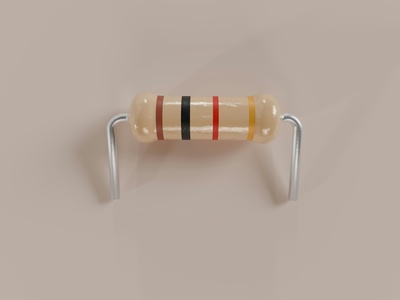
The ohm measures electrical resistance: one volt of potential per ampere of current. It’s fundamental in circuit design, component ratings and impedance calculations.
siemens
The siemens is the inverse of resistance, measuring conductance. It helps quantify how easily current flows through materials or components in electrical engineering.
farad
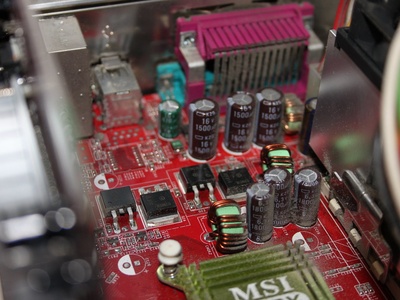
The farad measures capacitance: one coulomb stored per volt. Capacitor values in electronics, energy storage and signal filtering are expressed in farads or fractions thereof.
henry
The henry quantifies inductance: one weber of magnetic flux per ampere. Used in coils, transformers and radio circuits for energy storage and magnetic coupling.
tesla
The tesla is the SI unit of magnetic flux density. It measures magnetic field strength in MRI machines, particle accelerators and magnet technology.
weber
The weber quantifies magnetic flux through a surface: one volt-second. It’s important in electromagnetism, generators and magnetic circuit calculations.
lumen
The lumen measures perceived light output integrated over a solid angle. It’s used to rate lamps, LEDs and lighting fixtures for human vision.

lux
The lux measures illumination on a surface: lumens per square metre. It describes brightness conditions for workplaces, photography and building lighting design.
becquerel
The becquerel measures radioactive decay rate: one nuclear disintegration per second. It’s the SI unit for radioactivity in nuclear medicine, safety and research.
gray
The gray measures absorbed radiation dose: one joule of energy deposited per kilogram. Used in radiotherapy, radiation protection and dosimetry.
sievert
The sievert quantifies biological effect of radiation exposure, combining absorbed dose with weighting factors. It’s central to radiation safety and health guidelines.
katal
The katal measures catalytic activity: one mole of substrate transformed per second. It’s used in enzymology and chemical reaction engineering.
degree Celsius
Degree Celsius is a temperature scale offset from kelvin; temperature differences match kelvin. Common for weather, cooking and daily temperatures worldwide.
degree (angle)
The degree divides a circle into 360 equal parts. It’s a widely used angular unit in navigation, mapping and everyday geometry, convertible exactly to radians.
minute
The minute is a non‑SI time unit of 60 seconds. Widely used for everyday timekeeping, schedules and durations; officially accepted for use with SI.
hour
The hour equals 3,600 seconds (60 minutes). It’s the standard human‑scale time unit for daily life, work schedules and many engineering time calculations.
day
The day is 24 hours or 86,400 seconds, based on Earth’s rotation. It’s used universally for calendars, long-term scheduling and astronomical timekeeping.
yotta
Yotta is the largest SI prefix, multiplying a unit by 10^24. It’s used for astronomical data, global storage metrics and describing extremely large quantities.
zetta
Zetta multiplies a unit by 10^21. Common in data measurement (zettabytes) and physics when discussing very large scales.
exa
Exa is 10^18, used in computing (exaflops, exabytes) and scientific contexts for vast quantities such as particle counts or energy scales.
peta
Peta represents 10^15. It appears in data storage (petabyte) and large-scale computations or measurements in science and engineering.
tera
Tera denotes 10^12. Common in computing (terabyte), physics and engineering for large but human‑scale quantities.
giga
Giga is 10^9, used for frequencies (gigahertz), data (gigabyte) and large measurements in technology and science.
mega
Mega denotes one million (10^6). Common in power (megawatt), computing (megabyte historically) and engineering scales.
kilo
Kilo multiplies a unit by 1,000. It’s the most familiar prefix for everyday weights (kilogram), distances (kilometre) and many metrics.
hecto
Hecto is 100 times a unit; less common today but appears in hectopascal for air pressure and historical measurements.
deca
Deca multiplies by ten; rarely used but seen in decametre for large‑scale topography and some engineering contexts.
deci
Deci divides a unit by ten (0.1). Mostly used in metric subdivisions like decilitres in some countries and educational contexts.
centi
Centi denotes one‑hundredth (0.01). Familiar from centimetre and centilitre, common in daily measurements and consumer contexts.
milli
Milli means one‑thousandth (0.001). It’s ubiquitous in measurements like millimetre, millilitre and milligram across science and everyday life.
micro
Micro denotes one‑millionth (10^-6). Widely used in electronics (microfarad), biology (micrometre) and precision measurements.
nano
Nano is one‑billionth (10^-9). Central to nanotechnology, semiconductor specifications and tiny-scale measurements.
pico
Pico denotes 10^-12 and appears in physics, electronics and timing measurements for very small quantities.
femto
Femto is 10^-15, used in ultrafast physics and measuring extremely small timescales or quantities.
atto
Atto equals 10^-18, relevant in quantum physics, particle counts and very small measured values.
zepto
Zepto denotes 10^-21, used rarely except in specialized scientific notation for minuscule scales.
yocto
Yocto is 10^-24, the smallest standard SI prefix used for describing extraordinarily small quantities in physics and chemistry.
inch
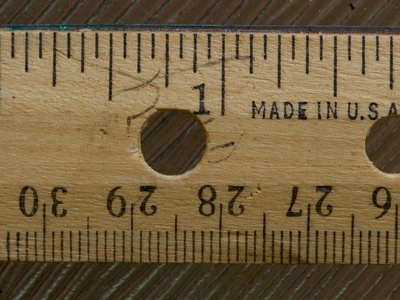
The inch is an imperial/U.S. customary length unit exactly 0.0254 metres. Common in North America, construction and manufacturing for small measurements.
foot
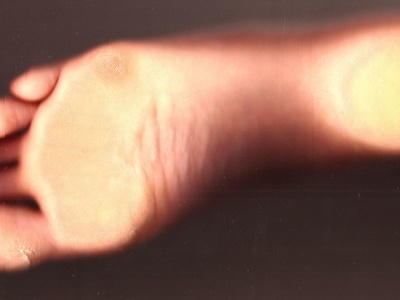
The foot (0.3048 m exactly) is used in the U.S. and UK construction, aviation altitude (feet), and everyday height measurements in some countries.
yard
The yard equals 0.9144 metres exactly. It’s used in textiles, sports fields (some contexts) and older measuring systems.
mile
The (statute) mile is 1,609.344 metres exactly. Common in the U.S. and UK for road distances and travel measurements.

chain
The survey chain (66 ft) equals 20.1168 metres exactly. Historically used in land surveying; still appears in cadastral records and older maps.
furlong
The furlong is 201.168 metres exactly (10 chains). Historically used in horse racing and land measurement; now rare but still referenced.

nautical mile
The nautical mile is exactly 1,852 metres, based on Earth’s geometry. It’s standard in maritime and aviation navigation.

knot
The knot is one nautical mile per hour; about 0.51 m/s. It’s the standard speed unit for ships and aircraft.

acre
The acre is 4,046.8564224 square metres (commonly 4,046.86 m^2), used for land area in the U.S., UK and former British territories.
square mile
The square mile covers 2.59 square kilometres (approx). It’s used for large land areas, municipalities and geographical statistics.
gallon (US)
The U.S. gallon is about 3.78541 litres (rounded 3.79 L). Widely used in the United States for fuel, beverages and liquid volumes.
gallon (UK)
The imperial (UK) gallon equals 4.54609 litres (rounded 4.55 L). Used historically in Britain and still in certain Commonwealth contexts.

pint (US)
The U.S. pint is 473.176 mL (0.47 L), used for beverages and liquid measures in the United States.

pint (UK)
The UK (imperial) pint is 568.261 mL (0.57 L), commonly used for beer and milk measures in Britain and Ireland.
fluid ounce (US)
The U.S. fluid ounce equals about 29.57 mL (0.03 L). It’s used in recipes, packaging and small‑volume liquid measurements.
ounce (avoirdupois)
The avoirdupois ounce is 28.34952 grams, commonly used for food packaging, postal weights and everyday mass in the U.S. and UK.
pound
The avoirdupois pound equals 0.45359237 kilograms (rounded 0.45 kg). It’s widely used in the U.S. for body weight and commerce.
ton (short)
The short ton (U.S.) equals 907.18474 kilograms (rounded 907.18 kg). Used in North American industry and shipping tonnage.
stone
The stone is 14 pounds or 6.35029318 kilograms (rounded 6.35 kg). Common in the UK and Ireland for body weight reporting.
barrel (oil)
The (U.S.) oil barrel is 158.9873 litres (rounded 158.99 L). It’s a standard commercial unit in the petroleum industry.
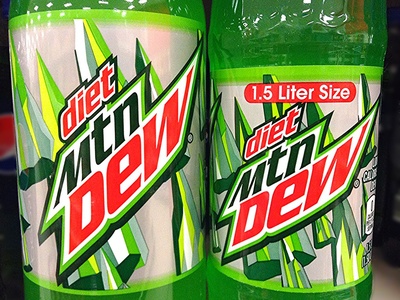
liter
The litre is a non‑SI unit accepted for use with SI: one cubic decimetre (0.001 m^3). It’s the common unit for liquids worldwide.
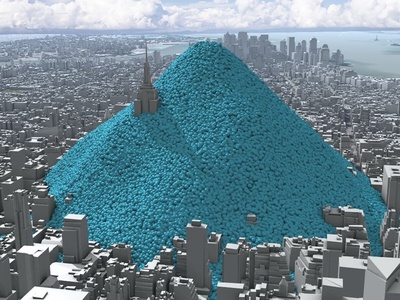
tonne
The tonne (metric ton) is exactly 1,000 kilograms. Widely used in shipping, resource reporting and international trade.
hectare
The hectare equals 10,000 square metres and is commonly used for land area, agriculture and property sizes around the world.
electronvolt
The electronvolt is the energy gained by an electron across one volt, 1.602×10^-19 J. It’s fundamental in atomic, particle and condensed‑matter physics.
atomic mass unit
The unified atomic mass unit (dalton) is about 1.6605×10^-27 kg, defined from carbon-12. It’s used to express atomic and molecular masses.
angstrom
The ångström is 10^-10 metres, convenient for atomic and molecular scales such as bond lengths and crystal lattice spacings; widely used in chemistry and crystallography.

barn
The barn is 10^-28 square metres, a unit in nuclear and particle physics for cross-sectional area; its whimsical name makes it memorable in nuclear measurements.

erg
The erg is a CGS energy unit equal to 10^-7 joules. It appears in older physics literature and astrophysics for small energy scales.
dyne
The dyne is the CGS unit of force: 10^-5 newtons. It’s used historically in mechanics and some physics contexts that employ CGS units.
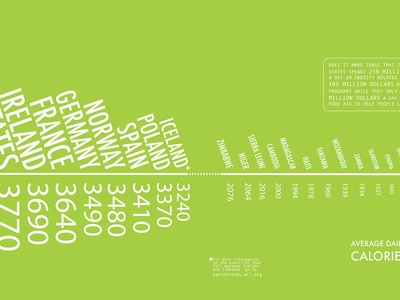
calorie
The calorie (thermochemical) is 4.184 joules. It’s known from chemistry and nutrition (though food calories are kilocalories).
kilocalorie
The kilocalorie (often called Calorie in food) equals 1,000 calories or 4,184 joules. It’s used to express food energy and metabolic intake.
British thermal unit
The BTU measures thermal energy; one BTU equals about 1,055.06 joules. It’s used in heating, ventilation and air conditioning (HVAC) ratings.

horsepower
Mechanical horsepower is approximately 745.7 watts. Used historically for engines and still common in automotive and machinery power ratings.
atmosphere
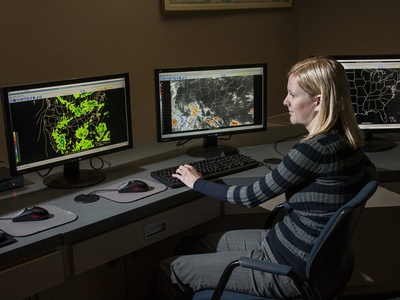
The standard atmosphere is 101,325 pascals, a conventional pressure unit used in meteorology, aviation and earlier scientific literature.
bar
The bar equals 100,000 pascals exactly, a convenient atmospheric scale used in meteorology, diving and engineering.
torr
The torr is defined as 1/760 of standard atmosphere, about 133.322 Pa (rounded 133.32 Pa). Used in vacuum physics and low‑pressure measurements.
curie
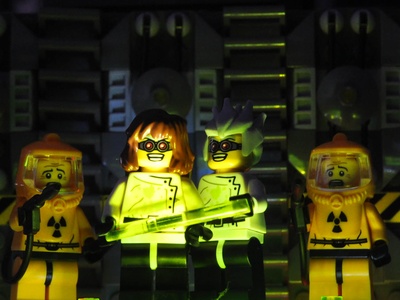
The curie is an older radioactivity unit equal to 3.7×10^10 becquerels (37,000,000,000 decays per second), still cited historically and in nuclear medicine.
rem
The rem is an older unit of radiation dose equivalent: one rem equals 0.01 sievert. It’s seen in radiological protection contexts and older regulations.
parsec
The parsec is about 3.09×10^16 metres, the astronomical distance at which one astronomical unit subtends one arcsecond. Common in astrophysics and galactic scales.

light-year
The light‑year is the distance light travels in one Julian year, about 9.46×10^15 metres. It’s a popular unit for interstellar distances.
astronomical unit
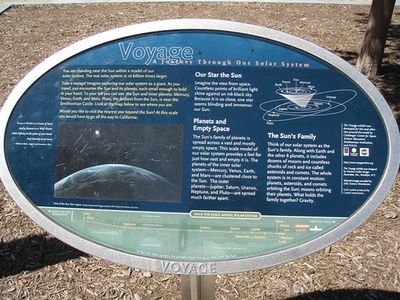
The astronomical unit is exactly 149,597,870,700 metres, roughly the Earth–Sun distance. It’s a convenient yardstick in solar system astronomy.
slug
The slug is the imperial mass unit in some U.S. engineering contexts: one slug is about 14.59 kilograms and relates mass to weight under gravity.
grain
The grain is an ancient mass unit still used for bullets and jewellery: one grain is about 64.80 milligrams.
troy ounce
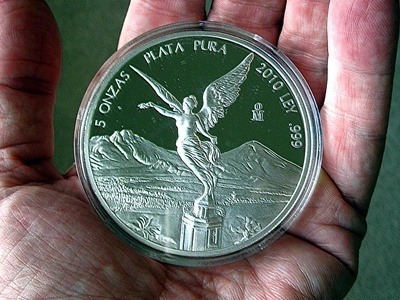
The troy ounce is 31.1034768 grams (rounded 31.10 g), used for precious metals trading like gold and silver.
carat
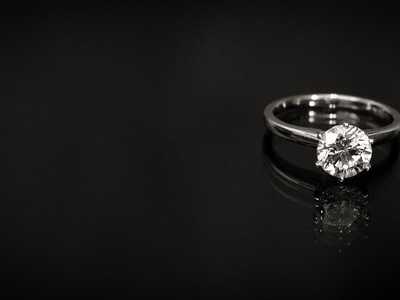
The carat is 200 milligrams (0.20 grams), the standard unit for gemstone mass, especially diamonds and precious stones.