In 1665 Robert Hooke published Micrographia and coined the term “cell” after observing cork under a microscope, launching more than three centuries of discoveries about the tiny structures that make up all living things.
Comparing plant and animal cells matters because those structural and biochemical differences drive everything from crop breeding and bioengineering to how we treat human disease. A plant cell’s central vacuole can take up to 90% of its volume, and that simple fact explains a lot about how plants stand, store, and respond to stress.
Although plant and animal cells share a fundamental cellular architecture, they differ in ten key structural, organelle-level, and biochemical ways that reflect distinct lifestyles and functions.
Below we group those differences into three broad categories: structural differences; organelles and communication; and biochemical and storage differences. Let’s start with how their physical structures set them apart.
Structural differences
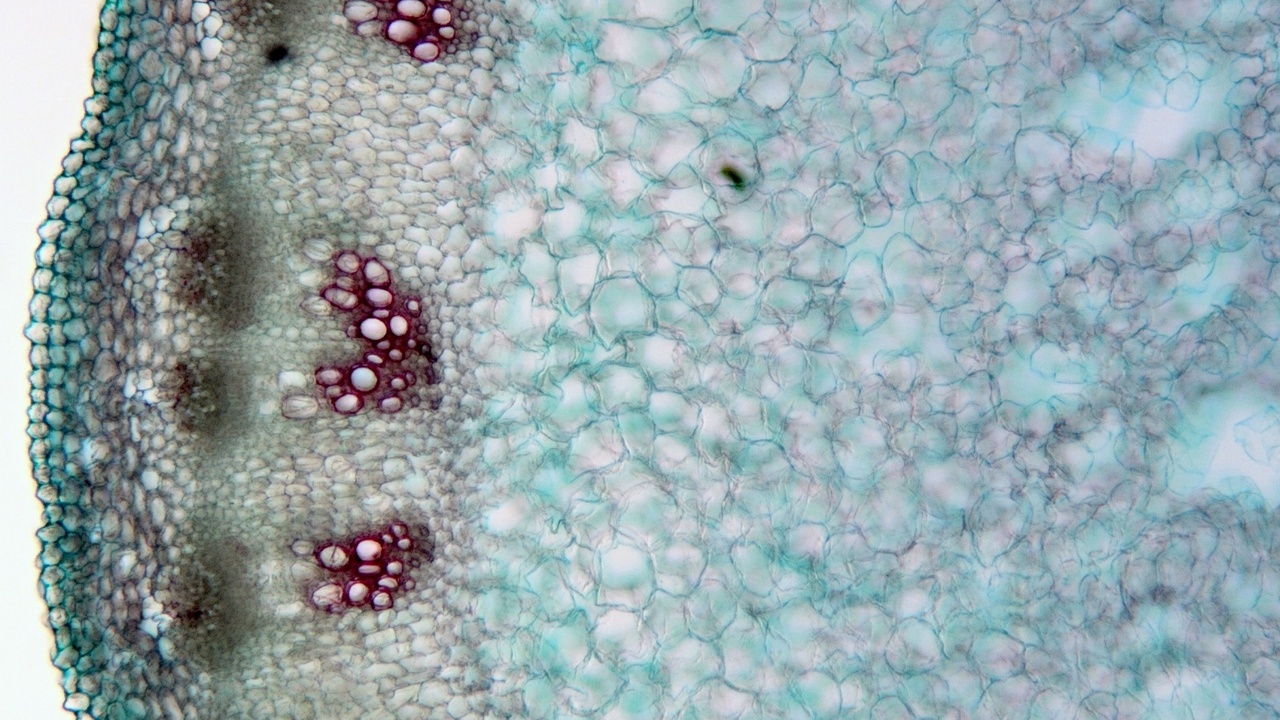
Structure underpins function: plant cells are built more for rigidity and support, while animal cells prioritize flexibility and mobility. Those contrasting design choices affect everything from how a tree holds itself up to how a white blood cell squeezes through tissue.
1. Cell wall presence and composition
Most plant cells have a rigid cell wall; animal cells do not. Plant walls are made largely of cellulose, a glucose polymer, and many woody tissues add lignin to reinforce that wall.
Cellulose is the dominant component of cotton—roughly 90% cellulose in raw cotton fibers—while timber shows lignified secondary walls that let trees stand tall for decades. Functionally, the wall gives mechanical support, protects against pathogens, and limits uncontrolled swelling.
That chemistry has practical uses: humans harvest cellulose-rich fibers for textiles and pulp for paper, and engineers tweak wall components when producing crops with desirable fiber or wood properties.
2. Chloroplasts and photosynthesis
Chloroplasts appear in plant and algal cells but are absent from almost all animal cells. These organelles contain chlorophyll and internal thylakoid membranes where light energy is captured and converted into chemical energy.
The simplified photosynthesis equation is: CO2 + H2O → C6H12O6 + O2. Plants and algae together produce the bulk of Earth’s oxygen and form the base of global food webs.
Leaf mesophyll cells—think fresh spinach leaves—are densely packed with chloroplasts, and improving chloroplast function is a major target in crop engineering aimed at raising yields and resource-use efficiency.
3. Large central vacuole
Plant cells typically contain a large central vacuole that can occupy up to 90% of the cell’s volume; animal cells have only small, temporary vacuoles or vesicles. That size difference matters.
The central vacuole stores water, ions, metabolic byproducts, and secondary metabolites, and it creates turgor pressure that keeps tissues rigid. When vacuoles lose water, tissues wilt—a straightforward explanation for drooping leaves on a hot day.
Researchers exploit vacuolar storage in phytoremediation to sequester heavy metals and in molecular farming to accumulate pharmaceutical compounds inside plant tissues.
4. Typical cell shape: fixed versus flexible
Plant cells are often rectangular or polygonal because the wall and turgor enforce a regular geometry; animal cells display a wide range of shapes—rounded, elongated, flattened—suited to mobility and specialized roles.
The cytoskeleton and extracellular matrix let animal cells change shape and migrate—red blood cells are biconcave and highly deformable to pass through capillaries—while parenchyma cells in a leaf are box-like and tightly packed.
Understanding shape matters in applications like designing crop canopies for light capture or engineering immune cells for better tissue infiltration.
Organelles and communication
Beyond gross structure, plant and animal cells differ in specific organelles and in how they communicate with neighbors. These differences affect defense, development, and how cells coordinate across tissues.
5. Plasmodesmata versus animal cell junctions
Plant cells are connected by plasmodesmata—tiny cytoplasmic channels that traverse cell walls—providing direct cytoplasmic continuity between neighboring cells. Animal cells use protein-based junctions such as gap junctions, tight junctions, and desmosomes.
Plasmodesmata permit the movement of larger molecules, RNAs, and some proteins, enabling coordinated development and long-distance signaling in plants. That same openness creates a route for pathogens—many plant viruses, like tobacco mosaic virus, move cell-to-cell through plasmodesmata.
In animals, gap junctions allow electrical coupling—critical for synchronized cardiac contraction—while tight junctions control barrier function in epithelia. Plant and animal researchers study these channels to modulate phloem loading, defense signaling, or tissue repair.
6. Lysosomes and digestion pathways
Animal cells feature prominent lysosomes—membrane-bound organelles loaded with hydrolytic enzymes that digest macromolecules and pathogens. Plants accomplish many of the same tasks through vacuolar enzymes and autophagy pathways.
In animals, lysosomal activity is central to immunity; macrophages use lysosomes to digest engulfed bacteria. Human diseases highlight that importance—lysosomal storage disorders such as Tay–Sachs arise when a single enzyme deficiency prevents normal breakdown and causes progressive pathology.
Plants deploy vacuoles and selective autophagy for large-scale recycling during senescence and to remove damaged organelles, and those routes play roles in nutrient remobilization during seed filling.
7. Centrioles and cell division machinery
Many animal cells contain centrioles and centrosomes that organize microtubules and help form the mitotic spindle. Most higher plant cells lack centrioles and instead use dispersed microtubule organizing centers to build their spindle.
That difference links to how cells complete cytokinesis. Animal cells constrict a cleavage furrow and split by contractile actin and myosin, while plant cells assemble a cell plate guided by the phragmoplast to create a new dividing wall between daughters.
These divergent division mechanics matter for tissue engineering and for interpreting microscopy of dividing cultures like HeLa cells versus dividing root meristem cells.
Biochemical and storage differences
Metabolism and storage reflect life strategies: photosynthetic, mostly sessile plants store energy and build biomass differently than heterotrophic, often-motile animals. These biochemical choices shape diet, industry, and biotechnology.
8. Energy storage: starch in plants vs glycogen in animals
Plants store carbohydrates primarily as starch, a mix of amylose (mostly linear) and amylopectin (branched). Animals store glucose as glycogen, which is more highly branched and tailored for rapid mobilization.
Starch accumulates in potato tubers, cereal grains, and roots—staple crops like rice, wheat, and potatoes provide a large fraction of global calories. Animals keep glycogen in liver and muscle for quick energy release during fasting or exercise.
The structural branching differences influence enzymatic access: glycogen’s branching makes glucose release faster, while starch’s structure suits longer-term storage in tissues that support plant growth.
9. Photosynthesis versus heterotrophy and mitochondrial roles
Plant cells perform both photosynthesis (in chloroplasts) and respiration (in mitochondria); animal cells rely solely on respiration to harvest energy from organic food. Mitochondria are present in both, but their abundance varies by cell type.
For example, heart muscle cells are packed with mitochondria to sustain continuous work. Plant mitochondria remain active at night when photosynthesis shuts down, maintaining cellular respiration and sugar metabolism.
This duality in plants creates day–night metabolic shifts that influence postharvest storage, crop breeding for yield stability, and synthetic biology approaches that try to rewire metabolism for higher productivity.
10. Extracellular matrix, cell motility, and flagella
Animal cells commonly interact with an extracellular matrix rich in protein polymers such as collagen and proteoglycans; plant cells are encased in a carbohydrate-based cell wall. That contrast affects motility and tissue mechanics.
Many animal cells are motile—sperm swim with flagella, immune cells crawl using actin-driven protrusions—while most higher plant cells are non-motile and grow instead by cell expansion and directed growth, as seen in pollen tubes.
Flagellated cells do appear in lower plants and in certain algal life stages, but among animals motility is central to reproduction, development, and defense, shaped in part by ECM composition and cytoskeletal control.
Summary
- Plant cells and animal cells differ in obvious structural ways: plant cell walls and large central vacuoles support rigidity and storage, while animal cells favor a flexible plasma membrane and extracellular matrix.
- Organelles and communication routes diverge—chloroplasts and plasmodesmata in plants versus lysosomes, centrioles, and junctions in animals—affecting defense, development, and cell division.
- Biochemical storage and metabolism are tailored to lifestyle: starch in potato and cereal crops vs glycogen in liver and muscle, and photosynthesis plus respiration in plants versus respiration-only in animals.
- These differences have practical consequences for agriculture, medicine, and biotechnology—from improving crop yield and stress tolerance to understanding human lysosomal disorders and immune cell function.
- See for yourself: look at stained plant and animal cells under a classroom microscope, or think about how the differences between plant cells and animal cells influence things you use every day, from cotton fabric to the food on your plate.