In 1896, Henri Becquerel accidentally discovered radioactivity while studying phosphorescent salts, launching a field that would reshape energy, medicine, and our picture of the atom. That single observation—uranium salts fogging a photographic plate—led quickly to Marie and Pierre Curie’s isolation of radium and the birth of radiochemistry. Nuclear physics may seem abstract, but its discoveries—from fission and the enormous energy bound in nuclei to fusion’s promise, from PET scans that guide cancer treatment to natural reactors that once ran on Earth—have concrete, surprising impacts on technology, health, and our understanding of matter. This piece presents seven engaging facts about nuclear physics, mixing history, practical applications, and near‑future directions so you can see why this branch of science matters beyond the laboratory.
Fundamentals and Early History
The foundations of nuclear physics were laid in the late 19th and early 20th centuries by a handful of surprising experiments and bold interpretations. Understanding how radioactivity was first noticed, how the nucleus was revealed, and how energy could be released by splitting atoms gives context to later breakthroughs and applications.
1. Radioactivity was discovered by accident in 1896
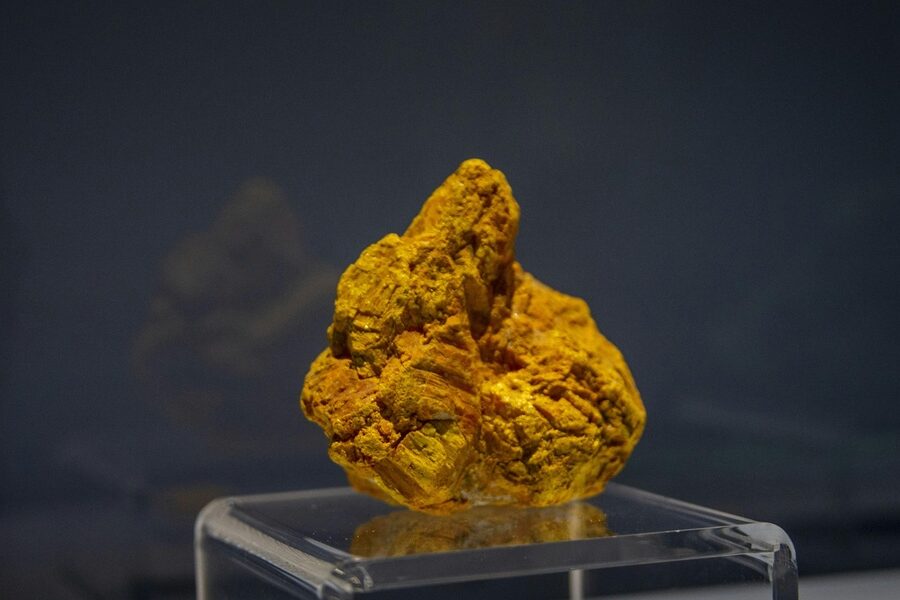
Henri Becquerel stumbled on radioactivity in 1896 when uranium salts darkened photographic plates he’d stored with them, even without sunlight. The result suggested an invisible emission coming from the material itself rather than reflected light.
Marie and Pierre Curie followed up, isolating radium and polonium in 1898 and founding radiochemistry as a discipline. Those early results earned Marie Curie two Nobel Prizes (1903 in Physics and 1911 in Chemistry) and set the stage for radiometric dating and medical isotopes.
Today radiometric dating uses decay rates to date geological and archaeological samples over millions to billions of years, and medical isotopes trace their lineage back to those first laboratory surprises.
2. Splitting a nucleus releases roughly 200 MeV of energy—enormous for tiny mass changes
A single uranium‑235 fission releases on the order of 200 million electron‑volts (≈200 MeV), which is about 3.2×10⁻¹¹ joules per event. That energy per event is tiny, but millions of events add up to macroscopic power.
Fission was identified experimentally in 1938 by Otto Hahn and Fritz Strassmann and interpreted by Lise Meitner and Otto Frisch. Enrico Fermi then led the first controlled chain reaction in Chicago in 1942 (Chicago Pile‑1), demonstrating how those per‑fission energies can be harnessed in reactors or, tragically, weapons.
Put another way, nuclear energy densities far exceed chemical fuels: a small mass defect in a nucleus can yield energy millions of times greater than typical chemical reactions.
Real‑World Applications
This category covers three ways nuclear physics left the lab and entered hospitals, power grids, and research facilities. These are practical facts about nuclear physics with direct effects on daily life, infrastructure, and scientific capability.
3. Nuclear physics is central to modern medicine—scans and treatments rely on isotopes
Many diagnostic and therapeutic procedures depend on radioisotopes and detectors born of nuclear research. Technetium‑99m, for example, is used in roughly 80% of nuclear medicine procedures worldwide and is the backbone of many SPECT imaging studies.
Isotopes for imaging (PET and SPECT) are produced in reactors and cyclotrons; PET uses short‑lived positron emitters like fluorine‑18 to map metabolic activity and stage cancers. Therapeutic radioisotopes—iodine‑131 for thyroid disease or lutetium‑177 for some neuroendocrine tumors—deliver targeted radiation to treat disease.
Hospitals often keep technetium‑99m generators on site, and cyclotrons in medical centers produce many PET isotopes locally, showing how nuclear techniques integrate with daily clinical care.
4. Nuclear power supplies a significant share of low‑carbon electricity
Nuclear energy has provided about 10% of the world’s electricity in recent years, with roughly 430–450 commercial reactors operating globally (IAEA figures give a conservative baseline in that range).
Reactors deliver steady baseload power with very low direct CO₂ emissions compared with coal or gas. Some countries rely heavily on nuclear: France reached roughly 60–70% of its electricity from nuclear at its peak, while large plants such as Palo Verde (U.S.) or Gravelines (France) illustrate the scale at which reactors operate.
The international reactor fleet, ongoing license renewals, and new designs for small modular reactors show how nuclear technology remains a major player in electricity systems aiming to cut emissions.
5. Nuclear techniques probe the smallest constituents of matter and enable big discoveries
Tools developed in nuclear physics—accelerators, beams, and detectors—revealed the proton, neutron, quarks, and neutrinos. Rutherford’s 1911 gold‑foil scattering experiment overturned the plum‑pudding model and identified a compact nucleus, and James Chadwick’s 1932 experiment discovered the neutron.
Modern facilities like CERN, synchrotron light sources, and neutrino observatories such as Super‑Kamiokande continue to push understanding of fundamental particles. Spin‑offs from these instruments help in materials science, semiconductor fabrication, and medical isotope production.
Strange Phenomena and Future Directions
Beyond practical uses lie surprising natural occurrences and ambitious projects aiming to recreate stellar processes on Earth. The next two facts highlight a natural nuclear reactor and the long road toward usable fusion power.
6. Natural nuclear reactors actually ran on Earth about 2 billion years ago
The Oklo natural reactor in Gabon sustained fission reactions roughly 1.7–2.0 billion years ago. Geologists discovered anomalous isotope ratios in 1972 that pointed to past chain reactions rather than modern contamination.
At that time, the natural abundance of uranium‑235 was higher, groundwater moderated neutrons, and ore geometry allowed self‑sustaining fission zones to form. Oklo gives scientists a real‑world case for studying long‑term migration of fission products and informs nuclear waste disposal research.
7. Fusion could provide abundant clean energy—progress is real but engineering remains tough
Controlled fusion seeks to replicate the Sun’s power source on Earth by forcing light nuclei to combine, releasing large amounts of energy. Typical fusion temperatures are about 100–150 million °C, and confining that hot plasma long enough is the central challenge.
There have been notable milestones: Lawrence Livermore National Laboratory’s NIF reported an ignition milestone in December 2022, where the energy delivered to the fuel capsule was exceeded by the fusion energy output from the fuel. ITER, the international tokamak project under construction, aims for first plasma in the coming decade and to demonstrate key technologies for sustained magnetic confinement.
Engineering hurdles remain—robust plasma‑facing materials, efficient heat extraction, tritium fuel cycles, and economical plant design. Still, incremental progress at NIF, tokamak experiments, and private companies suggests demo‑scale fusion plants are possible in the coming decades, even if commercial rollout will take sustained effort.
Summary
A quick set of takeaways to remember and share.
- An accidental 1896 observation by Henri Becquerel launched the study of radioactivity and led directly to radiochemistry and medical isotopes.
- A single uranium‑235 fission liberates about 200 MeV—tiny per atom, enormous when multiplied, which is why nuclear energy is so dense.
- Nuclear techniques fuel medicine (Technetium‑99m, PET, I‑131), supply roughly 10% of global electricity via ~430–450 reactors, and power fundamental research at places like CERN.
- Nature ran reactors at Oklo about 1.7–2.0 billion years ago, offering a real‑world laboratory for long‑term nuclear processes.
- Fusion progress (NIF ignition milestone, ITER construction) is encouraging but substantial materials and engineering challenges remain before widespread power generation.