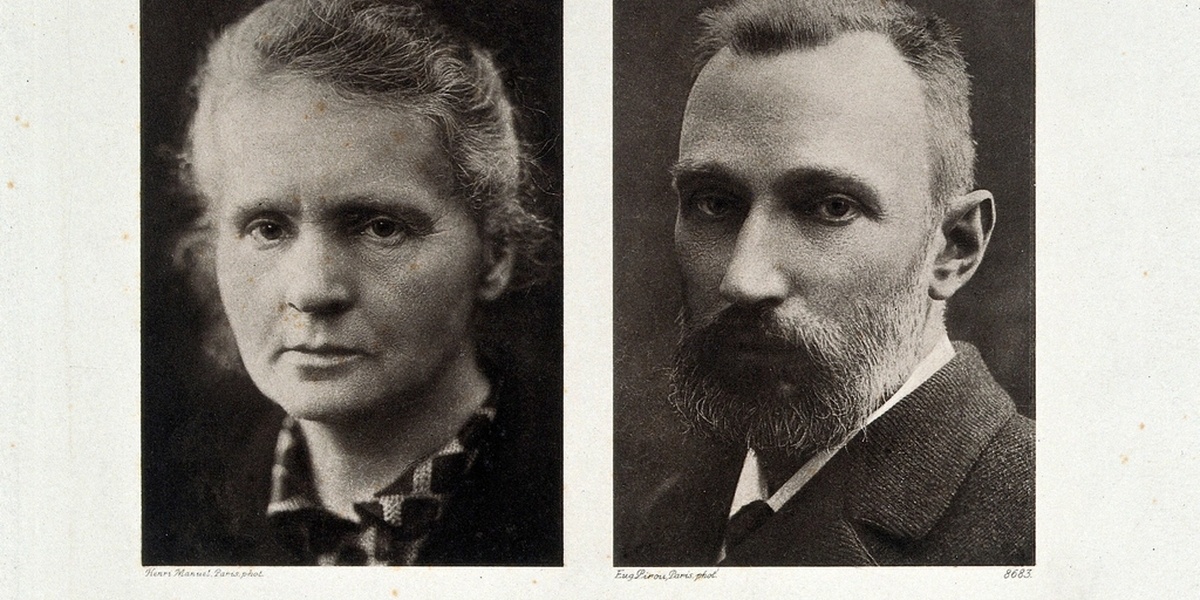
At the start of the 20th century, scientific breakthroughs and cultural achievements were reshaping public life across Europe and beyond. Looking back at 1911 offers a compact snapshot of that moment — a mix of scientific progress, literary influence, and peace work recognized on the world stage.
There are 6 1911 Nobel Prize Winners, ranging from Alfred Fried to Wilhelm Wien. The entries below are organized with Category, Country, Award citation (15 words max). You’ll find the full list and concise context for each of these six figures below.
Which fields and countries do the 1911 winners represent?
The 1911 laureates cover Physics, Chemistry, Physiology or Medicine, Literature, and Peace — with the Peace prize shared, giving six individual winners. Most recipients were based in European countries, reflecting the era’s intellectual centers; examples range from Alfred Fried in Central Europe to Wilhelm Wien in Germany.
How brief are the award citations and why are they useful?
Each citation is capped at 15 words to provide a clear, quick summary of the reason for the award — ideal for scanning and comparison while preserving the essentials of each laureate’s contribution.
1911 Nobel Prize Winners
| Name | Category | Country | Award citation (15 words max) |
|---|---|---|---|
| Wilhelm Wien | Physics | Germany | for his discoveries regarding the laws governing the radiation of heat. |
| Marie Curie | Chemistry | France | for the discovery and isolation of the elements polonium and radium. |
| Allvar Gullstrand | Physiology or Medicine | Sweden | for his work on the dioptrics of the eye. |
| Maurice Maeterlinck | Literature | Belgium | in appreciation of his many-sided literary activities, and especially of his dramatic works. |
| Alfred Fried | Peace | Austria | for his peace advocacy and writings promoting international arbitration and disarmament. |
| Tobias Asser | Peace | Netherlands | for his role in the codification of international law and promotion of arbitration. |
Images and Descriptions

Wilhelm Wien
German physicist Wilhelm Wien advanced thermal radiation theory, formulating Wien’s displacement law linking black-body peak wavelength and temperature. His work helped establish early quantum theory and influenced Planck’s radiation law, securing his 1911 Nobel Prize.
Marie Curie
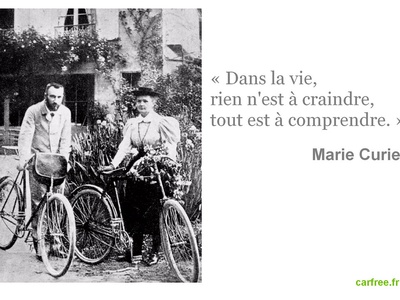
Polish-born French physicist and chemist Marie Curie pioneered research on radioactivity, discovering polonium and radium, isolating radium, and developing techniques for measuring radioactivity. She was the first person to win two Nobel Prizes and a leading figure in early nuclear science.
Allvar Gullstrand
Swedish ophthalmologist Allvar Gullstrand made foundational contributions to the optics of the eye, improving understanding of vision and refraction. His mathematical and clinical work led to better corrective lenses and eye surgery techniques, earning the 1911 Nobel Prize in Medicine.
Maurice Maeterlinck
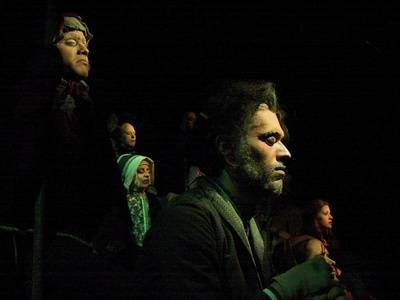
Belgian symbolist playwright and poet Maurice Maeterlinck wrote atmospheric dramas and essays exploring fate, silence, and inner life. His plays, like Pelléas and Mélisande, influenced modern theater and earned him the 1911 Nobel Prize for literature.
Alfred Fried
Austrian pacifist, journalist, and author Alfred Fried campaigned for international arbitration, disarmament, and peace education through books and activism. His influential writings and role in the peace movement earned him the 1911 Nobel Peace Prize alongside Tobias Asser.
Tobias Asser
Dutch jurist Tobias Asser helped develop private international law, founding the Hague Conference and promoting international arbitration and legal codification. His scholarly and diplomatic work on cross-border legal cooperation earned him the 1911 Nobel Peace Prize jointly with Alfred Fried.