Gadolinium sits at the intersection of practical medicine and advanced materials research, showing up in MRI contrast agents, magnetic alloys, catalysts and organometallic studies. Whether you’re a chemist, clinician, or student, a concise list helps spot patterns and pick the right compound for a task.
There are 42 Gadolinium Compounds, ranging from Gadobenate dimeglumine (Gd‑BOPTA) to Tris(cyclopentadienyl)gadolinium; for each entry you’ll find below Formula,Compound class,Primary uses so you can quickly compare properties and applications you’ll find below.
What are the main applications of gadolinium compounds?
Gadolinium compounds are most widely known for MRI contrast agents (chelated complexes) but also serve in phosphors and luminescent materials, magnetic refrigeration and alloys, and as catalysts or precursors in organometallic synthesis—each class tailored to stability, solubility and electronic properties.
Are gadolinium compounds safe to handle and use?
Safety depends on the specific compound: clinically used chelates are formulated to minimize free Gd3+ and are safe under approved protocols, while some organometallic or soluble salts can be toxic or irritating; handle with appropriate PPE, follow institutional safety rules and dispose of waste per regulations.
Gadolinium Compounds
| Name | Formula | Compound class | Primary uses |
|---|---|---|---|
| Gadolinium oxide | Gd2O3 | oxide | Phosphors, ceramics, polishing, catalyst precursor |
| Gadolinium(III) chloride | GdCl3 | halide salt | Laboratory reagent, precursor for syntheses |
| Gadolinium(III) chloride hexahydrate | GdCl3·6H2O | halide hydrate | Precursor, reagent for materials and coordination chemistry |
| Gadolinium(III) nitrate hexahydrate | Gd(NO3)3·6H2O | nitrate salt | Precursor for oxide and catalyst preparations |
| Gadolinium(III) sulfate | Gd2(SO4)3 | sulfate salt | Precursor, aqueous chemistry studies |
| Gadolinium(III) fluoride | GdF3 | fluoride | Upconversion phosphors, optics, ceramics |
| Gadolinium oxysulfide | Gd2O2S | oxysulfide (phosphor host) | Phosphor host for x‑ray screens, displays, imaging |
| Gadolinium orthosilicate (GSO) | Gd2SiO5 | silicate (scintillator) | Scintillators for radiation detectors and PET systems |
| Gadolinium gallium garnet (GGG) | Gd3Ga5O12 | garnet (oxide) | Laser substrates, microwave devices, magneto‑optical materials |
| Gadolinium vanadate | GdVO4 | vanadate | Phosphors, laser host materials |
| Gadolinium phosphate | GdPO4 | phosphate | Luminescent host, bioceramic research, inert host |
| Gadolinium(III) oxide‑sulfide (phosphor) | Gd2O2S:Tb (example doped) | oxysulfide | Green phosphors for imaging and displays |
| Gadolinium sulfide | Gd2S3 | sulfide | High‑temperature ceramics and phosphors |
| Gadolinium phosphide | GdP | phosphide | Semiconductor and magnetic materials research |
| Gadolinium nitride | GdN | nitride | Magnetic semiconductor research, spintronics |
| Gadolinium arsenide | GdAs | arsenide | Magnetic materials and solid‑state research |
| Gadolinium telluride | GdTe | telluride | Magnetic and electronic materials research |
| Gadolinium oxide hydroxide | GdO(OH) | oxohydroxide | Precursor to oxides, nanomaterial synthesis |
| Gadolinium hydroxide | Gd(OH)3 | hydroxide | Precursor for nanoparticles, materials chemistry |
| Gadolinium carbonate | Gd2(CO3)3 | carbonate | Precursor for oxide production and precipitation studies |
| Gadolinium oxalate | Gd2(C2O4)3 | oxalate | Precursor for materials synthesis, analytical separations |
| Gadolinium titanate (pyrochlore) | Gd2Ti2O7 | oxide (pyrochlore) | Magnetic materials, dielectric research |
| Gadolinium manganite | GdMnO3 | perovskite oxide | Multiferroics, magnetic and electronic research |
| Gadolinium aluminates | GdAlO3 | perovskite oxide | High‑temperature ceramics, laser materials research |
| Gadolinium(III) iodide | GdI3 | halide | Precursors, crystal growth research |
| Gadolinium(III) bromide | GdBr3 | halide | Synthesis precursor, materials chemistry |
| Gadolinium(III) oxalate hydrate | Gd2(C2O4)3·xH2O | oxalate hydrate | Precursor for oxides and nanomaterials |
| Gadolinium(III) triflate | Gd(CF3SO3)3 | triflate salt | Lewis acid catalyst in organic synthesis |
| Gadolinium(III) acetate | Gd(CH3COO)3 | acetate salt | Precursor in sol‑gel and materials syntheses |
| Gadolinium acetylacetonate | Gd(C5H7O2)3 | coordination complex | MOCVD precursor, materials synthesis, nanoparticle synthesis |
| Tris(cyclopentadienyl)gadolinium | Gd(C5H5)3 | organometallic | Fundamental organometallic research, synthesis precursor |
| Gadolinium diboride | GdB2 | boride | High‑temperature and electronic materials research |
| Gadolinium tellurate | Gd2TeO6 | tellurate oxide | Research into magnetic and optical properties |
| Gadolinium phosphonate | general formula varies (Gd‑R‑PO3)n | coordination polymer | Surface modification, MRI nanoparticle coatings |
| Gadolinium(III) oxyselenide | Gd2O2Se | oxyselenide | Optoelectronic and magnetic materials research |
| Gadolinium arsenide phosphide solid solution | GdAs1−xPx | pnictide solid solution | Solid‑state and magnetic property studies |
| Gadolinium‑based DTPA chelate (gadopentetate) | [Gd(DTPA)(H2O)]2− | chelate (MRI contrast) | Extracellular MRI contrast agent, clinical imaging |
| Gadolinium‑based DOTA chelate (gadoterate/gadoteridol class) | [Gd(DOTA)]− | macrocyclic chelate (MRI contrast) | Macrocyclic MRI contrast agents with high stability |
| Gadoxetate disodium (Gd‑EOB‑DTPA) | Na2[Gd(EOB‑DTPA)] | chelate (MRI liver agent) | Hepatocyte‑specific MRI contrast for liver imaging |
| Gadobenate dimeglumine (Gd‑BOPTA) | [Gd(BOPTA)(H2O)]−·2meglumine | chelate (MRI contrast) | High‑relaxivity MRI agent for enhanced imaging |
| Gadodiamide (Gd‑DTPA‑BMA) | [Gd(DTPA‑BMA)] | linear chelate (non‑ionic MRI) | MRI contrast agent, imaging applications |
| Gadobutrol (Gd‑DO3A‑butrol) | [Gd(Do3a‑butrol)(H2O)] | macrocyclic chelate (MRI) | High‑relaxivity, non‑ionic MRI contrast agent |
Images and Descriptions

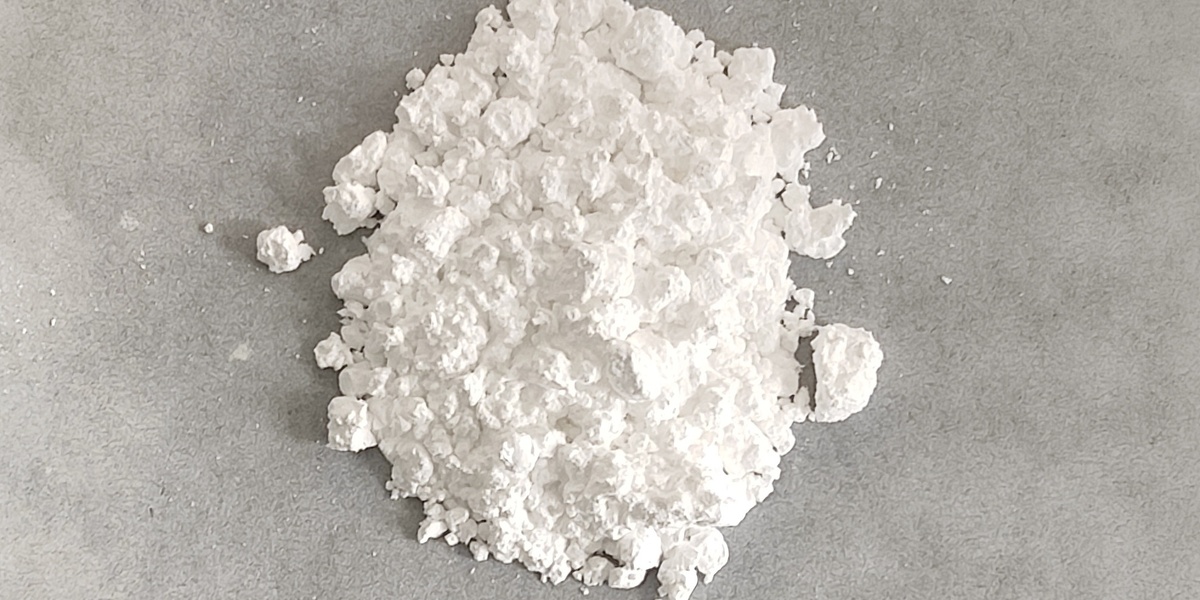
Gadolinium oxide
A stable rare-earth oxide used in ceramics, phosphors, optical materials and catalysts. It’s a common precursor for other Gd compounds; fine powders can irritate lungs and free Gd3+ is toxic, so handle to avoid dust and ingestion.
Gadolinium(III) chloride
A hygroscopic gadolinium salt used as a soluble Gd3+ source in syntheses and materials preparation. Common in labs for making other Gd compounds; soluble Gd salts are moderately toxic if ingested and irritant on contact.
Gadolinium(III) chloride hexahydrate
A widely used hydrated chloride providing Gd3+ in aqueous chemistry and coordination complex synthesis. It is water‑soluble and corrosive to mucous membranes; avoid ingestion and prolonged exposure.
Gadolinium(III) nitrate hexahydrate
A water‑soluble nitrate salt used to prepare Gd-containing oxides and catalysts. Nitrates are oxidizing; handle with care. Soluble Gd ions can be toxic and environmentally persistent.
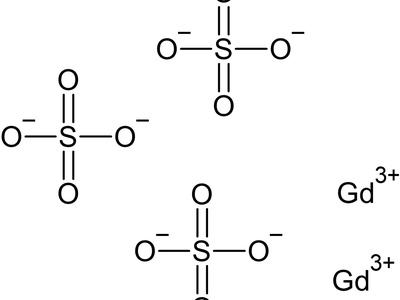
Gadolinium(III) sulfate
An inorganic sulfate salt used as a stable Gd3+ source in precipitation and materials work. It’s soluble and used in research; as with other soluble Gd salts, avoid ingestion and skin contact.
Gadolinium(III) fluoride
A low‑phonon host used in upconversion phosphors and optical materials. Fluoride forms are often used in luminescent nanoparticles; fluoride salts require careful handling, and soluble Gd poses toxicity risks.
Gadolinium oxysulfide
A robust phosphor host widely used in x‑ray intensifying screens and display phosphors. It offers strong luminescence when doped. Powder inhalation can be harmful; treat as potentially toxic particulate.
Gadolinium orthosilicate (GSO)
A dense scintillator crystal used in radiation detection and PET scanners. It has fast decay and good light yield. GSO crystals are stable, but raw powders should not be inhaled or ingested.
Gadolinium gallium garnet (GGG)
A single‑crystal garnet used as a substrate in optics and lasers and for magneto‑optical devices. Mechanically robust; crystalline material is inert but machining dust should be avoided.
Gadolinium vanadate
A luminescent host used in phosphors and as a laser crystal. Offers good thermal stability and luminescence when doped. Vanadate materials may pose chemical hazards; handle with standard lab precautions.
Gadolinium phosphate
A water‑insoluble phosphate used as a luminescent host and investigated for biomedical ceramics. Low solubility reduces free Gd3+ release, but particulate forms still require careful handling.
Gadolinium(III) oxide‑sulfide (phosphor)
Gd2O2S often doped with activators (e.g., Tb) to yield bright phosphors in imaging and display applications. As a host material it’s useful and chemically stable, but dust and fine powders should be avoided.
Gadolinium sulfide
A ceramic sulfide used in specialty materials and some phosphor applications. Sulfides can be sensitive to oxidation; powder forms may pose inhalation risks and should be handled carefully.
Gadolinium phosphide
A binary semiconductor/metallic compound studied for magnetic and electronic properties. Typically prepared under controlled conditions; as with many pnictides, synthesis hazards require inert conditions and careful handling.
Gadolinium nitride
A rare‑earth nitride with interesting magnetic and electronic properties used in spintronics research. The material is sensitive to air and moisture; nitrides require inert synthesis and cautious handling.
Gadolinium arsenide
An intermetallic/semiconductor studied for magnetic interactions. Contains arsenic — handle with extreme caution due to arsenic toxicity; material synthesis and disposal must follow strict safety rules.
Gadolinium telluride
A binary telluride investigated for magnetic and electronic behaviors. Telluride compounds can be toxic; synthesis and handling require protective procedures and appropriate waste disposal.
Gadolinium oxide hydroxide
An intermediate product in oxide synthesis and a common nanomaterial precursor. It’s often formed in hydrothermal syntheses; powders should be contained to avoid inhalation and environmental release.
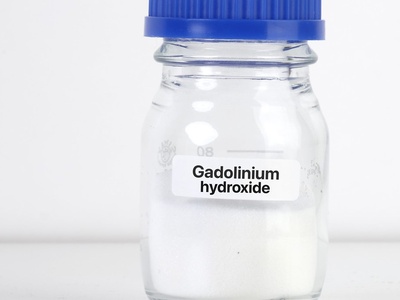
Gadolinium hydroxide
A basic gadolinium salt used as a precursor to oxides and Gd‑based nanoparticles. Reacts with acids to give soluble Gd3+; avoid ingestion and control nanoparticle exposure.
Gadolinium carbonate
A sparingly soluble carbonate used to isolate Gd from solution and as a precursor for oxides. Solid carbonate minimizes free Gd3+ mobility, but handle as potentially toxic particulate.
Gadolinium oxalate
A common precipitated precursor used to produce Gd2O3 after calcination. Oxalate salts can be combustible on decomposition; treat solids as chemically active and potentially toxic.
Gadolinium titanate (pyrochlore)
A pyrochlore oxide studied for frustrated magnetism and dielectric properties. Ceramic and crystalline forms are chemically stable; powders should be handled to avoid inhalation.
Gadolinium manganite
A perovskite oxide exhibiting coupled magnetic and ferroelectric behavior, of interest in basic research. Bulk material is stable; nanopowders require dust controls to limit exposure.
Gadolinium aluminates
A high‑temperature perovskite used for ceramics and optical research. It has good thermal and chemical stability, though fine powders must be controlled during handling.
Gadolinium(III) iodide
A trivalent iodide used in solid‑state syntheses and crystal growth. Iodides are moisture sensitive and can hydrolyze; handle under dry conditions and avoid inhalation of dust.
Gadolinium(III) bromide
A hygroscopic bromide salt used as a Gd3+ source in syntheses. Bromide salts are corrosive and may release HBr on hydrolysis; use gloves and respiratory protection where appropriate.
Gadolinium(III) oxalate hydrate
A hydrated oxalate precipitate used to prepare finely divided Gd2O3 upon calcination. Handle as a potentially hazardous particulate; decomposition products can be reactive.
Gadolinium(III) triflate
A soluble Lewis acid salt used in organic catalysis and materials chemistry. Triflate salts are useful for catalysis but require care due to Gd toxicity and potential environmental persistence.
Gadolinium(III) acetate
A moderately soluble organic salt used to prepare Gd‑containing films and nanoparticles. Organic salts can release Gd3+ in solution; handle by standard lab safety rules.
Gadolinium acetylacetonate
A neutral coordination complex used as a volatile precursor in vapor deposition and as a reagent for nanoparticle synthesis. It’s an organometallic/coordination compound — avoid inhalation and skin contact.
Tris(cyclopentadienyl)gadolinium
An organometallic complex studied in fundamental chemistry and as a starting material for specialty syntheses. Air‑sensitive and reactive; handle under inert atmosphere with appropriate precautions.
Gadolinium diboride
A refractory boride with interesting electronic and structural properties for materials research. Borides are usually chemically robust; synthesis and powder handling require standard precautions.
Gadolinium tellurate
A complex oxide incorporating tellurium studied for electronic and magnetic behavior. Tellurium compounds require careful handling due to potential toxicity; follow waste protocols.
Gadolinium phosphonate
An example class of coordination polymers used to anchor Gd on surfaces or nanoparticles; formulations vary. Bound Gd reduces free ion release, but safety depends on final material stability.
Gadolinium(III) oxyselenide
An oxyselenide studied for optical and magnetic properties. Selenium‑containing materials can be hazardous; syntheses require controlled conditions and proper handling of powders.
Gadolinium arsenide phosphide solid solution
A family of binary/solid‑solution materials used to tune magnetic and electronic properties in research. Pnictides can have toxicity concerns (As); synthesis/disposal must adhere to safety rules.
Gadolinium‑based DTPA chelate (gadopentetate)
A linear Gd chelate extensively used in MRI to shorten T1 relaxation. Chelation reduces free Gd toxicity, but release can occur in renal impairment; associated with nephrogenic systemic fibrosis risk in renal failure.
Gadolinium‑based DOTA chelate (gadoterate/gadoteridol class)
A macrocyclic Gd chelate known for greater thermodynamic and kinetic stability than linear agents, lowering free Gd release risk. Still used cautiously in patients with kidney issues.
Gadoxetate disodium (Gd‑EOB‑DTPA)
A DTPA‑based chelate with a lipophilic group enabling liver uptake for enhanced hepatic MRI. Useful clinically for liver lesion detection; same Gd safety considerations apply, especially in renal impairment.
Gadobenate dimeglumine (Gd‑BOPTA)
A partially hepatobiliary linear chelate giving improved contrast in certain MRI studies. Chelation lowers toxicity but free Gd risks remain, particularly for patients with severe renal dysfunction.
Gadodiamide (Gd‑DTPA‑BMA)
A non‑ionic linear Gd chelate once widely used for MRI. Linear structures are generally less stable than macrocyclic chelates; there have been concerns about retention and NSF in renal failure.
Gadobutrol (Gd‑DO3A‑butrol)
A non‑ionic macrocyclic Gd chelate designed for strong T1 shortening in MRI. Macrocyclic design improves stability and reduces free Gd release; still contraindicated in severe renal impairment without caution.