Ultraviolet radiation is all around us — from the sun lighting a summer day to specialized lamps used in labs and industry. Understanding the different sources helps when you’re considering exposure, measurement, or practical uses like sterilization and photography.
There are 20 Examples of Ultraviolet Radiation, ranging from Aurora to Xenon flash lamp, showing the span from natural atmospheric phenomena to high-intensity artificial pulses. For each entry you’ll find below the columns Type,Wavelength (nm),Common locations / uses to help you compare source, spectral range and typical applications — you’ll find below.
Which everyday UV sources should I worry about most?
Focus on intensity and exposure time: midday sun and tanning beds deliver the highest risk outdoors and indoors, respectively, because they combine strong UV-A/UV-B output with long exposure. Protect skin and eyes with sunscreen, clothing and certified UV-blocking eyewear, and avoid direct, prolonged exposure to artificial UV sources unless they’re shielded or used with safety protocols.
How do natural sources like auroras compare to devices such as xenon flash lamps?
Auroras are primarily visual phenomena with limited UV reaching the ground; their UV is diffuse and usually low risk. Xenon flash lamps emit concentrated, short bursts across a broad spectrum including UV, producing much higher local intensity — they can pose acute exposure risks and are typically used with shielding and controls.
Examples of Ultraviolet Radiation
| Name | Type | Wavelength (nm) | Common locations / uses |
|---|---|---|---|
| Sun | Natural | UVA 315-400 nm; UVB 280-315 nm (UVC mostly absorbed) | Outdoors, daylight |
| Tanning bed lamps | Artificial | Primarily UVA 320-400 nm; some UVB 280-320 nm | Tanning salons, cosmetic facilities |
| Black light (UVA fluorescent) | Artificial | UVA ~365 nm | Nightclubs, art, forensics, fluorescence displays |
| Germicidal UVC lamp (low-pressure mercury) | Artificial | UVC ~254 nm | Water treatment, surface/air disinfection, labs |
| UVA LED | Artificial | UVA ~365-405 nm | Inspection, curing, counterfeit detection, entertainment |
| UVC LED | Artificial | UVC ~260-280 nm | Compact disinfection devices, water purification |
| Mercury-vapor lamp | Artificial | UV lines ~253 nm and others up to UVA | Streetlights, stadiums, some lab equipment |
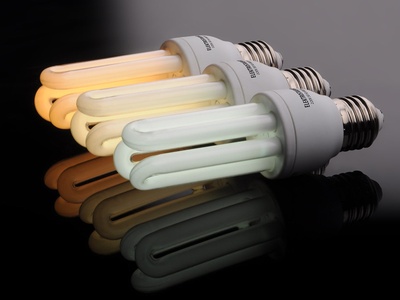
| Fluorescent lamps (CFL) | Artificial | Primarily UVA/UVB emissions inside tube; visible output after phosphor | Homes, offices, commercial lighting |
| Metal halide lamp | Artificial | UVA and UVB spectral lines present | Stadiums, industrial lighting, horticulture |
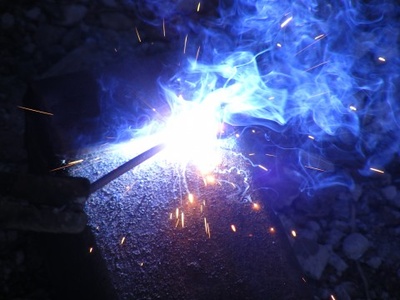
| Welding arc | Artificial | Broadband UV including UVA, UVB, some UVC | Welding shops, construction, metal fabrication |
| Xenon flash lamp | Artificial | Broad-spectrum including UVA/UVB components | Photography, testing, research, some sterilization studies |
| Excimer lamps/lasers | Artificial | Narrowband UVC (e.g., KrCl 222 nm) | Precision disinfection, lithography, research |
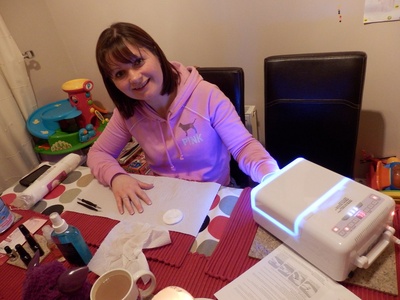
| UV nail curing lamps | Artificial | UVA ~365-405 nm | Nail salons, home manicure kits |
| Reptile UVB bulbs | Artificial | UVB ~280-320 nm | Pet enclosures, reptile habitats, zoos |
| Phototherapy lamps (narrowband UVB) | Artificial | Narrowband UVB ~311 nm | Dermatology clinics, hospitals |
| UV curing lamps (industrial) | Artificial | UVA and sometimes UVC depending on system | Printing, adhesives, coatings, manufacturing lines |
| Insect trap (UV black light) | Artificial | UVA ~350-380 nm | Insect zappers, pest control devices |
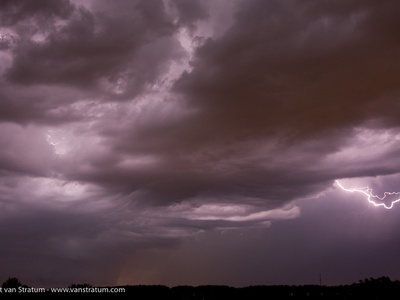
| Lightning | Natural | Broadband including UV; can reach into UVC | Thunderstorms, outdoor electrical discharges |
| Aurora | Natural | UV emission lines (varies by species, often vacuum-UV/UV) | High-latitude skies, upper atmosphere, observed by satellites |
| Cherenkov radiation | Artificial (observed in nuclear environments) | Visible-blue glow extending into UV wavelengths | Nuclear reactor pools, particle detectors |
Images and Descriptions
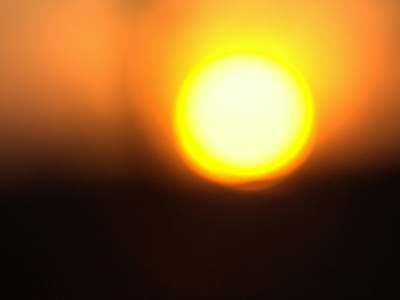
Sun
The Sun is the primary natural source of UVA and UVB reaching Earth; it drives tanning, vitamin D production and sunburn risk. UVC is absorbed by atmosphere. Sun exposure varies by time, season, altitude, and reflection from surfaces.
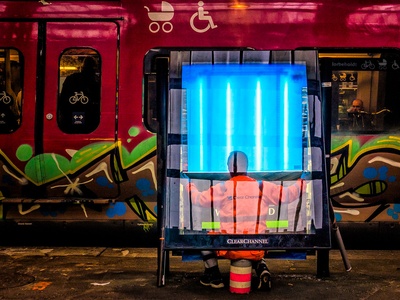
Tanning bed lamps
Tanning bed lamps concentrate UVA and some UVB to darken skin quickly; they mimic solar UV and increase skin aging and cancer risk. Typically found in salons; use should follow safety guidance and limit exposure.
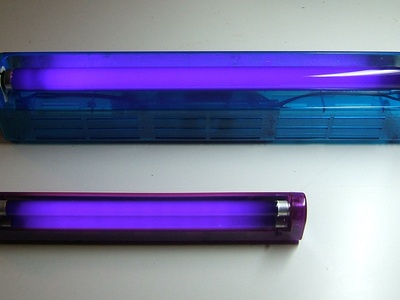
Black light (UVA fluorescent)
Black lights emit longwave UVA (around 365 nm) used for fluorescence effects, nightclubs, counterfeit detection and pest traps. They are low-intensity UVA but prolonged exposure can irritate eyes and skin; avoid close, extended contact.

Germicidal UVC lamp (low-pressure mercury)
Low-pressure mercury germicidal lamps produce intense UVC at 254 nm used for surface and air disinfection, water treatment, and labs. UVC damages DNA and skin; direct exposure causes severe eye and skin injury—use shielding and interlocks.
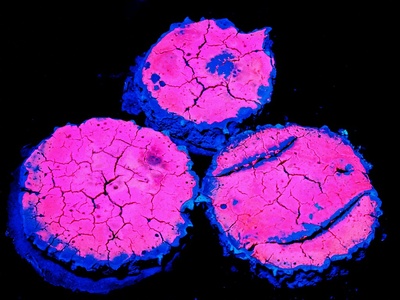
UVA LED
UVA LEDs (~365-405 nm) are common in inspection, curing, counterfeit detection and entertainment. They provide focused UVA light with lower heat than lamps; safety glasses recommended for prolonged exposure because they still contribute to eye and skin dose.
UVC LED
UVC LEDs emit shortwave UVC, often 260–280 nm, used in compact disinfection devices and water purification. They are effective for microbes but produce harmful ionizing-like effects on tissues; strict shielding and safety protocols are essential.
Mercury-vapor lamp
Mercury-vapor lamps produce UV and visible light from mercury discharge, used in streetlights, stadiums, and some lab equipment. They emit UV lines including 253–365 nm; aging or broken phosphor/covering can increase UV leakage and exposure.
Fluorescent lamps (CFL)
Fluorescent tubes and CFLs generate UV inside the tube via mercury discharge; phosphors convert most to visible light but small UV leakage can occur through glass or degraded coatings. Mostly low-level UVA/UVB—avoid broken tubes.
Metal halide lamp
Metal halide lamps are intense discharge lamps used in arenas and industrial settings; they emit UVA and UVB spectral lines and require UV-blocking covers. Unshielded units can cause skin burns and eye photokeratitis.
Welding arc
Electric welding arcs produce intense broadband UV including UVA, UVB and some UVC; they cause “welder’s flash” (photokeratitis) and severe skin burns. Welders must use helmets, gloves, and filtered shields to block UV and sparks.
Xenon flash lamp
Xenon flash and strobe lamps emit broad-spectrum light including UV down into UVA/UVB ranges; used in photography, testing and disinfection research. Intense flashes can damage eyes—avoid direct viewing without appropriate filters.
Excimer lamps/lasers
Excimer sources (e.g., KrCl at 222 nm) produce narrowband UVC used in precise disinfection and semiconductor lithography. They are highly effective against microbes but require strict enclosures and interlocks because of high tissue damage potential.
UV nail curing lamps
Nail curing lamps (UVA LEDs or fluorescent) emit focused UVA around 365–405 nm to cure gels and polishes. Short exposures are common but repeated manicures increase cumulative UV dose; consider finger guards or sunscreen for protection.
Reptile UVB bulbs
Specialized reptile UVB lamps emit UVB (around 280–320 nm) to support vitamin D synthesis in captive reptiles. Proper distance and bulb replacement are important—insufficient or excessive UVB harms animal health.
Phototherapy lamps (narrowband UVB)
Medical phototherapy uses narrowband UVB (~311 nm) to treat psoriasis, vitiligo and other skin conditions. Treatments are controlled and dosed clinically because UVB can burn and increase long-term skin cancer risk.
UV curing lamps (industrial)
Industrial UV curing systems (mercury or LED) emit UVA/UVC for rapid curing of inks, adhesives and coatings in printing and manufacturing. They offer speed and strong bonds but require shielding, interlocks and trained operators to prevent exposure.
Insect trap (UV black light)
Many insect traps use UVA black lights to attract insects; the lamps emit around 350–380 nm and are paired with electrified grids. Exposure risk is low for short distances but avoid staring into them and limit proximity.
Lightning
Lightning discharges create hot plasma that emits broadband radiation including UV (often down into UVC). Outdoor lightning UV is short-lived but can produce ozone and transient air chemistry—direct exposure risk is minimal compared with electrical hazards.
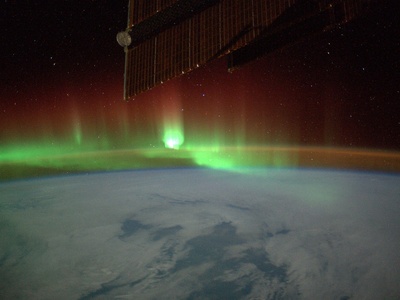
Aurora
Auroral displays produce UV emission lines from excited atmospheric atoms and molecules, observed by satellites and occasionally affecting high-altitude flights. UV aurora is invisible to human eyes from the ground but important to space weather and upper-atmosphere chemistry.
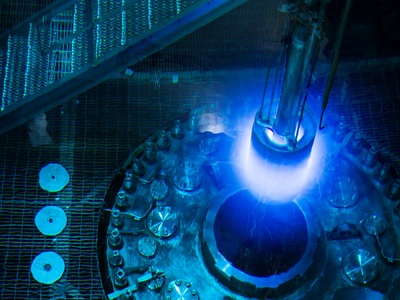
Cherenkov radiation
Cherenkov glow in nuclear reactor pools is blue but extends into ultraviolet; produced when charged particles exceed light speed in water. It indicates energetic radiation and is only observed in shielded reactor environments—avoid without training and shielding.