Maine’s coastline, forests and wetlands host a wide variety of birds throughout the year, from seasonal migrants to year-round residents. Whether you’re a backyard watcher or planning a field trip, knowing what to look for helps you spot the right species in the right habitats.
There are 60 Birds of Maine, ranging from American Black Duck to Wood Duck. Each entry lists the Scientific name,Status,Where found so you can quickly see identification details, conservation status, and typical locations; you’ll find below.
Where in Maine should I go and when to have the best chance of seeing many species?
Spring and fall migrations bring the highest diversity—coastal stopovers like the Maine coast and kettle ponds in the interior are excellent in April–May and September–October, while shorebirds peak on exposed flats at low tide; winters favor southern coastal bays and open water for ducks.
How current is this list and how were species included?
The list compiles recorded occurrences and status notes used by local birding groups and state records; check the Status column for notes on rarity or seasonal presence and consult local sightings or conservation updates for the most recent changes.
Birds of Maine
| Common name | Scientific name | Status | Where found |
|---|---|---|---|
| Mallard | Anas platyrhynchos | Resident breeder and migrant; common | Ponds, marshes, suburbs statewide |
| Canada Goose | Branta canadensis | Resident breeder and migrant; very common | Lakes, fields, coastal estuaries statewide |
| American Black Duck | Anas rubripes | Breeder and migrant; common in coastal areas | Marshes, estuaries, southern and coastal Maine |
| Mute Swan | Cygnus olor | Introduced resident; locally common | Protected bays, ponds, southern Maine coast |
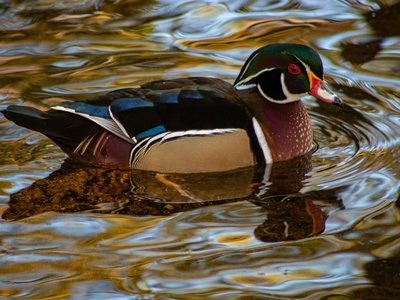
| Wood Duck | Aix sponsa | Breeder and migrant; common near woods | Wooded wetlands, beaver ponds, southern Maine |
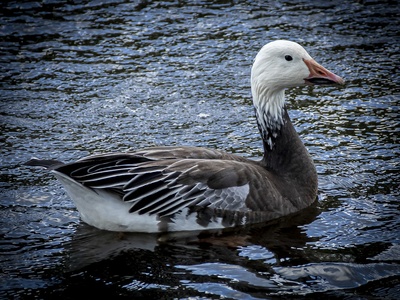
| Snow Goose | Anser caerulescens | Migratory visitor; common in migration | Tidal flats, fields, midcoast and interior |
| Brant | Branta bernicla | Migratory visitor and winterer; local | Coastal bays, salt marshes southern coast |
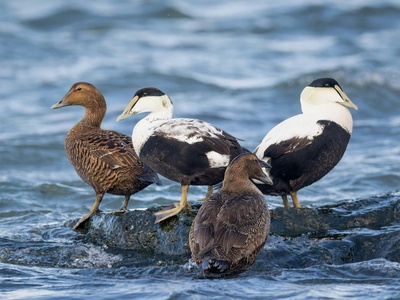
| Common Eider | Somateria mollissima | Breeding coastal resident and migrant; common | Rocky coasts, offshore islands, Gulf of Maine |
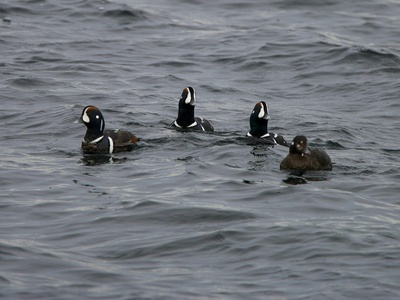
| Harlequin Duck | Histrionicus histrionicus | Winter visitor and migrant; local | Rocky headlands, swift coastal waters |
| Long-tailed Duck | Clangula hyemalis | Winter visitor and migrant; common offshore | Open sea, bays, Gulf of Maine, coastal waters |
| Bufflehead | Bucephala albeola | Breeder and migrant; common | Wooded ponds, coastal bays, midsized lakes |
| Common Goldeneye | Bucephala clangula | Breeder and migrant; common in winter | Lakes, rivers, coastal bays statewide |
| Hooded Merganser | Lophodytes cucullatus | Breeder and migrant; common locally | Wooded ponds, flooded swamps, coastal coves |
| Common Merganser | Mergus merganser | Breeder and migrant; common | Rivers, large lakes, coastal bays northern and interior |
| Red-breasted Merganser | Mergus serrator | Migratory and winter visitor; common offshore | Coastal bays, estuaries, open sea |
| Northern Pintail | Anas acuta | Migrant and breeder; less common | Marshes, mudflats, agricultural fields southern Maine |
| Green-winged Teal | Anas carolinensis | Migrant and breeder; fairly common | Marshes, flooded fields, coastal wetlands statewide |
| American Wigeon | Mareca americana | Migrant and breeder; common | Marshes, estuaries, ponds southern and coastal Maine |
| Common Loon | Gavia immer | Breeder and migrant; common on lakes | Clear inland lakes, rocky coasts, northern Maine |
| Red-throated Loon | Gavia stellata | Migratory and winter visitor; common offshore | Coastal waters, bays, offshore islands |
| Great Cormorant | Phalacrocorax carbo | Resident and migrant; locally common | Rocky coasts, islands, harbors southern and midcoast |
| Double-crested Cormorant | Phalacrocorax auritus | Breeder and migrant; common | Coastal bays, lakes, islands statewide |
| Osprey | Pandion haliaetus | Breeder and migrant; common coastal | Coastal estuaries, lakes, rivers statewide |
| Bald Eagle | Haliaeetus leucocephalus | Breeder and resident; increasing | Large lakes, rivers, coastal bays statewide |
| Peregrine Falcon | Falco peregrinus | Breeder and migrant; locally common | Coastal cliffs, inland rivers, cities nesting sites |
| Northern Harrier | Circus hudsonius | Breeder and migrant; locally common | Marshes, fields, coastal meadows southern and coastal Maine |
| Red-tailed Hawk | Buteo jamaicensis | Resident breeder and migrant; common | Open country, forest edges, statewide |
| American Kestrel | Falco sparverius | Breeder and migrant; locally common | Open fields, towns, coastal meadows statewide |
| Ruffed Grouse | Bonasa umbellus | Resident breeder; common in forests | Young forests, brushy woodlands northern and interior Maine |
| Wild Turkey | Meleagris gallopavo | Resident breeder; common and expanding | Woodlands, fields, suburbs statewide |
| Belted Kingfisher | Megaceryle alcyon | Breeder and migrant; common | Rivers, lakes, coastal shores statewide |
| American Woodcock | Scolopax minor | Breeder and migrant; locally common | Young forests, fields, wet thickets southern and coastal Maine |
| Killdeer | Charadrius vociferus | Breeder and migrant; common | Fields, mudflats, gravel shores statewide |
| Piping Plover | Charadrius melodus | Breeder and migrant; threatened | Sandy beaches, coastal dunes southern Maine coast |
| Semipalmated Sandpiper | Calidris pusilla | Migratory shorebird; very common in migration | Mudflats, tidal creeks, Bay of Fundy-type areas |
| Sanderling | Calidris alba | Migratory shorebird; common on coasts | Sandy beaches, tidal foreshore statewide coast |
| Purple Sandpiper | Calidris maritima | Winter visitor; local on rocky coasts | Rocky headlands, jetties, northern and midcoast |
| Red Knot | Calidris canutus | Migratory shorebird; uncommon but notable | Mudflats, sandy beaches, tidal areas southern coast |
| American Oystercatcher | Haematopus palliatus | Breeder and migrant; locally common | Salt marshes, sandy/rocky coasts southern and midcoast |
| Black Guillemot | Cepphus grylle | Breeder and winter resident; common rocky coasts | Rocky shores, islands, bays northern and coastal Maine |
| Atlantic Puffin | Fratercula arctica | Breeder; localized and seasonal | Offshore islands, Penobscot Bay, coastal colonies |
| Razorbill | Alca torda | Breeder and migrant; local | Rocky islands, offshore cliffs midcoast and Gulf of Maine |
| Common Murre | Uria aalge | Breeder and migrant; local colonies offshore | Sea cliffs, offshore islands Gulf of Maine |
| Black-legged Kittiwake | Rissa tridactyla | Breeder and migrant; offshore | Cliffs, offshore islands, open sea Gulf of Maine |
| Herring Gull | Larus argentatus | Resident breeder and migrant; very common | Coasts, towns, landfills, inland lakes statewide |
| Great Black-backed Gull | Larus marinus | Breeder and migrant; common on coasts | Rocky shores, islands, harbors all coasts |
| Common Tern | Sterna hirundo | Breeder and migrant; common on coasts | Sandy islands, beaches, coastal estuaries southern and midcoast |
| Roseate Tern | Sterna dougallii | Breeder and migrant; rare and declining | Sandy islands, protected colonies midcoast |
| Arctic Tern | Sterna paradisaea | Migratory breeder and migrant; uncommon | Coastal islands, estuaries midcoast and northern |
| Least Tern | Sternula antillarum | Breeder and migrant; locally rare | Sandy beaches, riverbars southern Maine coast |
| Laughing Gull | Leucophaeus atricilla | Summer visitor and migrant; common southern coast | Coastal beaches, harbors, estuaries southern Maine |
| Ring-billed Gull | Larus delawarensis | Breeder and migrant; common | Coasts, lakes, urban areas statewide |
| Snowy Owl | Bubo scandiacus | Winter visitor and occasional breeder; irruptive | Open fields, dunes, coastal barrens northern and coastal Maine |
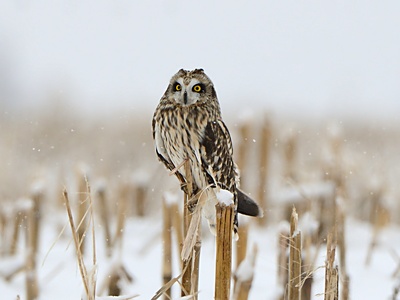
| Short-eared Owl | Asio flammeus | Winter visitor and breeder; local | Marshes, grasslands, coastal dunes statewide |
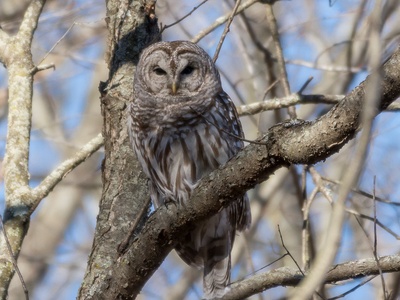
| Barred Owl | Strix varia | Resident breeder; common in woodlands | Mature forests, swamps, river valleys statewide |
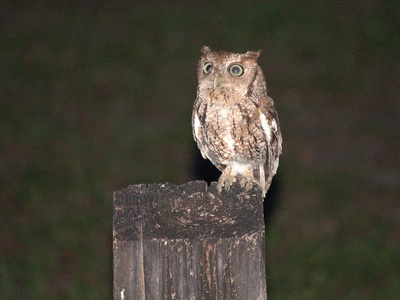
| Eastern Screech-Owl | Megascops asio | Resident breeder; common in southern Maine | Woodlands, parks, suburbs southern and coastal Maine |
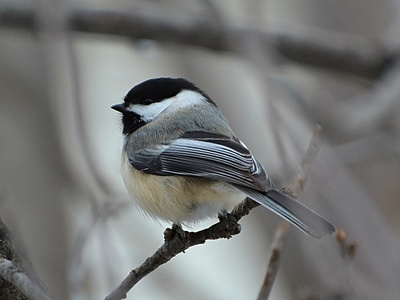
| Black-capped Chickadee | Poecile atricapillus | Year-round resident; very common | Forests, yards, parks statewide |
| White-breasted Nuthatch | Sitta carolinensis | Resident breeder; common | Woodlands, parks, feeders statewide |
| Ruby-throated Hummingbird | Archilochus colubris | Breeder and migrant; common summer | Flower gardens, forest edges southern and coastal Maine |
| American Robin | Turdus migratorius | Breeder and migrant; very common | Lawns, woodlands, suburbs statewide |
Images and Descriptions
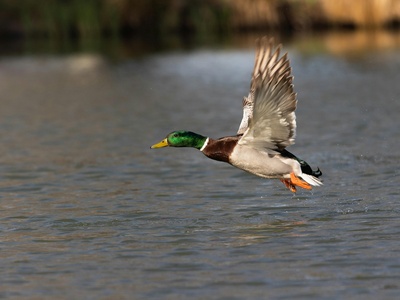
Mallard
A versatile dabbling duck seen on ponds, marshes and estuaries across Maine. Common breeder and frequent winter visitor in milder years; males have glossy green heads while females are mottled brown and easily recognized in mixed flocks.
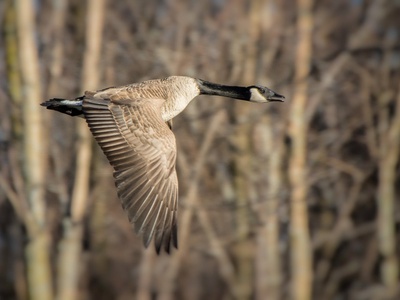
Canada Goose
Large, familiar goose often grazing in fields or resting on ponds. Breeds statewide with both resident flocks and migrants; forms noisy V‑formations during migration. Easily recognizable by black head and white cheek patch.
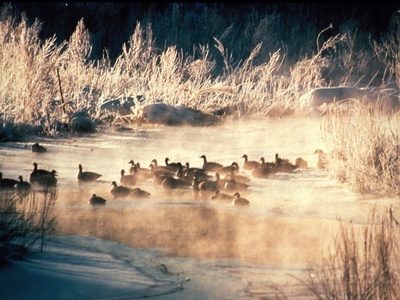
American Black Duck
A dark, large dabbling duck common in tidal marshes and estuaries. Often hybridizes with mallards but remains a signature species of Maine’s wetlands; females and males both show dusky plumage and a purple bill.
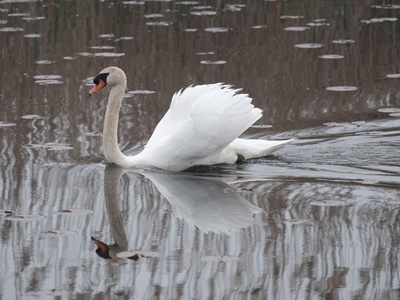
Mute Swan
An introduced, large white swan found in southern coastal ponds and bays. Impressive and vocal, often in small flocks; protected in many areas but noted for potential impacts on native wetlands and waterfowl.
Wood Duck
A colorful, tree‑nesting duck that prefers woodland ponds and marshes. Males are ornate with iridescent plumage; nests in cavity boxes and natural tree cavities, often seen in spring and fall migration.
Snow Goose
A striking white goose with black wingtips in flight, seen in large migrating flocks on fields and mudflats. Occurs in spring and fall migration and occasional winter gatherings; light and blue morphs exist.

Brant
A small, dark goose that grazes eelgrass and kelp in coastal bays. Seen during migration and mild winters along the southern and midcoast; notable for compact size and short neck.
Common Eider
Large sea duck of rocky shores and islands. Females nest on coastal islands; males are boldly patterned in breeding plumage. Popular with seabird-watchers during summer breeding season and wintering coveys offshore.
Harlequin Duck
A smartly patterned sea duck found on turbulent rocky coasts in winter and migration. Small and colorful, often in small groups feeding in surf; prized by coastal birders for its striking appearance.
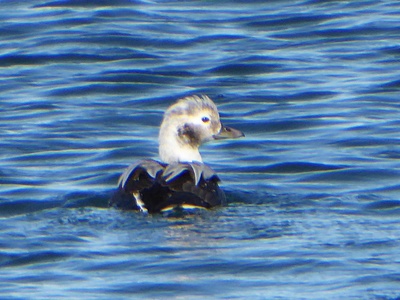
Long-tailed Duck
A distinctive winter sea duck with long tail streamers on males. Dives for mollusks and crustaceans offshore in the Gulf of Maine; often seen in large winter rafts near rocky points and islands.
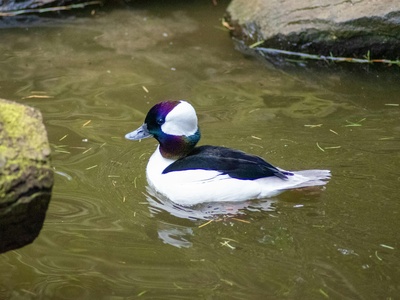
Bufflehead
Small, striking diving duck that nests in tree cavities and boxes. Males are glossy with bold white patches; winters in sheltered bays and lakes and breeds in boreal and mixed forests of northern Maine.
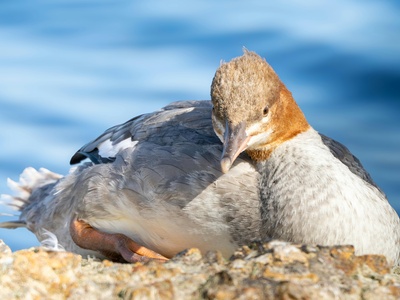
Common Goldeneye
A medium diving duck with a round white spot on the cheek of males. Winters on open water and breeds in tree cavities in northern forests; fairly common across Maine in appropriate habitat.
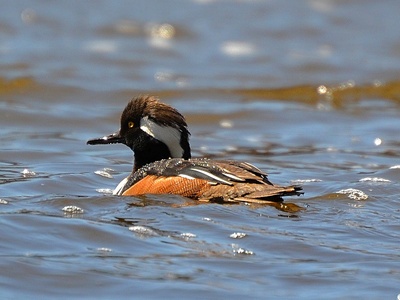
Hooded Merganser
A small crested merganser nesting in tree cavities; males show a dramatic black‑and‑white crest. Prefers wooded ponds and backwaters, often seen in small family groups during spring and summer.
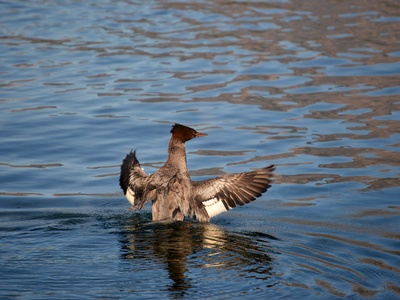
Common Merganser
A large fish‑eating duck often seen on rivers and lakes. Females have rusty heads; dives for fish and breeds in northern forests. Winters on larger unfrozen waters and in coastal bays.
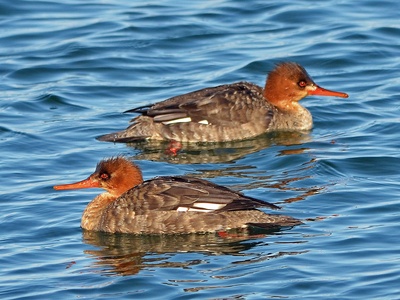
Red-breasted Merganser
A slender, spiky‑crested merganser common in saltwater. Active diver that feeds on fish in estuaries and offshore, often seen in mixed rafts during migration and winter along the coast.
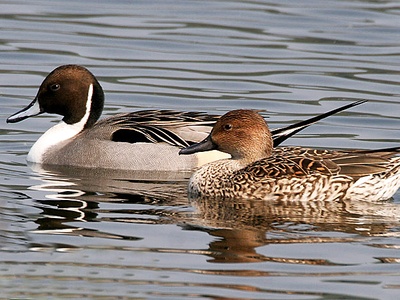
Northern Pintail
A sleek dabbling duck with a long pointed tail in males. Found on shallow marshes and flooded fields during migration; elegant profile makes it a favorite for photographers in spring and fall.
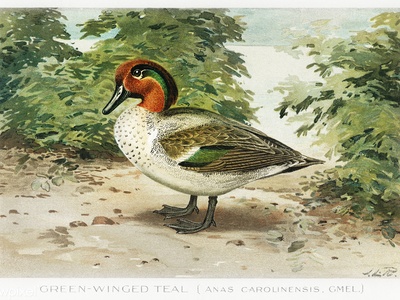
Green-winged Teal
The smallest North American dabbling duck with a green wing patch. Often occurs in mixed flocks on shallow wetlands and coastal mudflats during migration; males show a chestnut head in breeding plumage.
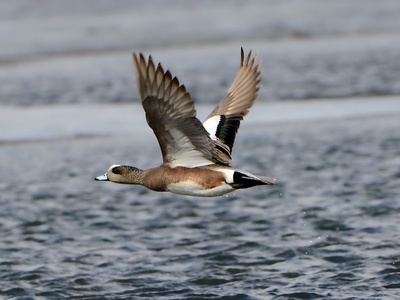
American Wigeon
A medium dabbling duck that grazes on aquatic vegetation. Males have a green eye stripe and white forehead; found on shallow marshes, freshwater ponds and coastal estuaries in migration and breeding seasons.
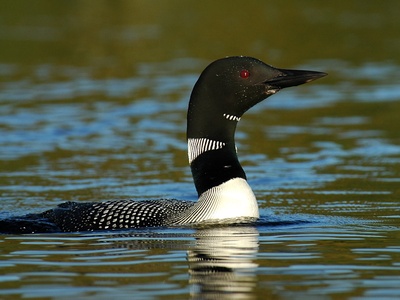
Common Loon
Iconic diving bird of Maine’s lakes with haunting calls. Breeds on quiet northern and interior lakes and moves to coasts in winter. Striking black‑and‑white summer pattern and red eyes make it unmistakable.
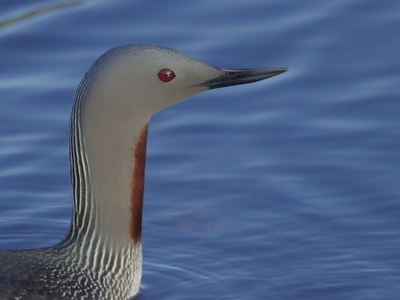
Red-throated Loon
A slender, ancient-looking loon that prefers saltwater. Seen on rocky coasts and offshore in migration and winter; in breeding season it is paler with a red throat patch and breeds in tundra ponds.
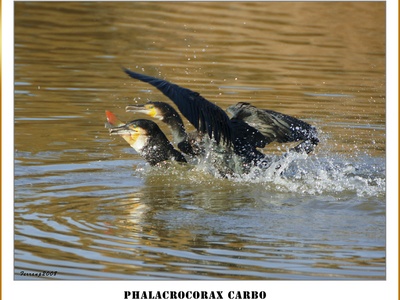
Great Cormorant
A large black seabird often seen drying wings on rocks. Nests on coastal islands and cliffs and forages offshore; larger and darker than the double‑crested cormorant and common in coastal Maine.
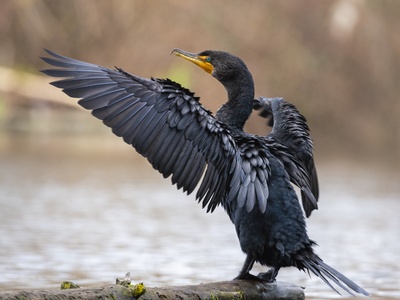
Double-crested Cormorant
A widespread cormorant found on inland and coastal waters. Nests in colonies on islands and dives for fish; distinguished by broadened bill and occasional crested breeding plumage.
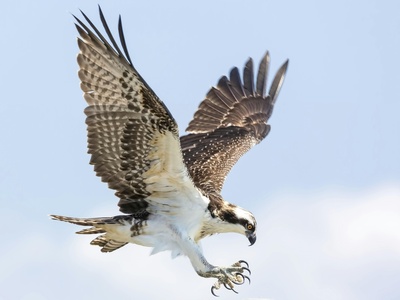
Osprey
A conspicuous fish‑eating raptor nesting on platforms, poles and trees near water. Summer breeder across Maine’s coast and interior; spectacular to watch as it hovers and plunges feet‑first for fish.
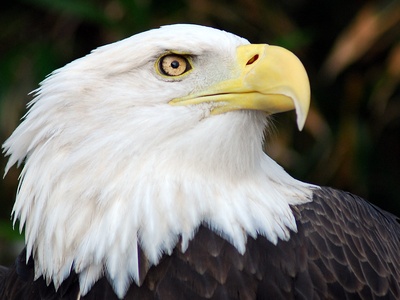
Bald Eagle
A recovered conservation success, now commonly seen soaring near large water bodies. Breeds statewide and winters where open water remains. Adults show white head and tail, juvenile plumage is mottled brown for years.
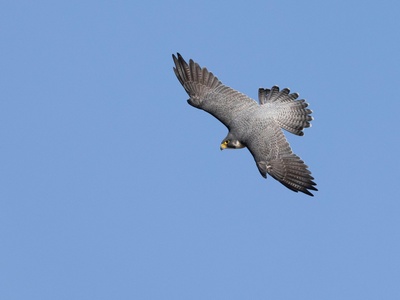
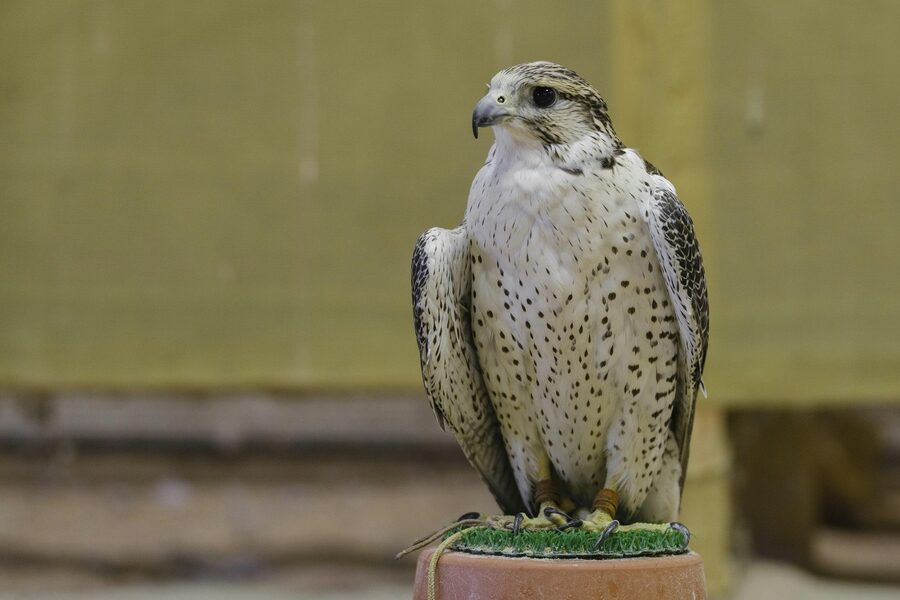
Peregrine Falcon
A high‑speed falcon nesting on cliffs and tall structures. Hunts birds in flight with spectacular stoops; recovery programs have led to nestings on coastal cliffs and urban sites in Maine.
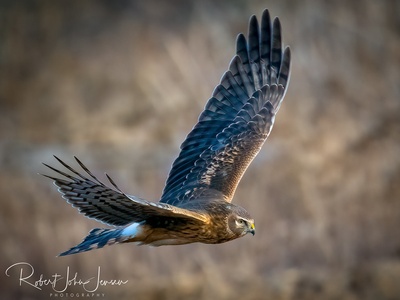
Northern Harrier
A slim, low‑flying raptor hunting over marshes and fields with owl‑like facial discs. Females are brown; males gray. Seen year‑round in suitable wetland habitat and distinctive for slow low flight.
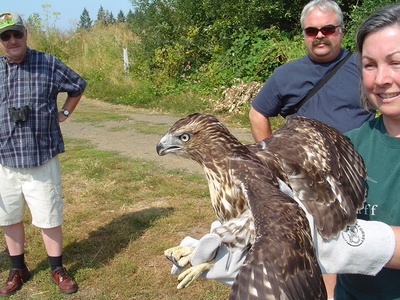
Red-tailed Hawk
A widespread, adaptable raptor of open areas and wood edges. Perches conspicuously and soars over fields; red tail of adults is diagnostic. Breeds statewide and is often the common roadside hawk.
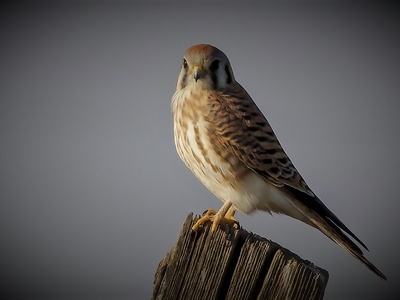
American Kestrel
Small, colorful falcon often seen perched on wires hunting insects and small mammals. Breeds in cavities and nest boxes; widespread in open habitats though declines noted in some areas.
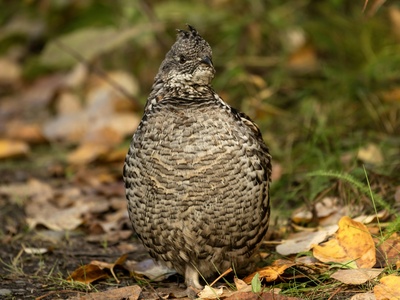
Ruffed Grouse
A secretive gamebird of dense young forests known for the male’s drumming display. Common across Maine’s forested landscape, especially where clear‑cuts and mixed age stands provide habitat.
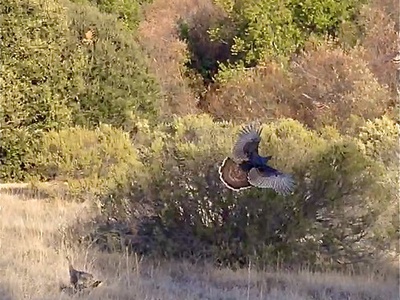
Wild Turkey
A large ground bird now widespread in Maine’s woods and farmland edges. Forms flocks outside breeding season, males display in spring. Often seen along roadsides and in agricultural fields foraging for seeds and acorns.
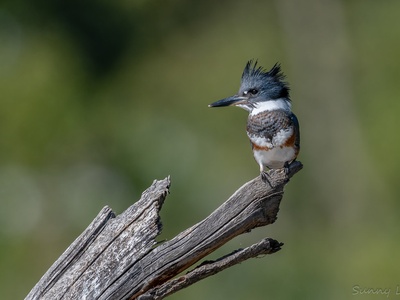
Belted Kingfisher
A noisy, fish‑eating bird that perches rattling above water before diving. Nests in riverbank burrows and is a familiar presence along waterways; females show chestnut band on belly in addition to male’s blue.
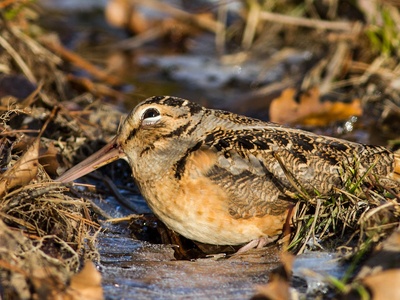
American Woodcock
A chunky, cryptic shorebird of moist thickets and young forest edges. Noted for its twilight aerial courtship “peent” and spiraling flight; best seen at dawn or dusk during spring.
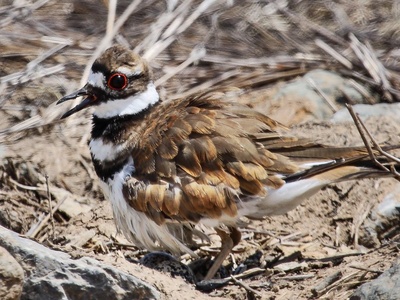
Killdeer
A noisy, adaptable plover often on lawns, gravel beaches and mudflats. Famous for its broken‑wing distraction display to protect nests on open ground; common spring through fall and in some winters.
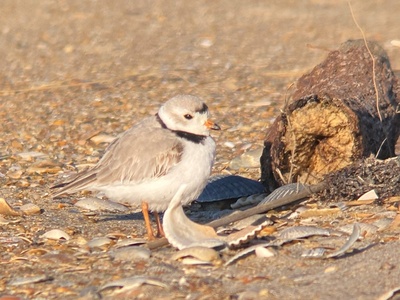
Piping Plover
A small, pale plover that nests on sandy beaches and is federally threatened. Careful protection of breeding sites is critical; look for its low profile and plaintive call on protected beach areas.
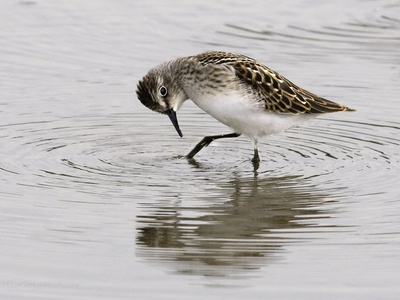
Semipalmated Sandpiper
A tiny sandpiper that masses on mudflats during late summer migration. Probes for invertebrates at tidal edges and is a hallmark species of Maine’s productive coastal migration stopovers.
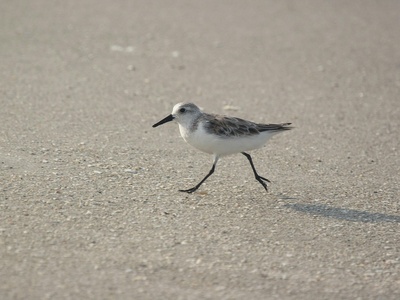
Sanderling
A pale, energetic sandpiper that runs with waves on sandy beaches. Seen during migration and on winter coasts, pecking for exposed prey; identifiable by pale nonbreeding plumage and habit of chasing surf.
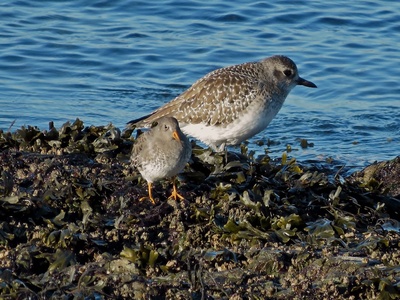
Purple Sandpiper
A hardy shorebird that favors icy rocky shores in winter. Moves along wave‑washed rocks probing for crustaceans; prized by winter seabirders for its coastal fidelity and quirky posture.
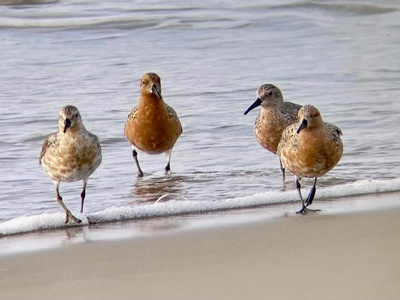
Red Knot
A large sandpiper known for long migrations and dramatic population declines. Spring stopovers are critical on Maine’s mudflats and beaches; breeding plumage shows reddish chest and bold patterning.
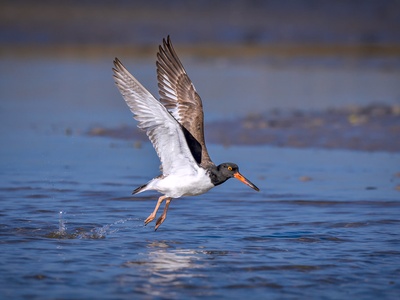
American Oystercatcher
A bold, heavy‑billed shorebird that feeds on shellfish along the coast. Nests on beaches and islands; striking black-and-white plumage and loud piping calls make it unmistakable in summer.
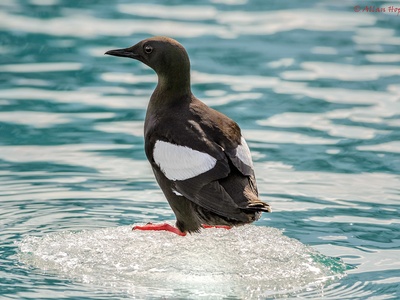
Black Guillemot
A chunky black seabird with bright red feet and white wing patch in summer. Nests in crevices on rocky islands and forages close to shore; often seen in family groups near coves.
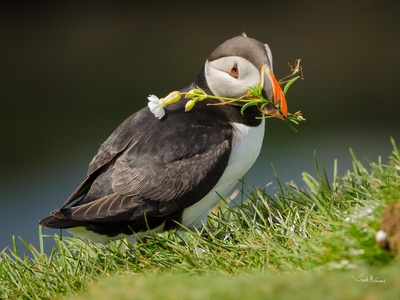
Atlantic Puffin
A charismatic, colorful seabird that nests on offshore islands in summer. Returns annually to burrows; clumsy on land but buoyant at sea. Major attraction at monitored colonies in midcoast Maine.
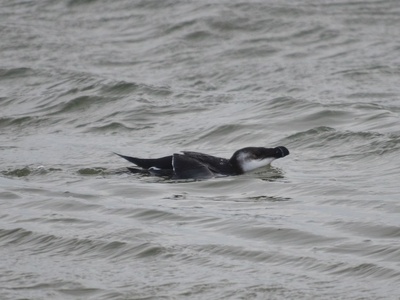
Razorbill
A black-and-white alcid that nests on cliffs and rocky islands. Looks like a chunky auk with a thick bill; common in summer at island colonies and seen offshore during migration.
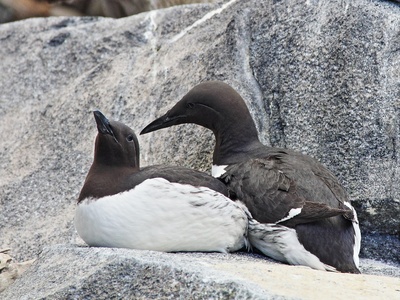
Common Murre
A black‑and‑white diving seabird that nests in dense colonies on steep cliffs. Sits tight on ledges and forages offshore; large rafts may form around productive fishing areas in summer.
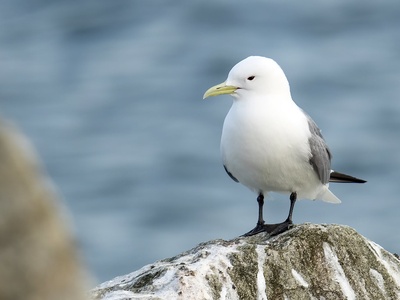
Black-legged Kittiwake
A small, slender gull that nests on steep sea cliffs and forages far offshore. Seen from boats or headlands, often in pelagic groups and notable for graceful flight and black wingtips.
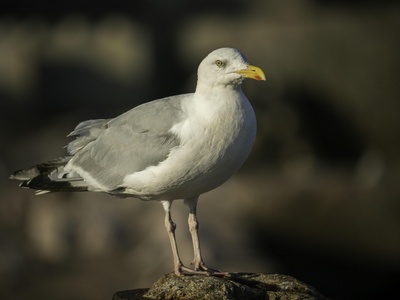
Herring Gull
A large, adaptable gull that thrives in coastal and human‑altered environments. Breeds on islands and urban sites; omnivorous and bold, it’s a ubiquitous presence on Maine’s shorelines and in towns.
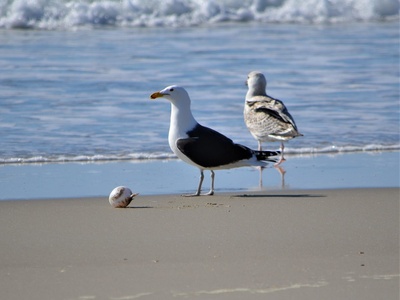
Great Black-backed Gull
The world’s largest gull, dominant at coastal sites and islands. Powerful and opportunistic, it preys on seabirds and scavenges widely. Breeds on rugged islands and is unmistakable by size and heavy bill.
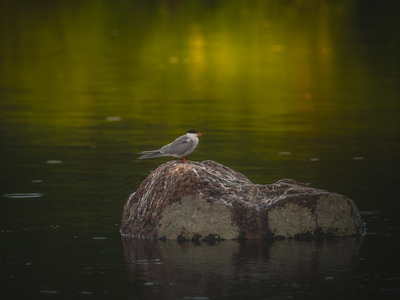
Common Tern
A sleek, acrobatic tern that nests on islands and beaches, plunging for small fish. Common in summer with noisy colonies; sensitive to disturbance so many sites are protected.
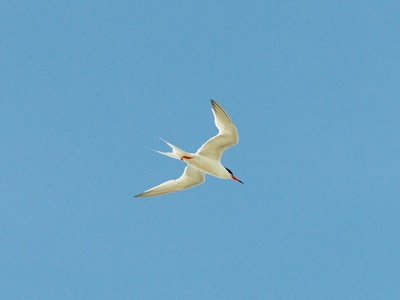
Roseate Tern
A pale, graceful tern federally endangered in parts of its range. Breeds in small coastal colonies with Common and Least Terns; noted for pinkish underparts and a tendency to nest in protected sites.
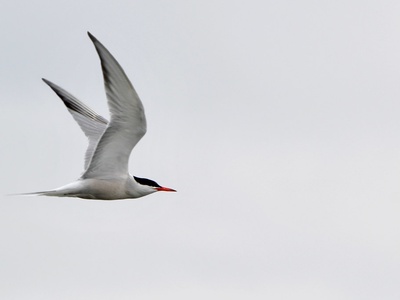
Arctic Tern
A long‑distance migrant that breeds on coastal islands and nests on exposed beaches. Famous for epic migrations to the Antarctic; smaller and more angular than common tern with very long tail streamers.
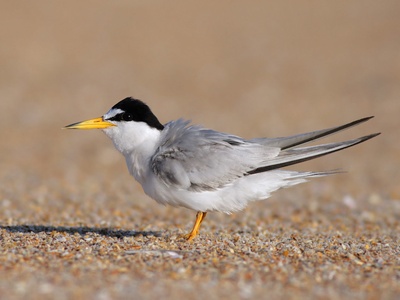
Least Tern
A tiny, endangered tern nesting on sandy beaches and riverbars. Highly sensitive to disturbance; protection and careful beach management are crucial where it nests in Maine.
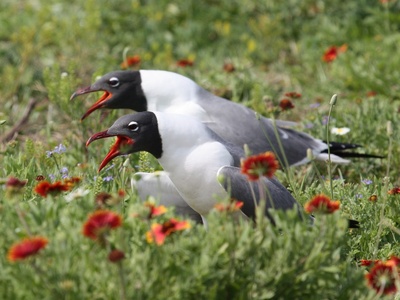
Laughing Gull
A medium gull with a laughing call and black hood in breeding season. Common summer visitor along the southern coast and harbors, where it scavenges and nests in colonies.
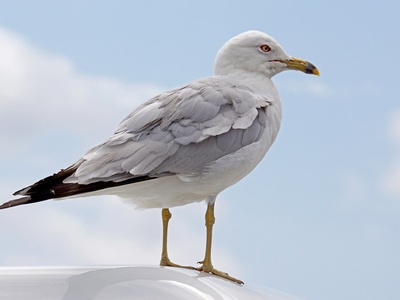
Ring-billed Gull
A medium gull common at shorelines and inland lakes as well as in towns. Adaptable scavenger that breeds in colonies; easily identified by the dark ring on the bill of adults.
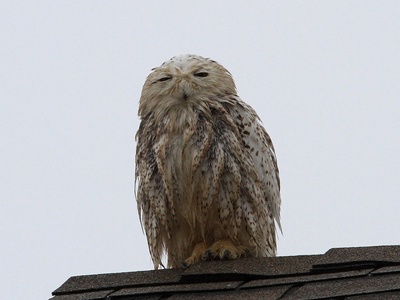
Snowy Owl
A spectacular, pale owl that irrupts into Maine in some winters from Arctic breeding areas. Perches on poles and dunes hunting rodents by day; white males and barred females show variable plumage.
Short-eared Owl
A crepuscular owl that hunts over open marshes and fields with buoyant flight. Breeds in northern and coastal heathlands; often seen at dusk and dawn during migration and winter.
Barred Owl
A large, hooting forest owl with distinctive “who cooks for you” call. Prefers mature woods and riparian corridors, nesting in tree cavities and abandoned nests; commonly heard at night across Maine.
Eastern Screech-Owl
A small, cryptic owl that nests in cavities and bird boxes. Often heard more than seen; comes in gray and red morphs and persists in towns and wooded suburbs across southern Maine.
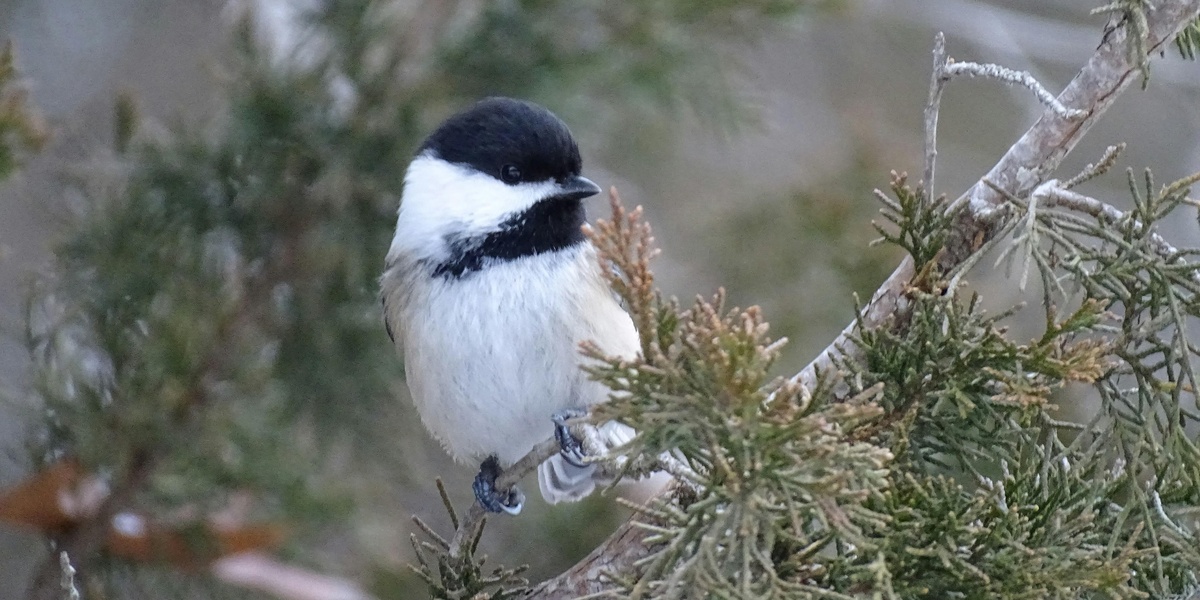
Black-capped Chickadee
A friendly, inquisitive small songbird often at feeders. Recognizable by a distinctive chick‑dee‑dee call and bold black cap. Common across Maine year‑round and a favorite of backyard birders.
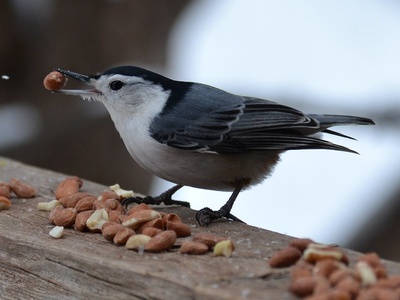
White-breasted Nuthatch
A compact, active bird that climbs tree trunks headfirst while foraging for insects and seeds. Readily visits feeders and nests in tree cavities; common in mixed and deciduous woodlands across Maine.
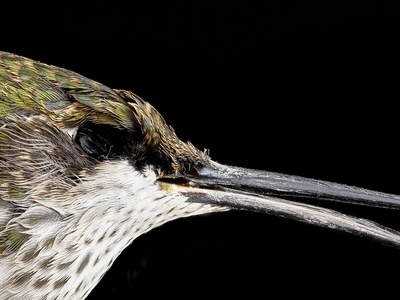
Ruby-throated Hummingbird
The only regular breeding hummingbird in Maine, arriving in late spring to feed on nectar and insects. Tiny and territorial at feeders; males show iridescent red throats while females are plain-throated.
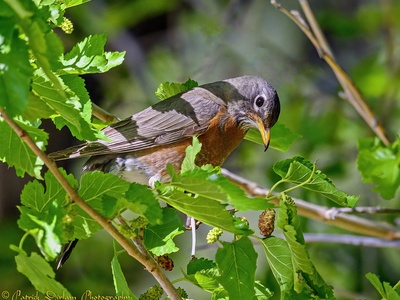
American Robin
A familiar thrush that heralds spring with song and is ubiquitous in yards and parks. Feeds on worms and fruit; breeds across Maine and often forms flocks in fruiting trees during migration and winter.