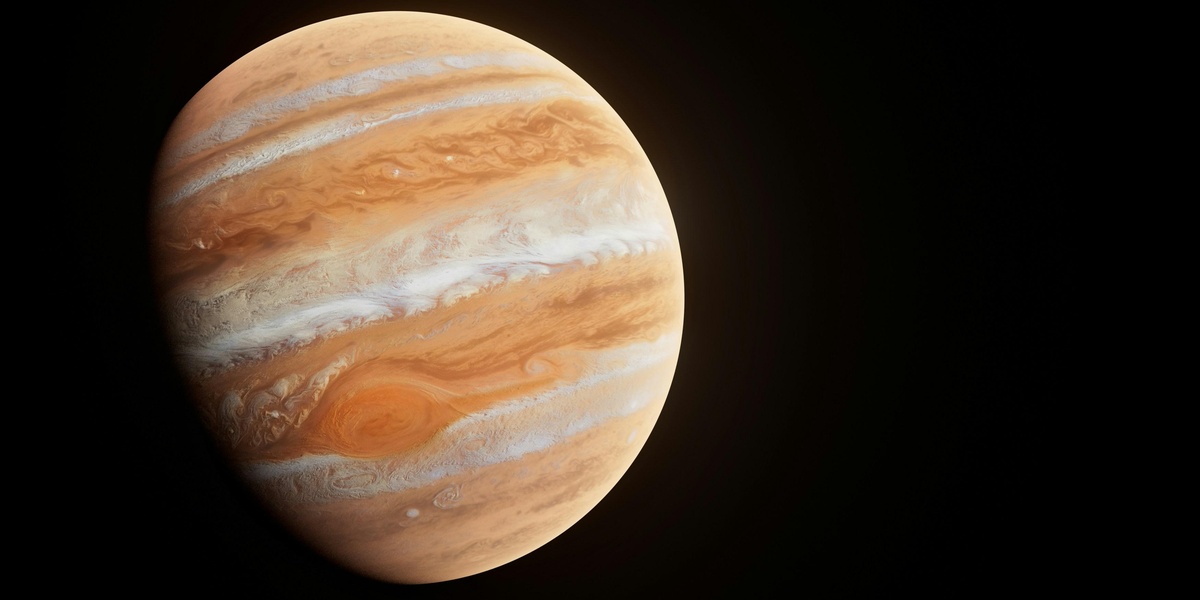
From the outer reaches of our own system to planets orbiting distant stars, giant planets help shape the architecture and evolution of planetary systems. Observations of their atmospheres, masses, and orbits give clues about formation history and the range of conditions that produce large, gaseous worlds.
There are 20 Gas Giants, ranging from 51 Eridani b to WASP-39b. For each entry the data are organized with Category,Mass (M_J),Orbit (AU) so you can compare type, mass, and orbital distance at a glance — you’ll find below.
How do astronomers measure the mass and orbit of distant gas giants?
Mass and orbit are inferred from several methods: radial velocity detects the star’s wobble to estimate minimum mass, transits give orbital period and size (and combined with radial velocity yield true mass and density), direct imaging can provide spectra and model-based mass estimates for wide-orbit planets, and astrometry or transit-timing variations refine orbital elements.
Are all items in this list confirmed planets or are some still candidates?
The list focuses on confirmed planets, though confirmation methods and reported values can be updated; for the most current status researchers check curated catalogs (e.g., mission archives and peer-reviewed detections) because classifications sometimes change with new data.
Gas Giants
| Name | Category | Mass (M_J) | Orbit (AU) |
|---|---|---|---|
| Jupiter | Solar System | 1.00 | 5.20 |
| Saturn | Solar System | 0.30 | 9.58 |
| HD 209458 b | Exoplanet (hot Jupiter) | 0.69 | 0.05 |
| HD 189733 b | Exoplanet (hot Jupiter) | 1.13 | 0.03 |
| 51 Pegasi b | Exoplanet (hot Jupiter) | 0.47 | 0.05 |
| WASP-12b | Exoplanet (ultra-hot Jupiter) | 1.47 | 0.02 |
| WASP-17b | Exoplanet (inflated hot Jupiter) | 0.49 | 0.05 |
| WASP-33b | Exoplanet (ultra-hot Jupiter) | 2.10 | 0.03 |
| WASP-121b | Exoplanet (ultra-hot Jupiter) | 1.18 | 0.03 |
| Kepler-7b | Exoplanet (hot Jupiter) | 0.44 | 0.06 |
| CoRoT-2b | Exoplanet (hot Jupiter) | 3.31 | 0.03 |
| HAT-P-2b | Exoplanet (massive gas giant) | 8.72 | 0.07 |
| HR 8799 b | Exoplanet (directly imaged gas giant) | 7.00 | 68.00 |
| HR 8799 c | Exoplanet (directly imaged gas giant) | 7.00 | 38.00 |
| HR 8799 d | Exoplanet (directly imaged gas giant) | 7.00 | 24.00 |
| HR 8799 e | Exoplanet (directly imaged gas giant) | 7.00 | 14.50 |
| Beta Pictoris b | Exoplanet (directly imaged gas giant) | 11.00 | 9.20 |
| PDS 70 b | Exoplanet (forming gas giant) | 2.80 | 22.00 |
| 51 Eridani b | Exoplanet (directly imaged gas giant) | 2.60 | 13.00 |
| WASP-39b | Exoplanet (Saturn-like gas giant) | 0.28 | 0.05 |
Images and Descriptions
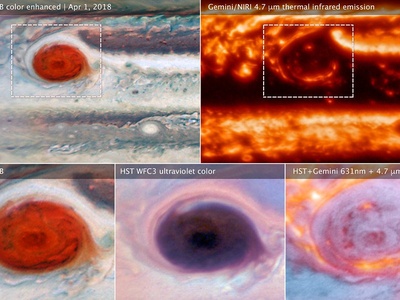
Jupiter
Largest Solar System gas giant with an H/He-dominated atmosphere, iconic Great Red Spot storm, strong magnetic field and many moons; notable as the archetypal gas giant that shaped the early Solar System and anchors comparisons to exoplanet giants.
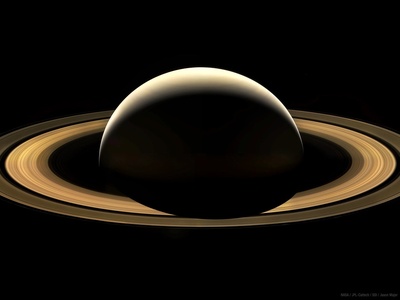
Saturn
Famous ringed gas giant dominated by hydrogen and helium, with low bulk density and powerful winds; notable for its spectacular ring system, many moons like Titan, and as an exemplar of how gas giants can host complex satellite systems.

HD 209458 b
One of the first transiting hot Jupiters with confirmed H/He atmosphere and detected atmospheric escape; notable for sodium, water and helium signatures and for pioneering studies of exoplanet atmospheres and evaporation.
HD 189733 b
Well-studied hot Jupiter with an H/He-dominated atmosphere, strong winds and variable hazes; notable for clear detections of water vapor and for being one of the brightest, most-observed transiting gas giants.
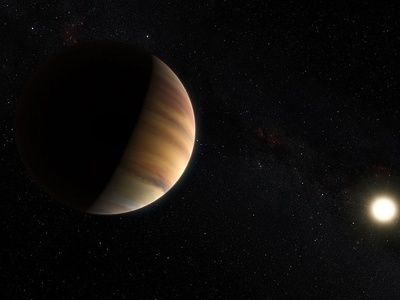
51 Pegasi b
Historic first exoplanet found around a Sun-like star, a close-in H/He-dominated gas giant that revealed hot Jupiters exist; notable for launching modern exoplanet science and prompting atmospheric follow-up observations.
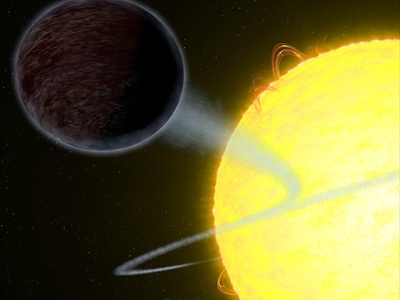
WASP-12b
Extremely irradiated H/He gas giant that is tidally distorted and losing mass to its star; notable for thermal inversion, carbon-rich atmosphere debates, and dramatic atmospheric escape seen in transit studies.
WASP-17b
Very low-density H/He gas giant with one of the largest known radii for its mass, highly inflated by stellar heating; notable for its retrograde orbit and extreme atmospheric puffiness.
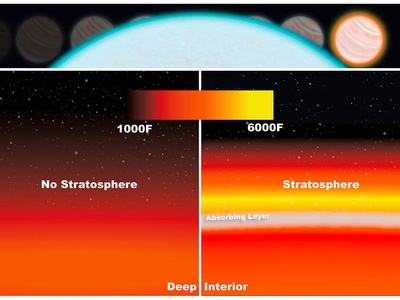
WASP-33b
A massive, ultra-hot H/He-dominated planet orbiting a pulsating A-type star; notable for high temperatures, detections of metal atoms in its atmosphere and being one of the hottest known gas giants.
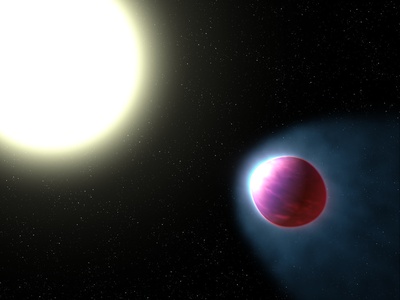
WASP-121b
Ultra-hot H/He gas giant with a stratosphere and strong atmospheric escape; notable for clear detections of water, metal ions and a temperature inversion caused by intense stellar irradiation.
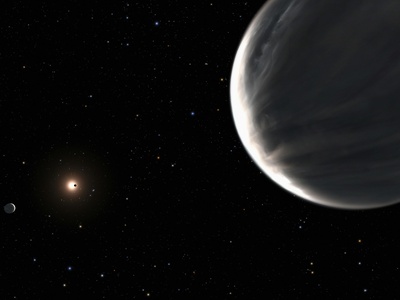
Kepler-7b
Low-density H/He gas giant with a large, puffy atmosphere and reflective clouds; notable for the first mapping of brightness variations across the planetary disk indicating persistent clouds in its atmosphere.
CoRoT-2b
A massive, close-in H/He gas giant with strong stellar activity influence; notable for its inflated radius, high temperatures, and robust detections that help study star–planet interactions and atmospheric properties.
HAT-P-2b
A high-mass H/He-dominated giant with an eccentric orbit and unusually high density for a gas giant; notable for challenging formation models and for precise mass and radius measurements that probe gas giant structure.

HR 8799 b
One of four directly imaged H/He gas giants orbiting HR 8799, with dusty, cloudy atmosphere and young age; notable for direct spectroscopy that reveals molecules and for demonstrating giant planet formation at wide separations.

HR 8799 c
Directly imaged H/He gas giant in the HR 8799 system, showing cloudy, molecular-rich atmosphere; notable for multi-planet imaging, comparative atmosphere studies, and being part of a rare, wide-orbit giant-planet system.
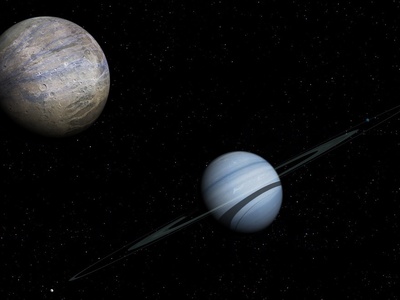
HR 8799 d
Middle member of the directly imaged HR 8799 planets with an H/He-dominated atmosphere and thick clouds; notable for providing a laboratory to compare atmospheres of young, massive gas giants at different separations.
HR 8799 e
Innermost directly imaged planet in HR 8799 system, an H/He gas giant with cloudy, warm atmosphere; notable for challenging models of planet formation and enabling direct-study of atmospheres in a multi-planet system.
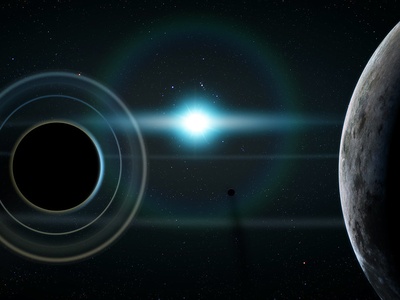
Beta Pictoris b
Young, massive H/He gas giant directly imaged orbiting a bright nearby star; notable for observations of its orbit, rotation, and atmospheric composition, and for shaping our understanding of young giant-planet evolution.
PDS 70 b
A directly imaged, accreting H/He gas giant caught forming in a protoplanetary disk; notable for evidence of ongoing gas accretion, circumplanetary material, and direct study of planet formation in action.
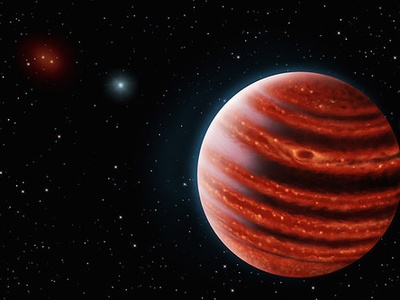
51 Eridani b
A young, directly imaged H/He-dominated gas giant with methane and water features in its atmosphere; notable for showing methane in a young planet and for informing atmospheric chemistry of youthful giants.
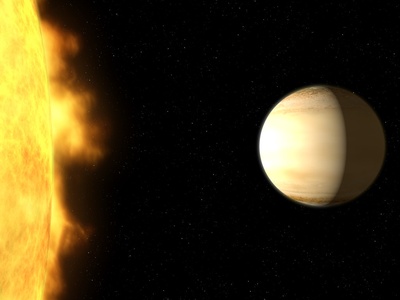
WASP-39b
Low-mass H/He gas giant with a clear atmosphere and strong water and metal detections; notable for high-precision transmission spectra that revealed atmospheric composition and formation clues for gas giants.