Australia’s coasts, woodlands and interior plains host a wide mix of resident and migratory birds, shaped by climate and unique habitats. Whether you’re new to birdwatching or keeping a checklist, knowing which species appear where makes trips more productive.
There are 99 Birds of Australia, ranging from Apostlebird to Yellow-tailed Black-Cockatoo. For each species you’ll find below entries organized by Scientific name,Size (cm),Range (states) so you can quickly see identification, typical size and which states record them.
How current is this list and what sources were used?
The list reflects commonly accepted checklists and published records; scientific names follow standard taxonomic references and range notes are based on state-level records. Expect periodic updates as taxonomy and sighting data change, so use it as a solid starting point and check recent local checklists for the latest changes.
Can I rely on the Range (states) column to plan birding trips?
Range (states) shows where a species has established records but doesn’t replace habitat- or season-specific guidance; use the range column to narrow targets, then check local guides, timing and recent sightings to increase your chances of finding a species on the ground.
Birds of Australia
| Common name | Scientific name | Size (cm) | Range (states) |
|---|---|---|---|
| Emu | Dromaius novaehollandiae | 150–190 | NSW,VIC,QLD,WA,SA,NT,ACT |
| Southern Cassowary | Casuarius casuarius | 150–180 | QLD |
| Wedge-tailed Eagle | Aquila audax | 100–135 | NSW,VIC,QLD,WA,SA,NT,ACT |
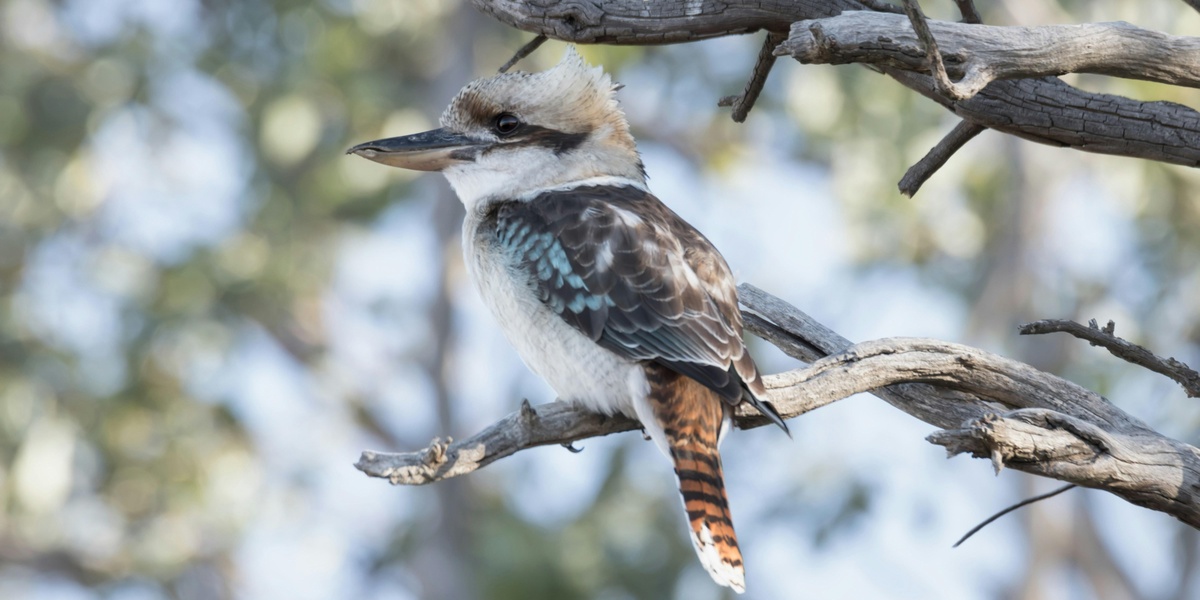
| Laughing Kookaburra | Dacelo novaeguineae | 39 | NSW,VIC,QLD,SA,WA,NT,ACT |
| Sulphur-crested Cockatoo | Cacatua galerita | 45–50 | NSW,VIC,QLD,WA,SA,NT,TAS,ACT |
| Galah | Eolophus roseicapilla | 35–38 | NSW,VIC,QLD,WA,SA,NT,ACT |
| Rainbow Lorikeet | Trichoglossus moluccanus | 25–30 | NSW,VIC,QLD,WA,SA,TAS,ACT |
| Crimson Rosella | Platycercus elegans | 30–36 | NSW,VIC,QLD,ACT,TAS |
| Eastern Rosella | Platycercus eximius | 32–38 | NSW,VIC,QLD,ACT,SA,TAS |
| Superb Fairywren | Malurus cyaneus | 14 | NSW,VIC,QLD,SA,ACT,TAS |
| Splendid Fairywren | Malurus splendens | 14 | WA,NT,SA,QLD,NSW |
| Australian Magpie | Gymnorhina tibicen | 37–43 | NSW,VIC,QLD,WA,SA,NT,ACT,TAS |
| Willie Wagtail | Rhipidura leucophrys | 19–22 | NSW,VIC,QLD,WA,SA,NT,ACT,TAS |
| White-bellied Sea-Eagle | Haliaeetus leucogaster | 70–90 | NSW,VIC,QLD,WA,SA,NT,offshore |
| Pacific Black Duck | Anas superciliosa | 47–59 | NSW,VIC,QLD,WA,SA,NT,ACT,TAS |
| Black Swan | Cygnus atratus | 100–120 | NSW,VIC,QLD,WA,SA,TAS,NT |
| Australian Pelican | Pelecanus conspicillatus | 160–180 | NSW,VIC,QLD,WA,SA,TAS,NT,offshore |
| Little Penguin | Eudyptula minor | 30–33 | VIC,TAS,SA,NSW,offshore |
| Short-tailed Shearwater | Ardenna tenuirostris | 30–45 | offshore,TAS,VIC,SA |
| Australasian Gannet | Morus serrator | 80–100 | NSW,VIC,QLD,SA,TAS,offshore |
| Silver Gull | Chroicocephalus novaehollandiae | 35–40 | NSW,VIC,QLD,WA,SA,TAS,NT,ACT,offshore |
| Crested Tern | Thalasseus bergii | 35–45 | NSW,VIC,QLD,WA,SA,TAS,offshore |
| Masked Lapwing | Vanellus miles | 30–37 | NSW,VIC,QLD,WA,SA,TAS,NT,ACT |
| Australian White Ibis | Threskiornis molucca | 65–75 | NSW,VIC,QLD,WA,SA,NT,ACT |
| Major Mitchell’s Cockatoo | Lophochroa leadbeateri | 35–40 | NSW,VIC,QLD,SA,NT |
| Cockatiel | Nymphicus hollandicus | 30–33 | WA,NT,SA,QLD,NSW,ACT |
| Little Corella | Cacatua sanguinea | 35–40 | NSW,VIC,QLD,WA,SA,NT,ACT |
| Long-billed Corella | Cacatua tenuirostris | 35–40 | NSW,ACT,VIC |
| Rainbow Bee-eater | Merops ornatus | 19–22 | NSW,VIC,QLD,WA,SA,NT,ACT |
| Satin Bowerbird | Ptilonorhynchus violaceus | 25–30 | NSW,VIC,QLD,ACT |
| Superb Lyrebird | Menura novaehollandiae | 80–100 | NSW,VIC |
| Australian Brush-turkey | Alectura lathami | 60–75 | QLD,NSW |
| Bush Stone-curlew | Burhinus grallarius | 60–70 | QLD,NSW,NT,WA,SA |
| Pied Oystercatcher | Haematopus longirostris | 45–50 | NSW,VIC,QLD,WA,SA,TAS |
| Sooty Oystercatcher | Haematopus fuliginosus | 45–50 | NSW,VIC,QLD,WA,SA,TAS |
| Eastern Curlew | Numenius madagascariensis | 60–70 | NSW,VIC,QLD,WA,SA,offshore |
| Bar-tailed Godwit | Limosa lapponica | 40–60 | NSW,VIC,QLD,WA,SA,offshore |
| Ruddy Turnstone | Arenaria interpres | 22–25 | NSW,VIC,QLD,WA,SA,TAS,offshore |
| Great Knot | Calidris tenuirostris | 24–30 | NSW,VIC,QLD,WA,SA,offshore |
| Australasian Pipit | Anthus novaeseelandiae | 16–17 | NSW,VIC,QLD,WA,SA,NT,TAS,ACT |
| Apostlebird | Struthidea cinerea | 30–35 | NSW,QLD,SA,WA,NT |
| Noisy Miner | Manorina melanocephala | 24–28 | NSW,VIC,QLD,ACT |
| Yellow-tailed Black-Cockatoo | Calyptorhynchus funereus | 55–65 | NSW,VIC,QLD,TAS,ACT |
| Black-faced Cuckooshrike | Coracina novaehollandiae | 33–38 | NSW,VIC,QLD,WA,SA,NT,ACT |
| White-winged Chough | Corcorax melanorhamphos | 41–47 | NSW,VIC,QLD,SA,ACT |
| Australian King-Parrot | Alisterus scapularis | 38–40 | NSW,VIC,QLD,ACT |
| Blue-winged Kookaburra | Dacelo leachii | 33–36 | QLD,NT |
| Sacred Kingfisher | Todiramphus sanctus | 19–23 | NSW,VIC,QLD,WA,SA,NT,ACT,TAS |
| Scaly-breasted Lorikeet | Trichoglossus chlorolepidotus | 24–28 | QLD,NSW |
| Brown Honeyeater | Lichmera indistincta | 12–15 | QLD,NT,WA,NSW |
| New Holland Honeyeater | Phylidonyris novaehollandiae | 18–25 | NSW,VIC,SA,TAS,ACT |
| Noisy Friarbird | Philemon corniculatus | 28–34 | QLD,NSW,ACT |
| Brown Goshawk | Accipiter fasciatus | 40–55 | NSW,VIC,QLD,WA,SA,NT,ACT |
| Collared Sparrowhawk | Accipiter cirrocephalus | 28–38 | NSW,VIC,QLD,WA,SA,NT,ACT,TAS |
| White-throated Needletail | Hirundapus caudacutus | 20–24 | NSW,VIC,QLD,WA,SA,TAS,NT,ACT |
| White-browed Scrubwren | Sericornis frontalis | 13–15 | NSW,VIC,QLD,ACT |
| Australian Raven | Corvus coronoides | 45–50 | NSW,VIC,QLD,SA,ACT |
| Torresian Crow | Corvus orru | 45–50 | QLD,NT,WA |
| Common Starling | Sturnus vulgaris | 20–24 | NSW,VIC,QLD,WA,SA,TAS,ACT |
| Common Myna | Acridotheres tristis | 23–28 | NSW,VIC,QLD,WA,SA,TAS,ACT |
| House Sparrow | Passer domesticus | 14–18 | NSW,VIC,QLD,WA,SA,TAS,ACT |
| Eurasian Blackbird | Turdus merula | 24–29 | NSW,VIC,QLD,WA,SA,TAS,ACT |
| Eastern Yellow Robin | Eopsaltria australis | 14–16 | NSW,VIC,QLD,ACT |
| Flame Robin | Petroica phoenicea | 12–14 | NSW,VIC,TAS,ACT |
| Scarlet Robin | Petroica boodang | 12–14 | NSW,VIC,SA,TAS,ACT |
| Rufous Whistler | Pachycephala rufiventris | 17–20 | NSW,VIC,QLD,SA,WA,NT,ACT |
| Olive-backed Sunbird | Cinnyris jugularis | 10–12 | QLD |
| Brown Quail | Coturnix ypsilophora | 18–23 | NSW,VIC,QLD,WA,SA,TAS,ACT |
| Dusky Woodswallow | Artamus cyanopterus | 19–23 | NSW,VIC,QLD,SA,WA,ACT |
| Silvereye | Zosterops lateralis | 11–13 | NSW,VIC,QLD,WA,SA,TAS,NT,ACT |
| Channel-billed Cuckoo | Scythrops novaehollandiae | 60–65 | QLD,NSW,NT,VIC |
| Eastern Koel | Eudynamys orientalis | 39–46 | QLD,NSW,NT |
| Barn Owl | Tyto alba | 33–39 | NSW,VIC,QLD,WA,SA,TAS,NT,ACT |
| Southern Boobook | Ninox boobook | 34–39 | NSW,VIC,QLD,WA,SA,TAS,NT,ACT |
| Spotted Pardalote | Pardalotus punctatus | 9–10 | NSW,VIC,QLD,SA,ACT |
| Striated Pardalote | Pardalotus striatus | 9–11 | NSW,VIC,QLD,WA,SA,TAS,NT,ACT |
| Wonga Pigeon | Leucosarcia melanoleuca | 32–38 | NSW,QLD |
| Topknot Pigeon | Lopholaimus antarcticus | 45–50 | QLD,NSW,ACT,VIC |
| Australian Hobby | Falco longipennis | 29–35 | NSW,VIC,QLD,WA,SA,NT,ACT |
| Powerful Owl | Ninox strenua | 60–65 | NSW,VIC,QLD,ACT |
| Nankeen Kestrel | Falco cenchroides | 29–35 | NSW,VIC,QLD,WA,SA,TAS,NT,ACT |
| Little Black Cormorant | Phalacrocorax sulcirostris | 55–65 | NSW,VIC,QLD,WA,SA,TAS,NT,ACT |
| Great Cormorant | Phalacrocorax carbo | 65–90 | NSW,VIC,QLD,WA,SA,TAS,NT,offshore |
| Little Pied Cormorant | Microcarbo melanoleucos | 55–65 | NSW,VIC,QLD,WA,SA,TAS,NT,ACT |
| Little Tern | Sternula albifrons | 20–25 | NSW,VIC,QLD,WA,SA,TAS,offshore |
| Swift Parrot | Lathamus discolor | 18–22 | TAS,NSW,VIC |
| Regent Honeyeater | Anthochaera phrygia | 21–26 | NSW,VIC |
| Pied Currawong | Strepera graculina | 48–53 | NSW,VIC,QLD,ACT,TAS |
| Grey Fantail | Rhipidura albiscapa | 16–19 | NSW,VIC,QLD,WA,SA,NT,TAS,ACT |
| Hoary-headed Grebe | Poliocephalus poliocephalus | 30–36 | NSW,VIC,QLD,SA,WA,TAS,NT |
| Australian Magpie-lark | Grallina cyanoleuca | 23–28 | NSW,VIC,QLD,WA,SA,TAS,NT,ACT |
| Crested Shrike-tit | Falcunculus frontatus | 19–22 | NSW,VIC,QLD,SA,ACT |
| Rufous Fantail | Rhipidura rufifrons | 14–17 | NSW,VIC,QLD,WA,ACT |
| Black-winged Stilt | Himantopus himantopus | 33–36 | NSW,VIC,QLD,WA,SA,TAS,NT |
| Royal Spoonbill | Platalea regia | 80–95 | NSW,VIC,QLD,WA,SA,TAS,NT,offshore |
| White-faced Heron | Egretta novaehollandiae | 60–75 | NSW,VIC,QLD,WA,SA,TAS,NT,ACT |
| Cattle Egret | Bubulcus ibis | 46–56 | NSW,VIC,QLD,WA,SA,TAS,NT,ACT |
| Great Egret | Ardea alba | 80–100 | NSW,VIC,QLD,WA,SA,TAS,NT,offshore |
| Channel-billed Cuckoo (duplicate removed) | Scythrops novaehollandiae | 60–65 | QLD,NSW,NT,VIC |
Images and Descriptions
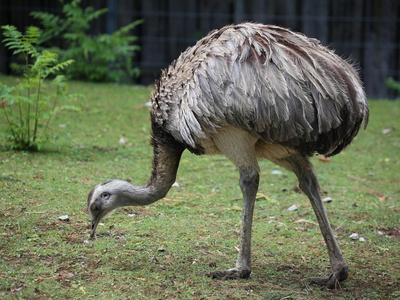
Emu
Australia’s large, flightless emu has shaggy brown plumage, long neck and powerful legs, found in open forests and grasslands, often nomadic. Notable for fast running and communal breeding; named from an Aboriginal word adopted by early settlers.
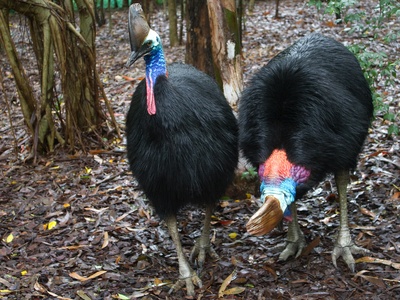
Southern Cassowary
A towering, black-plumaged ground bird with a helmet-like casque and bright blue-and-red neck, found in tropical north Queensland rainforests. Secretive and powerful, it disperses large seeds and is known for its striking prehistoric appearance and solitary nature.
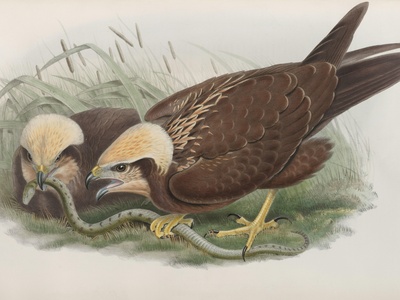
Wedge-tailed Eagle
Australia’s largest bird of prey, long-winged with a wedge-shaped tail and dark plumage, inhabits open country and mountains. A powerful soaring hunter feeding on mammals and carrion, culturally significant and commonly seen at height.
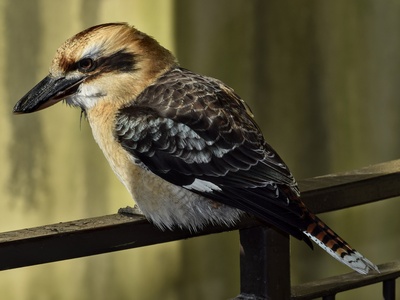
Laughing Kookaburra
A chunky kingfisher with a loud, laughing call, brown-and-white plumage and large bill, common in woodlands and suburban parks. Hunts reptiles and small mammals from perches; iconic “laugh” used to evoke the Australian bush.
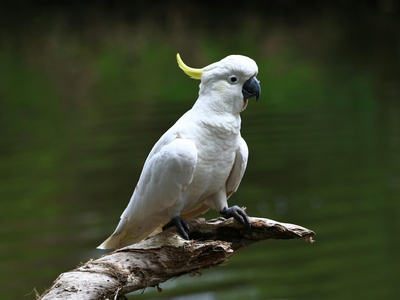
Sulphur-crested Cockatoo
A loud, white cockatoo with a bright yellow crest and strong bill, found in woodlands, urban parks and farmland. Social and long-lived, it feeds on seeds and roots and is known for clever, sometimes destructive behaviour.
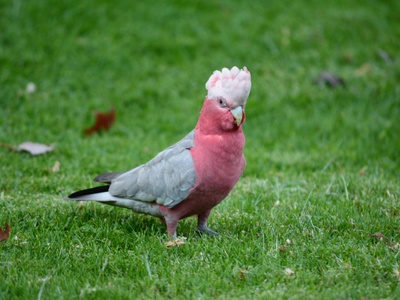
Galah
Pink-chested, grey-winged galahs are ubiquitous in open country and towns, often seen in large noisy flocks. They feed on seeds and grasses, nest in tree hollows, and are renowned for playful acrobatics and strong pair bonds.
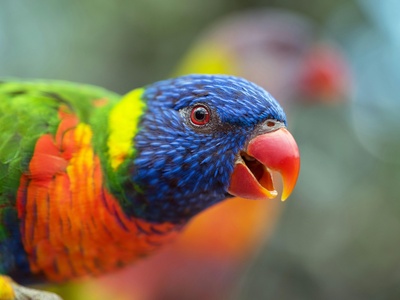
Rainbow Lorikeet
Brightly coloured green, blue and orange parrot with brush-tipped tongue for nectar, common in coastal forests, gardens and urban areas. Highly vocal and social, it feeds on nectar, pollen and fruit and often forms noisy flocks.
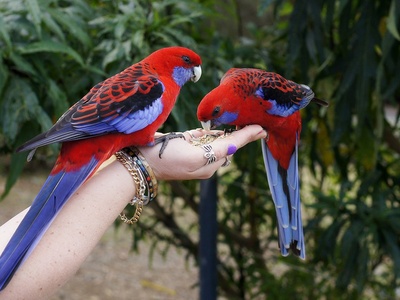
Crimson Rosella
Vivid red-and-blue rosella seen in eastern forests and gardens, with patterned back and long tail. Feeds on seeds, fruit and insects, often in pairs or small groups; many regional colour forms make it a favourite of birdwatchers.
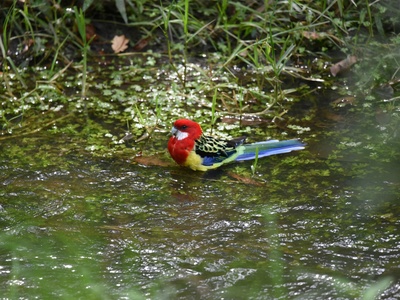
Eastern Rosella
A colourful parrot with white cheek patches, red head and yellow breast, favouring woodland edges, farmland and parks. Feeds on seeds and fruits, nests in hollows and is often seen perched conspicuously on fences and branches.
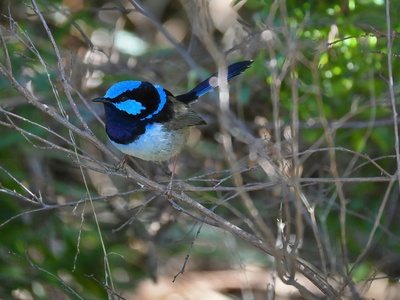
Superb Fairywren
Tiny, active wrens with sexually dimorphic plumage: males show brilliant blue breeding plumage, females brown. Found in dense shrubs in suburbs, woodlands and heath, feeding on insects. Known for social groups and elaborate courtship displays.
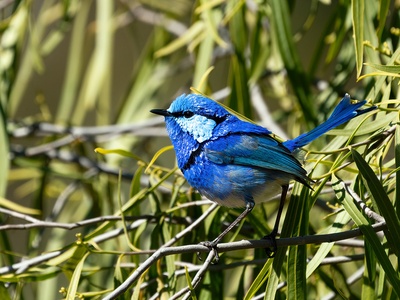
Splendid Fairywren
A dazzling small wren with iridescent blue breeding males and chestnut or brown females, inhabiting arid scrub, spinifex and woodland. Insectivorous and social, males perform distinctive displays and cooperative breeding is common in family groups.
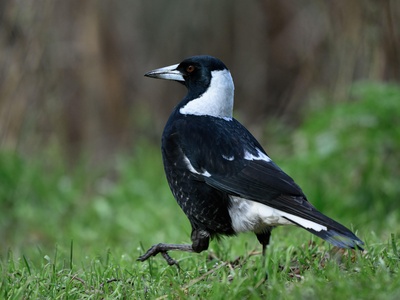
Australian Magpie
Bold black-and-white songbird with a complex flute-like repertoire, common in parks, farms and suburbs. Territorial and intelligent, often forms family groups; males can become defensive during breeding season, leading to famous “swooping” behaviour.
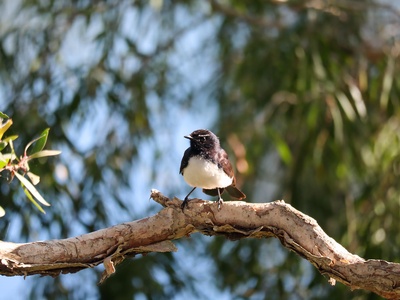
Willie Wagtail
A confident, active insect-eating flycatcher with black-and-white plumage and fanned tail used for displays, found across open woodlands, farms and towns. Fearless around humans, it catches insects on the wing and nests in shrubs.
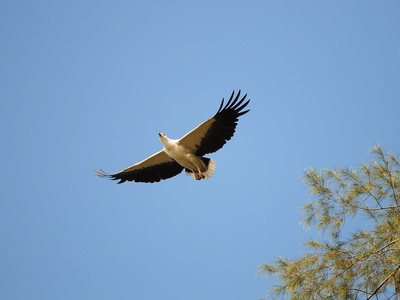
White-bellied Sea-Eagle
A large coastal raptor with white head and underparts, dark wings and powerful bill, commonly seen near estuaries, rivers and coasts. Hunts fish and waterbirds, nests on tall trees or cliffs and is an impressive, territorial predator.
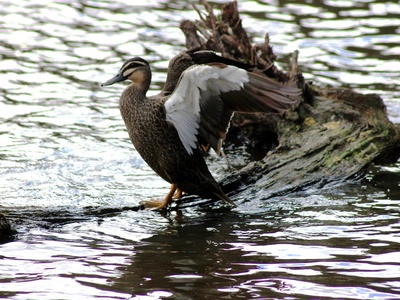
Pacific Black Duck
A widespread mottled duck with a distinctive dark eye stripe, common in freshwater wetlands, ponds and urban lakes. Dabbling feeder that eats plants and small animals; frequently hybridises with introduced Mallards in some regions.
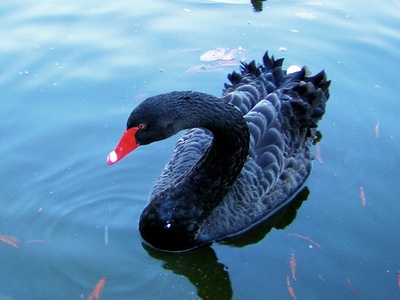
Black Swan
An elegant large waterbird with glossy black plumage and red bill, inhabiting lakes, rivers and estuaries. Often forms large flocks and performs elaborate courtship displays; culturally important and remarkably adaptive to varied wetland habitats.
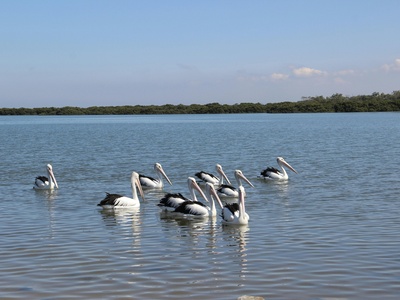
Australian Pelican
Huge waterbird with enormous bill and pale plumage, often seen loafing on inland lakes and coastal waters. Uses cooperative feeding and scooping to catch fish, nests in colonies on islands and is known for its slow, dignified wingbeats.
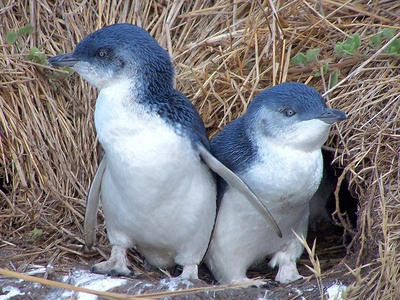
Little Penguin
The world’s smallest penguin, blue-grey above and white below, nesting in burrows on coastal islands and beaches. Returns ashore at dusk in colonies, feeds on small fish and squid, and is a popular wildlife attraction at several Australian sites.
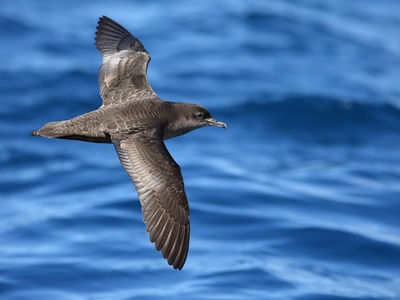
Short-tailed Shearwater
Migratory seabird that breeds in huge colonies in Tasmania and migrates to the North Pacific. Brown above and paler below, it nests in burrows, performs long-distance seasonal flights and is famous for its late-summer “muttonbird” harvest in some communities.
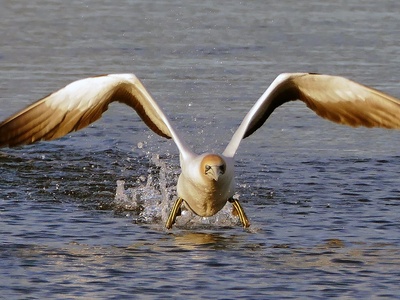
Australasian Gannet
Large seabird with white plumage, black-tipped wings and blue facial skin, known for spectacular plunge-diving to catch fish. Breeds in coastal colonies, often on rocky islands, and forms dense feeding flocks offshore.
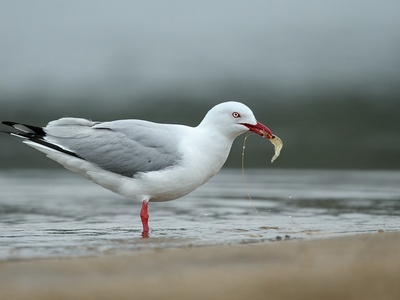
Silver Gull
A common coastal and urban gull with grey wings, white body and red bill, adaptable to beaches, harbours and rubbish tips. Opportunistic feeder that scavenges and forages, easily recognised in city and coastal environments nationwide.
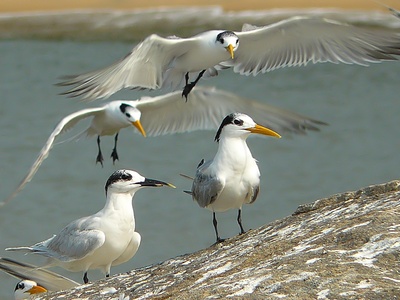
Crested Tern
A slender tern with a shaggy black crest and pale body, found on coasts and estuaries. Noted for high-speed plunge-dives to catch fish, nests in dense coastal colonies and often roosts on beaches and jetties.
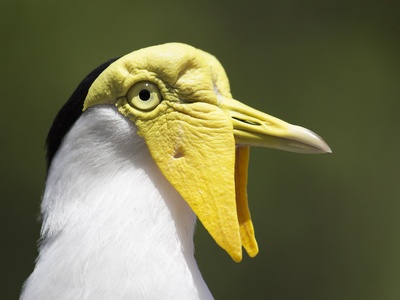
Masked Lapwing
A large, boldly patterned plover with a distinctive facial wattle, common on lawns, sports fields and wetlands. Territorial and noisy, it defends nests aggressively in spring, often causing surprise encounters with people and dogs.
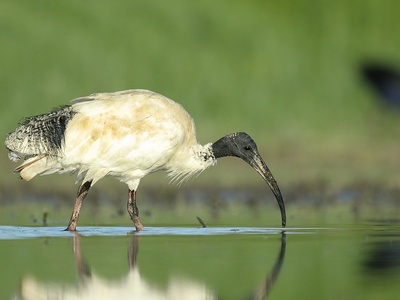
Australian White Ibis
A long-legged, white wading bird with bare black head and curved bill, traditionally wetland-associated but now common in cities. Urban-adapted and opportunistic, it probes for food in parks and rubbish, sparking both fascination and debate.
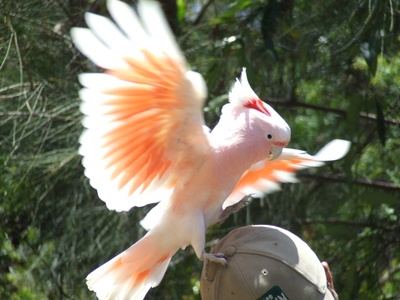
Major Mitchell’s Cockatoo
A graceful pink-and-white cockatoo with a vivid red-and-yellow crest, preferring arid woodlands and riverine forests. Shy and somewhat nomadic, it feeds on seeds and roots and is prized for its striking, elegant appearance.
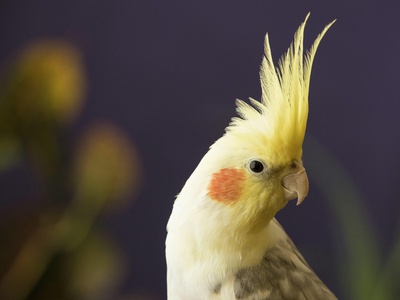
Cockatiel
A small grey parrot with a yellow face and crest in many wild birds, found in arid and open woodlands, feed on seeds. Sociable and adaptable, locally nomadic after rains, and the ancestor of a popular pet species.
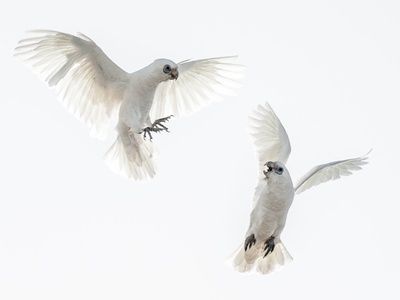
Little Corella
White cockatoo with pink facial skin often seen in flocks in farmland and urban parks. Noisy and gregarious, feeds on seeds and roots, nests in hollows, and can be locally abundant or considered a pest in some agricultural areas.
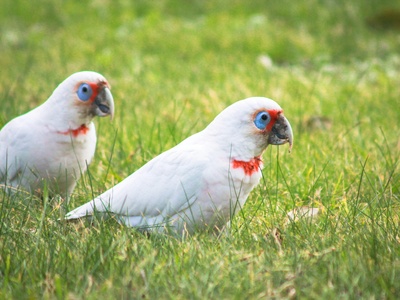
Long-billed Corella
Creamy-white cockatoo with a long bill, red eye patches and pale plumage, common in southeastern Australia. Often feeds on bulbs and roots, can form large feeding flocks and may damage lawns and crops where abundant.
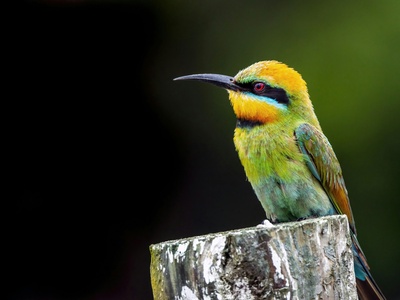
Rainbow Bee-eater
A slim, colourful insectivore with green plumage, chestnut throat and long tail streamers, nesting in sandy burrows. Eats bees and flying insects, often perches conspicuously on wires and branches before aerial sallies to catch prey.
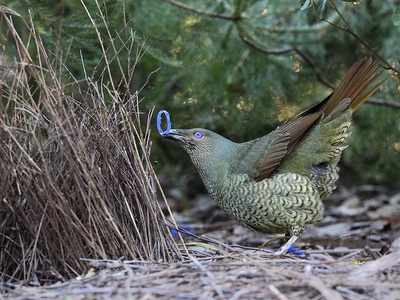
Satin Bowerbird
A medium-sized green bowerbird where males develop glossy blue-black plumage or intense satin sheen and build elaborate bowers decorated with blue objects to attract mates. Lives in eastern forests, feeds on fruit, and has complex courtship behaviour.
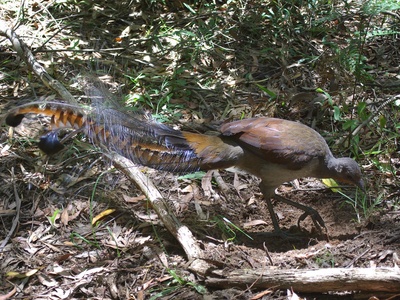
Superb Lyrebird
A large, secretive ground-dweller with ornate tail feathers in males and astonishing mimicry skills, able to reproduce sounds including other birds and human-made noises. Prefers wet forests where males perform elaborate displays on cleared mounds to attract mates.
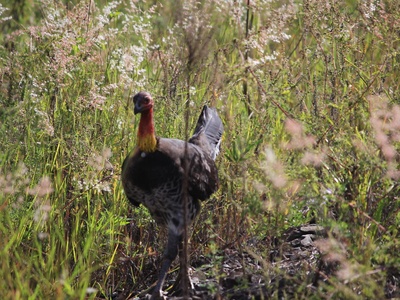
Australian Brush-turkey
A large, black mound-building megapode with bare head and a habit of constructing incubation mounds of leaf litter, common in rainforests and suburban gardens in the east. Eggs are incubated by heat from decomposing vegetation, not body warmth.
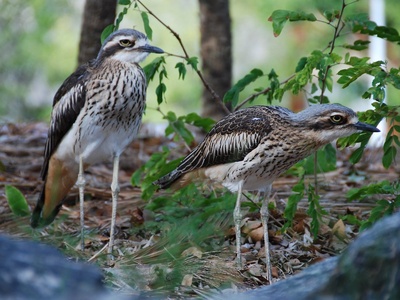
Bush Stone-curlew
A large, cryptic night bird with long legs, big yellow eyes and streaked cryptic plumage, inhabiting open woodlands and grasslands. Nocturnal and silent by day, it freezes when approached and emits eerie calls at night.
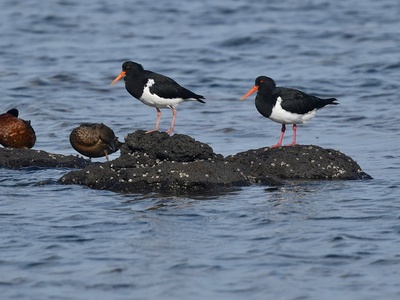
Pied Oystercatcher
A bold black-and-white shorebird with long orange bill used to pry molluscs and invertebrates from sand and rock pools. Found on sandy beaches and estuaries, pairs fiercely defend territory during breeding season and are charismatic coastal residents.
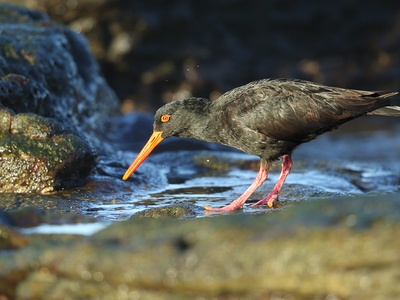
Sooty Oystercatcher
All-black shorebird with bright red bill and eyes, inhabiting rocky coasts and shorelines. Feeds on shellfish and marine invertebrates, usually seen in pairs or small groups, and is highly adapted to intertidal life.
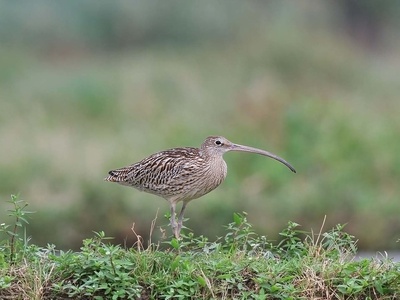
Eastern Curlew
The world’s largest sandpiper with a very long, curved bill used to probe tidal mudflats. A migratory shorebird that stages on Australian coasts during non-breeding season, vulnerable due to habitat loss and declining populations.
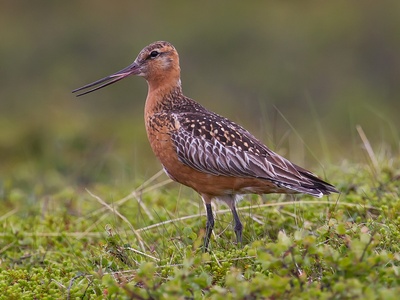
Bar-tailed Godwit
A long-distance migratory shorebird with mottled plumage and slightly upturned bill, arrives on Australian coasts from Arctic breeding grounds. Forages on intertidal mudflats and sandy beaches, famous for remarkable nonstop migratory flights.
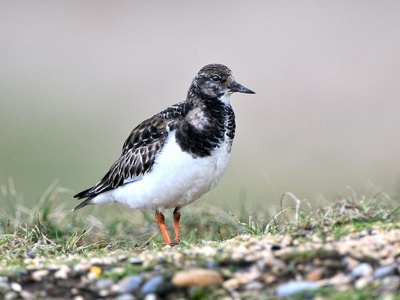
Ruddy Turnstone
Stocky shorebird with bold patterned plumage and short orange legs, flips stones and debris to find invertebrates. Migratory visitor to beaches and rocky shores across Australia, easily recognised by distinctive feeding behaviour and contrasting plumage.
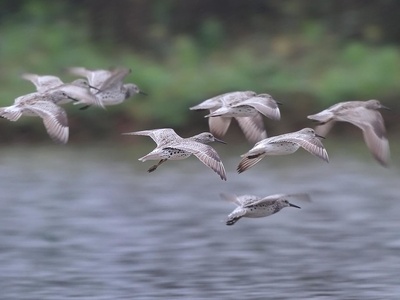
Great Knot
A medium-sized migratory sandpiper with grey-brown breeding plumage, relies on intertidal mudflats in northern and eastern Australia during non-breeding season. Globally threatened due to habitat loss, notable for huge migratory flocks.
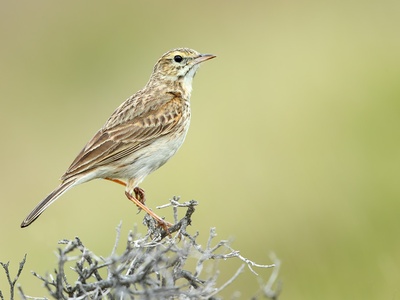
Australasian Pipit
A slender, streaked ground passer that frequents open grasslands, farmland and airport fields, walking and running while foraging for insects. Cryptic in plumage, common across Australia and easily overlooked despite widespread distribution.

Apostlebird
A social, grey-brown passer that forms large cooperative breeding groups, inhabiting open woodlands and scrub in inland and arid Australia. Feeds on insects and seeds, known for communal living and strong family bonds among group members.
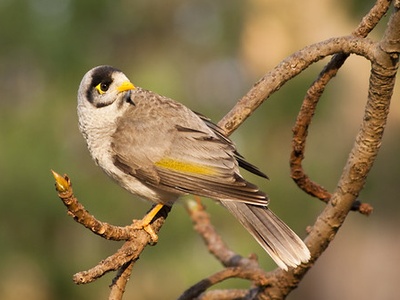
Noisy Miner
A bold grey honeyeater with a black crown and yellow patch behind the eye, extremely territorial in woodlands and urban areas. Eats nectar and insects, forms aggressive colonies that can exclude smaller birds from habitat.
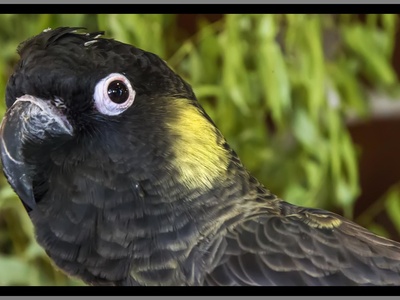
Yellow-tailed Black-Cockatoo
Large black cockatoo with yellow panels in the tail and a distinctive piping call, inhabiting tall eucalypt forests and woodlands. Feeds on seeds and wood-boring larvae, often seen in pairs or loose flocks and valued for its dramatic appearance.
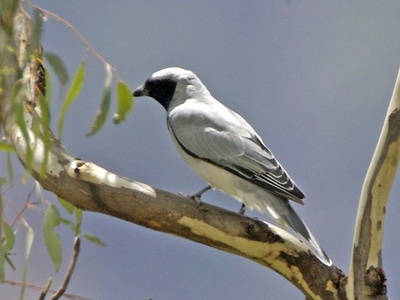
Black-faced Cuckooshrike
A sleek grey passerine with darker face and hooked bill, found across woodlands, parks and farmland. Feeds on insects and fruit, often seen perched conspicuously and moving through tree canopies in search of prey.
White-winged Chough
Large, crow-like black bird with a long curved bill, living in cooperative family groups that forage on the ground for invertebrates. Known for communal breeding, loud calls and passing items between group members as social behaviour.
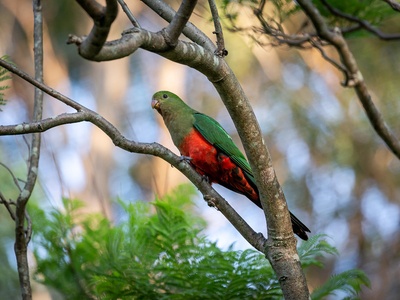
Australian King-Parrot
A striking large parrot with vibrant red and green plumage in males and green in females, inhabiting eastern forests and gardens. Feeds on seeds and fruit, often seen quietly perched high in treetops or visiting backyard feeders.
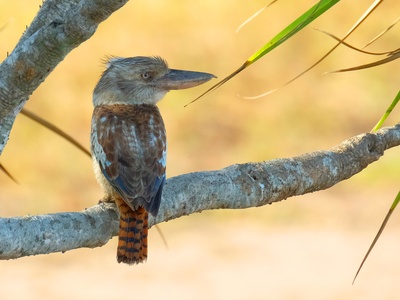
Blue-winged Kookaburra
A northern relative of the laughing kookaburra with pale head, blue wing patches and a softer call, found in tropical woodlands and along waterways. Hunts insects, small reptiles and mammals from perches and nests in tree hollows.
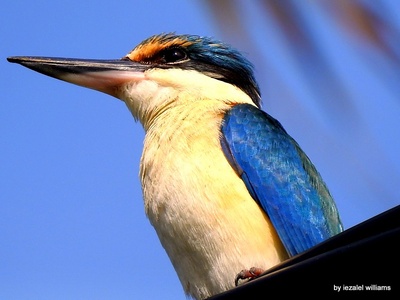
Sacred Kingfisher
A compact, turquoise-and-buff kingfisher that perches quietly before diving for insects, small fish and reptiles. Found in woodlands, mangroves and gardens across Australia during breeding and migration seasons, often seen near water.
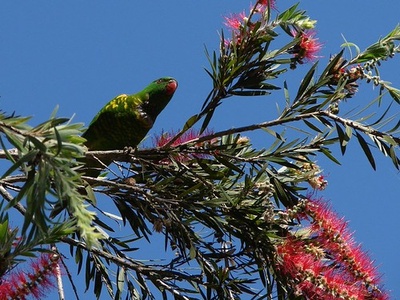
Scaly-breasted Lorikeet
A small green lorikeet with scaly breast pattern and orange bill, preferring open forest edges and urban flowering trees. Feeds on nectar and pollen with a brush-tipped tongue, often found in flocks and noisy when feeding.
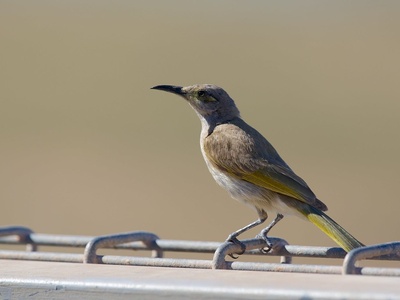
Brown Honeyeater
A small, active honeyeater with olive-brown plumage and distinctive eye ring, common in coastal and tropical woodlands. Feeds on nectar and insects, visiting flowering eucalypts and paperbarks across northern and eastern Australia.
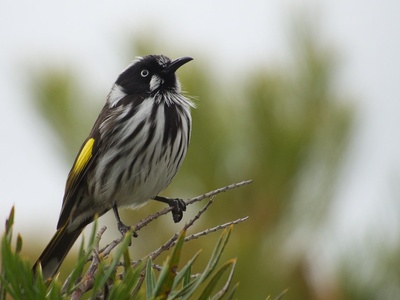
New Holland Honeyeater
A black-and-white honeyeater with bright yellow wing panels and an energetic feeding style, common in heathland and coastal scrub. Specialised for nectar feeding, it plays an important role in pollinating native plants.
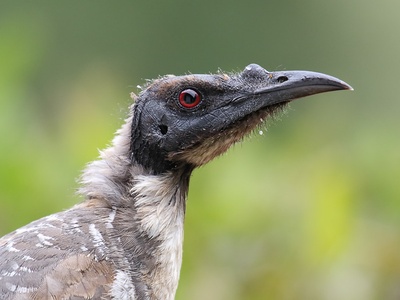
Noisy Friarbird
A large, bare-headed honeyeater with a long curved bill and loud raucous calls, found in woodlands and urban areas of eastern Australia. Nectar and insect feeder that often forms noisy foraging groups and nests in colonies in eucalypts.
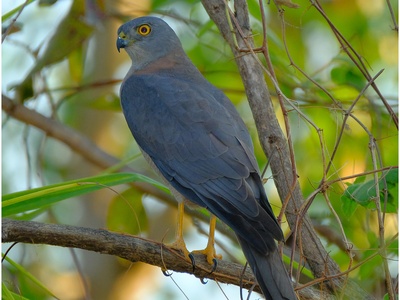
Brown Goshawk
A medium-sized forest raptor with barred underparts and long tail, adept at fast pursuit through trees to catch birds and small mammals. Common across varied habitats including woodlands, suburban parks and open forest edges.
Collared Sparrowhawk
A small agile hawk with barred chest and hooked bill, often hunting small birds in woodland and suburban gardens. Fast and elusive, it surprises prey with rapid manoeuvres through dense foliage and across urban landscapes.
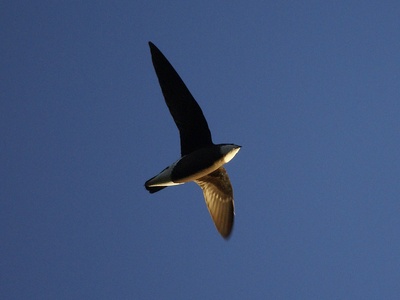
White-throated Needletail
A fast, stout swift with long swept wings and a white throat, migratory visitor to Australia during the southern summer. Spends most time on the wing catching aerial insects and is renowned for high-speed flight and distant migrations.
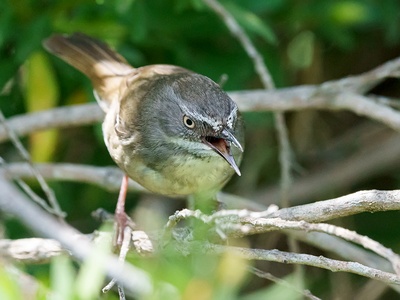
White-browed Scrubwren
A small brown scrub-dwelling passer with a pale eyebrow and energetic foraging style, common in dense understorey of forests and gardens. Feeds on insects gleaned from foliage and leaf litter, often seen in small family groups.
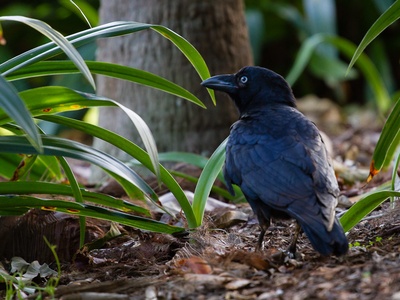
Australian Raven
A large, glossy black corvid with a hefty bill and deep croaking call, common in open country, farmland and urban areas. Omnivorous and highly intelligent, it displays complex social behaviour and remarkable adaptability to human landscapes.
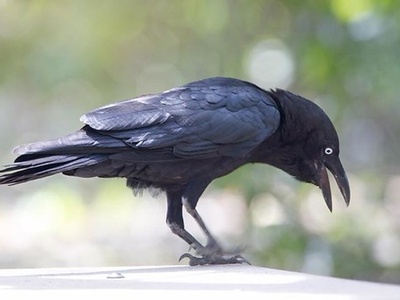
Torresian Crow
A black crow of northern Australia with robust bill and raucous calls, found in coastal woodlands, mangroves and urban areas. Omnivorous and opportunistic, it often scavenges and forages with bold behaviour around people and rubbish tips.
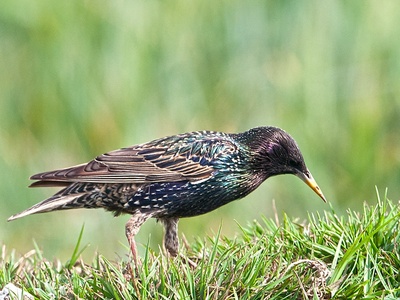
Common Starling
Introduced, iridescent black passer with speckled winter plumage, common in towns, farmland and parks. Forms large roosts and flocks, feeds on insects and fruit, and competes with native cavity-nesters in some areas.
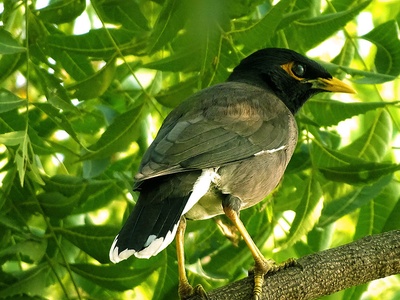
Common Myna
Introduced, brown bird with black head and prominent yellow eye patch, highly adaptable and common in urban and agricultural areas. Aggressive competitor for nest sites, omnivorous diet and strong association with human-modified habitats.
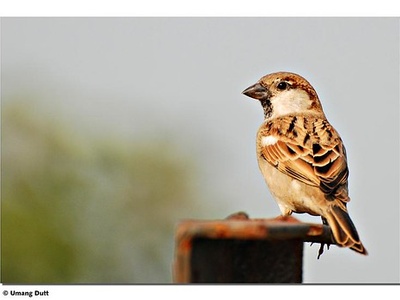
House Sparrow
Introduced, small chunky brown-and-grey bird ubiquitous in towns and farms, associated with human habitation. Feeds on seeds and scraps, nests in buildings and eaves, and has declined in some urban areas while remaining common in others.
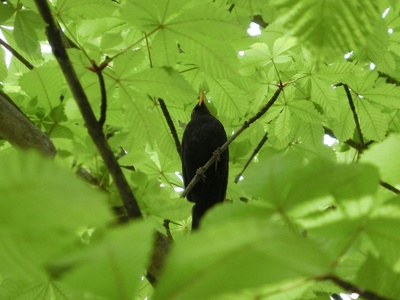
Eurasian Blackbird
Introduced thrush with glossy black male and brown female, common in gardens, parks and woodlands. Feeds on fruit, earthworms and invertebrates, often sings melodious phrases at dawn and dusk across urban areas.
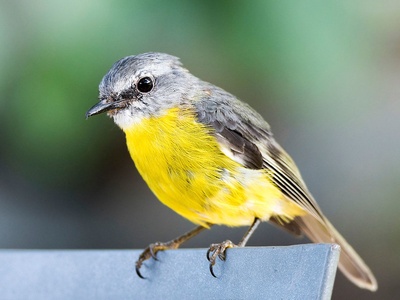
Eastern Yellow Robin
A calm, grey-and-yellow forest robin perched on low branches, gleans insects from trunks and foliage. Found in moist forests and woodland, it is sedentary and approachable, often seen flicking its tail while foraging near the ground.
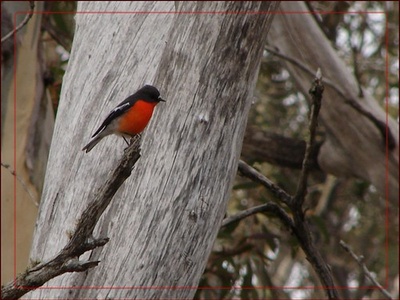
Flame Robin
A small, perky robin with bright orange-red breast in males and brownish females, inhabiting open forests and alpine gullies of southeastern Australia. Insectivorous and often perches conspicuously on fence posts or low branches to sally for prey.
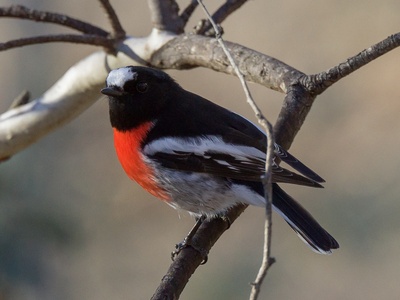
Scarlet Robin
A colourful small robin with striking red breast in males and subtle patterns in females, preferring open woodlands and sheltered gullies. Insect-eating and often seen perched upright on branches, it forms territories and breeds in spring.
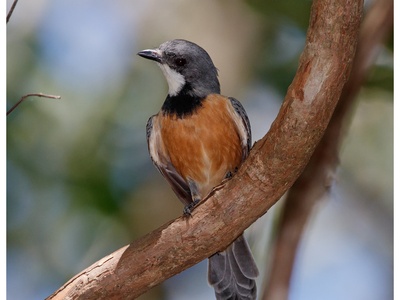
Rufous Whistler
A melodic songbird with warm rufous underparts in males and a rich whistling song, inhabiting woodlands and shrublands. Feeds on insects and occasionally fruit, often heard before seen in bushy habitats across Australia.
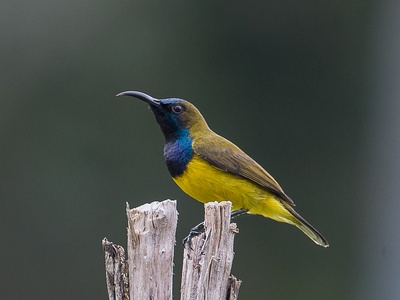
Olive-backed Sunbird
A tiny, iridescent sunbird found in far northern Queensland and nearby islands, with metallic plumage in males and olive-backed females. Feeds on nectar and small insects from flowers and is often seen in coastal rainforest and mangroves during the warmer months.
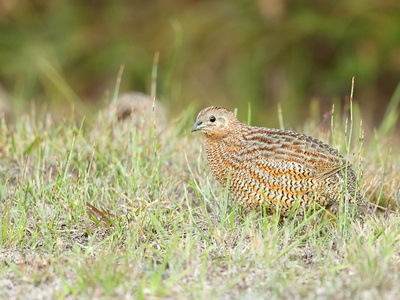
Brown Quail
A small ground-dwelling gamebird with cryptic brown streaked plumage, found in grasslands, agricultural fields and wet sedgelands. Secretive and often flushed from cover, feeds on seeds and small invertebrates and forms small coveys outside breeding season.
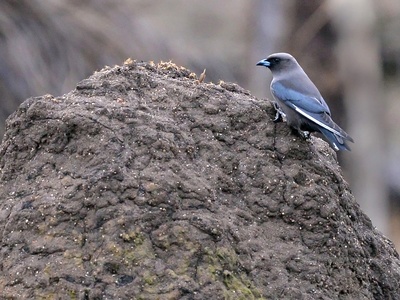
Dusky Woodswallow
A sleek, charcoal-grey passer with pale underparts and white rump, often perching on wires and branches. Hunts flying insects in open woodlands and farmland, forms flocks and performs agile aerial sallies to capture prey.
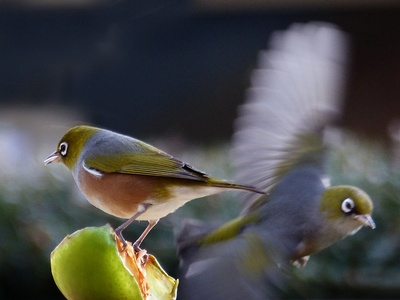
Silvereye
A small olive-green bird with a conspicuous white eye-ring, gregarious and often found in gardens, orchards and woodlands. Eats fruit, nectar and insects, and can form large, mobile flocks that move with seasonal food supplies.
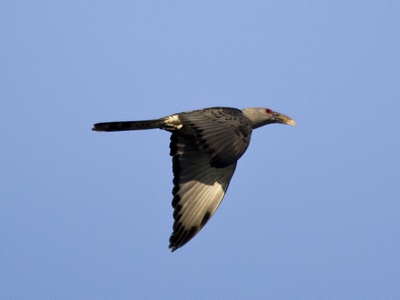
Channel-billed Cuckoo
The largest cuckoo in Australia, with a massive bill and grey-brown plumage, migratory and breeding in northern woodlands. A brood parasite on large host species such as crows and currawongs, it winters in northern Australia and New Guinea.
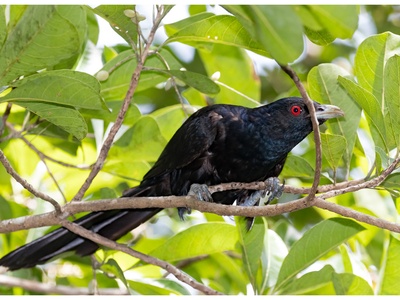
Eastern Koel
A large cuckoo with glossy dark plumage in males and spotted females, famous for its loud, repetitive “ko-el” call in summer. A brood parasite of large passerines, it arrives in eastern Australia seasonally and uses rainforest and urban trees.
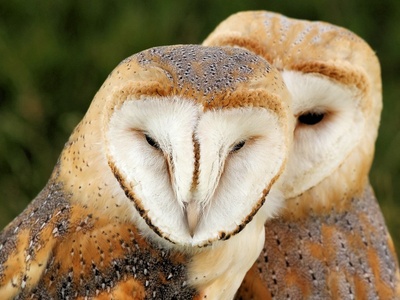
Barn Owl
A pale, heart-faced nocturnal owl with silent flight, nesting in barns, cliffs and tree hollows. Hunts small mammals and nocturnal birds by sound, widespread across open country and rural areas and often associated with farmland.
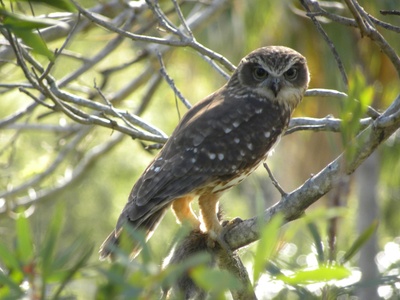
Southern Boobook
A small brown nocturnal owl with a deep “boobook” call, inhabiting forests, woodlands and urban parks. Performs nocturnal hunting on insects and small vertebrates, easily identified by its distinctive two-note call echoing at dusk.
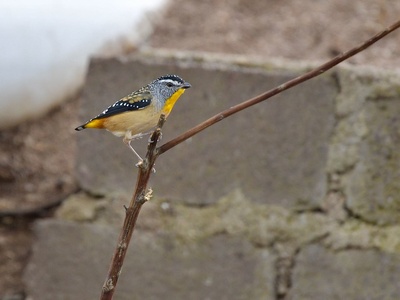
Spotted Pardalote
A tiny, brightly coloured woodland bird with spotted crown and yellow underparts, gleaning insects from foliage in eucalypt forests and woodlands. Often secretive but noticeable by its trilling call and habit of foraging on tree trunks and branches.
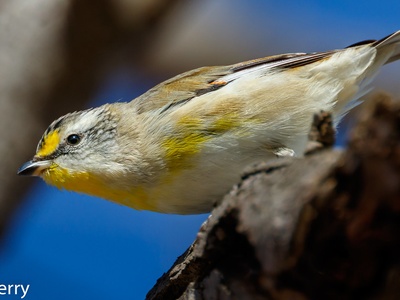
Striated Pardalote
A small, chunky insect-eating bird with striated head markings and spotted back, common in eucalypt forests and parks. Extracts lerp and insects from leaves, often foraging alongside other small passerines in tree canopies.
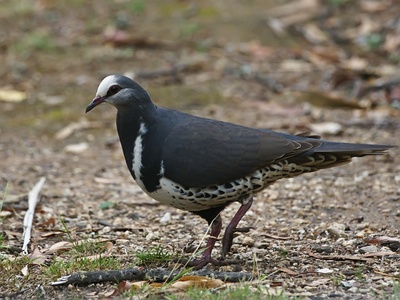
Wonga Pigeon
A large, plump rainforest pigeon with mottled grey plumage and soft cooing calls, found in subtropical and tropical rainforests. Feeds on fallen fruit and seeds on the forest floor, often seen in shaded gullies and wet forest patches.
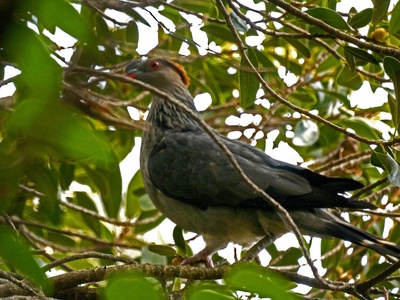
Topknot Pigeon
A big, dusty-blue fruit-eating pigeon with a distinctive crest, inhabiting rainforests and coastal forests. Feeds heavily on figs and rainforest fruit, often forming flocks that descend into suburban fruiting trees when food is abundant.
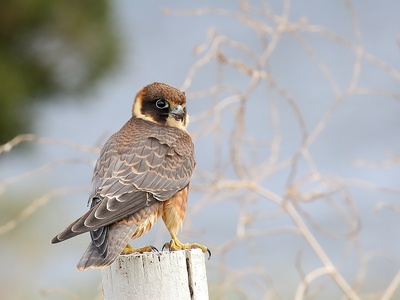
Australian Hobby
A slim, fast falcon with long wings and a habit of agile aerial hunting, preying on insects and small birds. Found over open woodlands and wetlands, it performs spectacular chases and nests on high tree branches.
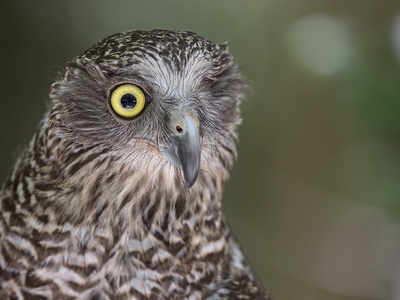
Powerful Owl
Australia’s largest owl, with barred grey plumage and deep booming calls, inhabits large tracts of forest and tall urban trees. Nocturnal predator of medium-sized mammals and birds, requires extensive habitat and large tree hollows for nesting.
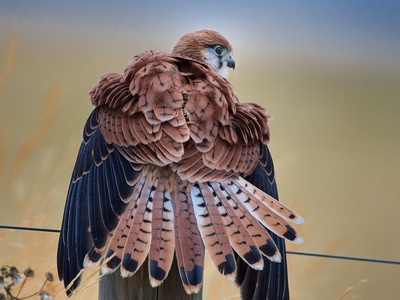
Nankeen Kestrel
A small, honey-brown falcon often seen hovering over farmland and open country, hunting insects and small rodents. Adaptable and widespread, nests in hollow trees or buildings and is a familiar sight above rural landscapes.
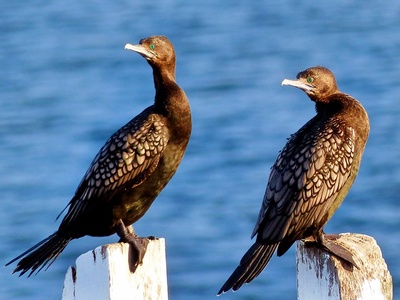
Little Black Cormorant
A medium-sized black waterbird that fishes by diving in inland and coastal waters, often seen drying wings while perched. Forms large communal roosts and colonies, feeding on fish and aquatic invertebrates across a wide range of wetland habitats.
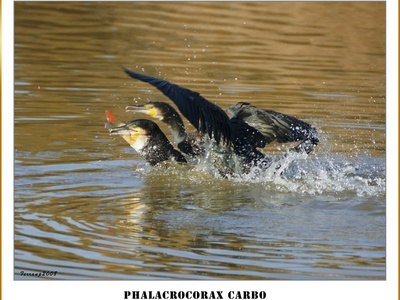
Great Cormorant
A large black cormorant with robust build, found on coasts, estuaries and inland waters. Competent diver that catches fish at various depths, nests in colonies on cliffs and trees, and shows white throat patches in some populations.
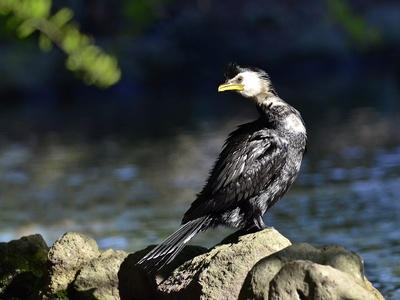
Little Pied Cormorant
A smaller black-and-white cormorant common on inland lakes, rivers and coastal estuaries. Hunts fish by diving or spearing in shallow water, often seen perched on logs and rocks to dry its plumage between dives.
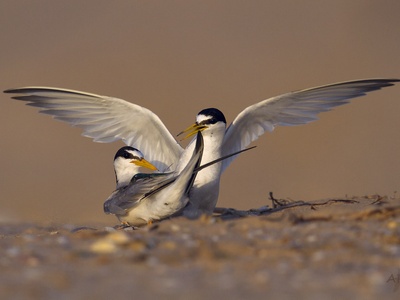
Little Tern
A small, delicate coastal tern with white forehead and yellow bill tip, nesting on sandy beaches and shellbanks. Feeds on small fish by shallow plunges, often in summer colonies that are vulnerable to disturbance and habitat loss.
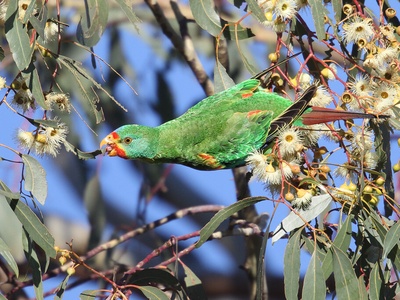
Swift Parrot
A fast-flying, bright green and red parrot that breeds only in Tasmania and migrates to mainland southeast Australia in winter to feed on nectar. Critically endangered due to habitat loss and predation, it favours flowering gums in woodlands and urban parks.
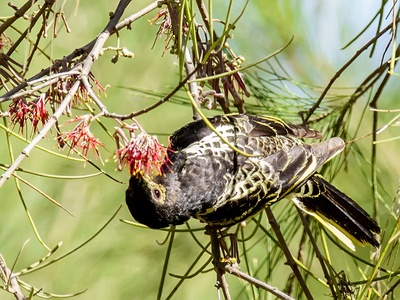
Regent Honeyeater
A rare, striking honey-eater with glossy black and golden-yellow plumage, found in remnant box-ironbark woodlands of southeastern Australia. Nectar and insect feeder with a distinctive song, heavily threatened by habitat destruction and population fragmentation.
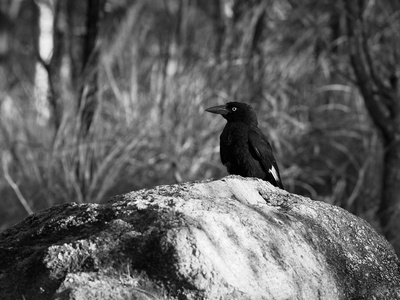
Pied Currawong
A large, black passer with white wing patches and a loud, melodious call, common in forests, parks and gardens of eastern Australia. Omnivorous and bold around humans, it forages on fruit, insects and small vertebrates and nests in large trees.
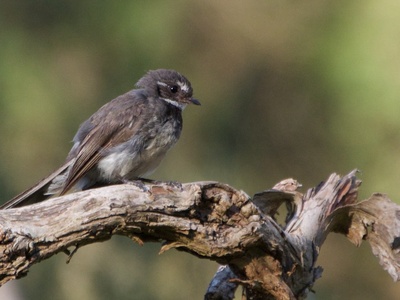
Grey Fantail
A small, active insectivore with long fanned tail and pale grey plumage, constantly flicking its tail while catching insects on the wing. Found in forests and gardens nationwide, it is restless, vocal and easily recognised by its energetic foraging style.
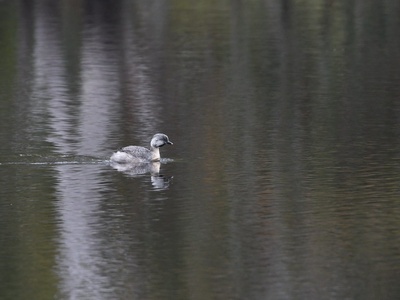
Hoary-headed Grebe
A small diving grebe with silvery-grey head and black back, inhabiting freshwater lakes and wetlands. Dives for aquatic invertebrates and small fish, often seen in loose flocks and performing bobbing movements while feeding.
Australian Magpie-lark
Black-and-white passer known as the “peewee”, common on lawns and open country. Strongly territorial, pairs build conspicuous mud nests and duet loudly. Feeds on insects and small invertebrates that it forages from the ground.
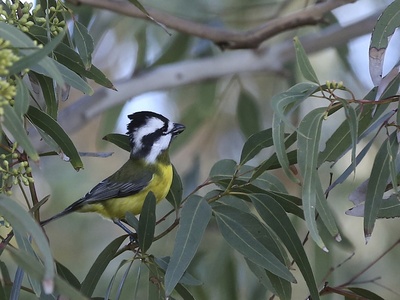
Crested Shrike-tit
A chunky, crested woodland bird with strong bill for prising bark and extracting insects. Found in eucalypt forests and woodlands, moves methodically along branches and trunks while foraging; both sexes share in nest building and feeding young.
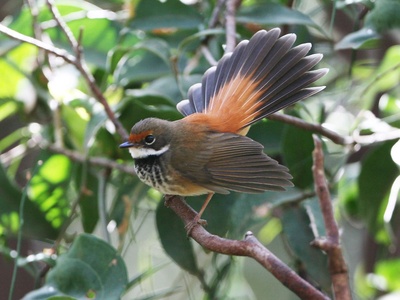
Rufous Fantail
A small, rufous-tailed flycatcher with agile flight and fluttering habits, often inhabiting rainforests and dense gullies. Feeds on insects caught mid-air or gleaned from foliage, migratory or dispersive in parts of its range.
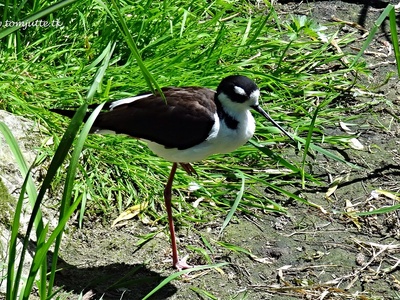
Black-winged Stilt
A tall, slender wader with long pink legs, black-and-white plumage and needle-like bill, found on shallow wetlands and saltpans. Feeds on small invertebrates by probing and wading, often nesting in loose colonies on exposed mudflats.
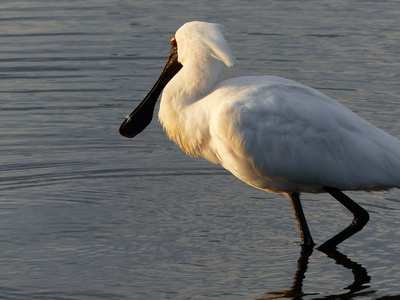
Royal Spoonbill
A large white ibis-like bird with a distinctive spoon-shaped bill and black legs, forages in shallow waters by sweeping bill side-to-side to catch fish and crustaceans. Breeds in colonies and shows elegant plumes in breeding season.
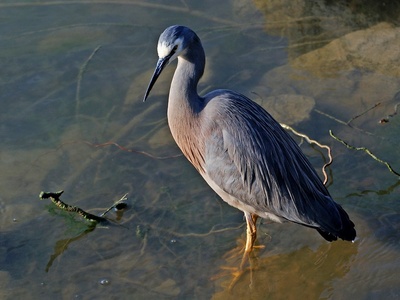
White-faced Heron
A slender, blue-grey heron with white face and fine plumes, common in wetlands, paddocks and urban ponds. Hunts by stalking or standing still to snatch fish, frogs and insects; adaptable and widespread across Australia.
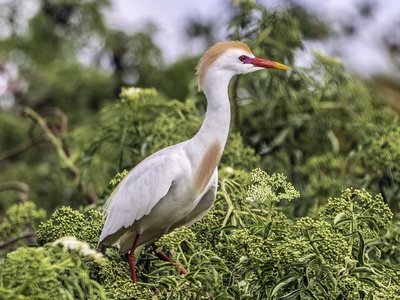
Cattle Egret
A stocky white heron often seen accompanying livestock, feeding on insects stirred up by grazing animals. Tends to breed in colonies, rapidly expanded range with agriculture worldwide, and is commonly found in pastures and wetlands.
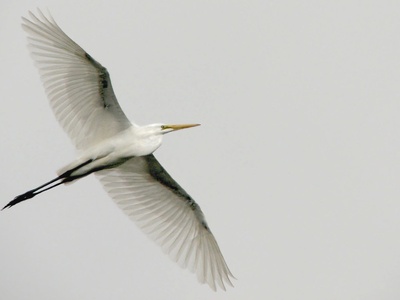
Great Egret
A tall, elegant white heron with long S-shaped neck and yellow bill, inhabiting wetlands and estuaries. Hunts fish and amphibians by slow stalking, nests in trees in colonies, and is noticeable for stately posture and widespread distribution.
Channel-billed Cuckoo (duplicate removed)
Duplicate omitted per inclusion rules.