In October 2019, Google said its 53-qubit Sycamore processor completed a specific computation in about 200 seconds — a task the company estimated would take the world’s fastest supercomputer thousands of years. That claim pushed a clear point into the public eye: quantum hardware has reached milestones that invite serious attention.
The benefits of quantum computing matter because several problems that are effectively intractable today could become solvable, with direct effects on materials, drugs, logistics, finance, and security. Classical computers will remain essential, but quantum systems promise faster solutions for certain hard problems, new types of simulation, and economic impacts that change how R&D and operations work. Below are eight specific, well‑evidenced benefits spanning technology, industry, and science.
Technological benefits of quantum computing
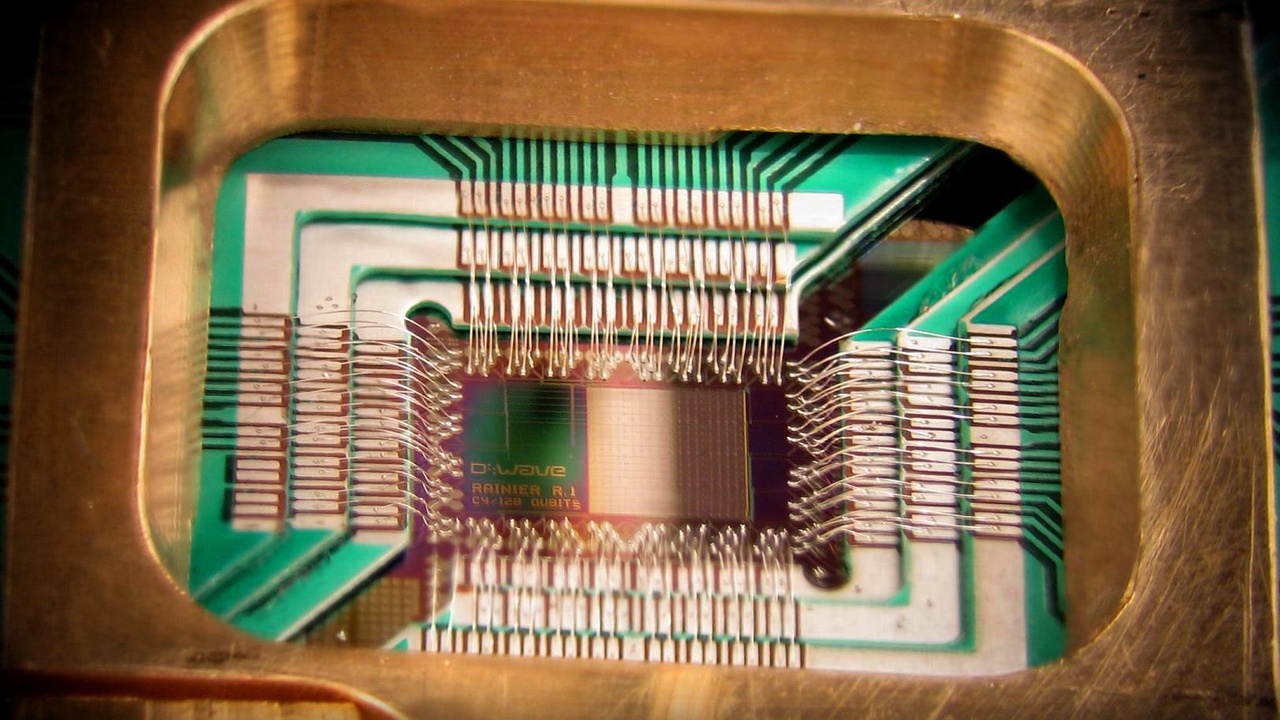
Progress in qubits (the quantum version of a bit), control electronics, and new algorithms is what makes practical advantages possible. Foundational algorithms from the 1990s set the theory, and recent hardware milestones show experimental progress: Peter Shor’s factoring algorithm (1994) and Grover’s search algorithm (1996) defined the targets, while Google’s Sycamore (2019) and D‑Wave’s Advantage system (launched around 2020 with more than 5,000 qubits) show different hardware approaches moving forward. These advances let researchers test both long-term algorithmic speedups and near-term hybrid methods that mix classical and quantum compute.
1. Significant speedups for specific hard problems
Certain problems have provable quantum speedups. Shor’s algorithm (1994) gives an exponential improvement for integer factoring, and Grover’s algorithm (1996) offers a quadratic speedup for unstructured search. Those are theoretical results, but they define what quantum hardware can aim to achieve.
Experimental demonstrations — for example Google’s 53‑qubit Sycamore experiment in 2019 — show the field moving from theory toward practice, even if today’s devices are noisy and limited in scale. The real-world consequence is concrete: a future fault‑tolerant quantum computer running Shor’s algorithm would break widely used public‑key cryptography, which is why organizations are planning cryptographic migrations now.
2. New algorithms and hybrid approaches for near-term use
Not all useful quantum work waits for large, error‑corrected machines. Hybrid algorithms such as the variational quantum eigensolver (VQE) and the Quantum Approximate Optimization Algorithm (QAOA) pair small quantum circuits with classical optimizers to tackle problems on noisy devices today.
VQE has been used in laboratory demos to approximate the ground states of simple molecules like H₂ and LiH, and academic groups and companies (IBM, Rigetti, Xanadu and several universities) have run hybrid pilots to explore chemistry and optimization workflows. These experiments don’t yet replace classical methods for complex targets, but they provide a practical path for incremental gains as hardware improves.
3. Better optimization through quantum annealing and inspired methods
Quantum annealing targets combinatorial optimization problems by evolving a system toward low‑energy states that represent good solutions. D‑Wave’s Advantage system (announced around 2020 with over 5,000 qubits) is the most visible example of annealer‑scale hardware available for experiments.
Industry pilots have used annealers and quantum‑inspired solvers for tasks like traffic routing and scheduling. Volkswagen ran traffic‑routing pilots, showing how these methods can generate plausible routing improvements, and firms continue to explore hybrid pipelines where quantum or quantum‑inspired steps sit inside larger classical optimization frameworks. Not every problem gains from annealing, but many real‑world scheduling and routing tasks are good candidates for experimentation.
Economic and industrial benefits
Quantum computing’s commercial value is emerging through reduced R&D time, improved operational efficiency, and new analytical tools. Companies across automotive, logistics, chemicals, and finance are running pilots and research programs to capture measurable improvements in time‑to‑market, cost structure, and decision quality.
4. Accelerated materials discovery and chemistry simulation
Electronic‑structure problems sit at the heart of materials design and catalysis. Quantum simulation can represent electronic interactions directly, avoiding some of the severe approximations that classical methods must make for large, correlated systems.
Early demonstrations have simulated small molecules (H₂, LiH) with VQE and related approaches, and several startups and established firms have formed partnerships with materials and chemical companies to test targeted workflows. Those collaborations aim to shorten R&D cycles for batteries, catalysts, and semiconductor materials — reducing the months or years of experimental iteration needed today.
5. Improved supply chain and logistics optimization
Better optimization reduces operational costs and emissions across complex logistics networks. Combinatorial problems in routing, fleet scheduling, and warehouse assignment scale rapidly, so even modest algorithmic gains can produce large dollar and time savings.
Industry pilots — for instance, traffic‑routing and delivery‑optimization trials run by automakers and logistics firms — have used quantum or quantum‑inspired methods to improve routing and reduce travel time in specific scenarios. These pilots typically combine classical preprocessing with quantum or special‑purpose solvers to extract practical benefits today.
6. Better financial modeling and risk analysis
Quantum algorithms can accelerate Monte Carlo sampling and certain optimization routines used in pricing and portfolio construction. Faster or higher‑fidelity simulations let traders and risk managers explore more scenarios in the same time window.
Major financial institutions — including research teams at JPMorgan Chase and Goldman Sachs — have run quantum research programs since the late 2010s and into the 2020s, exploring use cases like option pricing, scenario analysis, and portfolio optimization. Those efforts aim for richer models and more timely risk signals rather than immediate production replacement of classical systems.
Scientific and societal benefits
Beyond commercial returns, quantum computing affects public goods: security infrastructure, medical research, and fundamental science. Some outcomes are direct (better simulation), and others are systemic (stronger crypto standards and new research methods).
7. Strengthening cryptography and preparing for post-quantum security
Quantum algorithms create both a threat and an incentive for stronger cryptography. Shor’s algorithm (1994) showed that public‑key schemes based on integer factoring and discrete logarithms would be vulnerable to a sufficiently large, fault‑tolerant quantum computer.
That technical reality prompted NIST’s post‑quantum cryptography (PQC) standardization process, which reached selection milestones in 2022 with algorithms like CRYSTALS‑Kyber and CRYSTALS‑Dilithium. The benefit is practical: an accelerated, coordinated migration to quantum‑resistant protocols reduces long‑term risk and creates demand for new cryptographic services and expertise. Enterprises should inventory at‑risk assets and follow migration roadmaps now.
8. Enabling advances in medicine, biology, and climate science
Quantum simulation can model molecular and material behavior at higher fidelity than many classical methods allow, which helps drug discovery, enzyme design, and materials for clean energy. That improved fidelity shortens cycles where researchers otherwise rely on coarse approximations or brute‑force screening.
Pharma and energy research teams have started partnerships with quantum firms to pilot simulations of binding interactions and catalytic steps. Today’s demos focus on small molecules, but each successful step broadens what researchers can test in silico — and that has clear downstream value for accelerating discovery timelines in medicine and climate technologies.
Summary
- Quantum milestones such as Google’s Sycamore (2019) and NIST’s PQC selections (2022) mark concrete turning points: experimental progress and a clear security response.
- Near‑term hybrid methods (VQE, QAOA) and annealers (D‑Wave Advantage) already enable practical experiments in chemistry and optimization that can shorten R&D cycles and improve operations.
- Financial and industrial pilots show measurable gains in modeling, routing, and scheduling; even modest improvements scale to significant cost and time savings.
- Preparing for post‑quantum security now reduces future risk and opens opportunities for new cryptographic services and compliance work.
- Follow pilot results, watch PQC updates, and consider talent and training investments so organizations can evaluate practical adoption as hardware and algorithms mature.