Brazil’s mosaic of habitats—from the Amazon and Atlantic Forest to cerrado and coastal plateaus—supports a rich array of animals found nowhere else. That regional diversity shapes conservation priorities and makes local species especially important to study and protect.
There are 14 Endemic Species of Brazil, ranging from the Araripe manakin to the Zebra pleco. For each species I list the Scientific name,Biome/region,IUCN status — you’ll find below.
How is an endemic species defined and identified in Brazil?
An endemic species is one native to and restricted within Brazil’s political or ecological boundaries; researchers determine this using distribution records, field surveys and taxonomic studies, and sometimes genetic data—small or isolated habitats like the Araripe Plateau often produce such restricted species.
How should I use the Scientific name, Biome/region and IUCN status columns?
Use the Scientific name for precise identification, the Biome/region to understand habitat and where to look or focus conservation, and the IUCN status to gauge extinction risk and prioritize actions—together they make it easier to compare species and plan further reading or fieldwork.
Endemic Species of Brazil
| Common name | Scientific name | Biome/region | IUCN status |
|---|---|---|---|
| Golden lion tamarin | Leontopithecus rosalia | Atlantic Forest; Rio de Janeiro (RJ), Espírito Santo (ES) | EN |
| Golden-headed lion tamarin | Leontopithecus chrysomelas | Atlantic Forest; Bahia (BA), Espírito Santo (ES) | EN |
| Black lion tamarin | Leontopithecus chrysopygus | Atlantic Forest; São Paulo (SP) | EN |
| Superagui lion tamarin | Leontopithecus caissara | Atlantic Forest coastal; Paraná (PR), São Paulo (SP) | CR |
| Northern muriqui | Brachyteles hypoxanthus | Atlantic Forest; Minas Gerais (MG), Espírito Santo (ES) | CR |
| Southern muriqui | Brachyteles arachnoides | Atlantic Forest; São Paulo (SP), Paraná (PR), Rio de Janeiro (RJ) | CR |
| Lear’s macaw | Anodorhynchus leari | Caatinga and dry woodlands; Bahia (BA) | EN |
| Brazilian merganser | Mergus octosetaceus | Atlantic Forest rivers; Rio Grande do Sul (RS), Santa Catarina (SC), Paraná (PR) | CR |
| Golden lancehead | Bothrops insularis | Atlantic Forest island; Ilha da Queimada Grande (São Paulo) | CR |
| Brazilian three-banded armadillo | Tolypeutes tricinctus | Caatinga and Cerrado; northeastern Brazil (MA, PI, CE, BA, PE) | VU |
| Zebra pleco | Hypancistrus zebra | Freshwater; Rio Xingu (Pará – PA) | EN |
| Pau-brasil (Brazilwood) | Paubrasilia echinata | Atlantic Forest coastal; Bahia (BA), Espírito Santo (ES), Pernambuco (PE) | EN |
| Pumpkin toadlet | Brachycephalus ephippium | Atlantic Forest leaf litter; Espírito Santo (ES), Rio de Janeiro (RJ), São Paulo (SP) | NT |
| Araripe manakin | Antilophia bokermanni | Chapada do Araripe plateau; Ceará (CE) | CR |
Images and Descriptions
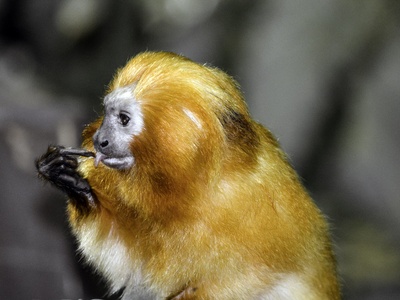
Golden lion tamarin
Small, striking primate with a mane-like golden coat found in remnant Atlantic Forest patches near Rio de Janeiro. Highly threatened by habitat loss, conservation programs and reintroductions have helped stabilize populations in protected fragments.
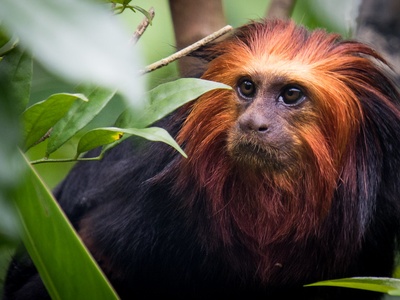
Golden-headed lion tamarin
Vivid black-and-gold tamarin restricted to coastal Atlantic Forest in southern Bahia and Espírito Santo. Notable for its bright mane and arboreal lifestyle, it faces ongoing pressure from deforestation and habitat fragmentation.

Black lion tamarin
A rare, small primate with glossy black fur and golden mane patches found in São Paulo’s Atlantic Forest remnants. Intensive conservation, captive-breeding and habitat protection campaigns aim to prevent further declines from agricultural expansion.
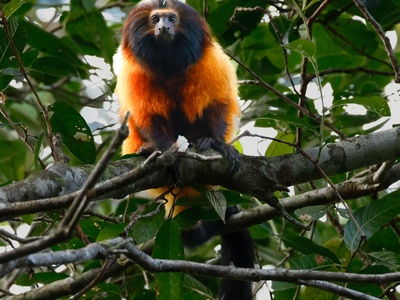
Superagui lion tamarin
One of the rarest lion tamarins, restricted to a tiny coastal strip and islands in southern Brazil. Critically endangered due to restricted range and habitat loss; conservationists prioritize habitat protection and community engagement.
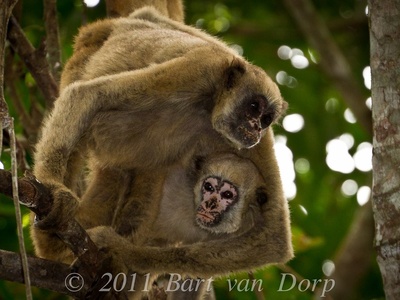
Northern muriqui
One of the world’s largest New World monkeys, the northern muriqui is critically endangered and endemic to Brazil’s Atlantic Forest canopy. Gentle and socially complex, it survives in isolated forest fragments and protected reserves.
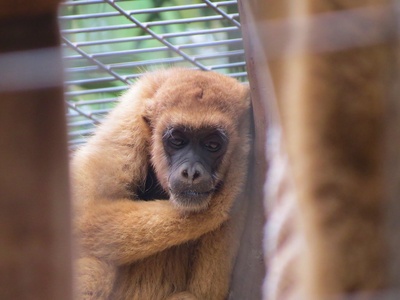
Southern muriqui
A large, long-limbed primate of southern Atlantic Forest remnants. Critically endangered from logging and fragmentation, the southern muriqui is a flagship species for rainforest restoration and corridor initiatives.
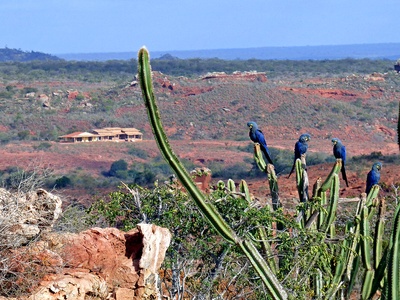
Lear’s macaw
A striking cobalt-blue parrot native to dry thorn scrub in Bahia. Once near extinction, targeted conservation, nest protection and habitat management have improved numbers, making it an emblem of successful species recovery in Brazil.
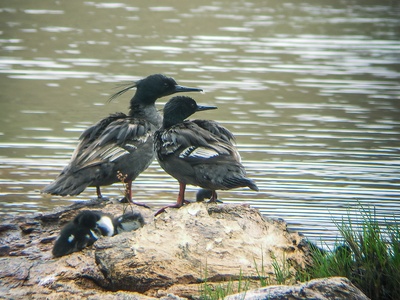
Brazilian merganser
A critically endangered river duck found on fast-flowing Atlantic Forest streams in southern Brazil. Very rare and secretive, it’s threatened by habitat degradation, water pollution and small population size.
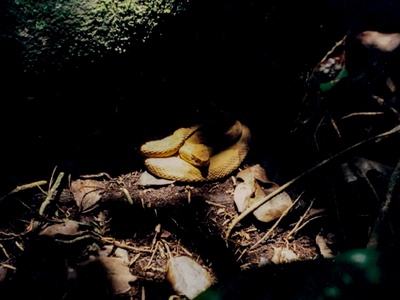
Golden lancehead
A highly venomous pit viper found only on a single island off São Paulo. Famous for its dense venom and island endemism, it is critically endangered due to tiny range and illegal collection pressure.
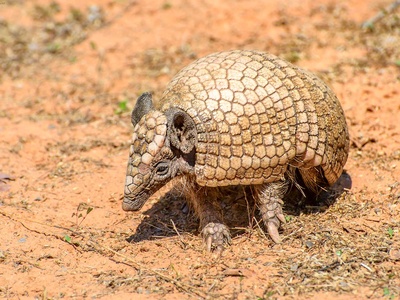
Brazilian three-banded armadillo
A distinctive armored mammal that can roll completely into a ball. Endemic to Brazil’s northeastern drylands, it faces hunting and habitat conversion but is culturally well known and the focus of local conservation efforts.
Zebra pleco
A striking black-and-white striped catfish restricted to a short stretch of the Xingu River. Popular in the aquarium trade, overcollection and habitat changes from dams put this endemic fish at high extinction risk.
Pau-brasil (Brazilwood)
The tree that gave Brazil its name, prized historically for red dye and timber. Now rare in coastal Atlantic Forest remnants, it’s protected and culturally iconic while threatened by past overexploitation and habitat loss.
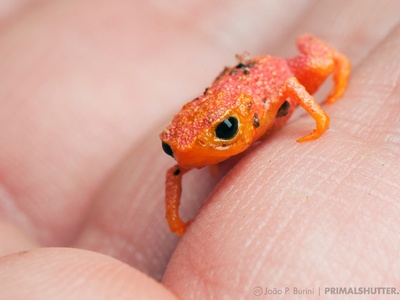
Pumpkin toadlet
Tiny, brightly colored frog confined to leaf litter in cloud forests and mountain ridges of southeastern Brazil. Notable for its miniature size and toxicity; sensitive to microhabitat loss and climate change.
Araripe manakin
A critically endangered, ground-leaning manakin found only on the Araripe plateau in Ceará. Its tiny range and specialized habitat make it highly vulnerable; local conservation and protected-area work focus on preserving its unique dry forest home.