When Galileo trained a simple refracting telescope on Jupiter in 1609 and found moons circling the planet, he flipped astronomy from naked-eye skywatching into an instrument-driven science. That shift matters today more than ever: modern tools push precision, let us see wavelengths our eyes can’t, and open entirely new frontiers such as exoplanet atmospheres and precision cosmology. The sky may look simple, but answering questions about how stars, planets, and galaxies form requires specialized gear and clever engineering.
From backyard lenses to continent-spanning arrays and space telescopes, eight key instruments underpin modern discovery and yield practical spin-offs that touch daily life. This guide groups those instruments into four categories—optical/near-infrared, space/high-energy, radio/interferometry, and detectors/direct-imaging tools—and summarizes what each does and why it matters. Below you’ll find the eight instruments and concrete examples astronomers use to map the universe.
Optical and Near-Infrared Instruments
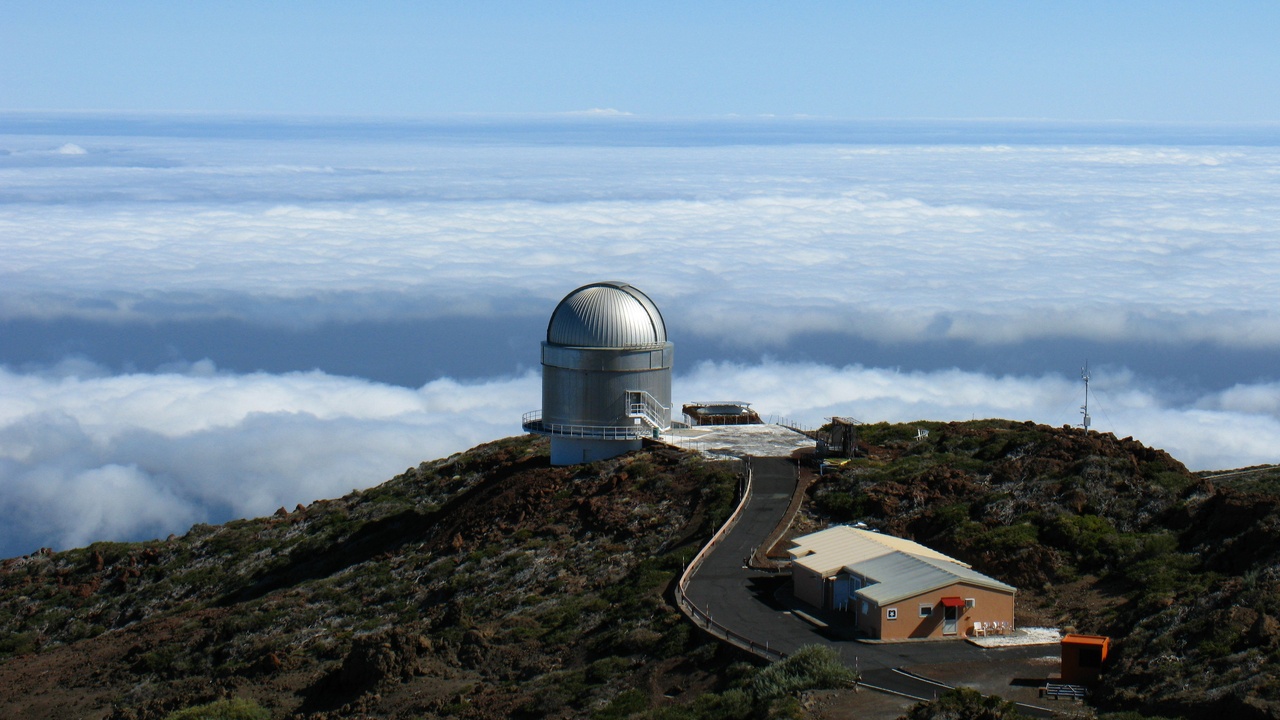
Visible and near-infrared light are the wavelengths humans know best, and they remain central because they deliver high angular resolution and rich diagnostic power for stars and galaxies. Ground-based optical/near-IR facilities pair large light-collecting apertures with technologies that counter atmospheric turbulence, letting telescopes reach fine detail and probe faint targets like distant galaxies or exoplanet atmospheres.
Atmospheric seeing blurs images, so site selection (high, dry locations) plus adaptive optics (real-time wavefront correction) are standard. Together these tools support everything from deep cosmological surveys to direct imaging of young exoplanets.
1. Reflecting Telescopes (Large Ground-Based Observatories)
Large reflecting telescopes collect huge amounts of light, allowing study of very faint objects and fine spatial detail. Modern 8–10 meter class reflectors—Keck’s twin 10‑m mirrors and the Very Large Telescope’s (VLT) 8.2‑m units—came online in the 1990s and 2000s and transformed observational capability.
Adaptive optics (AO) systems correct atmospheric blur in real time with deformable mirrors, often improving resolution to roughly 0.05 arcseconds under good conditions. That near-diffraction-limited performance lets Keck and VLT image exoplanets, resolve stellar populations in nearby galaxies, and rapidly follow up transient events.
Concrete examples: Keck Observatory (10 m) uses AO to study exoplanets and protoplanetary disks; the VLT array performs deep imaging and spectroscopy for galaxy evolution work; the Gran Telescopio Canarias (10.4 m) adds northern-hemisphere reach.
2. Spectrographs (Optical and Near-IR Spectroscopy)
A spectrograph spreads light into a spectrum so astronomers can measure composition, velocity, and temperature. Resolution varies by purpose: low-resolution survey instruments operate around R ≈ 100–2,000, while precision radial-velocity spectrographs reach R ≈ 50,000–100,000.
The Sloan Digital Sky Survey (SDSS) spectrographs—responsible for millions of spectra since major data releases began around 2000—mapped galaxy redshifts for cosmology. High-resolution instruments like Keck/HIRES and VLT/X-shooter detect tiny Doppler shifts used to find exoplanets and measure stellar abundances.
Spectroscopy underpins measurements from chemical fingerprints in stars to the expanding-universe redshift ladder, making it indispensable for both survey science and precision experiments.
Space-Based and High-Energy Observatories
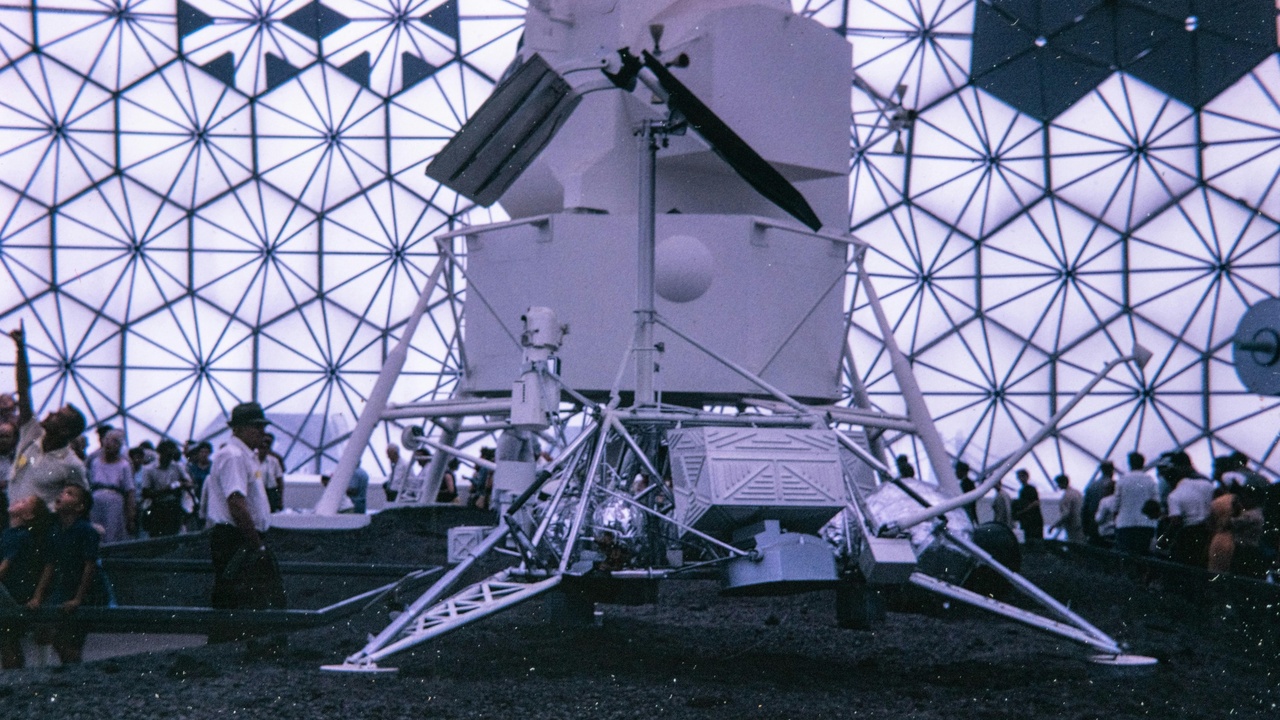
Putting instruments above the atmosphere opens wavelengths blocked or distorted from the ground—ultraviolet, X-ray, and far-infrared—and provides ultra-stable platforms for long exposures. Space observatories have produced some of the most iconic images and measurements in modern astronomy.
These facilities include optical/IR space telescopes and high-energy satellites that detect X-rays and gamma rays. They deliver diffraction-limited imaging without atmospheric seeing and capture transients that trigger follow-up across the globe.
3. Space Telescopes (Hubble, JWST)
Hubble, launched in 1990, demonstrated the leap in capability a telescope gains in orbit—most famously with the 1995 Hubble Deep Field that pushed galaxy counts and formation studies. The James Webb Space Telescope, launched on December 25, 2021, operates primarily in the infrared and extends that reach to first-light galaxies and detailed exoplanet atmospheres.
Space telescopes benefit from a stable point-spread function and continuous viewing windows, enabling deep-field surveys, precise photometry, and spectroscopy of faint targets. JWST, for example, has detected water and carbon-bearing molecules in exoplanet spectra, opening new windows on atmospheric chemistry.
4. X-ray and Gamma-ray Observatories
X-ray and gamma-ray satellites probe the hottest, most energetic processes in the universe. Chandra (launched 1999) and XMM-Newton (1999) observe keV X-rays from accreting black holes and supernova remnants, while the Fermi Gamma-ray Space Telescope (launched 2008) surveys the sky in MeV–GeV gamma rays.
These observatories provide angular resolutions and energy sensitivity appropriate to their bands and supply time-domain alerts for transients such as gamma-ray bursts and tidal disruption events. Results have clarified black hole accretion physics, neutron-star behavior, and high-energy particle acceleration.
Radio, Submillimeter, and Interferometric Instruments
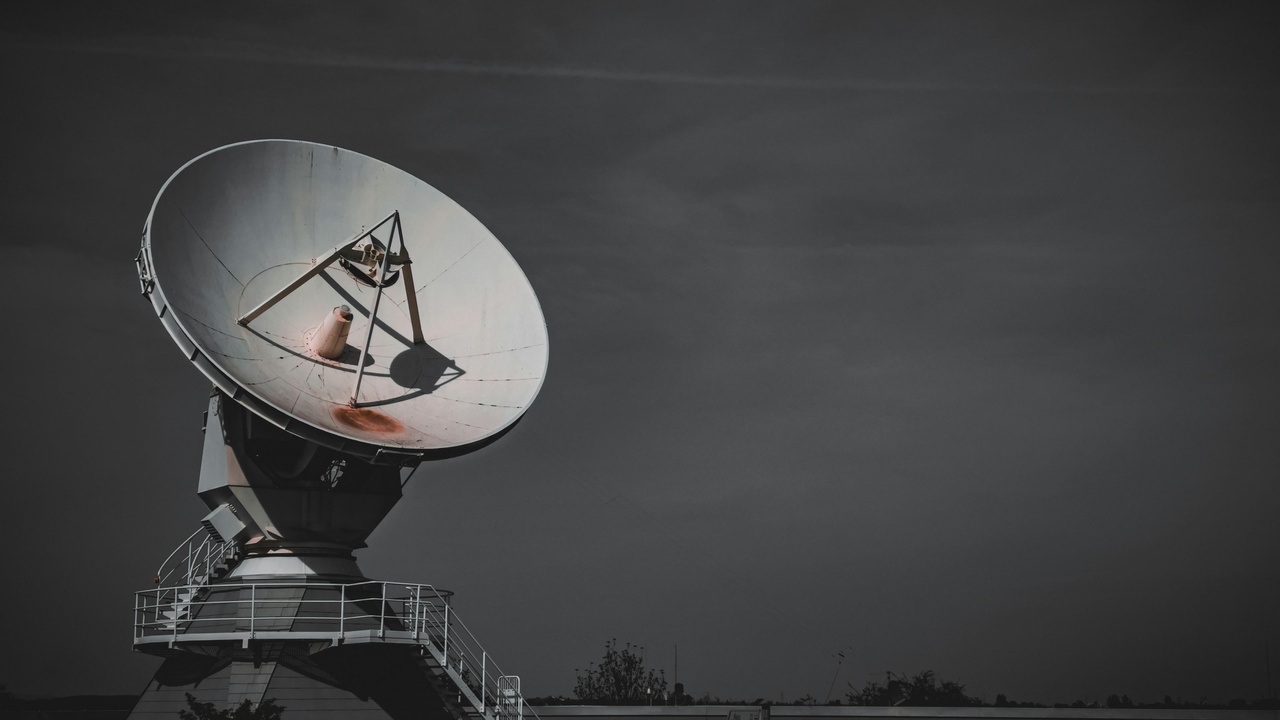
Radio and submillimeter instruments reveal cold gas, dust, and non-thermal emission that optical telescopes miss. Arrays and interferometry synthesize very large apertures for high angular resolution, letting astronomers map molecular clouds, time pulsars, and even image black hole shadows.
Because different physics show up at these wavelengths—molecular rotational lines, the 21‑cm hydrogen line, and synchrotron radiation—radio/submm facilities are essential for star-formation studies and precision timing.
5. Radio Telescopes and Arrays
Radio arrays combine multiple dishes to increase effective aperture and resolution. ALMA (Atacama Large Millimeter/submillimeter Array) uses 66 antennas with baselines up to about 16 km to map cold gas and protoplanetary disks. The Very Large Array (VLA) has 27 dishes and excels at sensitive imaging and timing.
The 21‑cm hydrogen line is a core tracer of neutral gas, and radio timing of pulsars enables stringent tests of general relativity. Applied examples include ALMA’s detailed images of planet-forming disks and VLA monitoring of pulsars and transients.
6. Very Long Baseline Interferometry (VLBI) and the Event Horizon Telescope
VLBI links radio telescopes across continents to synthesize Earth-sized apertures and reach micro-arcsecond angular resolution. Baselines as large as the planet yield the highest resolving power in astronomy.
The Event Horizon Telescope (EHT) used VLBI to produce the first image of a black hole shadow in M87 in April 2019. VLBI now supports precision astrometry, geodesy, and follow-up for multi-messenger events, demonstrating how global networks can probe the smallest astrophysical scales.
Detectors, Adaptive Optics, and Instruments for Direct Imaging
Behind every telescope are enabling technologies: detectors that turn photons into data, adaptive optics that sharpen images, and coronagraphs or starshades that block starlight for exoplanet viewing. Advances in these areas have directly enabled discoveries and seeded real-world applications.
Improved detectors reduce noise and raise sensitivity, AO restores sharp imaging from the ground, and coronagraphy/starshade concepts let us hunt faint companions next to bright stars. Many of these innovations have spun off into consumer cameras and medical imaging sensors.
7. Detectors: CCDs, CMOS, and Bolometers
Detectors are the workhorses that record photons and largely determine sensitivity. The charge‑coupled device (CCD) was invented in 1969 and became widespread in astronomy during the 1980s; modern CCDs often exceed 80% quantum efficiency at peak wavelengths.
For submillimeter work, bolometers measure tiny temperature rises from absorbed photons and were used on missions like Herschel and in ground-based submm instruments. Detector advances enabled digital camera sensors and improvements in medical imaging.
8. Adaptive Optics, Coronagraphs, and Starshades (Direct Imaging Tools)
Adaptive optics—real-time correction of atmospheric turbulence with deformable mirrors—became practical in the 1990s and can boost Strehl ratios dramatically, restoring near-diffraction-limited imaging from the ground. Coronagraphs and the starshade concept block or suppress starlight to reveal faint planets and disks.
Examples: Keck’s AO systems regularly enable high-contrast imaging; SPHERE on the VLT uses advanced coronagraphy to image exoplanets and circumstellar disks; the Roman Space Telescope includes a coronagraph technology demonstration in the 2020s aimed at direct exoplanet characterization.
Together, AO and coronagraphy have produced the first direct images of some exoplanets and clarified disk structures around young stars—key steps toward characterizing other worlds.
Summary
These instruments used in astronomy extend our senses across wavelengths and scales, and they work together—ground and space, single dishes and global arrays—to build a complete picture of the universe.
- Instruments expand accessible wavelengths and angular scales, revealing cold gas, high-energy processes, and faint distant galaxies.
- Advances in detectors, adaptive optics, and interferometry drive many headline discoveries and lead to practical spin-offs like improved camera and medical sensors.
- Space observatories (Hubble 1990, JWST 2021) and ground facilities (ALMA 66 antennas, VLA 27 dishes) complement one another for a multi-wavelength view.
- Global coordination—VLBI/EHT and multi-messenger follow-up—lets astronomers probe the smallest and most energetic phenomena, from black hole shadows to gamma-ray bursts.
- Want to explore more? Look up Hubble or JWST images, check out the EHT M87 result from April 2019, or try a citizen-science project such as Zooniverse.