When Howard Carter opened Tutankhamun’s tomb in November 1922, the world rediscovered ancient Egypt—and with it, a host of stories that reshaped how people imagined the past. The sealed chamber in the Valley of the Kings produced gold, paint, and an atmosphere that invited wild explanations. Newspapers ran with every rumor. Tourists and novelists filled in the blanks.
Why do those stories stick? Sensational finds, romantic travelers’ reports, and early archaeology that mixed science with spectacle all helped. Add film, fiction and national myths, and you get a set of persistent misunderstandings that outlived the evidence. Egypt’s recorded history stretches roughly 3,000 years, so change and complexity get flattened in short takes.
This piece dismantles ten common myths—drawing on archaeology, ancient texts, and modern scholarship—and groups them under construction and outsiders; rulers and identity; religion, death, and texts; and monuments and timelines. It also flags why correcting myths matters for how we teach, preserve, and visit the past. Expect clear examples (like the Giza workers’ village and the Rosetta Stone) and straightforward explanations of the facts behind the myths about ancient egypt. On to the list.
Construction, labor and the ‘alien’ idea
Big stone monuments invite big stories. People see scale and assume mystery: massive labor must mean slaves, or else something supernatural helped. But archaeology gives concrete traces of how projects were run. Excavations, inscriptions and logistical papyri show organization rather than otherworldly shortcuts.
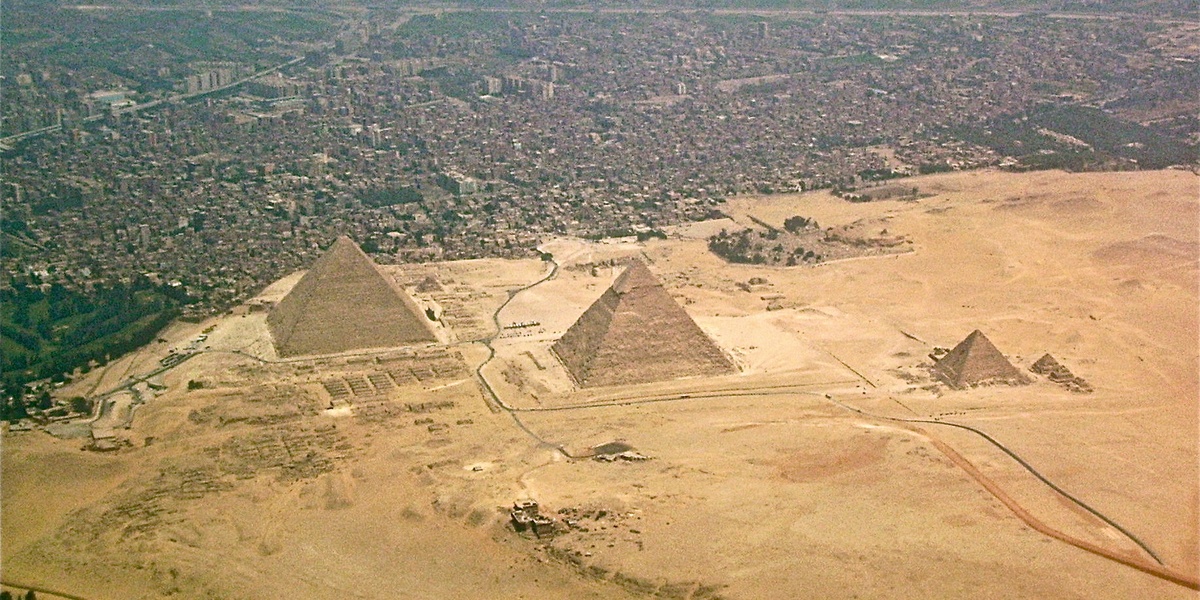
The peak of pyramid building took place in the 4th Dynasty, around c. 2600–2500 BCE. Work on Khufu’s Great Pyramid (often dated c. 2560 BCE) sits within a long local tradition that moves from mastaba tombs to step pyramids and then to true pyramids. Recent finds—workers’ settlements, burial plots for laborers, and administrative documents—supply real-world detail about who did the work and how they lived.
Below are two widespread—but incorrect—claims about construction and where the credit belongs.
1. The pyramids were built by slave labor
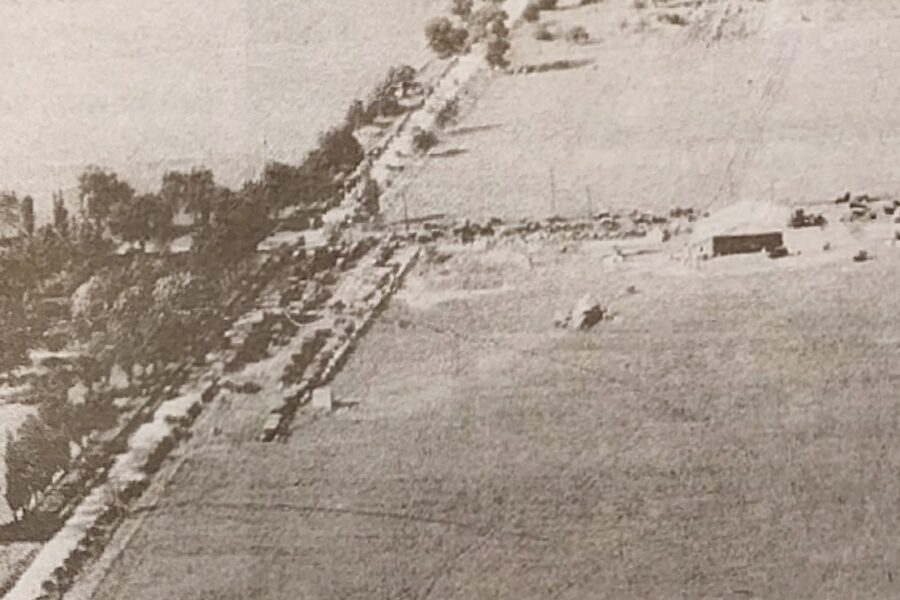
That image—chains, overseers and permanent chattel slavery—comes partly from ancient Greek writers and later imagination. Excavations at Giza by Mark Lehner and others revealed a sizeable workers’ village and nearby tombs for laborers dated to the Old Kingdom (4th Dynasty, c. 2600 BCE).
Archaeologists found bakeries, breweries and housing blocks. Human remains show healed injuries and diet consistent with provisioned workers. Estimates favor a seasonal workforce model—roughly 10,000–30,000 people rotating through building seasons—rather than a permanent slave population. Administrative records and tool marks back up organized teams and paid labor.
Concrete documentary evidence arrived with the Diary of Merer papyri, published in the 2010s. Merer’s log describes moving limestone and coordinating supplies for Khufu’s project. That kind of record points to logistics, management and state direction rather than anonymous, coerced labor. The myth of slave-built pyramids lingers because it’s dramatic—but it misreads the archaeological record and understates the Egyptians’ administrative skill.
2. Aliens or unknown advanced civilizations built the pyramids
Extraordinary claims draw attention. The idea that extraterrestrials or a lost super-civilization constructed the pyramids trades on awe rather than evidence. In fact, the material record shows progressive, local innovation.
Stonecutting left quarry marks and copper-tool traces on limestone and granite. Archaeologists and experimental teams have demonstrated how sledges, ropes and wooden rollers—sometimes lubricated with water—could move multi-ton blocks. Several experiments have reproduced these techniques successfully.
Architectural continuity matters too. The sequence from Early Dynastic mastabas to Djoser’s step pyramid (3rd Dynasty) and then to the smooth-sided pyramids of the 4th Dynasty shows incremental development. Suggesting alien help erases the ingenuity of Egyptian engineers and misrepresents African technical history.
Rulers, identity, and famous names
Leaders become shorthand for eras, so myths attach easily to their names. Simplified stories about ethnicity, gender and greatness obscure political nuance and historical contingency. Material culture, inscriptions and foreign accounts help restore that nuance.
This category tackles three persistent errors: Cleopatra’s origins, the assumed masculinity and uniform divinity of pharaohs, and the outsized reputation of Tutankhamun. Dates and dynasty names anchor each correction.
3. Cleopatra was Egyptian
Many assume Cleopatra VII was ethnically Egyptian. In fact, she belonged to the Ptolemaic dynasty, a Macedonian Greek ruling house established after Alexander the Great’s conquests in the late 4th century BCE.
Cleopatra VII ruled from 51–30 BCE and adopted Egyptian royal ritual and language to govern effectively. Coins and literary sources (like Plutarch and Cassius Dio) show her presenting herself within both Greek and Egyptian traditions. Genealogies and portraits point to Hellenistic ancestry rather than native Egyptian lineage.
The distinction matters today because modern identity politics and tourism narratives sometimes claim Cleopatra as symbolically ‘native’ without acknowledging the dynasty’s mixed cultural strategies. She was, however, fluent in Egyptian and used pharaonic imagery to legitimize her rule.
4. All pharaohs were male and universally worshipped as living gods
Pharaonic kingship combined political power and religious symbolism, but it was not uniform across time. Female rulers and varied theological roles complicate the picture.
Hatshepsut, who reigned about 1479–1458 BCE in the 18th Dynasty, styled herself with royal titulary and often appears in monumental reliefs wearing the traditional male regalia. She ran building programs and sent expeditions that rivaled those of male predecessors.
Across centuries, the king’s religious status shifted. Some periods emphasized divine kingship more explicitly; others highlighted administrative or military roles. Inscriptions and temple reliefs show a range of titles, co-regencies and female regents—proof that pharaonic authority was adaptable and not simply a single, immutable model.
5. Tutankhamun was one of Egypt’s greatest pharaohs
Tutankhamun’s modern fame rests largely on fortune rather than statecraft. He became pharaoh as a child and reigned around c. 1332–1323 BCE in the 18th Dynasty, dying in his late teens.
His tomb’s remarkable preservation—uncovered by Howard Carter in November 1922—gave the world a wealth of objects that shaped museum displays and public imagination. But politically he left few major reforms or temples compared with long-reigning rulers like Ramses II.
So his celebrity is a product of archaeological circumstance. The intact burial goods teach us about burial practice and material culture, but they don’t make him one of the most consequential pharaohs in terms of policy or empire-building.
Religion, death rituals, and written texts
Religion, mummification and hieroglyphs attract supernatural and mystical readings. Close study shows a complex pantheon, varied funerary practices, and a sophisticated writing system deciphered in the modern era.
We cover three myths here: that cats were universally worshipped as gods; that mummy curses explain early deaths; and that hieroglyphs were unreadable mystical marks until modern scholars solved them. Primary sources and artifacts ground each correction.
6. Egyptians worshipped cats as gods
The idea that all Egyptians bowed to cats as gods simplifies real practice. Certain deities, most famously Bastet, took feline forms or associations, and some cult centers treated animals as sacred.
Bubastis was the main cult center for Bastet, and archaeologists have excavated mummified cat cemeteries and votive offerings there. But animal cults existed alongside dozens of other deities—Ra, Osiris, Isis, Amun—and rituals varied by region and period.
Victorian travelers and Hollywood amplified the ‘cats as gods’ image because it made for striking stories. In reality, animals could be symbolic, sacred, or used in ritual, but that is not the same as blanket worship of household pets.
7. Mummy curses are real and killed early tomb explorers
The “mummy’s curse” became a global trope after the Tutankhamun discovery, especially once Lord Carnarvon died in April 1923. Newspapers were quick to link his death to the tomb, and fiction filled in the rest.
Statistical scrutiny shows no unusual mortality cluster among people associated with excavations. Many early deaths had mundane explanations—infectious disease, accidents, war. Environmental hazards in tombs (mold, bacteria) could cause illness, but that’s not the same as supernatural retribution.
The curse story did have real effects: museums tightened security, the public flocked to sensational exhibitions, and fiction cemented the trope. The press turned coincidence into legend, which then outlived the evidence.
8. Hieroglyphs were purely symbolic or magical and couldn’t be read until modern times
Hieroglyphs combine logograms (word signs), phonograms (sound signs) and determinatives (semantic classifiers). They are neither purely mystical nor wholly pictorial; they functioned as a full writing system across millennia.
The Rosetta Stone, discovered in 1799, provided the bilingual key scholars needed. Jean-François Champollion announced a working decipherment in 1822, showing how hieroglyphic signs represented sounds and meanings. Bilingual and trilingual inscriptions offered cross-checks.
Once Champollion’s method spread, translators could read inscriptions from temples, tombs and stelae. The result transformed Egyptology and turned mysterious pictures into readable texts that explain religion, administration and daily life.
Monuments, damage, and the timeline
Monuments invite origin stories about how and when they changed. Early travelers’ sketches and dated reports let us track damage and restoration. And contrary to the frozen-civilization image, Egypt experienced long-term change across millennia.
Here we address the Sphinx nose anecdote and the larger myth that Egyptian culture stayed the same for 3,000 years. Historical drawings, expedition records and a concise chronology show both tactical damage and deep transformation.
9. Napoleon’s troops shot off the Sphinx’s nose
The dramatic story that Napoleonic soldiers used the Sphinx for target practice during the 1798 expedition is durable, but the evidence contradicts it. Drawings by travelers like Frederik Norden in 1737 already show the Sphinx lacking its nose.
Damage likely occurred earlier—reports mention medieval iconoclasm, local vandalism or erosion as plausible causes. The Napoleonic tale stuck because it fit a Romantic narrative that cast Europe as both discoverer and destroyer of antiquity.
Using dated sketches and explorers’ accounts helps separate eyewitness evidence from later embellishment. Colonial-era sources are useful but require careful context and skepticism.
10. Ancient Egypt was static and unchanged for millennia
Seeing Egypt as frozen ignores a history of reform, foreign rule and artistic evolution. The record shows alternating periods of centralization and fragmentation and repeated waves of external influence.
Key chronological markers help: Early Dynastic around c. 3100 BCE; Old Kingdom roughly 2686–2181 BCE; New Kingdom about 1570–1069 BCE; and the Ptolemaic period from 305–30 BCE. Those labels mask lots of internal change but make the big shifts easier to follow.
Examples: Akhenaten’s religious reform (c. 1350 BCE) temporarily elevated a solar cult; the Hyksos introduced new military technologies in the Second Intermediate Period; later, Persians, Greeks under Alexander and Romans all reshaped institutions. The civilization adapted repeatedly rather than remaining fixed.
Summary
- Archaeology and texts overturn sensational claims: the Giza workers’ village and the Diary of Merer show organized labor, not mass chattel slavery.
- The Rosetta Stone and Champollion (1822) made hieroglyphs readable, and Cleopatra belonged to the Macedonian Ptolemaic line despite her Egyptian royal presentation.
- Mummy curses and alien-building stories grew from press, fiction and awe; they distract from real evidence and the Egyptians’ technical skill.
- Monuments and institutions changed across roughly 3,000 years of recorded history; sketches, inscriptions and chronology reveal dynamism, not stasis.
- Learning the truths behind these myths about ancient egypt enriches appreciation and supports responsible heritage practices: visit museums, read reliable translations of primary sources, and back ethical archaeology.