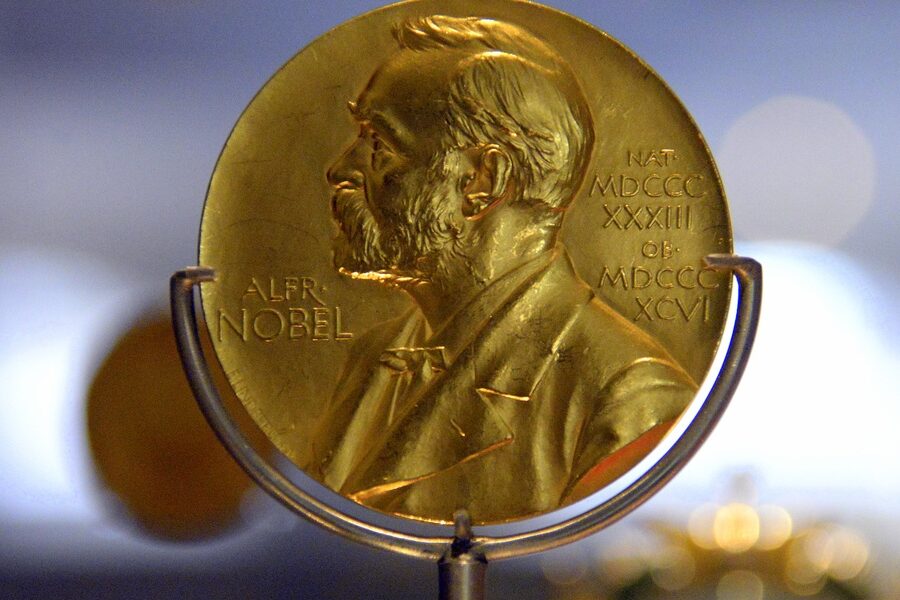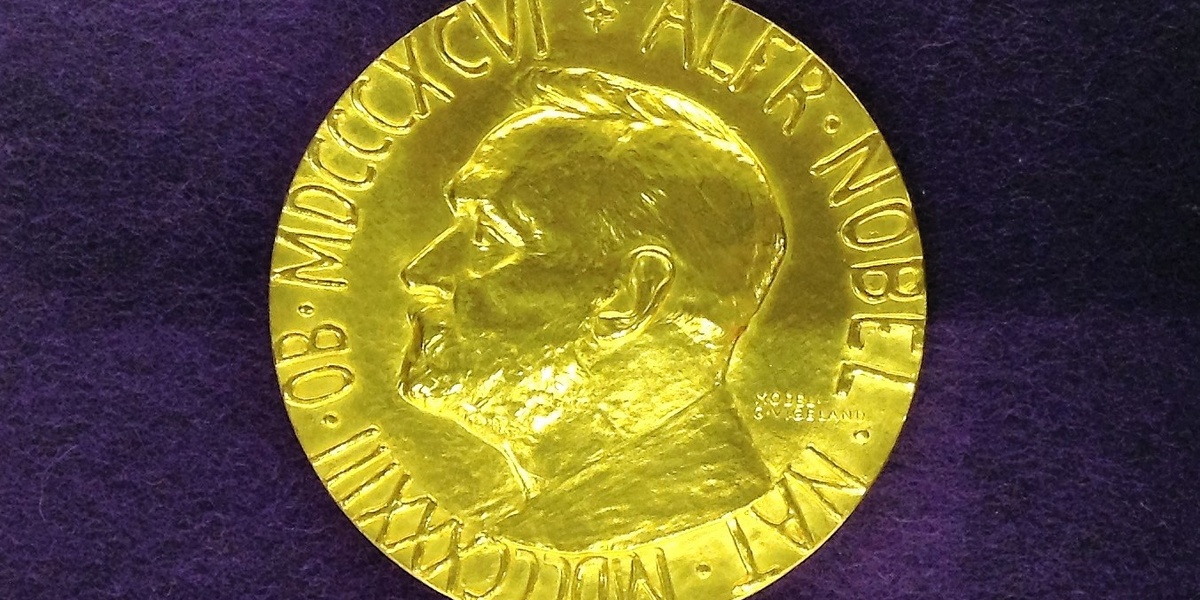
From Stockholm and Oslo to university labs and writers’ studies around the world, the 1992 Nobel announcements highlighted breakthroughs and voices that shaped science, culture and human rights. That year’s winners show how specialized research and powerful storytelling both earned global recognition.
There are 7 1992 Nobel Prize Winners, ranging from Derek Walcott to Rudolph A. Marcus. Each recipient is shown in a concise row with Prize category,Nationality,Citation (<=15 words) so you can quickly see the field, nationality and the reason they were honored — you'll find below.
Who were the seven winners and which categories did they represent?
The seven winners were Derek Walcott (Literature, Saint Lucia), Georges Charpak (Physics, France), Rudolph A. Marcus (Chemistry, Canada/USA), Edmond H. Fischer and Edwin G. Krebs (Physiology or Medicine, USA), Rigoberta Menchú (Peace, Guatemala) and Gary S. Becker (Economic Sciences, USA).
How should I read the short citation in the list?
Each citation is a compact phrase (up to 15 words) summarizing why the prize was awarded—use it to get immediate context, then consult linked sources for full citations and detailed explanations.
1992 Nobel Prize Winners
| Name | Prize category | Nationality | Citation (<=15 words) |
|---|---|---|---|
| Georges Charpak | Physics | France | For invention and development of particle detectors, notably the multiwire proportional chamber |
| Rudolph A. Marcus | Chemistry | Canada/United States | For contributions to the theory of electron transfer reactions in chemical systems |
| Edmond H. Fischer | Physiology or Medicine | United States | For discoveries concerning reversible protein phosphorylation as a biological regulatory mechanism |
| Edwin G. Krebs | Physiology or Medicine | United States | For discoveries concerning reversible protein phosphorylation as a biological regulatory mechanism |
| Derek Walcott | Literature | Saint Lucia | For a poetic oeuvre of great luminosity, sustained by a historical vision |
| Rigoberta Menchú Tum | Peace | Guatemala | For work for social justice and ethno-cultural reconciliation honoring indigenous peoples’ rights |
| Gary S. Becker | Economic Sciences | United States | For extending microeconomic analysis to human behavior, including discrimination, crime, and family organization |
Images and Descriptions

Georges Charpak
Georges Charpak was a French physicist who revolutionized particle detection with the multiwire proportional chamber. His detector dramatically improved particle tracking, increasing efficiency and resolution in accelerator experiments, and became widely adopted in high-energy physics instruments worldwide
Rudolph A. Marcus
Rudolph A. Marcus, a Canadian-born chemist, developed the Marcus theory explaining rates of electron transfer reactions. His work provided quantitative frameworks for redox processes and has deep influence in chemistry, electrochemistry, and biological electron-transfer systems
Edmond H. Fischer
Edmond H. Fischer, a biochemist, discovered reversible protein phosphorylation with Edwin Krebs. Their findings revealed a fundamental regulatory mechanism controlling metabolism and cell signaling, profoundly shaping molecular biology and medicine
Edwin G. Krebs
Edwin G. Krebs, an American biochemist, shared the Nobel with Edmond Fischer for revealing reversible protein phosphorylation. His work established how enzymes turn cellular processes on and off, informing research on hormones, cancer, and signal transduction
Derek Walcott
Derek Walcott, a Saint Lucian poet and playwright, won for his luminous poetry blending Caribbean history, classical forms, and personal memory. His work explores colonial legacy, identity, and cultural fusion with vivid imagery and formal mastery
Rigoberta Menchú Tum
Rigoberta Menchú Tum, a K’iche’ Maya activist from Guatemala, campaigned for indigenous rights, social justice, and reconciliation after civil conflict. Her testimony and advocacy raised global awareness of human rights abuses and indigenous issues in Latin America
Gary S. Becker
Gary S. Becker, an American economist, extended microeconomic analysis to human behavior—family decisions, crime, and discrimination—applying rational choice models to social issues. His work broadened economics’ scope and influenced public policy and interdisciplinary social science