Cell membranes are dynamic landscapes where lipids and proteins interact to control transport, signaling, and adhesion. Spotting the different protein types makes it easier to understand how cells respond to their environment and maintain internal order.
There are 15 Types of Membrane Proteins, ranging from ABC transporters to Type II membrane protein. For each entry we list Class/topology,Function,Typical location so you can compare roles and locations — you’ll find below.
How do different types of membrane proteins affect cellular processes?
Different classes—like channels, transporters, receptors, and anchors—determine how signals, ions, and molecules cross or interact with the membrane; for example, ABC transporters actively move substrates using ATP, while Type II membrane proteins have a single membrane-spanning region with their N-terminus inside the cytosol, influencing localization and interaction partners.
How can I tell which type a membrane protein is from sequence or structure?
Look for hallmarks such as the number and orientation of transmembrane helices, signal peptides, conserved motifs (e.g., ATP-binding cassette for ABC transporters), and topology predictions from sequence tools; combining bioinformatic predictions with experimental data (glycosylation, protease protection, cryo-EM) gives the most reliable classification.
Types of Membrane Proteins
| Name | Class/topology | Function | Typical location |
|---|---|---|---|
| Type I membrane protein | single-pass (N-extracellular), signal peptide | receptor, enzyme, adhesion | plasma membrane, secretory pathway, eukaryotes |
| Type II membrane protein | single-pass (N-cytosolic), signal-anchor | receptor, enzyme, trafficking | plasma membrane, Golgi, eukaryotes |
| Multi-pass alpha-helical proteins | multi-pass alpha-helical (polytopic) | transporters, channels, receptors, enzymes | all cellular membranes, all life domains |
| GPCR (G protein-coupled receptor) | seven-transmembrane (7TM) alpha-helical, multi-pass | receptor (G-protein/cell signalling) | plasma membrane, eukaryotes |
| Ion channels | multi-pass, pore-forming (alpha-helical/subunit) | selective ion conductance/channel | plasma membrane, excitable cells, bacteria |
| Transporters (carriers / SLC) | multi-pass alpha-helical carriers (alternating-access) | substrate transport (uni/anti/symport) | plasma membrane, mitochondria, bacteria, eukaryotes |
| ABC transporters | multi-pass with cytosolic ATP-binding domains | ATP-driven transport/export (import in bacteria) | plasma membrane, bacteria, eukaryotes |
| Beta-barrel outer membrane proteins | beta-barrel transmembrane (integral) | porins, receptors, import channels | bacterial outer membrane, mitochondria, chloroplasts |
| GPI-anchored proteins | GPI-anchored (glycosylphosphatidylinositol) outer leaflet | enzymes, adhesion, complement regulators | plasma membrane outer leaflet, eukaryotes |
| Lipid-anchored (acylated) proteins | acylated (myristoyl/palmitoyl) peripheral inner leaflet | signalling, scaffolding, membrane targeting | inner leaflet plasma membrane, eukaryotes |
| Prenylated proteins | prenylated (farnesyl/geranylgeranyl) lipid-anchored | membrane targeting, small GTPase signalling | inner leaflet plasma membrane, endomembranes, eukaryotes |
| Tail-anchored proteins | C-terminal single-pass (tail-anchor) integral | membrane insertion, fusion, targeting (SNAREs) | ER, mitochondria, peroxisomes, eukaryotes |
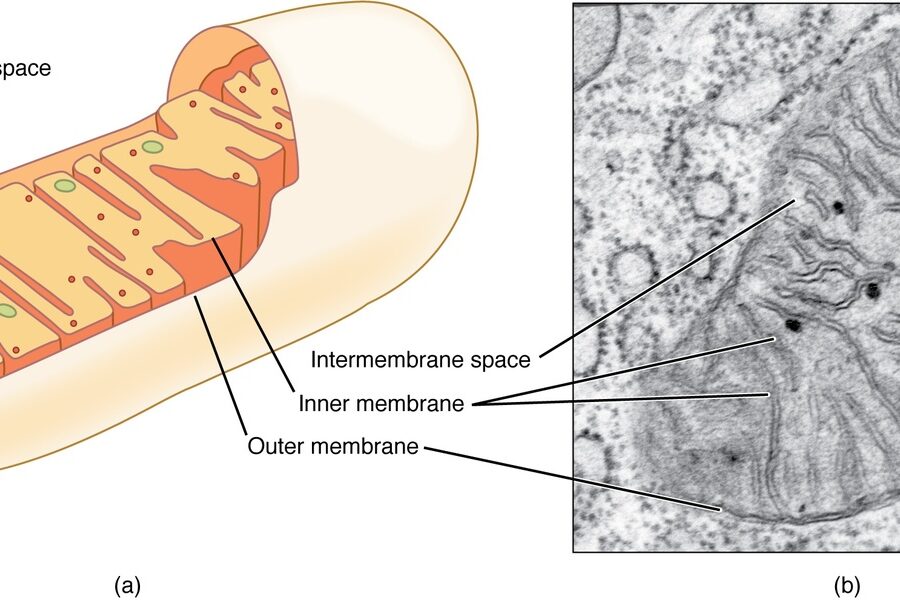
| Respiratory chain complexes | multi-subunit integral enzyme complexes | electron transport, proton pumping, ATP synthesis | inner mitochondrial membrane, bacterial plasma membrane |
| Lipid flippases/scramblases | multi-pass transmembrane scramblases/flippases | move lipids between leaflets (asymmetry) | ER, plasma membrane, Golgi, eukaryotes |
| Cell adhesion molecules (CAMs) | single-pass (often type I) extracellular domains | cell–cell adhesion, signalling, ECM binding | plasma membrane, multicellular eukaryotes |
Images and Descriptions

Type I membrane protein
Single-pass proteins with luminal/extracellular N-terminus and cleaved signal peptide. They act as receptors, enzymes, adhesion molecules; examples include EGFR and LDL receptor. Common in plasma membrane and secretory pathway; important for signaling, uptake, and cell–cell interactions.
Type II membrane protein
Single-pass proteins with cytosolic N-terminus and luminal/extracellular C-terminus using a signal-anchor. They mediate receptor, enzymatic, or trafficking roles; examples include the transferrin receptor and some Golgi enzymes. Important for polarized orientation and intracellular sorting.
Multi-pass alpha-helical proteins
Broad class of integral proteins with multiple transmembrane alpha-helices. They perform transport, signalling, or enzymatic tasks; examples include SLC transporters, many ion channels, and cytochrome oxidase subunits. Ubiquitous across bacteria, archaea, and eukaryotes.
GPCR (G protein-coupled receptor)
Seven-transmembrane G protein-coupled receptors detect diverse ligands and activate intracellular G-proteins. Classic examples are rhodopsin and beta-adrenergic receptors. They mediate vision, smell, hormones, and drug responses and form the largest receptor family in eukaryotes.
Ion channels
Proteins that form aqueous pores permitting selective ion flow across membranes. Includes voltage-gated, ligand-gated, and K+/Na+/Ca2+ channels; examples Kv1, Nav1, and nAChR. Essential for electrical signalling, homeostasis, and neurotransmission. Channels may be single polypeptides or multi-subunit assemblies.
Transporters (carriers / SLC)
Carrier proteins that alternately expose binding sites to each side of the membrane to move substrates. Examples include GLUT glucose transporters and mitochondrial ADP/ATP carriers. They control nutrient uptake, metabolite exchange, and drug transport.
ABC transporters
ATP-binding cassette transporters couple ATP hydrolysis to substrate translocation. They export toxins, lipids, and drugs; bacterial members import nutrients. Examples include P-glycoprotein and CFTR, clinically important in multidrug resistance and cystic fibrosis.
Beta-barrel outer membrane proteins
Beta-barrel proteins span membranes with antiparallel beta-strands forming a pore or scaffold. Found in bacterial outer membranes and organelles; examples include OmpF, FepA, Tom40, and VDAC. They mediate nutrient uptake, protein import, and metabolite exchange.
GPI-anchored proteins
Proteins covalently attached to the outer leaflet by a GPI glycolipid. They act as enzymes, adhesion molecules, or immune regulators; examples include alkaline phosphatase and CD59. GPI anchors allow lateral mobility and release by phospholipases.
Lipid-anchored (acylated) proteins
Proteins tethered to membranes via covalent fatty-acyl modifications like myristoylation or palmitoylation. Examples include Src-family kinases and some G proteins. Acylation regulates membrane affinity, subcellular targeting, and signal complex assembly.
Prenylated proteins
Proteins with C-terminal prenyl groups that anchor them to membranes; common in Ras and Rab GTPases. Prenylation is crucial for vesicle trafficking, signal transduction, and cycling between membrane and cytosol.
Tail-anchored proteins
Small to medium proteins with a single C-terminal transmembrane helix anchoring them post-translationally. Includes SNAREs and tail-anchored chaperones. They mediate membrane fusion, protein targeting, and organelle biogenesis. Recognition and insertion pathways differ from co-translational routes, ensuring correct topology.
Respiratory chain complexes
Multi-subunit membrane protein complexes (Complexes I–IV, ATP synthase FO) catalyze electron transfer and proton translocation to power ATP synthesis. Examples include cytochrome c oxidase and Complex I. They are central to cellular respiration and energy metabolism.
Lipid flippases/scramblases
Membrane proteins that translocate phospholipids between bilayer leaflets, regulating membrane asymmetry. ATP-dependent P4-ATPases flip lipids; TMEM16 and Xkr families scramble lipids. Important for membrane biogenesis, apoptosis, coagulation, and influence membrane curvature and protein distribution.
Cell adhesion molecules (CAMs)
Cell-surface single-pass proteins mediating cell–cell and cell–matrix adhesion; includes cadherins, integrins, selectins. They have large extracellular domains for binding and cytosolic tails for signalling, crucial for tissue architecture, development, and immune interactions.