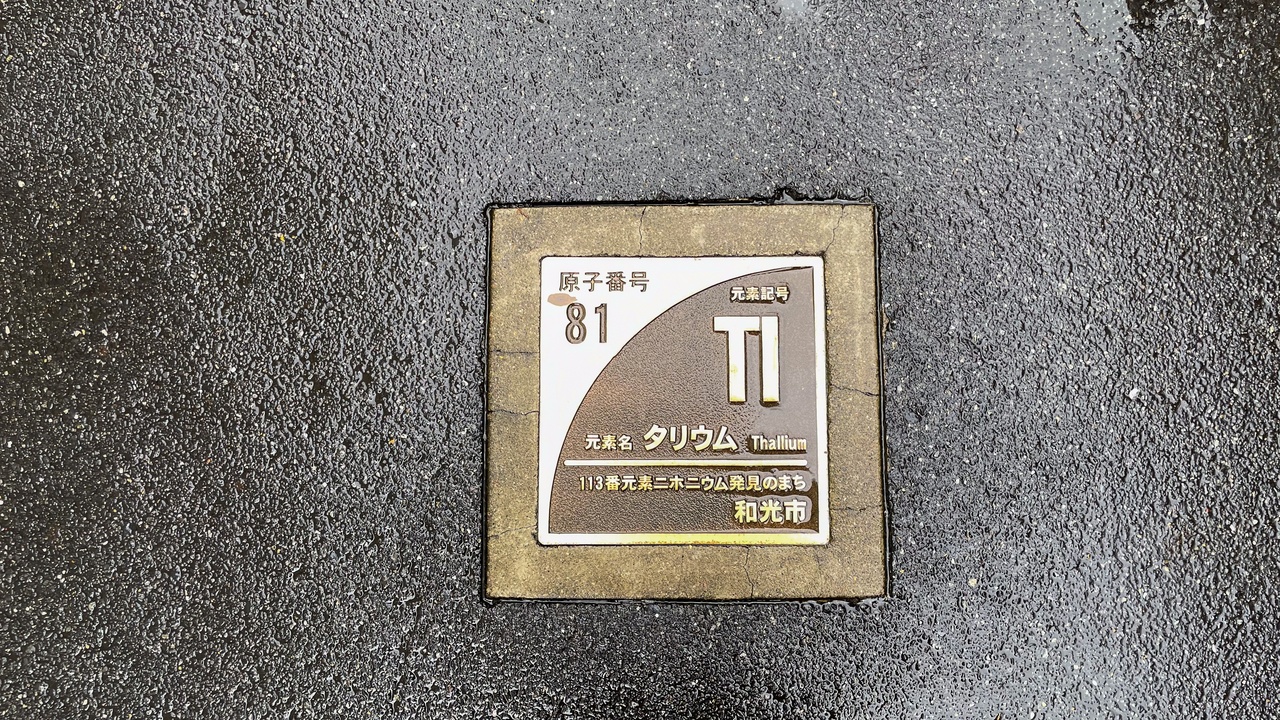
In 1861 the chemist William Crookes spotted a bright green line in a flame test and discovered thallium, an element whose name comes from the Greek word for “green shoot.” A post-transition metal with atomic number 81, thallium most commonly appears in the +1 oxidation state but also shows +3 chemistry under strong oxidizing conditions. That unusual variable valence is why thallium compounds turn up in niche industrial applications (most famously as an activator in radiation detectors), in materials research, and unfortunately in toxicology reports. Below, we’ll look at eight elements thallium reacts with; we’ll group reactions into halogens, chalcogens, and heavier chalcogen analogs.
Reactions with Halogens
With fluorine, chlorine, bromine and iodine, thallium typically forms monovalent halides (TlX) that reflect the stable +1 state, while trivalent halides (TlX3) exist in some cases but are less robust. Halogenation can occur by direct combination of the metal with elemental halogen or by salt metathesis in solution, and the resulting halides are important in optics and detector technology as well as in fundamental solid-state studies. Handle them carefully: halides combine thallium’s high toxicity with halogen-specific hazards like corrosiveness or fluoride reactivity.
1. Fluorine (Tl + F → TlF / TlF3)
Thallium reacts with fluorine to give TlF as the common fluoride, illustrating dominant thallium(I) chemistry; under strong fluorinating conditions higher oxidation-state species such as TlF3 can be generated. TlF is ionic in character and is reasonably stable and water-soluble compared with some heavier halides.
In practice, TlF appears mainly in laboratory synthetic chemistry and as an intermediate for preparing other thallium salts. Because both fluoride and thallium present distinct health hazards, work with Tl–F chemistry follows strict respiratory and waste controls.
2. Chlorine (Tl + Cl → TlCl / TlCl3)
TlCl is the typical chloride and is readily prepared by treating thallium oxide or metal with hydrochloric acid or by direct chlorination. TlCl reflects the +1 oxidation state; TlCl3 is known but hydrolyzes or decomposes more readily in aqueous media, so it’s less commonly encountered.
TlCl crystals are used as precursors in synthesis and studied for their ionic lattice properties. Chlorination reactions using Cl2 gas require standard precautions against corrosive, toxic chlorine alongside thallium containment measures.
3. Bromine (Tl + Br → TlBr)
TlBr is a well-known thallium bromide that forms readily and crystallizes into structures studied for optical and electronic behavior. It shows semiconducting tendencies and has attracted attention in detector and infrared-optics research.
Researchers have explored TlBr as a direct-conversion radiation-detection material, although TlI-doped NaI remains the dominant scintillator in many applications. As with other halogenations, bromine handling demands fume hood work and protective gear to manage both bromine vapor and thallium exposure.
4. Iodine (Tl + I → TlI; thallium as a dopant in NaI(Tl))
TlI is one of the best-known thallium halides and exists stably as a monovalent iodide with distinctive crystal structures used in materials research. Its relatively low lattice energy gives TlI properties useful in crystal engineering and optics.
Most people encounter thallium in the context of NaI(Tl) scintillation detectors: sodium iodide crystals doped with trace thallium activator dramatically improve light yield for gamma-ray detection. Typical thallium doping levels are on the order of 0.01–0.1 mol%—small but critical to detector performance. Handle TlI with the same caution as other thallium salts due to systemic toxicity risks.
Reactions with Chalcogens: Oxygen and Sulfur
Thallium reacts with oxygen and sulfur to form oxides and sulfides that showcase the +1 and +3 oxidation states. These chalcogen compounds—from Tl2O and Tl2O3 to Tl2S—are precursors in synthetic chemistry and have been studied for electronic and optical properties, but all require careful handling because of thallium’s toxicity.
5. Oxygen (Tl + O → Tl2O, Tl2O3)
When exposed to air or heated in oxygen, thallium oxidizes to give Tl2O (thallium(I) oxide) and, under stronger oxidizing conditions, Tl2O3 (thallium(III) oxide). These two oxides illustrate the +1 and +3 states in oxide chemistry.
Tl2O often serves as a starting material for preparing other thallium salts, while Tl2O3 has attracted attention in solid-state electronic studies. Both oxides are handled as toxic materials; laboratory preparation typically uses controlled heating and enclosed apparatus to limit airborne contamination.
6. Sulfur (Tl + S → Tl2S and related sulfides)
Thallium combines with sulfur to form sulfides such as Tl2S by direct combination of the elements or by metathesis reactions in solution. These sulfides are typically dark-colored and can display semiconducting or photoconductive behavior.
Laboratory syntheses often involve heating stoichiometric mixtures of thallium and sulfur or precipitation from thallium salt solutions. Researchers have explored Tl2S and mixed sulfides in experimental electronic contexts, but none are widespread industrial products because of toxicity and cost considerations.
Reactions with Selenium and Tellurium
Moving down the chalcogen column, thallium forms selenides and tellurides with layered or complex crystal structures. Compounds such as TlSe and Tl–Te phases have been investigated for semiconducting and thermoelectric properties, making them subjects of solid-state research rather than mass-market chemistry.
7. Selenium (Tl + Se → TlSe and related selenides)
Thallium reacts with selenium to form TlSe and other selenides; TlSe is known for a layered structure and semiconducting traits that drew solid-state attention during the mid- to late 20th century. Researchers have examined its band structure and transport behavior in experimental settings.
Selenides of thallium are mainly of research interest—for example, single-crystal studies and thin-film experiments—rather than broad industrial use. As always, selenium and thallium safety protocols are essential when preparing or characterizing these materials.
8. Tellurium (Tl + Te → Tl–Te alloys and compounds)
Thallium forms a family of tellurides (for example, phases such as Tl5Te3 and related alloys) that have been explored for electrical and thermoelectric behavior. Some Tl–Te phases show metallic or semi-metallic conductivity and have appeared in experimental thermoelectric studies.
Work on tellurides is almost entirely at the laboratory and research-alloy level. Because tellurides can include heavy elements with complex phases, studies focus on fundamental properties rather than large-scale manufacturing—and disposal of spent materials must follow hazardous-waste rules because of thallium content.
Summary
- Thallium is dominated by the +1 oxidation state but shows +3 chemistry under strong oxidizers, which shapes the kinds of compounds it forms.
- Halogens produce common TlX salts—TlF, TlCl, TlBr, TlI—with practical roles in optics and radiation detectors (notably NaI(Tl) scintillators doped at roughly 0.01–0.1 mol%).
- Chalcogens yield oxides and sulfides (Tl2O, Tl2O3, Tl2S) that function as precursors or semiconducting materials, while heavier chalcogenides (TlSe, Tl5Te3) sit in advanced materials research.
- Because thallium compounds are highly toxic, anyone working with these materials should consult material safety data sheets (MSDS) and follow institutional and regulatory guidance for handling, storage, and disposal.
These eight elements thallium reacts with illustrate both practical uses and significant hazards; respect safety procedures and consult specialist sources before attempting laboratory work with thallium compounds.