The Central African Republic sits where savanna, rainforest and river systems meet, creating a patchwork of habitats that support diverse bird communities. Local observers, museum records and recent surveys together paint a clearer picture of which species occur year-round and which pass through on migration.
There are 35 Birds of the Central African Republic, ranging from African Fish Eagle to White-backed Vulture. Each entry below is organized with Scientific name,Status,Length (cm) so you can quickly compare identification, conservation status and size; you’ll find below.
How current and reliable are the status labels in this list?
Status labels reflect the best available published assessments and national checklists at the time of compilation, but conservation categories can change; use the list as a starting point and confirm any critical or time-sensitive details against the IUCN Red List or recent regional publications.
Can I use this list to plan where and when to see these birds?
Yes, as a species reference—length and status help set expectations—but it doesn’t replace site-level guidance or seasonal timing; pair the list with local guides, recent trip reports and park information to plan logistics and maximize sightings.
Birds of the Central African Republic
| Common name | Scientific name | Status | Length (cm) |
|---|---|---|---|
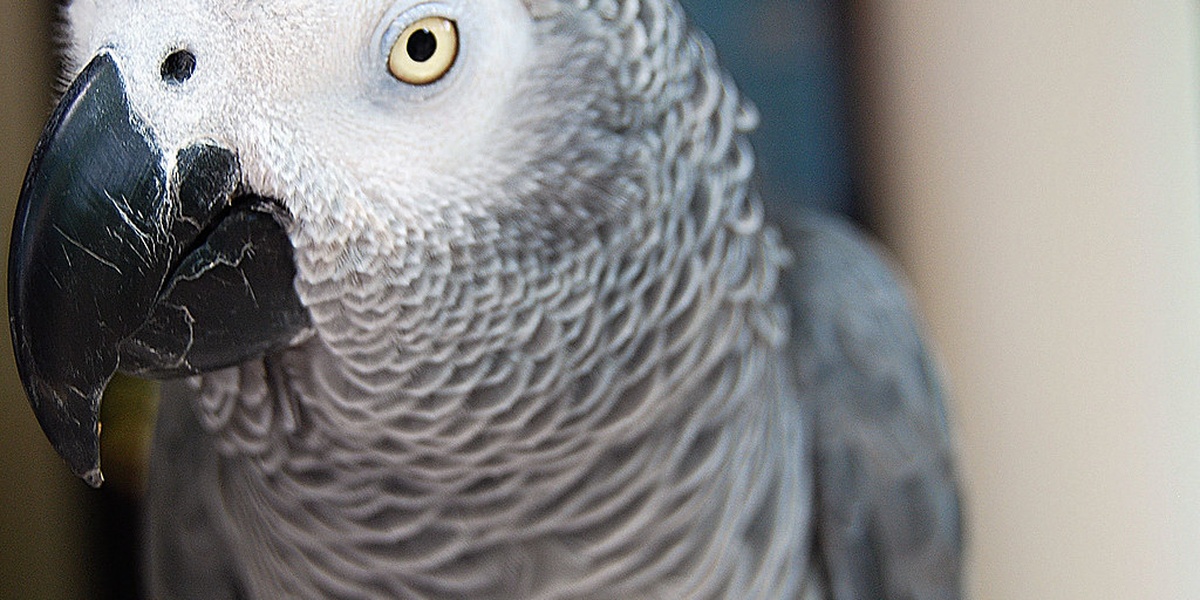
| African Grey Parrot | Psittacus erithacus | Resident; IUCN Endangered | 33 |
| Senegal Parrot | Poicephalus senegalus | Resident | 23 |
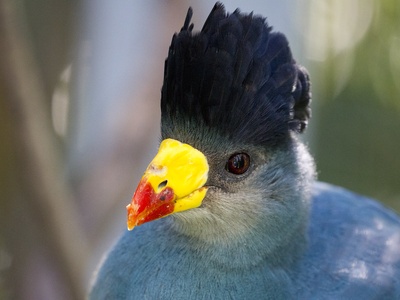
| Great Blue Turaco | Corythaeola cristata | Resident | 70 |
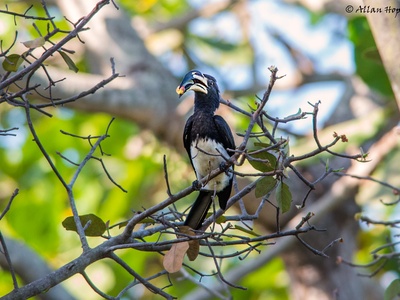
| African Pied Hornbill | Lophoceros fasciatus | Resident | 50 |
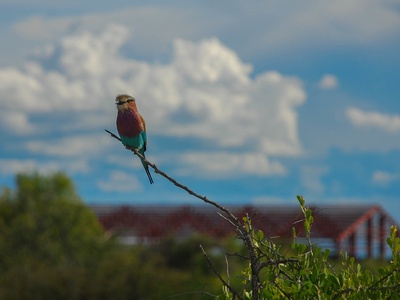
| Lilac-breasted Roller | Coracias caudatus | Resident | 36 |
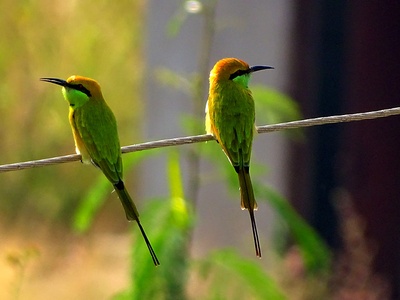
| Little Bee-eater | Merops pusillus | Resident | 15 |
| European Bee-eater | Merops apiaster | Migratory spring-autumn visitor | 29 |
| Carmine Bee-eater | Merops nubicus | Local migrant/colonial breeder | 24 |
| Pied Kingfisher | Ceryle rudis | Resident | 30 |
| Malachite Kingfisher | Corythornis cristatus | Resident | 13 |
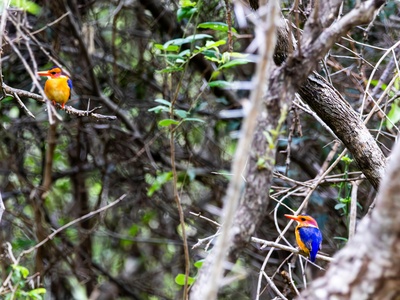
| African Pygmy Kingfisher | Ispidina picta | Resident | 12 |
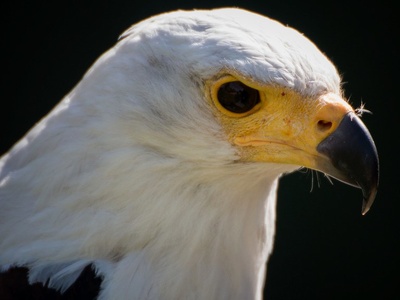
| African Fish Eagle | Haliaeetus vocifer | Resident; IUCN Least Concern | 63 |
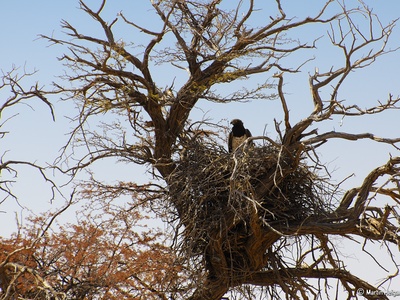
| Martial Eagle | Polemaetus bellicosus | Rare resident; IUCN Vulnerable | 85 |
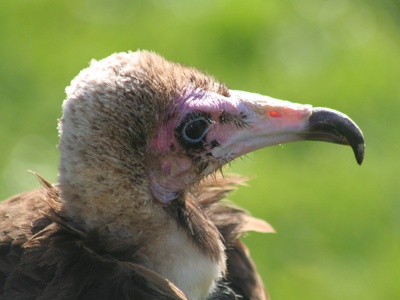
| Hooded Vulture | Necrosyrtes monachus | Resident; IUCN Critically Endangered | 55 |
| White-backed Vulture | Gyps africanus | Resident; IUCN Critically Endangered | 95 |
| African Harrier-Hawk | Polyboroides typus | Resident | 55 |
| Shikra | Accipiter badius | Resident | 30 |
| Black Kite | Milvus migrans | Resident/Migrant | 55 |
| African Jacana | Actophilornis africanus | Resident | 26 |
| Great Egret | Ardea alba | Resident | 100 |
| Little Egret | Egretta garzetta | Resident | 60 |
| Goliath Heron | Ardea goliath | Resident | 120 |
| Hadada Ibis | Bostrychia hagedash | Resident | 65 |
| African Sacred Ibis | Threskiornis aethiopicus | Resident | 70 |
| Helmeted Guineafowl | Numida meleagris | Resident | 53 |
| Spur-winged Lapwing | Vanellus spinosus | Resident | 30 |
| Common Bulbul | Pycnonotus barbatus | Resident | 18 |
| African Paradise Flycatcher | Terpsiphone viridis | Resident | 22 |
| Piapiac | Ptilostomus afer | Resident | 34 |
| Pied Crow | Corvus albus | Resident | 45 |
| Village Weaver | Ploceus cucullatus | Resident | 15 |
| Red-billed Quelea | Quelea quelea | Resident | 12 |
| Red-billed Firefinch | Lagonosticta senegala | Resident | 11 |
| Green Wood Hoopoe | Phoeniculus purpureus | Resident | 34 |
| Crested Guineafowl | Guttera pucherani | Resident | 44 |
Images and Descriptions
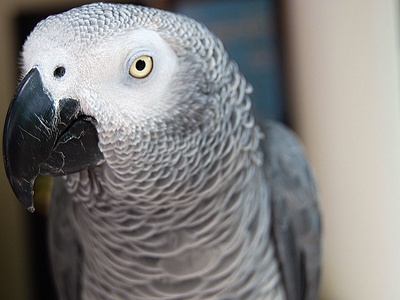
African Grey Parrot
Large grey parrot of southern CAR rainforests and riverine forest, common in protected areas and forest edges. Known for intelligence and vocal mimicry; heavily trapped for the pet trade, populations declining and legally protected locally and internationally.
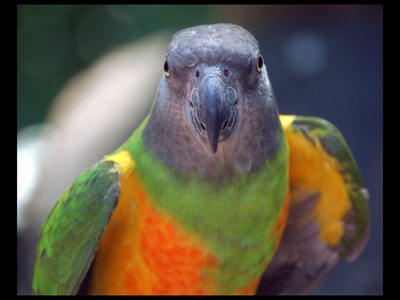
Senegal Parrot
Small, stocky parrot of savannas and woodland across northern and central CAR. Frequent in cultivated areas and gallery forests with green plumage and yellow belly. Common and adaptable, often tolerated despite some local trapping pressure.
Great Blue Turaco
Huge, colorful turaco of southern CAR lowland rainforest and gallery forest, mostly seen in canopy. Notable cobalt-blue plumage, crest and loud deep calls. Locally common in intact forest but sensitive to logging and habitat fragmentation.
African Pied Hornbill
Medium-sized hornbill of south-central CAR forests and forest-savanna mosaic, black-and-white with a large curved bill. Nests in tree cavities and forages on fruit and insects; important seed disperser but declines where large trees are removed.
Lilac-breasted Roller
Vividly colored roller of open savanna and woodland across CAR, especially in north and central regions. Perches conspicuously to sally for insects; admired by birdwatchers for striking plumage and usually common where habitat remains intact.
Little Bee-eater
Small, slender bee-eater in woodland, forest edges and riverbanks throughout CAR. Bright green with chestnut crown and slender bill; hawks insects from low perches. Resident and widespread, tolerant of light disturbance and visible in many habitats.
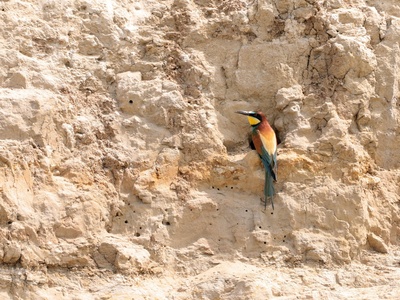
European Bee-eater
Colorful migrant passing through CAR during migration, favoring savanna, open woodland and river corridors. Striking multicolored plumage and aerial insect-catching acrobatics. Seen mainly during spring and autumn migrations; not a year-round resident.
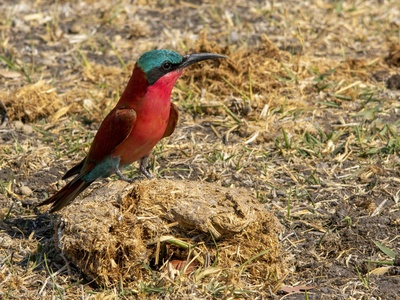
Carmine Bee-eater
Striking red bee-eater that nests in sandy riverbanks, recorded along major rivers in CAR. Breeds in colonies and feeds on flying insects over floodplains. Locally common where riverine cliffs exist, vulnerable to disturbance of nesting banks.
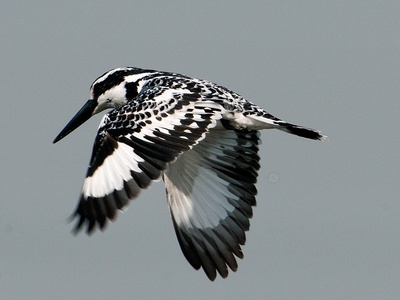
Pied Kingfisher
Black-and-white kingfisher of rivers, lakes and wetlands across CAR. Hovers and dives for fish, often seen along the Ubangi and Sangha rivers. Widespread and common in suitable waters, easily observed by birdwatchers on waterways.
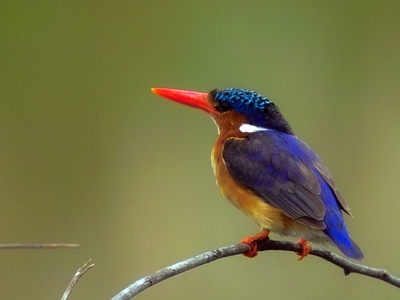
Malachite Kingfisher
Tiny bright kingfisher occurring on forest streams, swamps and river edges mainly in southern CAR. Brilliant blue upperparts and orange underparts; quick to dart from low perches to catch small fish and insects. Local and patchily common.
African Pygmy Kingfisher
Little forest kingfisher of shaded streams and secondary growth in southern CAR. Rufous underparts and vivid blue back; secretive but detectable by soft calls. Prefers quiet forested waterways and is vulnerable to deforestation and stream degradation.
African Fish Eagle
Iconic raptor of rivers and large lakes across CAR, especially near major river systems. White head and chest contrast with brown body and a loud, familiar call. Top freshwater predator; populations stable in well-protected areas.
Martial Eagle
Powerful, large eagle of open savanna and woodland in northern and central CAR with dark upperparts and barred underparts. Hunts mammals and large birds. Rare and declining due to persecution and habitat change, seen mostly in large protected areas.
Hooded Vulture
Small, hooded vulture common near villages and savanna in CAR, scavenging at carcasses and markets. Rapid declines from poisoning and trade have made it rare in many areas; locally protected but critically endangered globally.
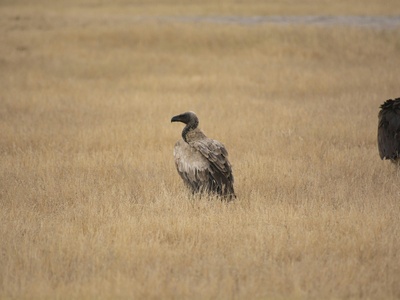
White-backed Vulture
Large, tree-and-cliff-nesting vulture across CAR’s savannas and woodlands, often seen circling over carcasses. Essential scavenger but severely reduced by poisoning and trade. Now critically endangered and a focus for urgent conservation in key sites.
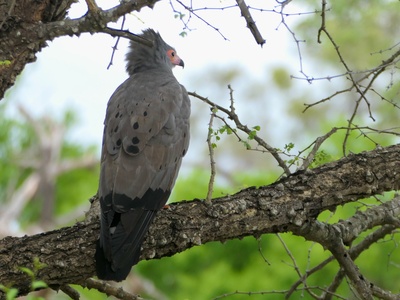
African Harrier-Hawk
Also called Gymnogene; slender grey hawk with long legs in forests and woodland across CAR. Climbs into epiphytes and nests to extract prey; versatile diet includes birds and reptiles. Widespread and adaptable, often near human settlements.
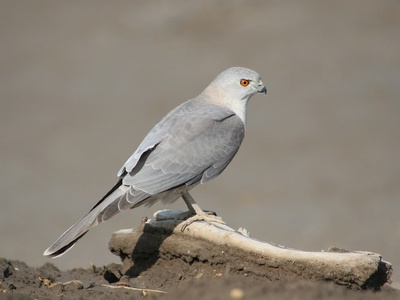
Shikra
Small accipiter of woodland, savanna and towns across CAR with grey upperparts and barred underparts. Agile hunter of small birds and large insects, frequently seen perched and performing short bursts of flight. Common and widespread near edges.
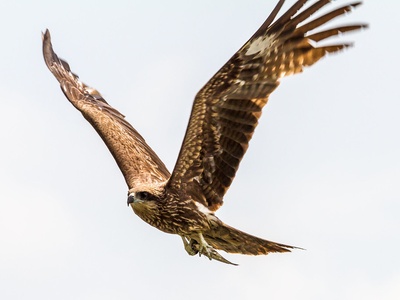
Black Kite
Familiar medium-sized raptor in CAR’s towns, savanna and wetlands, often scavenging around humans. Dark brown with slightly forked tail; includes both resident and migratory populations. Tolerant of human landscapes but locally affected by poisoning.
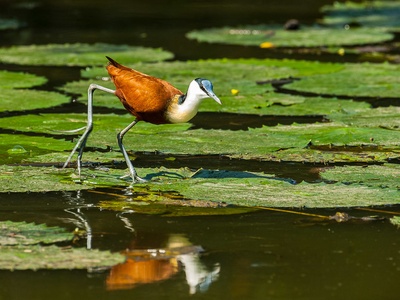
African Jacana
Long-toed wader of marshes, flooded grassland and swampy rivers in southern CAR. Walks on floating vegetation to feed on insects and small invertebrates. Locally common in the wet season but reliant on intact wetland habitat.
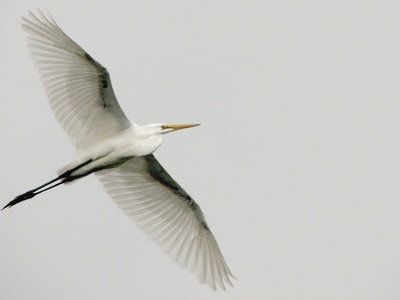
Great Egret
Tall white heron of marshes, riverbanks and flooded zones across CAR. Long neck and dagger-like bill used for fishing; occurs on wetlands and floodplains. Widespread where water persists, visible at larger wetlands and river margins.
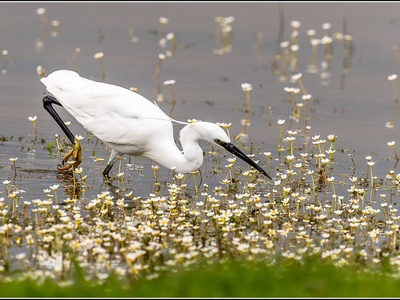
Little Egret
Smaller white heron frequenting streams, wetlands and flooded fields across CAR. Slender black bill and yellow feet; active fisher in shallow waters. Common locally during wet season and adaptable to a range of wetland habitats.
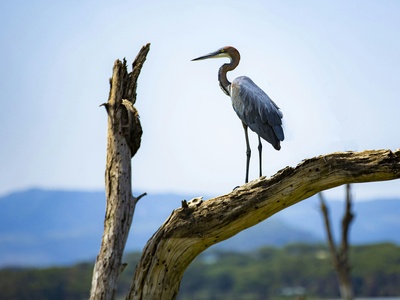
Goliath Heron
World’s largest heron found on large rivers and wetlands in southern CAR. Massive, slow stalking heron that takes very large fish; rusty and grey plumage. Scarce but regular in major river systems, vulnerable to wetland loss.
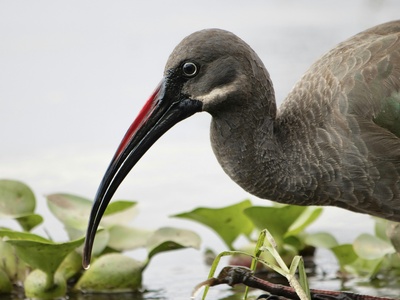
Hadada Ibis
Large noisy ibis of savanna, open woodland and wet clearings throughout CAR. Grey-brown plumage and loud ‘ha-da-da’ calls; forages on soil and shallow water for invertebrates. Common in many habitats, often near villages and gardens.
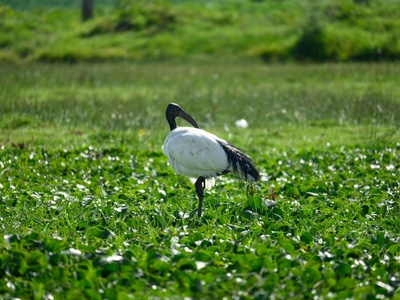
African Sacred Ibis
White ibis with bare black head found on marshes, floodplains and rivers in CAR. Feeds on invertebrates and small fish and is gregarious around wetlands. Widespread where water exists and commonly seen in flocks.
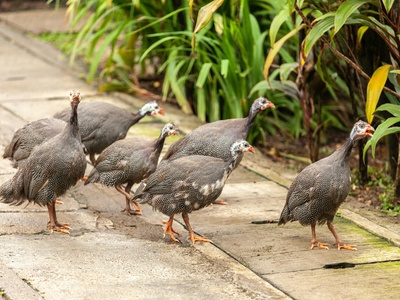
Helmeted Guineafowl
Stocky, ground-dwelling bird of savanna and open woodland across CAR with spotted dark plumage and bare helmeted head. Forages in groups for seeds and insects. Common in suitable habitats and often found near human settlements.
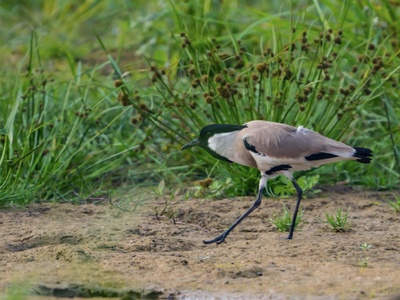
Spur-winged Lapwing
Bold wader of wetlands, riverbanks and floodplains found across CAR. Black-and-white plumage with a small wing spur used in displays and defense; frequently defends territory near water. Common on muddy shores and flooded fields.
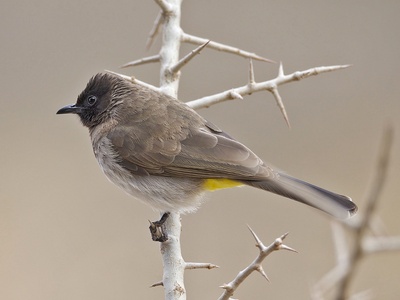
Common Bulbul
Widespread, vocal songbird of savanna, gardens and forest edges across CAR. Drab olive-brown plumage with darker head; adaptable and often seen in towns and villages. A familiar and resilient species in many habitats.
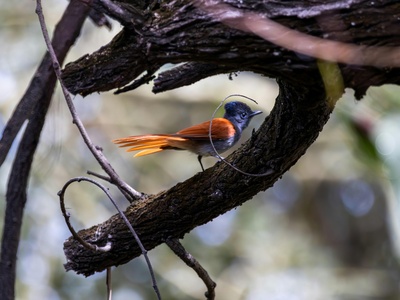
African Paradise Flycatcher
Elegant flycatcher of woodland and forest edges in southern and central CAR. Males may show long tail streamers and rufous or white morphs; hawks insects on the wing. Locally common in suitable wooded habitats and riparian corridors.
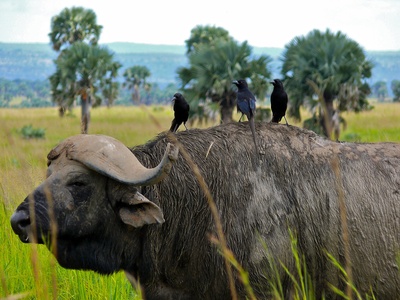
Piapiac
Glossy black corvine bird of open savanna and gallery forest in CAR. Social and often follows large mammals, feeding on insects and carrion stirred up by hoofed animals. Common in central and northern regions and notable for inquisitive behavior.
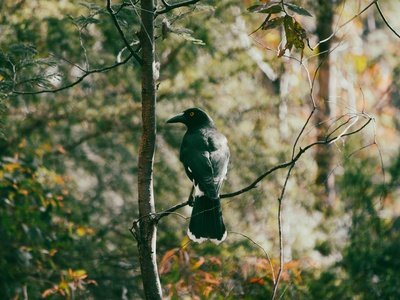
Pied Crow
Black crow with a distinctive white breast patch inhabiting towns, farmland and savanna across CAR. Omnivorous and bold around people; often scavenges and nests on buildings or tall trees. Very adaptable and common near human habitation.
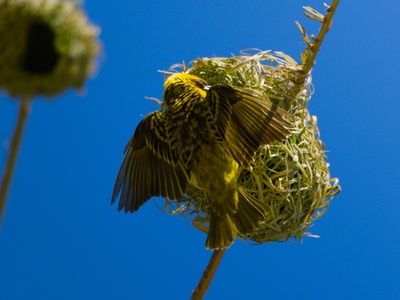
Village Weaver
Small, gregarious weaver of savanna, cultivated land and village edges throughout CAR. Males build conspicuous woven nests; bright yellow breeding plumage. Abundant and well-known, often forming large colonies near water or trees.
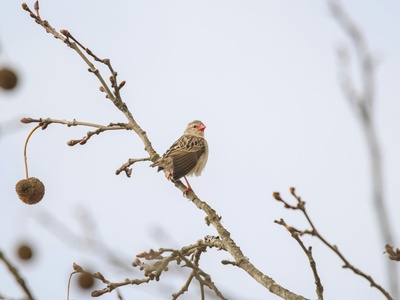
Red-billed Quelea
Tiny, highly gregarious seed-eating finch found in flocks across grassland and agricultural areas of CAR. Noted as one of the world’s most numerous birds; forms huge roosts and can impact cereal crops seasonally.
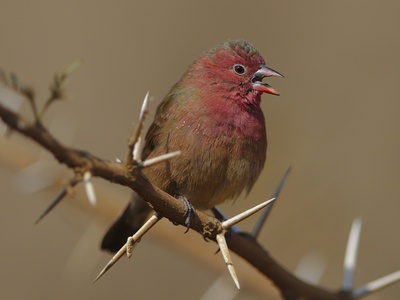
Red-billed Firefinch
Small, colorful estrildid finch occurring in savanna, scrub and village gardens across CAR. Males show rich red underparts and bill; feeds on small seeds and insects. Common and often seen near human habitation.
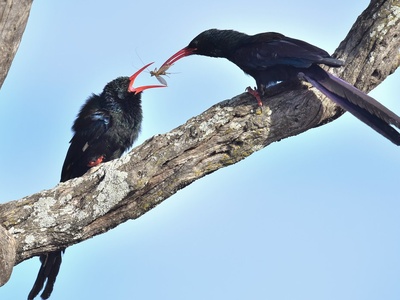
Green Wood Hoopoe
Long-tailed, metallic-green hoopoe of woodland and savanna in CAR. Forages on tree trunks and branches for insects and arthropods, often in small family groups. Common locally and noted for hopping along branches rather than probing the ground.

Crested Guineafowl
Forest-dwelling guineafowl in southern CAR lowland forests and dense gallery woodland. Black spotted plumage with a distinctive crest and bare facial skin; moves in small groups feeding on invertebrates. Prefers intact forested tracts and is less common near heavy clearance.