Paraguay’s mix of dry Chaco, seasonally flooded wetlands and subtropical forest supports a rich variety of birdlife, from riverine specialists to wide-ranging waterbirds. This compilation brings together species recorded across those habitats to make field reference and basic conservation checks easier for observers and researchers.
There are 59 Birds of Paraguay, ranging from the river-edge Amazon Kingfisher to the marsh-dwelling Wood Stork. For each species you’ll find the Scientific name, IUCN status and Range/habitat — details you’ll find below.
How should I use the columns when looking up a species?
The Scientific name gives precise identification for comparison with field guides and databases, the IUCN status summarizes conservation concern, and the Range/habitat notes where and in what conditions the bird is typically seen; use them together to plan where and when to search.
When and where in Paraguay am I most likely to see the widest variety of species?
Visit wetlands and river corridors in the dry season for waterbirds and shorebirds, and explore eastern subtropical forests during breeding months for forest specialists; combining river margins, marshes and forest edges across regions yields the broadest species mix.
Birds of Paraguay
| Common name | Scientific name | IUCN status | Range/habitat |
|---|---|---|---|
| Greater Rhea | Rhea americana | Near Threatened | Chaco, Eastern, open grasslands |
| Red-legged Seriema | Cariama cristata | Least Concern | Chaco, open savanna, grasslands |
| Chaco Chachalaca | Ortalis canicollis | Least Concern | Gran Chaco, woodland edges, scrub |
| Jabiru | Jabiru mycteria | Least Concern | Pantanal, wetlands, riversides |
| Maguari Stork | Ciconia maguari | Least Concern | Wetlands, Pampas, marshes |
| Wood Stork | Mycteria americana | Near Threatened | Pantanal, eastern wetlands, rivers |
| Roseate Spoonbill | Platalea ajaja | Least Concern | Rivers, marshes, Pantanal, eastern wetlands |
| Cocoi Heron | Ardea cocoi | Least Concern | Rivers, wetlands, Pantanal, eastern Paraguay |
| Great Egret | Ardea alba | Least Concern | Wetlands, rivers, flooded fields |
| Cattle Egret | Bubulcus ibis | Least Concern | Open fields, pasturelands, wetlands |
| Southern Screamer | Chauna torquata | Least Concern | Wet grasslands, marshes, Pantanal |
| Black-necked Stilt | Himantopus mexicanus | Least Concern | Wetlands, shallow pools, Pantanal |
| Southern Lapwing | Vanellus chilensis | Least Concern | Open fields, pastures, wetlands |
| Toco Toucan | Ramphastos toco | Least Concern | Eastern forests, gallery forest, woodland edges |
| Hyacinth Macaw | Anodorhynchus hyacinthinus | Vulnerable | Chaco, Pantanal, gallery forests |
| Blue-and-yellow Macaw | Ara ararauna | Least Concern | Riverside forest, eastern Paraguay, gallery forests |
| Scarlet Macaw | Ara macao | Least Concern | Eastern Paraguay, remnant Atlantic Forest |
| Monk Parakeet | Myiopsitta monachus | Least Concern | Open country, towns, gardens, Chaco |
| Ringed Kingfisher | Megaceryle torquata | Least Concern | Rivers, large streams, wetlands |
| Amazon Kingfisher | Chloroceryle amazona | Least Concern | Rivers, streams, flooded forest edges |
| Green Kingfisher | Chloroceryle americana | Least Concern | Small streams, rivers, forested waterways |
| Rufous-tailed Jacamar | Galbula ruficauda | Least Concern | Forest edges, gallery forest, eastern Paraguay |
| Burrowing Owl | Athene cunicularia | Least Concern | Open grasslands, pampas, Chaco |
| Ferruginous Pygmy-Owl | Glaucidium brasilianum | Least Concern | Woodland edges, savanna, riparian forest |
| Crested Caracara | Caracara plancus | Least Concern | Open country, grasslands, farmland, Chaco |
| Roadside Hawk | Rupornis magnirostris | Least Concern | Open woodland, forest edges, agricultural areas |
| Black Vulture | Coragyps atratus | Least Concern | Across Paraguay, open areas, wetlands |
| Turkey Vulture | Cathartes aura | Least Concern | Widespread, open country, forests edges |
| Great Kiskadee | Pitangus sulphuratus | Least Concern | Rivers, woodlands, urban parks, edges |
| Tropical Kingbird | Tyrannus melancholicus | Least Concern | Open habitats, forest edges, towns |
| Fork-tailed Flycatcher | Tyrannus savana | Least Concern | Open country, pampas, urban areas |
| Vermilion Flycatcher | Pyrocephalus rubinus | Least Concern | Open habitats, river edges, agricultural areas |
| Rufous Hornero | Furnarius rufus | Least Concern | Open woodland, fields, parks, towns |
| Lineated Woodpecker | Dryocopus lineatus | Least Concern | Woodland, gallery forest, parks |
| Squirrel Cuckoo | Piaya cayana | Least Concern | Forest edges, gardens, woodlands |
| Guira Cuckoo | Guira guira | Least Concern | Open country, savanna, scrub, farmland |
| Smooth-billed Ani | Crotophaga ani | Least Concern | Open habitats, pastures, wetlands |
| Eared Dove | Zenaida auriculata | Least Concern | Widespread, fields, urban areas, scrub |
| Picui Ground-Dove | Columbina picui | Least Concern | Open scrub, savanna, farmland |
| Ruddy Ground-Dove | Columbina talpacoti | Least Concern | Open country, gardens, forest edge |
| Rock Pigeon | Columba livia | Least Concern | Urban areas, towns, farms (introduced) |
| Rufous-bellied Thrush | Turdus rufiventris | Least Concern | Woodland, parks, gardens, eastern Paraguay |
| Pale-breasted Thrush | Turdus leucomelas | Least Concern | Woodland, gardens, riparian forest |
| Sayaca Tanager | Thraupis sayaca | Least Concern | Open woodland, gardens, urban parks |
| Blue-gray Tanager | Thraupis episcopus | Least Concern | Woodland edges, gardens, towns |
| Palm Tanager | Thraupis palmarum | Least Concern | Forest edge, palm groves, parks |
| Silver-beaked Tanager | Ramphocelus carbo | Least Concern | Forest edges, secondary growth, eastern Paraguay |
| White-bearded Manakin | Manacus manacus | Least Concern | Forest edges, secondary growth, eastern Paraguay |
| Barn Swallow | Hirundo rustica | Least Concern | Across Paraguay, open habitats, near water |
| Southern Rough-winged Swallow | Stelgidopteryx ruficollis | Least Concern | Rivers, open areas, marsh edges |
| House Wren | Troglodytes aedon | Least Concern | Woodland edges, gardens, parks |
| Glittering-bellied Emerald | Chlorostilbon lucidus | Least Concern | Gardens, forest edge, clearings, eastern Paraguay |
| White-collared Swift | Streptoprocne zonaris | Least Concern | Over forests, cliffs, rivers, throughout Paraguay |
| Barred Antshrike | Thamnophilus doliatus | Least Concern | Forest edge, secondary growth, scrub |
| Black-capped Donacobius | Donacobius atricapilla | Least Concern | Marshes, reedbeds, river margins |
| Red-crested Cardinal | Paroaria coronata | Least Concern | Open woodland, gardens, riparian zones |
| Magpie Tanager | Cissopis leverianus | Least Concern | Forest edge, second growth, riverine woodland |
| Shiny Cowbird | Molothrus bonariensis | Least Concern | Open country, farmland, savanna |
| Common Pauraque | Nyctidromus albicollis | Least Concern | Woodland edges, savanna, gardens, near water |
Images and Descriptions
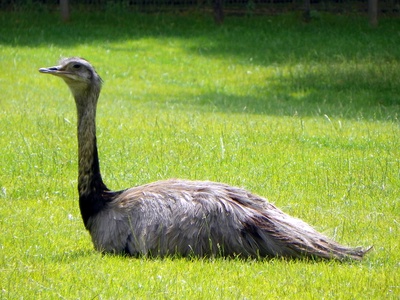
Greater Rhea
Huge, flightless bird with long neck and legs, gray-brown plumage and strong running gait. Often seen in open pampas and dry Chaco, feeding on plants and small animals. Vulnerable to hunting and habitat conversion for agriculture.
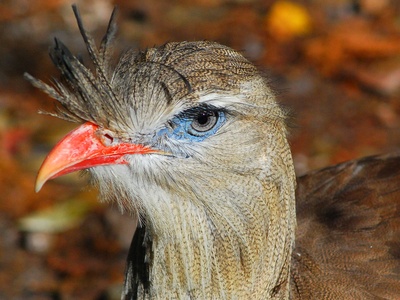
Red-legged Seriema
Tall, long-legged bird with crest and loud yelping calls, distinctive reddish legs and curved bill. Forages on ground for insects, snakes and small vertebrates. A charismatic grassland species often seen in pairs or family groups.
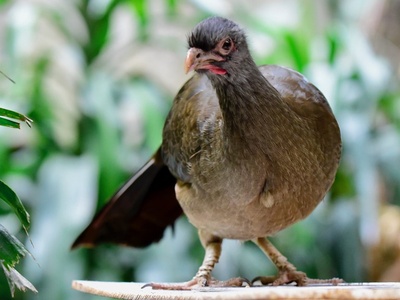
Chaco Chachalaca
Noisy, chicken-like gamebird with brownish plumage and pale throat. Lives in dry thorny woodland and scrub, moving in small flocks. Vocal at dawn and suitable indicator of healthy Chaco habitats.
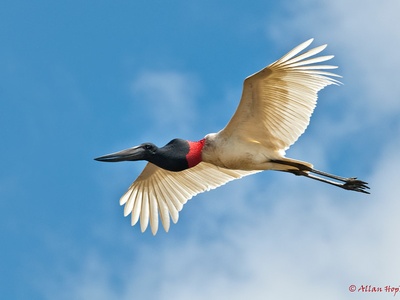
Jabiru
Large stately stork with black neck collar and red face patch, long bill and white body. Wades in shallow wetlands feeding on fish and amphibians. Localized and reliant on extensive marshes; sensitive to wetland loss.
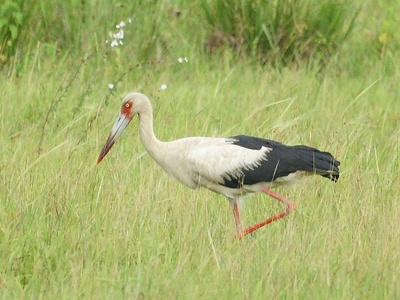
Maguari Stork
Large white stork with long legs and heavy bill, often seen in open marshes and flooded fields. Opportunistic feeder on fish, frogs and invertebrates. Common in seasonally flooded areas and agricultural wetlands.
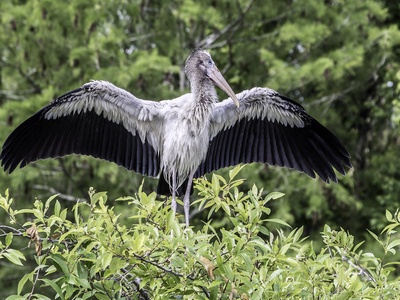
Wood Stork
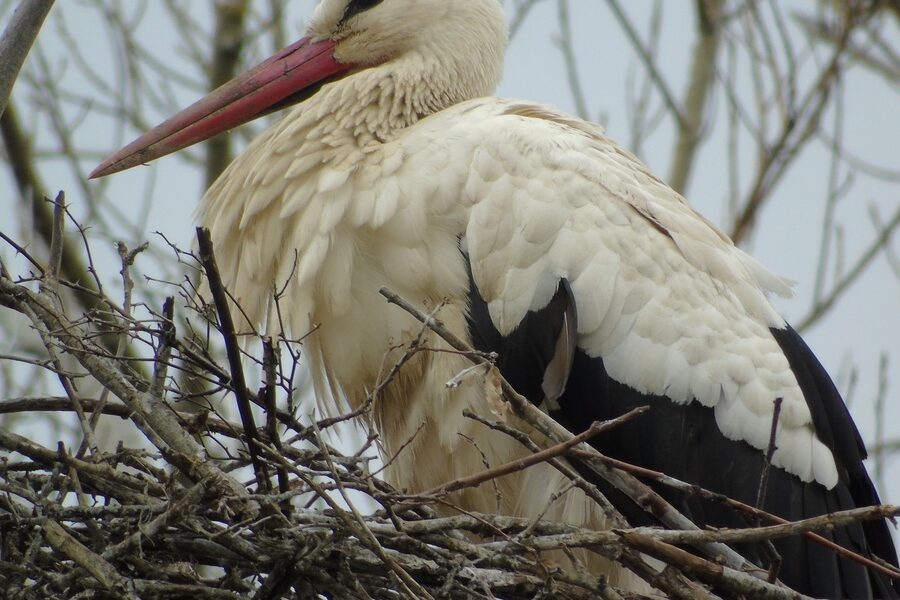
Big, white stork with bare dark head and thick bill; feeds by tactile sweeping in shallow water. Breeds in large colonies in flooded forests and is vulnerable due to wetland degradation.
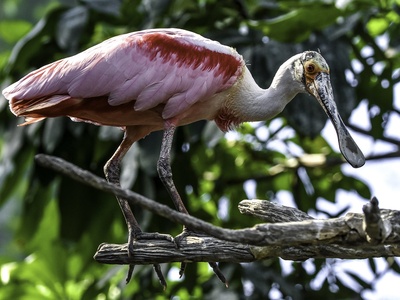
Roseate Spoonbill
Pink, spoon-billed wader with distinctive spatulate bill used to sweep for crustaceans and small fish. Found in shallow wetlands and mangroves, often in mixed colonies with herons and ibises; eye-catching and unmistakable.
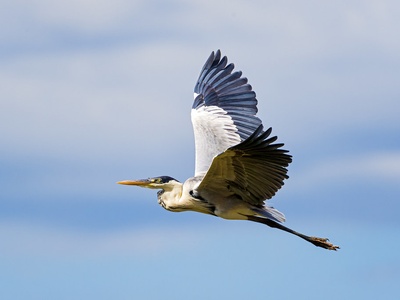
Cocoi Heron
Large grey-and-white heron with long neck and dagger bill, frequently seen standing motionless at water edges. Feeds on fish and amphibians; common along rivers and flooded savannas across Paraguay.
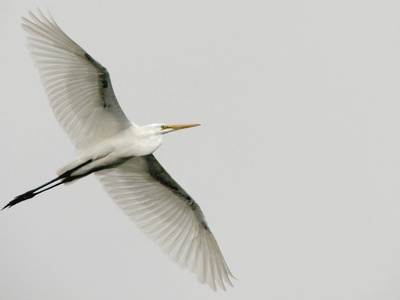
Great Egret
Elegant white heron with long S-shaped neck and yellow bill, follows shallow waters to hunt fish. Widespread and familiar in wetlands, often forming small rookeries during breeding.
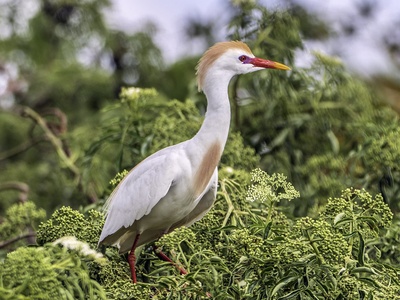
Cattle Egret
Small white heron often following livestock to feed on stirred insects; buff breeding plumage on head and back. Extremely common in farmland and grasslands, benefiting from agricultural landscapes.

Southern Screamer
Large, bulky waterbird with loud, far-carrying calls, heavy bill and downy plumage. Prefers marshes and flooded savanna, grazing on aquatic plants and defending territories aggressively.
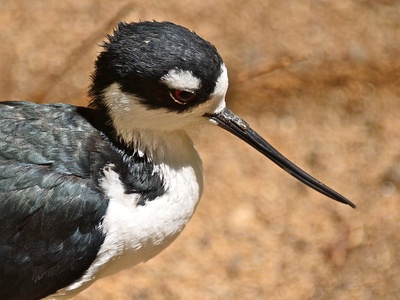
Black-necked Stilt
Slender, long-legged wader with black upperparts and white underparts, long pink legs and thin bill. Forages in shallow water for invertebrates; striking silhouette in wetland flats.
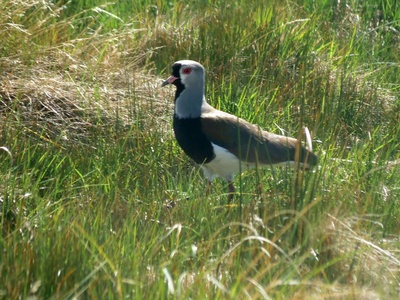
Southern Lapwing
Stocky plover with prominent facial crest and loud alarm calls; grey-brown upperparts and black chest band. Common in open habitats and urban parks; fiercely defensive of nests.
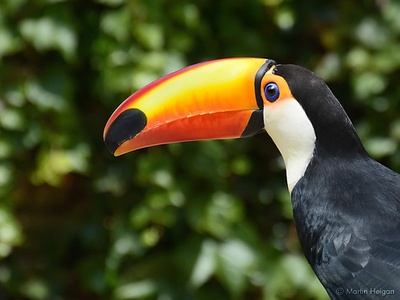
Toco Toucan
Iconic large toucan with striking oversized orange bill, black body and white throat. Perches conspicuously in canopy, feeds on fruit and occasionally small animals; a charismatic symbol of tropical woodlands.
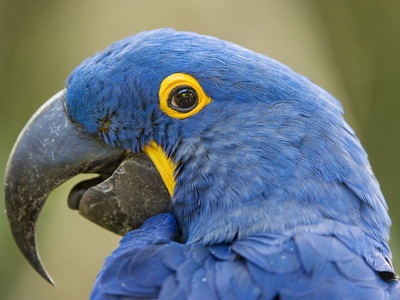
Hyacinth Macaw
World’s largest parrot with vivid cobalt-blue plumage and massive yellow-rimmed bill. Lives in palm-rich savannas and seasonally flooded forests, feeds on hard palm nuts. Threatened by trapping and habitat loss.
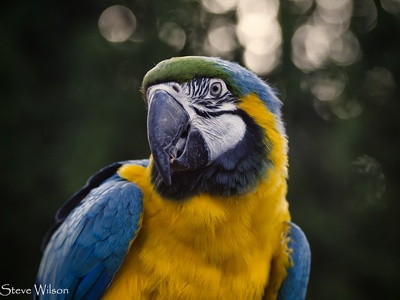
Blue-and-yellow Macaw
Bright blue upperparts with vibrant yellow chest and green forehead, large long-tailed macaw often seen in pairs. Prefers riverine forest and forest edges, nesting in tree cavities; threatened locally by habitat loss.
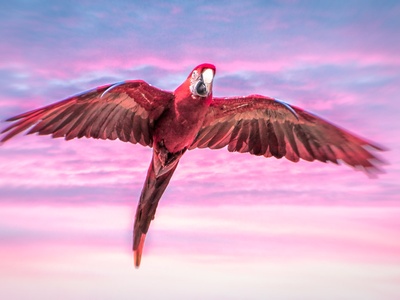
Scarlet Macaw
Brilliant red macaw with blue and yellow wing panels, large and vocal. Historically widespread in eastern forests; now fragmented and locally rare due to trapping and deforestation.
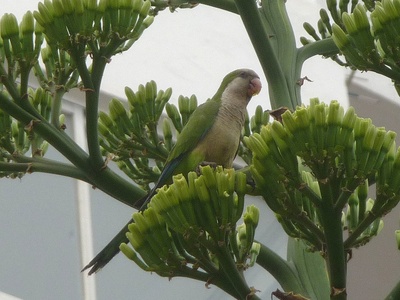
Monk Parakeet
Small green parakeet known for colonial twig nests often on manmade structures. Vocal and gregarious, adapts well to disturbed habitats and urban areas, sometimes considered a crop pest.
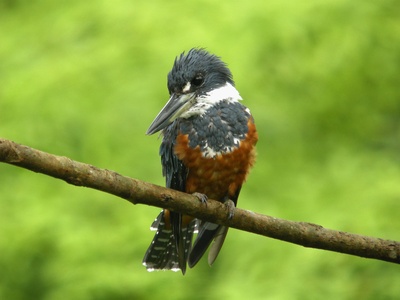
Ringed Kingfisher
Large kingfisher with rufous underparts and blue-gray back, loud rattling call. Hunts fish from perches, common along major rivers and floodplain channels in Paraguay.
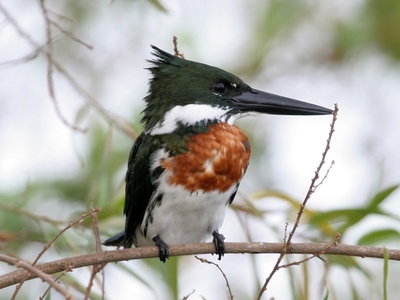
Amazon Kingfisher
Medium green-and-white kingfisher with stocky bill, perches low over water to hunt small fish. Prefers slow-moving rivers and vegetated banks in lowland forest.
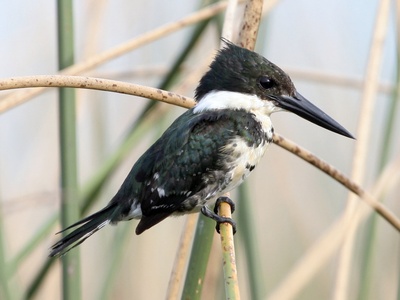
Green Kingfisher
Small, green kingfisher with spotted white underparts and sharp bill. Shy and quick to dart into cover, hunts from low perches near quiet water.
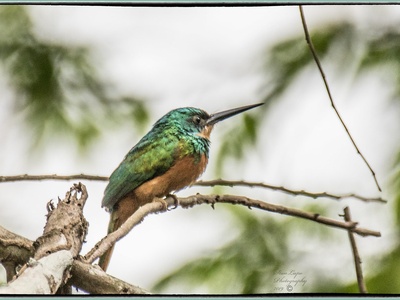
Rufous-tailed Jacamar
Slim iridescent green bird with long bill and rufous tail, hawks flying insects from perches. Common along forest edges and clearings, noted for glossy plumage and quick sallies.
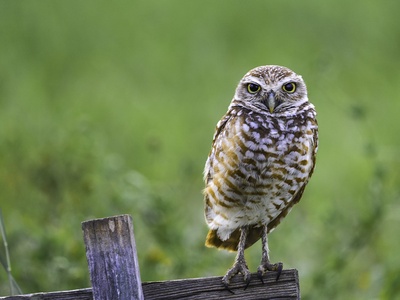
Burrowing Owl
Small, ground-dwelling owl with long legs and spotted plumage, nests in burrows often dug by other animals. Active at dusk and dawn, hunts insects and small vertebrates in open country.
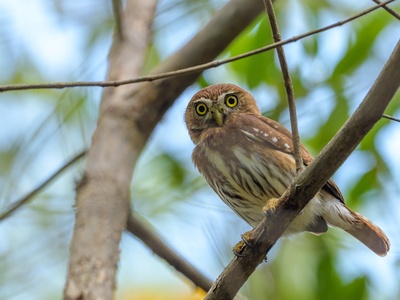
Ferruginous Pygmy-Owl
Tiny owl with rufous-brown tones and bold dark eye spots; surprisingly bold and diurnal. Hunts insects and small birds, often perches conspicuously while calling.
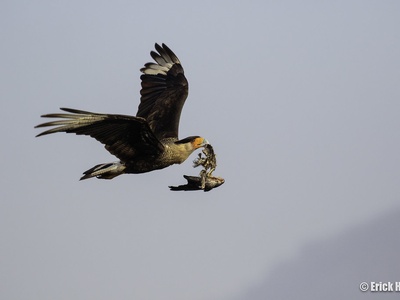
Crested Caracara
Large, crow-like raptor with black cap, orange facial skin and white neck. Omnivorous and opportunistic, often seen walking on ground scavenging or hunting small prey.
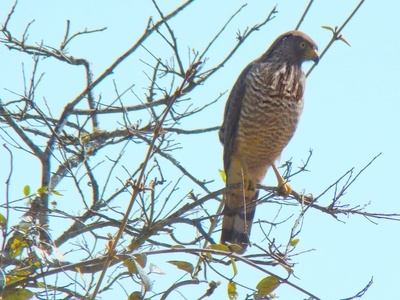
Roadside Hawk
Small hawk with streaked underparts and broad tail, perches openly along roads and edges. Feeds on small birds, reptiles and insects; common and adaptable.
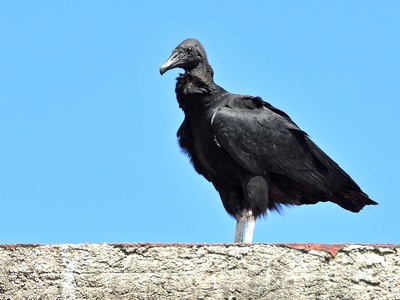
Black Vulture
Large dark vulture with short tail and bare head, often seen scavenging in groups. Common on carrion and waste sites, important carrion recyclers.
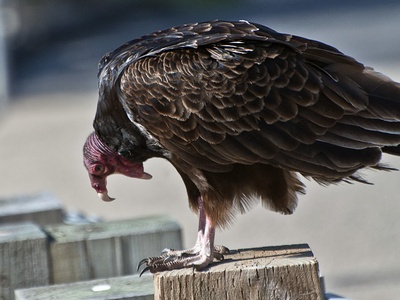
Turkey Vulture
Large vulture with red head, soaring flight and strong sense of smell for carrion. Widespread across habitats, often seen gliding over open areas.
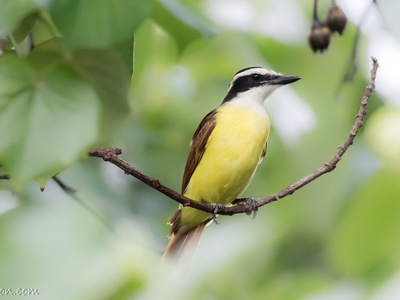
Great Kiskadee
Bold, large flycatcher with bright yellow belly, black-and-white head pattern and loud call. Aggressive and conspicuous, hunts insects and small prey from exposed perches.
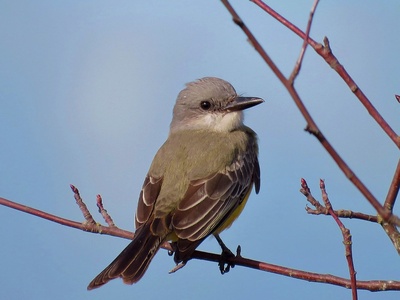
Tropical Kingbird
Common, long-tailed flycatcher with pale belly and yellowish underparts; sits on wires and sallies for insects. Widespread and familiar across agricultural and urban landscapes.
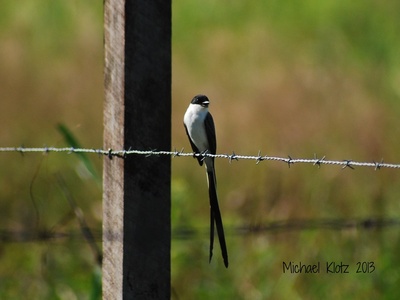
Fork-tailed Flycatcher
Slim, long-tailed migratory flycatcher with white body and black tail; males have dramatically long forked tails. Performs aerial insect-catching displays, often seen perched on wires.
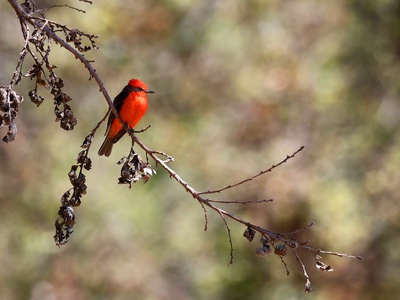
Vermilion Flycatcher
Small, striking flycatcher with brilliant red plumage in males, dark eye patch and perky posture. Hovering and sallying for insects, stands out in open landscapes.
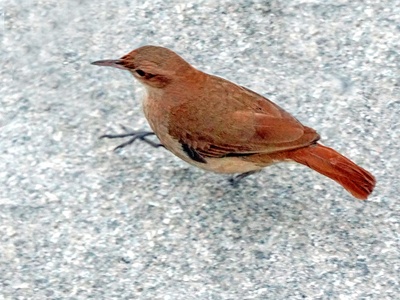
Rufous Hornero
Familiar ovenbird with reddish-brown plumage and distinctive clay “oven” nest. Builds conspicuous mud nests on posts and buildings; a common, industrious presence in rural and urban areas.
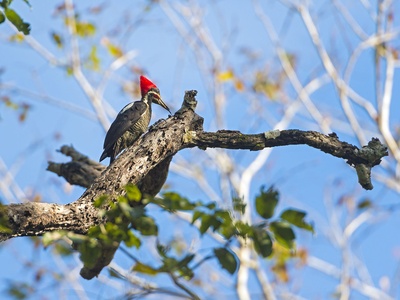
Lineated Woodpecker
Large woodpecker with black body, white lines on face and red crest. Drums loudly on trunks and excavates large nest holes; common in mature trees near watercourses.
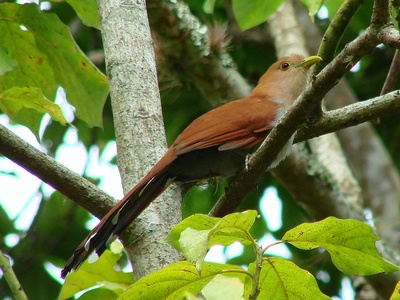
Squirrel Cuckoo
Long-tailed, rufous-headed cuckoo with curved bill and noisy, rolling calls. Moves actively in canopy gleaning large insects and fruit, often visible at forest edges.
Guira Cuckoo
Gregarious, scruffy-looking cuckoo with long tail and patchy brown-and-white plumage. Forages on ground and in low vegetation for insects; forms noisy communal flocks.
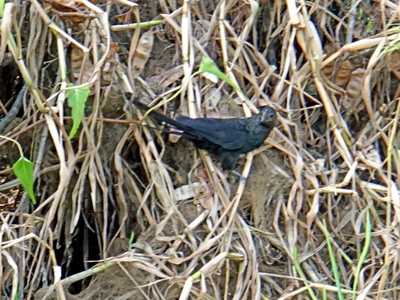
Smooth-billed Ani
Glossy black communal bird with long tail and distinctive ridged bill. Lives in groups that share nests and feed on insects, fruit and small vertebrates in open countryside.
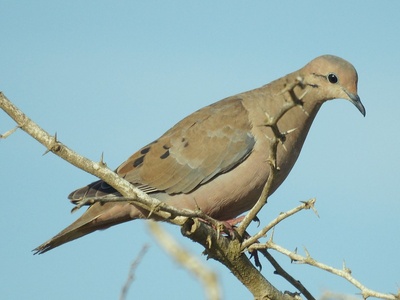
Eared Dove
Small plump dove with gray-brown plumage and pale ear patch, forms large flocks in agricultural areas. Feeds on seeds on ground and adapts well to human-altered landscapes.
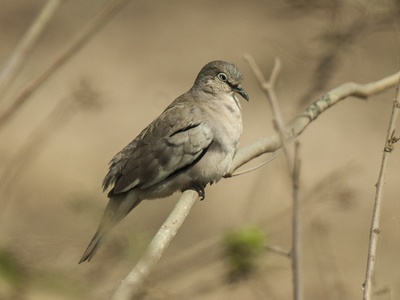
Picui Ground-Dove
Tiny dove with streaked crown and fine spotting on wings, walks on ground feeding on seeds. Common in open dry habitats and often seen in pairs or small groups.
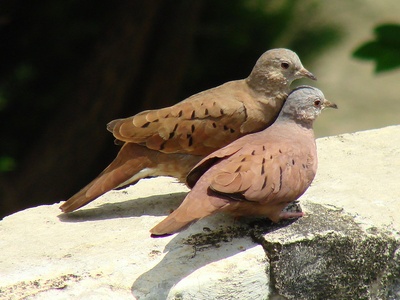
Ruddy Ground-Dove
Small, pale dove with rufous underparts in males and subtle facial pattern. Ground-feeding and widespread in disturbed and natural habitats alike.
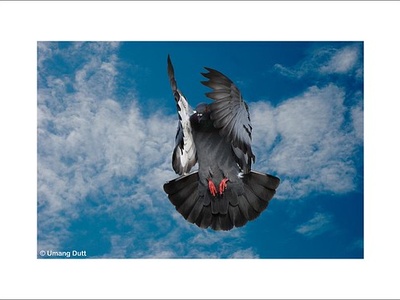
Rock Pigeon
Introduced city pigeon with variable grey plumage and iridescent neck patches. Ubiquitous in towns and plazas, nesting on buildings and scavenging human food sources.
Rufous-bellied Thrush
Medium thrush with warm rufous belly and plain face; sings melodious phrases. Common in gardens and forest edges, foraging on the ground for fruit and invertebrates.
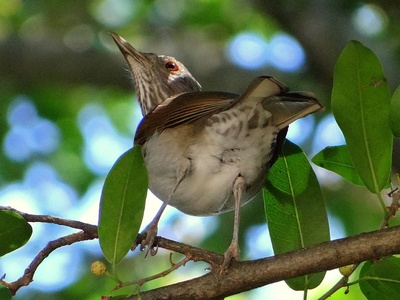
Pale-breasted Thrush
Plain olive-brown thrush with pale underparts and soft song; forages on leaf litter for insects and fruit. Often found at forest edges and shaded gardens.
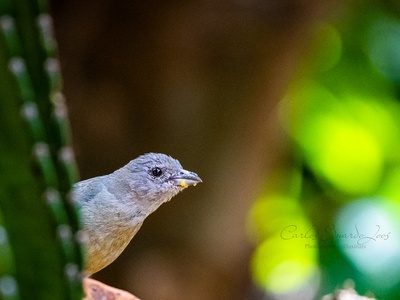
Sayaca Tanager
Blue-gray tanager with pale underparts and gentle appearance, commonly seen in flocks. Feeds on fruit and insects, adapts well to human-modified landscapes.
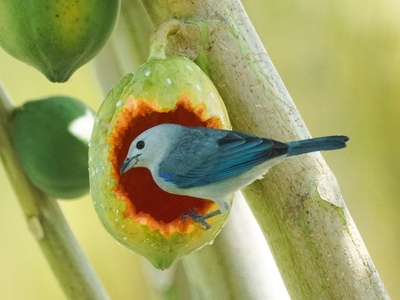
Blue-gray Tanager
Friendly, sky-blue tanager with pale belly, often in pairs or flocks. Feeds on fruit and nectar, widespread in eastern Paraguay and urban green spaces.
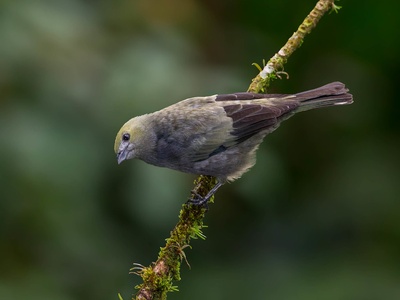
Palm Tanager
Olive-green tanager that frequents canopy and palm groves, subtle plumage and active behavior. Eats fruit and insects, common in disturbed forest and plantations.
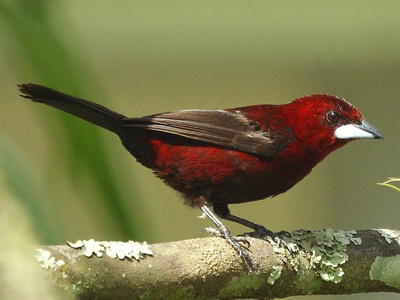
Silver-beaked Tanager
Striking male with glossy black body and bright silver lower bill area and red rump; feeds on fruit in flocks. Common along forest edges and riverine habitats.
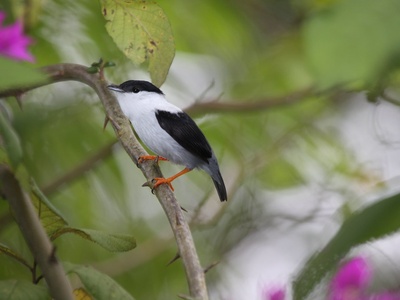
White-bearded Manakin
Small, chunky black-and-white manakin known for acrobatic courtship displays on fallen logs. Males show bright white throat patch; insectivorous and often heard at leks.
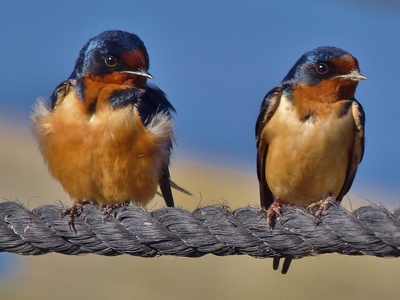
Barn Swallow
Slender migratory swallow with steel-blue upperparts and deeply forked tail; nests on buildings and bridges. Aerial insectivore that migrates long distances between continents.
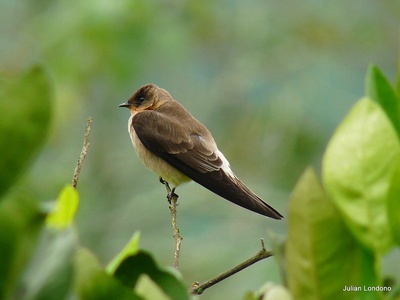
Southern Rough-winged Swallow
Brown-backed swallow with pale underparts, nests in cavities or banks. Forages low over water and fields, common near streams and open wetlands.
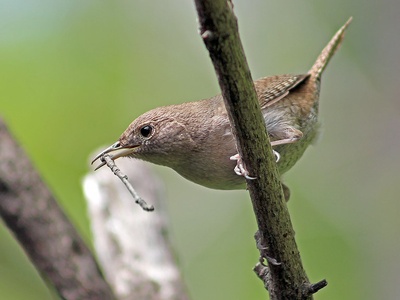
House Wren
Small, busy brown wren with loud, complex song and cocked tail. Builds domed nests in cavities, very common in human-altered and natural habitats alike.
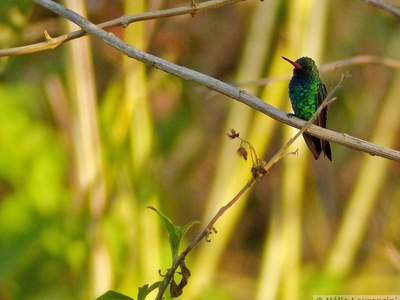
Glittering-bellied Emerald
Small metallic-green hummingbird with glittering belly, fast hovering and short rapid flights. Visits flowers and urban feeders, often seen in open, sunny spots.
White-collared Swift
Large swift with a pale collar and long swept wings, flies high in fast flocks. Aerial insectivore frequenting open skies above forest and river corridors.
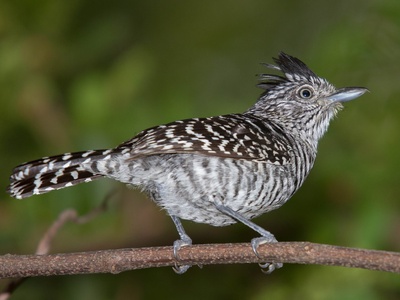
Barred Antshrike
Stout antbird with bold barred plumage (male) and rufous female; skulks in understory and joins mixed flocks. Feeds on insects, common in degraded and edge habitats.
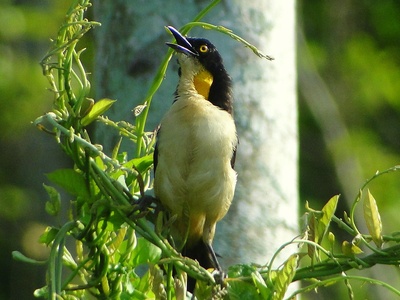
Black-capped Donacobius
Stocky, black-capped wetland bird with loud duetting calls and long tail. Common along reedy waterways, feeds on insects and small aquatic prey.
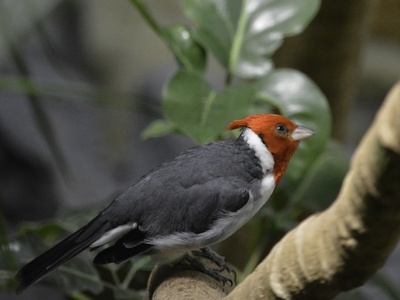
Red-crested Cardinal
Showy cardinal-like bird with red head and crest, gray body and white belly. Often found in pairs on fence posts and shrub edges, sings melodically.
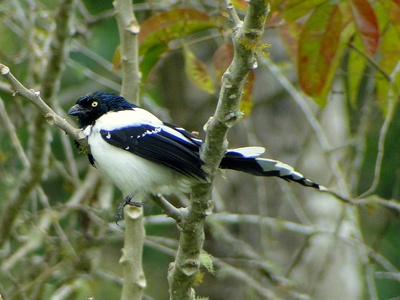
Magpie Tanager
Large, long-tailed tanager with black, white and chestnut plumage; often in noisy flocks. Eats fruit and insects and favors disturbed forest and edges.
Shiny Cowbird
Small glossy black brood-parasitic bird that lays eggs in other species’ nests. Common in agricultural areas and known for affecting smaller passerine reproductive success.
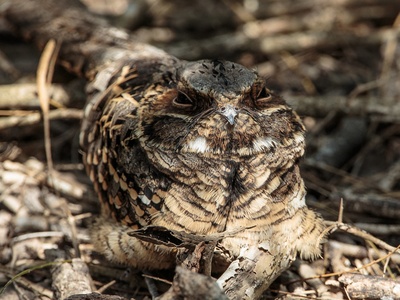
Common Pauraque
Cryptic nightjar with mottled plumage, wide gape for hawking insects at dusk. Rests on ground by day and vocal at night, blending into leaf litter.