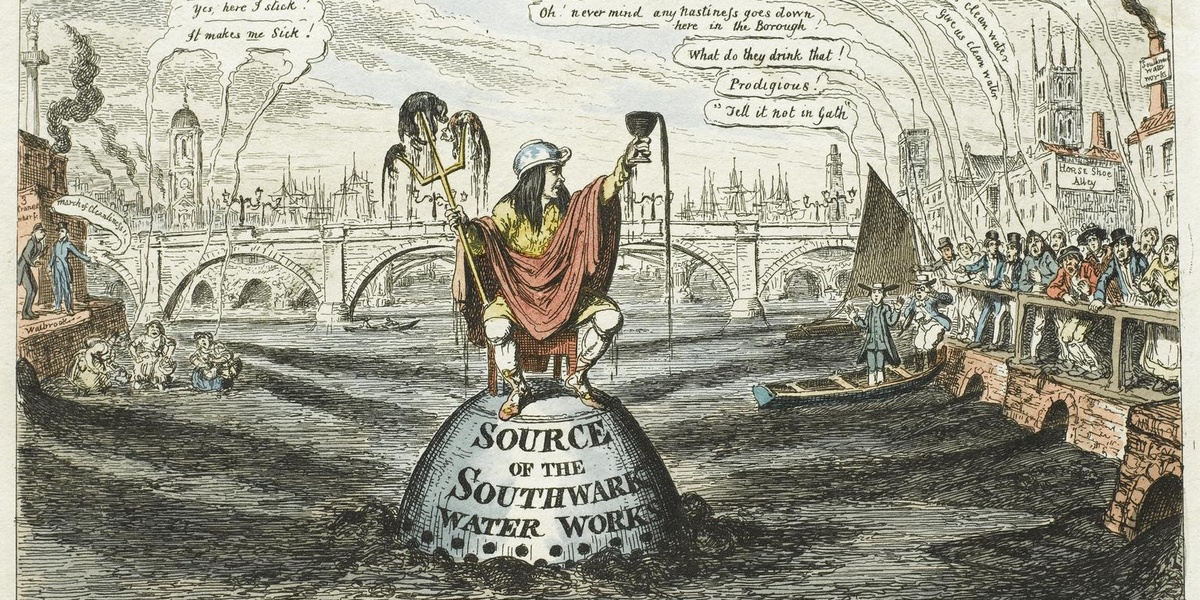
In 1972 the U.S. passed the Clean Water Act after rivers like the Cuyahoga actually caught fire — a vivid moment that shifted public thinking about water pollution and pushed lawmakers to act. Visible disasters changed how industries treated discharges, but they also left people with a simple, misleading idea: if pollution wasn’t smoky or oily, it wasn’t a big problem.
That misconception still matters because water quality affects public health, commercial fisheries, drinking-water access, and how resilient catchments are to a changing climate. An estimated 2.2 billion people lack safely managed drinking water (WHO/UNICEF), and many pollution risks are invisible. Despite stronger laws and more awareness, myths about water pollution still shape decisions by households, companies, and policymakers. Below I debunk seven common misunderstandings and explain what really drives contamination and what actually helps fix it.
Sources and Cause Myths
Understanding where contamination comes from changes how we prevent it; many popular beliefs about causes steer attention away from the biggest, most fixable sources.
1. Myth: Only factories and big plants cause serious water pollution
People often picture smokestacks and discharge pipes as the main culprits, but nonpoint sources like agricultural runoff and urban stormwater can match or exceed industrial pollution in many watersheds.
Scientific assessments show nutrient and sediment loads frequently come from diffuse sources; for example, fertilizer and manure runoff drive harmful algal blooms that closed drinking-water intakes in Lake Erie in 2014 and led to the Toledo advisory. Many coastal dead zones — including the seasonal Gulf of Mexico hypoxic zone — trace back to upstream farmland and municipal runoff rather than a single factory. Globally, the UN estimates roughly 80% of wastewater is discharged untreated, worsening diffuse pollution in rivers and coastal zones.
The policy consequence is clear: focusing only on end-of-pipe controls leaves entire watersheds vulnerable. States and regions that shifted toward source-control programs—such as nutrient-reduction plans combined with land-management incentives—have seen better outcomes than those relying solely on traditional permits.
2. Myth: Agricultural runoff is just fertilizer and not a major pollution threat
Calling agricultural runoff “just fertilizer” overlooks pesticides, animal waste, and soil erosion — all carry nutrients and contaminants that reshape aquatic ecosystems.
Nitrogen and phosphorus from fields feed algal blooms and create low-oxygen zones that harm fish and shellfish; the Gulf of Mexico’s hypoxic zone is a recurring seasonal example tied to Midwestern nutrient loads. Nitrate contamination also threatens drinking water — high levels can cause methemoglobinemia (blue-baby syndrome) and often exceed WHO guideline values in shallow wells near intensive farming.
That means solutions must include on-farm practices: cover crops, buffer strips, precision fertilizer application, and managed grazing. Conservation programs and state nutrient-reduction plans that pay farmers for these practices have reduced peak loads in pilot watersheds, showing prevention at the source is both practical and cost-effective.
3. Myth: Household waste is insignificant compared with industrial pollution
Individually, a single household seems harmless, but cumulatively residential sources introduce a steady trickle of micropollutants, plastics, oils, and improperly disposed chemicals into urban waterways.
Modern monitoring finds traces of pharmaceuticals, personal-care products, and hormones in rivers and near wastewater effluent, and these micropollutants can affect fish behavior and reproduction even at low concentrations. Stormwater from neighborhoods also carries automotive fluids, lawn chemicals, and microplastics into streams during rain events.
Practical responses include municipal household hazardous-waste collection, drug take-back programs, and public outreach to reduce pesticide use. Cities that run medication take-back days and curbside hazardous-waste pickups often see measurable drops in those pollutants at local treatment plant influent.
Impact and Health Misconceptions
Mistakes about how pollution affects health and safety lead to bad personal choices and delayed public-health responses, so clarifying impacts is essential.
4. Myth: If water looks clear, it’s safe to drink or swim in
Appearance is a poor gauge of safety because many pathogens and chemical contaminants are colorless and odorless.
Illness outbreaks have been traced to visually clear recreational waters and private wells carrying viruses, E. coli, or Giardia. Testing protocols like coliform assays and targeted chemical analyses are the only way to know what’s present; municipal monitoring covers many public systems but private wells need regular checks. Health agencies recommend annual testing of wells for total coliforms and nitrates, with added tests after flooding or nearby septic failure.
So, don’t rely on clarity. When advisories are posted after rainfall or known contamination events, heed them; routine testing and timely advisories protect swimmers and household users alike.
5. Myth: Boiling water removes all types of pollution
Boiling kills microbes, but it does not remove dissolved chemicals, heavy metals, or many synthetic organics — and it can concentrate some contaminants as water evaporates.
During the Flint crisis, public-health guidance stressed that boiling would not eliminate lead leached from pipes; filtration and pipe replacement were required. For chemical contaminants such as nitrates, arsenic, or many pharmaceuticals, households need point-of-use systems certified for specific contaminants. Reverse osmosis and some activated-carbon filters (look for NSF/ANSI ratings that match the contaminant) reduce a range of chemicals, but consumers must match the treatment to the problem.
When a municipal advisory cites a chemical issue rather than microbial contamination, follow the specific guidance — boiling may be useless or counterproductive.
Responsibility, Remediation, and Recovery Misconceptions
Beliefs about who should act and how fast nature bounces back shape funding, civic engagement, and long-term management — often in ways that slow real recovery.
6. Myth: Cleaning up pollution is only the government’s job
Government regulation is crucial, but effective prevention and cleanup require industry, communities, and individuals to share responsibility.
Private-sector actions — from producer take-back schemes for pesticides and electronics to greener product design — reduce waste at the source. Municipal programs like stormwater fees fund green infrastructure, and grassroots watershed groups organize regular river cleanups and monitoring. Extended producer responsibility pilots and corporate stewardship programs have cut inputs of specific pollutants in several regions, showing collaborative approaches scale better than top-down fixes alone.
Individuals can help by disposing of household hazardous waste properly, reducing single-use chemicals, and joining local watershed efforts; paired with policy, those actions add up.
7. Myth: Once a water body is cleaned, it quickly returns to its original healthy state
Ecological recovery is often slow and sometimes incomplete; some systems take decades or longer to rebound because contaminants persist in sediments and food webs.
The Exxon Valdez oil spill (1989) still shows lingering ecological effects decades later, and PCB-contaminated sediments in urban rivers can require dredging and ongoing monitoring for generations. Chesapeake Bay restoration efforts illustrate how nutrient reductions, habitat restoration, and fisheries rebuilding are multi-decade commitments with phased targets and adaptive management. Successes happen, but they come from sustained funding, long-term monitoring, and willingness to adjust tactics over years.
Expect patience and persistence: restoration plans that set short-term wins alongside long-term goals produce better ecological and social outcomes than one-off cleanup efforts.
Summary
- Nonpoint sources — farms, stormwater, and households — contribute a large share of contamination and require watershed-scale prevention.
- Many hazards are invisible: clear water can still carry pathogens or chemicals, and boiling removes microbes but not heavy metals or many synthetic pollutants.
- Agricultural nutrients drive algal blooms and dead zones; simple on-farm practices like cover crops and buffer strips reduce loads.
- Cleanup and prevention are shared responsibilities: governments, industry, and citizens each play roles, and long-term commitments are essential for recovery.
- Practical steps: test private wells annually, use certified filters when needed, support local watershed funding, and join or donate to community cleanup groups.