Tropical rainforests cover roughly 6% of Earth’s land surface but are home to an outsized share of global biodiversity—a surprising mismatch that has bred persistent myths (UNESCO, WWF).
How did so many misconceptions about these places arise, and why do they matter for policy, consumer choices, conservation funding, and Indigenous rights?
Many widely repeated ideas about rainforests are oversimplified or false; clearing up seven common myths reveals why these ecosystems are fragile, globally important, and central to both Indigenous rights and practical conservation. This article debunks seven common myths about rainforests, grouped into ecology, people and conservation, and global use and climate, and it includes numbers and examples to back each correction.
Ecological Myths About Rainforests
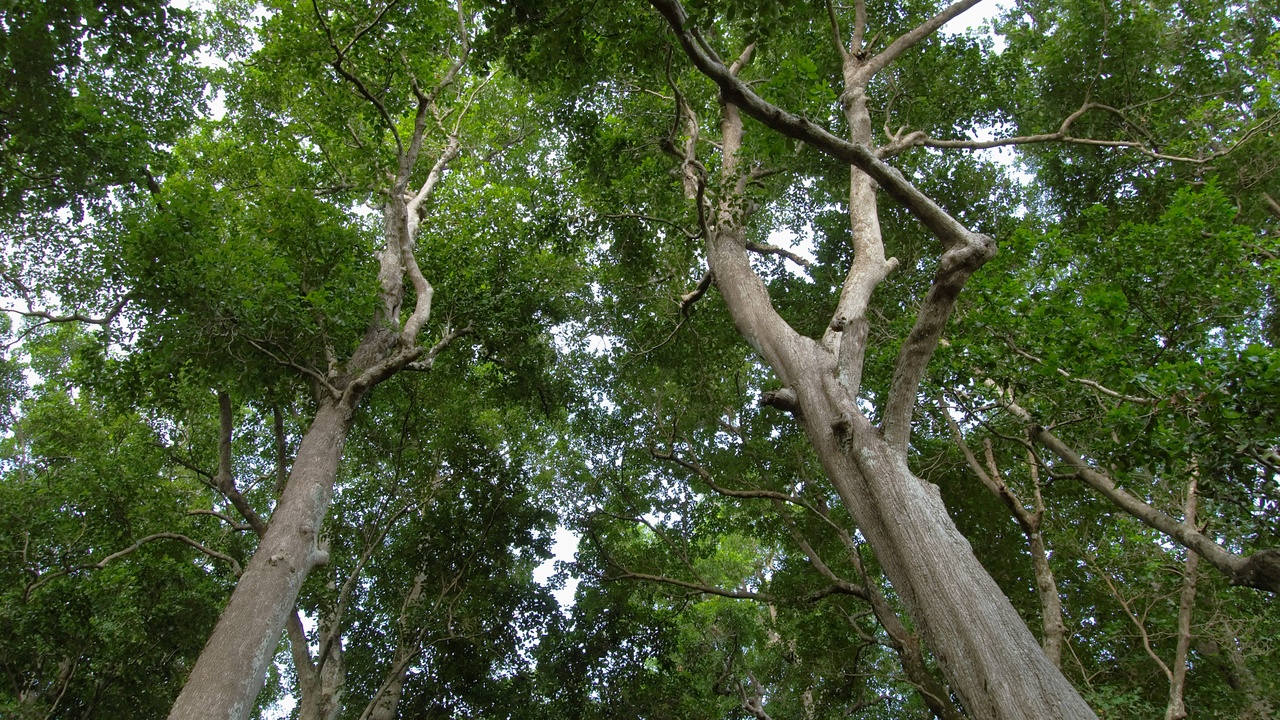
Romantic or outdated views fuel many ecological myths about rainforests. These landscapes are biologically rich—the tropics contain an estimated majority of terrestrial species (see WWF)—yet they are also experiencing rapid habitat loss (remote sensing shows substantial forest loss over recent decades; see NASA Landsat).
Better ecological knowledge from archaeology and satellites changes conservation priorities and helps target restoration where it will be most effective (sources: UNESCO, NASA, WWF).
1. Myth: Rainforests are pristine, untouched wilderness
That idea is misleading. Archaeological and paleoecological research shows long histories of human habitation, cultivation, and forest management across Amazonia, Central Africa and Southeast Asia going back thousands of years.
Modern studies find that Indigenous-managed and legally recognized territories tend to have lower rates of deforestation than comparable unprotected lands; several analyses from roughly 2016–2020 reported substantially reduced forest loss on titled Indigenous lands (often differences of 2–10 percentage points depending on region and timeframe). For synthesis, see work by the Rights and Resources Initiative and conservation assessments by IUCN.
The practical implication is clear: secure land tenure and Indigenous stewardship are conservation measures, not obstacles. A concrete example is the Kayapó in the Brazilian Amazon, who have defended territory and biodiversity through organized resistance and land demarcation efforts (see IUCN reports).
2. Myth: Rainforests are impenetrable and inaccessible
People often picture dense blocking vegetation, but physical and technological access is far more widespread. Road-building, logging tracks, mines and infrastructure projects open previously remote areas.
Historically, projects like the Trans‑Amazonian Highway (begun in the 1970s) accelerated settlement and forest conversion, and recent decades have seen renewed road expansion in many tropical regions. Remote-sensing tools (Landsat, MODIS) document fragmentation and edge effects that follow road nets.
Access brings ecological consequences: higher hunting pressure, invasive species spread, increased ignition risk, and altered microclimates along edges that reduce forest resilience. At the same time, controlled access supports science and ecotourism—canopy cranes and biodiversity inventories in Costa Rica are examples of legitimate, low-impact ways researchers reach forest strata.
3. Myth: Rainforests are endless and can’t be exhausted
Rainforest ecosystems and their resources are finite. Regional deforestation has removed large swaths of original forest cover—in parts of Southeast Asia and the Amazon, single-digit to double-digit percentages of forest have been lost within recent decades (FAO and NASA provide region-by-region data).
Overharvesting of timber, wildlife, and non-timber forest products depletes species pools and can trigger local ecological collapse. Recovery can be slow or impossible for some species, especially when soil, seed banks and microclimates are altered.
History offers examples: the 19th–20th century rubber boom in Amazonia produced boom-and-bust local economies and forest disturbance that left lasting socioeconomic and ecological scars—an object lesson in the limits of extractive dependence and the need for sustainable harvest and active restoration.
Myths About People, Indigenous Rights, and Conservation
Stories about Indigenous peoples and local communities affect laws, funding and public support. Misleading narratives—portraying people as obstacles—have real consequences for rights and outcomes.
Community-based models frequently outperform exclusionary protection in both biodiversity and livelihood metrics; legal recognition of territories often correlates with reduced forest loss (see Rights and Resources Initiative, IUCN).
4. Myth: Indigenous peoples are backward or irrelevant to conservation
That stereotype ignores the role of traditional ecological knowledge (TEK) and active stewardship. Indigenous and local practices—controlled burning in some landscapes, agroforestry, and selective harvesting—sustain biodiversity and resources in many regions.
Empirical studies show that formally recognized Indigenous lands often experience lower deforestation than nearby unprotected areas; some analyses from the 2016–2020 window reported materially lower rates of forest loss on titled territories (see synthesis by the Rights and Resources Initiative and IUCN case studies).
Real-world applications include co-management agreements and community forestry enterprises. For example, parts of the Amazon and Papua New Guinea have seen measurable conservation gains after communities secured legal rights and managed resources with outside support.
5. Myth: Conservation means locking people out
Modern conservation increasingly emphasizes inclusion. Community-based conservation, payments for ecosystem services (PES), and sustainable-use reserves balance livelihoods with biodiversity goals.
Costa Rica’s national PES program and forest recovery policies, documented by the FAO and national agencies, show how incentives can reverse deforestation trends and expand forest cover while supporting smallholders. In Brazil, extractive reserves have allowed sustainable livelihoods alongside biodiversity protection in some regions.
Policies that combine tenure security, local governance, and financial incentives often outperform strict exclusion, because they align conservation outcomes with community interests.
Myths About Use, Benefits, and Global Importance
Rainforests supply more than timber: they provide medicines, pollination services, cultural goods and climate regulation. Misunderstanding that breadth can skew investment and policy toward short-term extraction.
Pharmaceutical discoveries, carbon storage studies, and research on rainfall recycling all point to values that extend well beyond local markets and into global public goods.
6. Myth: Rainforests are only useful for timber
Reducing forests to timber ignores medicines, non-timber products, pollination and cultural values. Many important drugs trace to tropical plants: quinine from cinchona trees is a canonical example with direct public-health impact.
Other pharmaceuticals and research compounds have roots in rainforest chemistry; conservation-minded research partnerships and benefit-sharing agreements help ensure ethical bioprospecting. Collaborations between research institutions and local communities can create alternative revenue streams that preserve standing forest while advancing science.
Sustainable business models that value non-timber forest products and pharmaceutical partnerships can sometimes outcompete short-term logging profits, but they require fair contracts and legal safeguards for communities.
7. Myth: Rainforests are not important for climate regulation beyond their region
That view understates both carbon and hydrological roles. Tropical forests are major carbon reservoirs and, when cleared, release significant greenhouse gases from biomass and soil (see IPCC and FAO reports on land-use emissions).
Forests also recycle moisture—often described as “flying rivers”—and studies link Amazon deforestation to altered rainfall patterns downwind that can affect agriculture and water supplies hundreds of kilometers away (research examples: regional modeling studies and publications summarized by NASA and environmental science journals).
Policy implications are global: protecting tropical forests contributes to climate mitigation, stabilizes regional hydrology and reduces risks of tipping points that would raise mitigation costs worldwide.
Summary
- Many common rainforest misconceptions obscure the long histories of Indigenous stewardship and the proven conservation benefits of secure land rights; supporting rights-based approaches yields better forest outcomes.
- Rainforests are not uniformly inaccessible or inexhaustible—roads, mining and harvest have made many areas vulnerable, and scientific monitoring (Landsat, MODIS) documents fragmentation and loss.
- These ecosystems offer far more than timber: medicines, non-timber products, pollination, carbon storage and rainfall recycling all have local and global importance; ethical partnerships can translate that value into sustainable livelihoods.
- Practical next steps: support Indigenous land rights and organizations that advance them (for example Rights and Resources Initiative), choose deforestation-free products, and follow reputable science and conservation groups such as UNESCO, WWF, and IPCC.