In laboratories, industrial plants and even household settings, oxidizing agents are everywhere — from stain removers to combustion processes. Spotting common examples helps you pick the right reagent, anticipate reactions, and manage risks where you work or study chemistry.
Permanganate, dichromate and chlorate all come up in the ion drill. Practise the polyatomic ions — free, no sign-up, works on a phone.
There are 20 Examples of Oxidizing Agents, ranging from Benzoyl peroxide to Sodium peroxide to illustrate the span from organic peroxides to inorganic salts. For each entry you’ll find below the columns Formula, Oxidizing strength (V), Common uses, Hazards so you can compare reactivity and safety at a glance — you’ll find those details below.
How do I choose an oxidizing agent for a particular reaction?
Pick an oxidizer based on required redox potential, selectivity and compatibility with solvents and substrates: weaker agents suit sensitive functional groups, stronger ones drive difficult oxidations. Also weigh practical factors — solubility, byproducts, temperature and availability — and always check hazard data before scaling up.
What safety steps are essential when working with strong oxidizers?
Use appropriate PPE, work in a fume hood, store oxidizers separately from organic materials and reducers, and avoid contamination with combustible materials; handle small quantities, have spill procedures and neutralizing agents ready, and follow local disposal rules to minimize fire and explosion risk.
Examples of Oxidizing Agents
| Name | Formula | Oxidizing strength (V) | Common uses | Hazards |
|---|---|---|---|---|
| Fluorine | F2 | +2.87 V | Industrial fluorination, etching, chemical synthesis | Extremely corrosive, toxic, violently reactive |
| Oxygen | O2 | +1.23 V (acidic) | Combustion, steelmaking, medical oxygen, oxidations | Supports combustion, pressure hazards, high-concentration risks |
| Chlorine | Cl2 | +1.36 V | Water disinfection, bleaching, chemical manufacture | Toxic, corrosive, respiratory hazard on exposure |
| Ozone | O3 | +2.07 V | Water treatment, bleaching, air purification | Toxic inhalant, highly reactive, material damage |
| Hydrogen peroxide | H2O2 | +1.78 V (acidic) | Disinfectant, bleaching, propellant, lab oxidizer | Corrosive, can decompose violently, explosion risk |
| Potassium permanganate | KMnO4 | +1.51 V (MnO4-/Mn2+) | Water treatment, organic oxidations, disinfectant | Corrosive, stains, oxidizes organics vigorously |
| Potassium dichromate | K2Cr2O7 | +1.33 V (Cr2O7^2-/Cr3+) | Metal finishing, lab oxidizer, reagents | Carcinogenic (CrVI), corrosive, toxic |
| Nitric acid | HNO3 (conc.) | Strong (~+0.96 V for NO3^-→NO) | Nitration, etching, fertilizers, oxidizer in synthesis | Corrosive, emits toxic fumes, reacts violently with organics |
| Sodium hypochlorite | NaOCl | Strong (qualitative) | Household bleach, disinfection, water treatment | Corrosive, releases chlorine with acids, irritant |
| Chlorine dioxide | ClO2 | Strong (qualitative) | Water disinfection, pulp bleaching, sterilization | Toxic gas, can be explosive at concentration |
| Peracetic acid | CH3CO3H | Strong (qualitative) | Sterilant, bleaching, wastewater treatment | Corrosive, volatile, can decompose explosively |
| Sodium chlorate | NaClO3 | Strong (qualitative) | Herbicides, bleaching, chemical manufacture | Oxidizer in mixtures, fire and explosion risk |
| Potassium chlorate | KClO3 | Strong (qualitative) | Pyrotechnics, matches, oxidizer in explosives | Violent oxidizer, explosive with organics |
| Potassium perchlorate | KClO4 | Strong (qualitative) | Pyrotechnics, propellants, matches | Oxidizer, explosive in energetic mixtures |
| Sodium peroxide | Na2O2 | Strong (qualitative) | Oxygen source, bleaching, oxidizer in labs | Reacts violently with water, corrosive, oxidizing |
| Benzoyl peroxide | (C6H5CO)2O2 | Moderate–strong (qualitative) | Polymerization initiator, acne treatment | Explosive, irritant, decomposition hazard |
| Potassium bromate | KBrO3 | Strong (qualitative) | Laboratory oxidant, historical flour additive | Carcinogenic, strong oxidizer, hazardous |
| Silver oxide | Ag2O | Moderate (qualitative) | Primary batteries, selective oxidations, reagents | Corrosive, mildly toxic, can stain skin |
| Chromium trioxide | CrO3 | Strong (qualitative) | Metal finishing, cleaning agents (historical) | Carcinogenic (CrVI), highly corrosive, toxic |
| Periodic acid | HIO4 | Strong (qualitative) | Oxidative cleavage of diols in organic synthesis | Corrosive, strong oxidizer, reacts violently with reducers |
Images and Descriptions

Fluorine
Fluorine gas is the most reactive halogen; it accepts electrons readily and oxidizes most substances. Used industrially to make fluorinated compounds and etch glass. Requires specialized handling due to extreme reactivity, corrosion, and acute toxicity.
Oxygen
Molecular oxygen is a ubiquitous oxidizer involved in combustion and many redox reactions. In acidic aqueous conditions its standard reduction potential is +1.23 V. Widely used in industry and medicine but supports rapid combustion and poses pressure-related hazards.
Chlorine
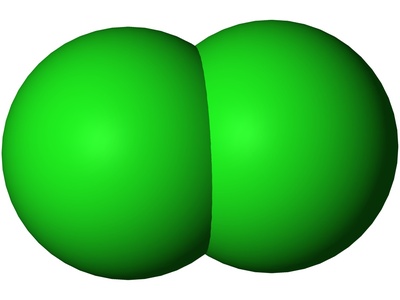
Chlorine is a common halogen gas and disinfectant that oxidizes organic and inorganic materials. With E° around +1.36 V it kills microbes and bleaches. It is highly toxic, corrosive, and dangerous if released as gas.
Ozone
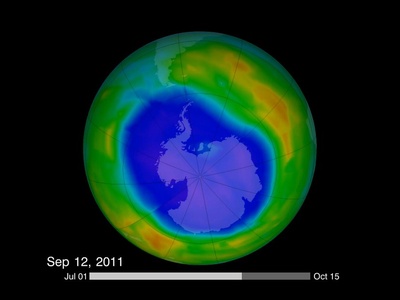
Ozone is a powerful triatomic oxygen oxidizer with strong disinfecting and bleaching properties; E° about +2.07 V. Used in water treatment and industry. Toxic to lungs, highly reactive, and can degrade materials on contact.
Hydrogen peroxide
Hydrogen peroxide is a widely used peroxide oxidizer used for disinfection, bleaching, and laboratory oxidations. Its reduction potential in acidic media is about +1.78 V. Concentrated solutions are corrosive, may violently decompose, and present fire/explosion risks.
Potassium permanganate
Potassium permanganate is a purple solid oxidizer used for water treatment, organic synthesis, and first aid. The MnO4-/Mn2+ couple has E° ≈+1.51 V in acid. It stains, is corrosive, and reacts vigorously with organics.
Potassium dichromate
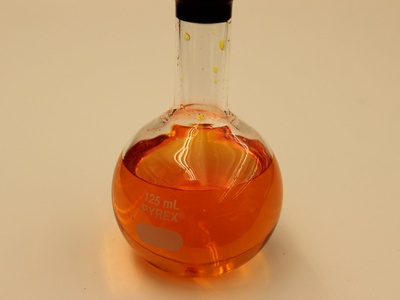
Potassium dichromate is a strong hexavalent chromium oxidizer used historically for cleaning and lab oxidations. The Cr2O7^2-/Cr^3+ couple E° ≈+1.33 V. It is carcinogenic, corrosive, and environmentally toxic; handle with extreme precautions.
Nitric acid
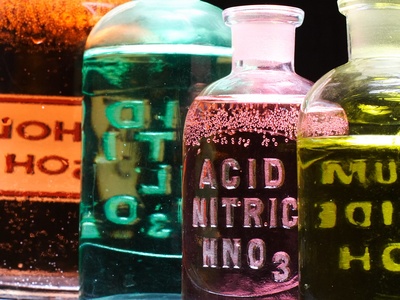
Concentrated nitric acid is a powerful oxidizer that nitrates and oxidizes organic and metal substrates. Nitrate reduction potentials depend on conditions (e.g., ~+0.96 V for NO3^-→NO). It emits toxic fumes, is highly corrosive and can cause violent reactions.
Sodium hypochlorite
Sodium hypochlorite solution (bleach) is a common household oxidizer used to disinfect and whiten. Active chlorine species oxidize microbes and stains. Mixing with acids or ammonia liberates toxic chlorine or chloramines; it’s corrosive and irritating.
Chlorine dioxide
Chlorine dioxide is a selective gaseous oxidizer used for water disinfection and pulp bleaching. Highly effective at low concentrations but is a toxic, irritant gas that can be explosive at elevated concentrations or pressures.
Peracetic acid
Peracetic acid is a peracid oxidizer used for sterilization and bleaching in industry and healthcare. It is highly effective at low concentrations but is corrosive, volatile, and can decompose explosively if concentrated or heated.
Sodium chlorate
Sodium chlorate is a strong inorganic oxidizer used in herbicides and chemical manufacturing; it supplies oxygen in combustion. It reacts dangerously with organics and reducing agents, posing severe fire and explosion risks.
Potassium chlorate
Potassium chlorate is a powerful oxidizer used historically in pyrotechnics and matches. It decomposes to release oxygen and can violently react with combustible materials; mixing with sulfur, sugar, or organics can cause explosions.
Potassium perchlorate
Potassium perchlorate is a stable solid oxidizer used in pyrotechnics and propellants. Perchlorate salts release oxygen upon heating and can accelerate fires when combined with fuels; ingestion and dust inhalation are hazardous.
Sodium peroxide
Sodium peroxide is a strong inorganic peroxide that provides oxygen and oxidizes organics; used as an oxygen source and bleaching agent. It reacts vigorously with water to release oxygen and caustic soda, posing burn and fire hazards.
Benzoyl peroxide
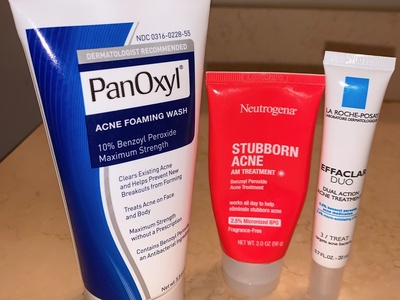
Benzoyl peroxide is an organic peroxide used as a polymerization initiator and in acne treatments. It is a moderate-to-strong oxidizer that decomposes exothermically; concentrates and dry powders are shock- and friction-sensitive explosives.
Potassium bromate
Potassium bromate is a powerful oxidizer formerly used to strengthen flour and in laboratories. It oxidizes organic substrates but is carcinogenic and strictly regulated; it poses strong oxidation and health hazards.
Silver oxide
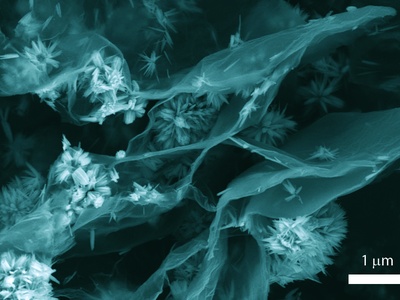
Silver oxide is a mild oxidizing compound used in primary batteries and selective organic oxidations. Its oxidizing power is moderate. It is corrosive, can darken skin (argyria) and is hazardous if ingested or inhaled as dust.
Chromium trioxide
Chromium trioxide (chromic acid source) is a potent oxidizer used historically for metal finishing and cleaning. It contains toxic hexavalent chromium, is highly corrosive, carcinogenic, and poses severe environmental and health hazards.
Periodic acid
Periodic acid is a strong inorganic oxidizer used in organic chemistry for cleaving vicinal diols. It’s a powerful, corrosive oxidant that can cause burns and reacts violently with reducing materials.