Motion is part of everyday life — from bicycles and cars to factory equipment and power farms. Noticing how moving objects store and transfer energy helps you compare safety risks and engineering choices across very different situations.
There are 20 Examples of Kinetic Energy, ranging from a 9 mm bullet to a Wind turbine rotor. For each entry, data are organized with Category,Typical KE (J),Where found so you can compare magnitudes at a glance; you’ll find these details below.
How is kinetic energy calculated for the items on this list?
Most linear objects use KE = 1/2 mv^2 (mass and speed). Rotating parts use 1/2 Iω^2 (moment of inertia and angular velocity). The typical KE values shown are estimates based on representative masses and speeds, so check the assumptions if you need precise numbers.
Why do values range so much between a 9 mm bullet and a wind turbine rotor?
Kinetic energy depends on both mass and velocity: a 9 mm bullet has very high speed but low mass, while a wind turbine rotor has huge mass and moderate angular speed, producing large rotational energy. Differences in operating conditions, measurement methods, and whether peak or average values are reported also affect the numbers.
Examples of Kinetic Energy
| Name | Category | Typical KE (J) | Where found |
|---|---|---|---|
| Baseball (thrown) | Translational (1/2mv^2) | 100 | Ballpark, street |
| Car (highway speed) | Translational (1/2mv^2) | 546,750 | Road/highway |
| 9 mm bullet | Translational (1/2mv^2) | 500 | Firearms, ballistics range |
| Bicycle with rider | Translational (1/2mv^2) | 1,440 | City streets, trails |
| Low-Earth-orbit satellite (1,000 kg) | Translational/Orbital (1/2mv^2) | 30,420,000,000 | Low Earth orbit |
| Wind gust (1 m^3 at 10 m/s) | Translational (1/2ρv^2 per volume) | 60 | Outdoor gusts, storms |
| Flowing river (per m^3 at 2 m/s) | Translational (1/2ρv^2 per volume) | 2,000 | Rivers, streams |
| Boat cruising (10,000 kg at 10 m/s) | Translational (1/2mv^2) | 500,000 | Inland/coastal waters |
| Roller coaster car | Translational (1/2mv^2) | 360,000 | Amusement parks |
| Passenger airliner (200,000 kg at 250 m/s) | Translational (1/2mv^2) | 6,250,000,000 | Cruise altitude, airports |
| Flywheel energy storage (industrial) | Rotational (1/2Iω^2) | 1,000,000 | Laboratory prototypes, storage systems |
| Spinning bicycle wheel | Rotational (1/2Iω^2) | 27 | Bicycles, workshops |
| Wind turbine rotor | Rotational (1/2Iω^2) | 100,000 | Wind farms |
| Guitar string (plucked) | Vibrational (kinetic component ~1/2mv^2) | 0.01 | Musical instruments, practice rooms |
| Loud sound (per m^3) | Vibrational/Acoustic (particle KE density ≈1/2ρv^2) | 0.10 | Concerts, speakers |
| Ocean wave (per m width, crest) | Wave/translational (kinetic portion of wave motion) | 10,000 | Coastlines, open ocean |
| Raindrop (typical) | Translational (1/2mv^2) | 0.08 | Rainstorms, umbrellas |
| Bowling ball (thrown) | Translational (1/2mv^2) | 126 | Bowling alleys |
| Spinning hard drive platter | Rotational (1/2Iω^2) | 1 | Computers, servers |
| Thermal motion (one mole gas at 25°C) | Thermal (molecular kinetic energy per mole ≈3/2RT) | 3,700 | Air, gas samples |
Images and Descriptions
Baseball (thrown)
A standard baseball (≈0.145 kg) thrown at ~40 m/s stores about 100 J of kinetic energy. It shows how small mass at high speed still carries significant energy and why catching fast balls requires absorbing motion.
Car (highway speed)
A 1,500 kg car at 60 mph (27 m/s) has roughly 546,750 J of kinetic energy. This everyday example highlights why collisions are so destructive and why braking distances increase quickly with speed.

9 mm bullet
A typical 9 mm bullet (≈8 g) leaving the muzzle at a few hundred m/s contains on the order of 500 J. Bullets demonstrate how very small masses at high speed concentrate substantial kinetic energy.
Bicycle with rider
A rider and bike totaling ~80 kg at 22 km/h (6 m/s) carry about 1,440 J. This everyday figure explains why stopping a bike is much easier than stopping a car with far greater mass.
Low-Earth-orbit satellite (1,000 kg)
A 1,000 kg satellite orbiting at ~7.8 km/s contains roughly 30,420,000,000 J of kinetic energy. Orbital motion stores enormous energy, making deorbiting and reentry energetically significant engineering challenges.
Wind gust (1 m^3 at 10 m/s)
One cubic meter of air (≈1.2 kg) moving at 10 m/s holds about 60 J of kinetic energy. This simple fluid example helps explain wind loading on structures and how turbines extract energy.
Flowing river (per m^3 at 2 m/s)
A cubic meter of river water (≈1,000 kg) flowing at 2 m/s stores roughly 2,000 J of kinetic energy. Hydropower systems and erosive forces depend on this moving-water energy density.
Boat cruising (10,000 kg at 10 m/s)
A 10,000 kg boat moving at 10 m/s carries about 500,000 J. Marine motion illustrates how large masses at moderate speeds contain energy comparable to many land vehicles.
Roller coaster car
An 800 kg roller coaster car at 30 m/s stores roughly 360,000 J of kinetic energy. Designers convert potential energy to this kinetic form to create thrills while ensuring safe deceleration.
Passenger airliner (200,000 kg at 250 m/s)
A large airliner cruising at ~250 m/s carries on the order of 6,250,000,000 J of kinetic energy. Aircraft kinetic energy explains runway requirements, fuel needs during maneuvers, and recovery after engine failure.
Flywheel energy storage (industrial)
A medium industrial flywheel can store around 1,000,000 J of rotational kinetic energy. Flywheels demonstrate how rotational motion is a practical way to store and rapidly release energy.
Spinning bicycle wheel
A bicycle wheel with a light rim spinning at cruising speed stores a few dozen joules of rotational kinetic energy. This small but useful amount helps stabilize bikes and illustrates rotational inertia in motion.
Wind turbine rotor
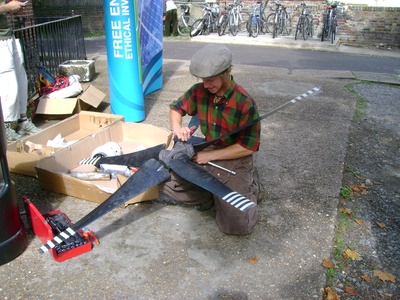
A large wind turbine rotor has on the order of 100,000 J of rotational kinetic energy in motion. That stored energy affects startup, shutdown, and mechanical stresses during gusts and grid connection changes.

Guitar string (plucked)
A plucked guitar string stores only a few hundredths of a joule as kinetic energy at peak motion. This tiny amount produces audible sound thanks to efficient energy transfer into the air and instrument body.
Loud sound (per m^3)
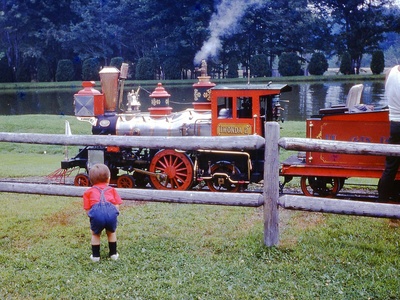
Very loud sound fields can have kinetic energy densities around 0.10 J per cubic meter of air. Acoustic kinetic energy explains how vibrating air parcels transmit energy that our ears detect as sound.
Ocean wave (per m width, crest)
A single ocean wave per meter of crest width can carry roughly 10,000 J of kinetic energy in the moving water. Waves combine kinetic and potential contributions and power coastal erosion and wave energy devices.

Raindrop (typical)
A typical raindrop (~2 mm diameter, 2 g) falling at terminal speed stores about 0.08 J. Though small, many drops together create impact energy that soils, splashes, and erodes surfaces.
Bowling ball (thrown)
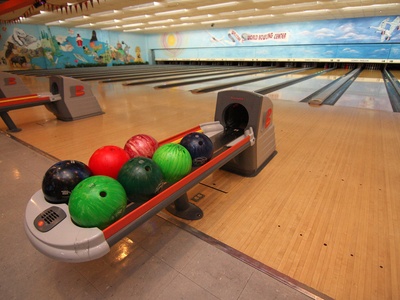
A 7 kg bowling ball rolled at ~6 m/s carries about 126 J of kinetic energy. This everyday example shows how moderate mass and speed combine to knock down pins and why lanes must be protected.

Spinning hard drive platter
A small hard-drive platter spinning at thousands of RPM stores on the order of 1 J of rotational kinetic energy. It’s enough to cause noticeable torque and requires careful braking in sudden stops.
Thermal motion (one mole gas at 25°C)
The translational kinetic energy associated with thermal motion for one mole of an ideal gas at 25°C is about 3,700 J. This macroscopic number links temperature to the microscopic motion of particles.