In 1846, the first public demonstration of ether anesthesia at Massachusetts General Hospital transformed surgery from brutal and brief to precise and prolonged.
Understanding the core instruments used in surgery reveals how modern procedures became safer, faster, and more precise — from the earliest scalpels to today’s minimally invasive optics. Why should you care? Because the tools surgeons select influence operative time, blood loss, infection risk, and recovery. Approximately 300 million surgical procedures are performed worldwide each year (WHO), so the ripple effects of better instruments touch patients everywhere. Below, we walk through seven essential tools, grouped by function: cutting and dissection; grasping, clamping and retracting; and suturing, visualization and suction.
Cutting and Dissection Instruments
Cutting and dissection instruments create the initial access and define precise tissue planes—essential steps for every operation. These tools have roots going back millennia, but the combination of anesthesia in the 19th century and modern metallurgy turned them into standardized, often single-use or durable reusable designs. Sterility and the right blade or edge choice matter for both accuracy and infection control. Next: the scalpel and surgical scissors, the workhorses of incision and dissection.
1. Scalpel
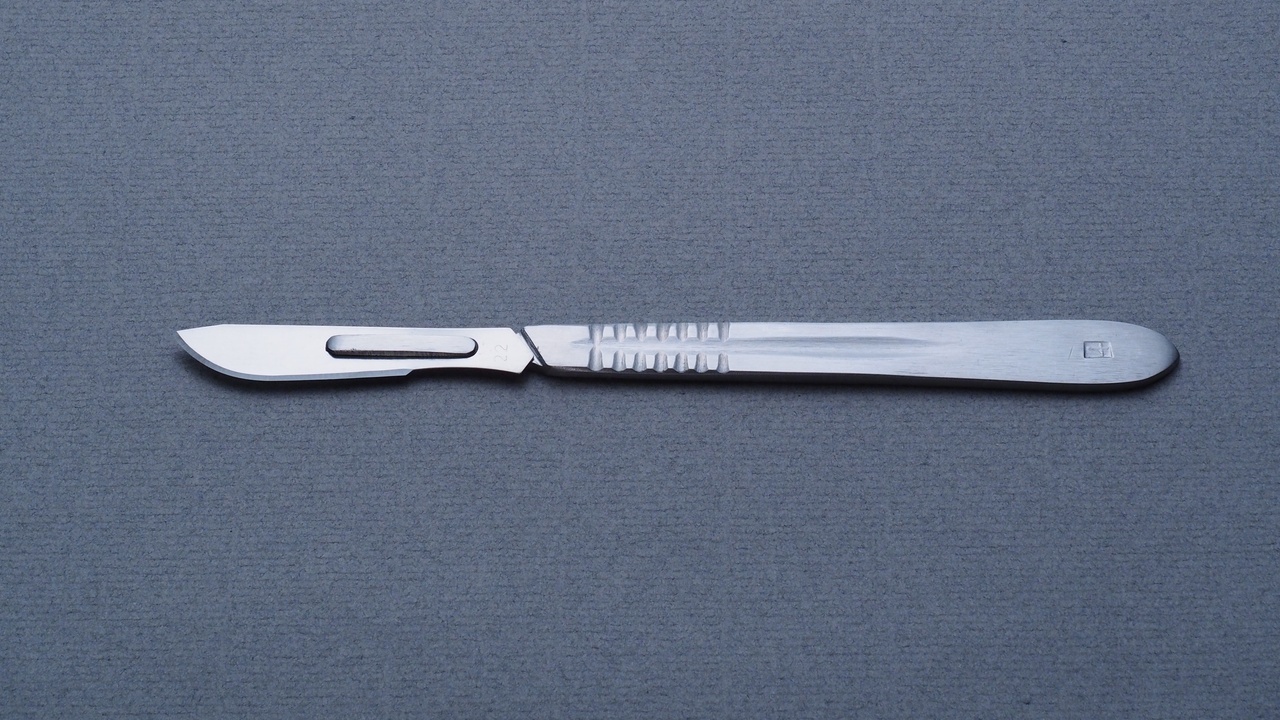
The scalpel is the primary cutting instrument in most open surgeries, prized for its sharpness and control. Blades come in many shapes: the #10 is common for larger skin incisions, while the #11 is used for stab or precision punctures; microsurgeons may use finer-point blades. Systems range from reusable handles with replaceable blades (Swann‑Morton handle and blade combinations) to single‑use scalpel units and Feather scalpels favored in microsurgery. After anesthesia became routine in 1846, surgeons could make longer, more deliberate cuts—raising the bar for precision.
Scalpels are used in the majority of open procedures (skin incisions, fascial entry, minor excisions). Single‑use blades help lower infection risk, while reusable handles remain common in settings focused on waste reduction and cost control. For everyday practice: a Swann‑Morton #10 on a reusable handle for an appendectomy, or a Feather scalpel for delicate plastic or ENT work.
2. Surgical Scissors
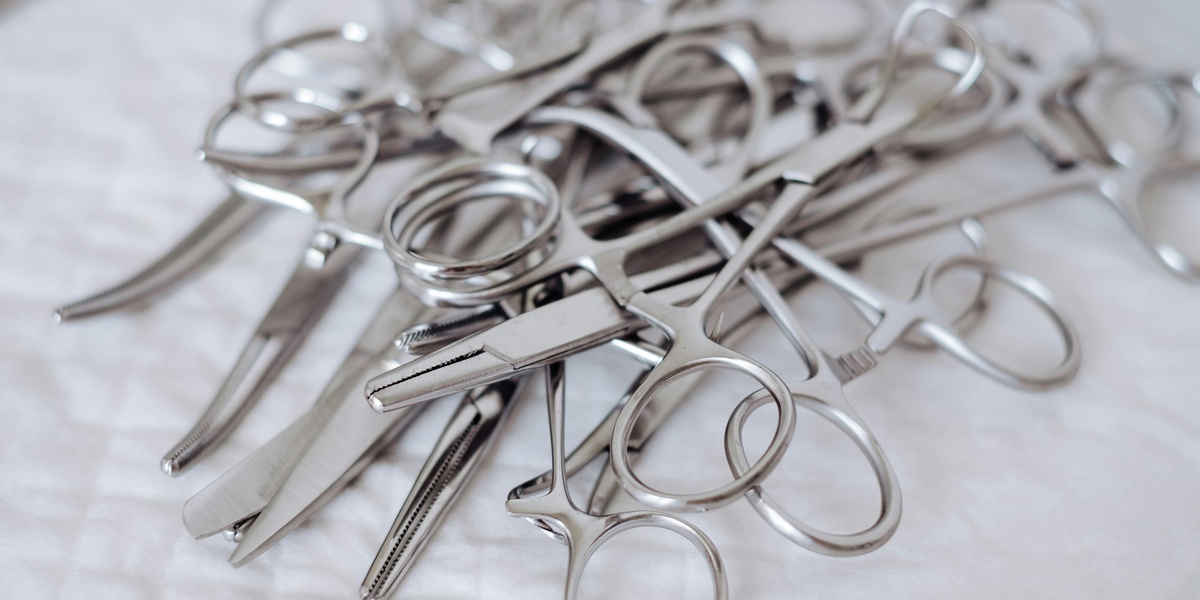
Surgical scissors are precision cutters for tissue, sutures, and dressings. Metzenbaum scissors (typically 15–20 cm) are long and fine for delicate tissue dissections, while Mayo scissors (15–25 cm) have heavier blades for fascia and tougher tissue. Suture scissors and suture‑cutting designs are part of standard kits.
High‑use scissors often feature tungsten carbide inserts to extend edge life and improve cut quality. In gynecologic procedures Metzenbaum scissors separate delicate tissue, while Mayo scissors help with uterine or fascial layers; orthopedic closures regularly call for heavier Mayo styles. Good ergonomics and the right length reduce hand fatigue and improve precision on the operating table.
Grasping, Clamping and Retracting Instruments
Grasping, clamping, and retracting instruments control tissue, stop bleeding, and keep the operative field visible—three functions that directly affect safety and speed. Choosing atraumatic forceps, the right hemostat, or a suitable retractor limits tissue damage and shortens procedure time. Proper selection is a simple, high‑impact way to protect patients.
3. Forceps
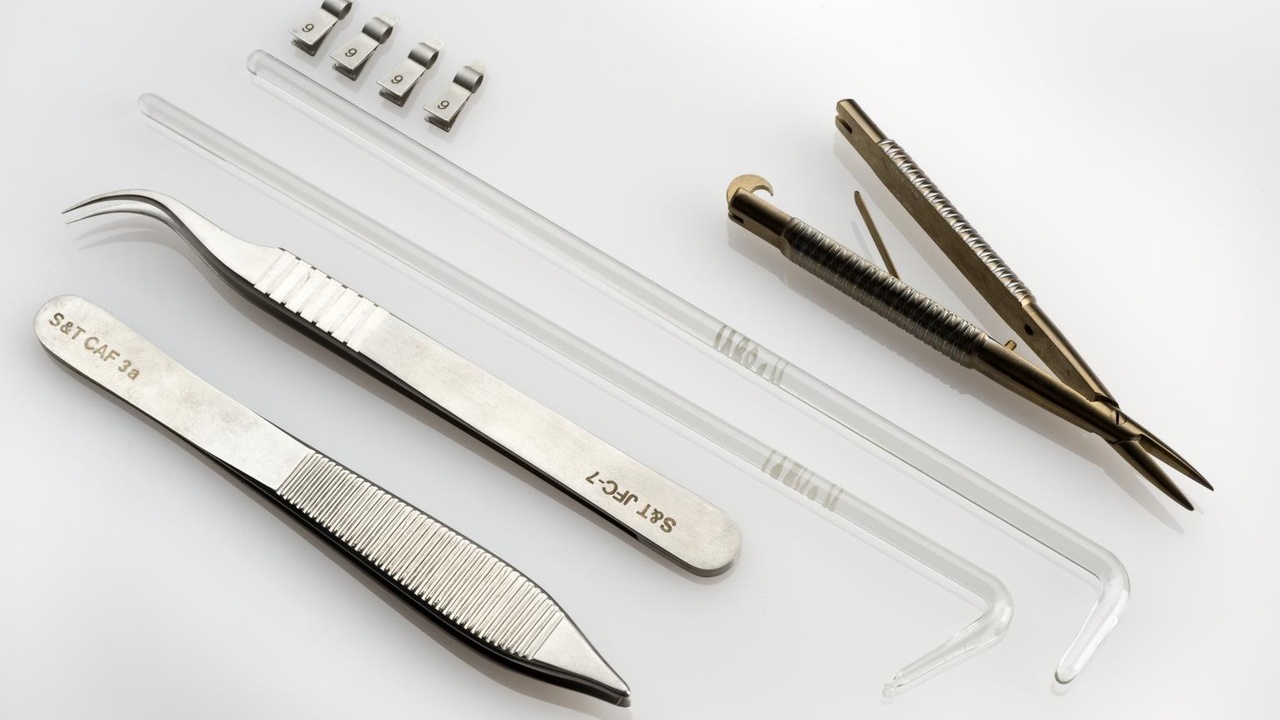
Forceps are used to grasp and manipulate tissue or dressings; they come in thumb‑style (Adson) and tissue‑specific designs (Allis, Babcock). Adson thumb forceps help with skin closure, offering fine control for needle placement. Allis forceps have toothed jaws suitable for holding fascia temporarily, while Babcock forceps feature an atraumatic bowl for handling bowel without crushing it.
Manufacturers such as Aesculap and Sklar supply hospital‑grade forceps in multiple sizes and tip patterns. A typical use case: Babcock forceps hold a loop of small bowel during an abdominal procedure while the surgeon inspects or repairs it; the atraumatic design minimizes serosal injury. Tissue‑sparing tips and proper technique keep postoperative complications lower.
4. Hemostatic Clamps (Hemostats)
Hemostats are essential for clamping vessels and achieving temporary hemostasis before permanent ligation. Mosquito clamps are fine‑tipped and used on small vessels; Kelly clamps have heavier jaws for larger pedicles. Both come straight or curved to reach different angles in the wound.
A common intraoperative move is to place a hemostat on a bleeder before tying an absorbable suture or applying a clip—simple, immediate control that reduces blood loss. Effective hemostasis in the OR remains a top priority because it lowers transfusion likelihood and improves visualization. In general surgery, a curved Kelly is a go‑to for small arterial bleeds; Mosquito clamps handle capillary or venous oozing.
5. Retractors
Retractors hold tissue aside to expose the surgical field. Handheld retractors like the Richardson are flexible for small incisions and quick adjustments, while self‑retaining models such as the Balfour free the assistant and maintain continuous exposure for longer abdominal cases.
Specialized retractors exist for thoracic work (Finochietto rib spreader) and specific subspecialties. The right retractor choice improves ergonomics, cuts surgeon fatigue, and can shorten operative time by keeping the anatomy visible without constant readjustment. Most trays include multiple retractor sizes so teams can match the tool to the incision and depth.
Suturing, Visualization and Suction Instruments
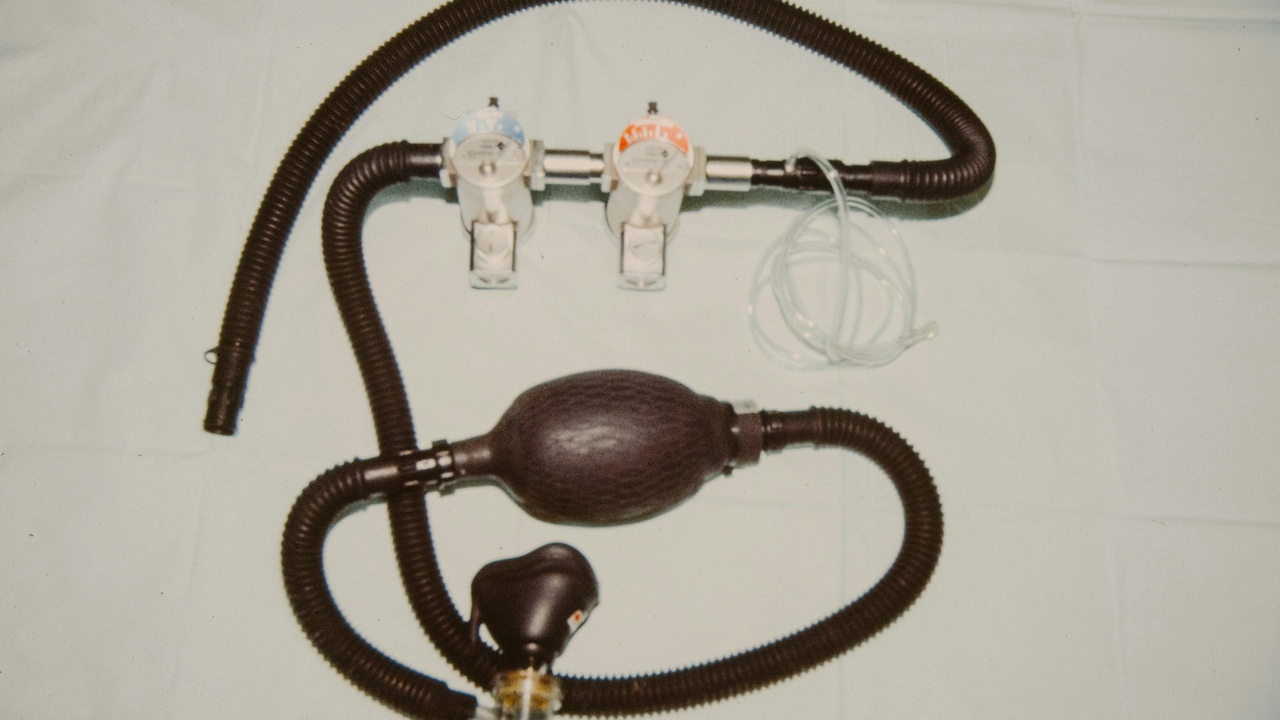
Closure, clear visualization, and fluid control are the final pillars of a safe operation. Needle holders secure the needle for precise suturing, suction keeps blood and fluid from obscuring the view, and endoscopes let surgeons work through small ports rather than large incisions—changing recovery for millions of patients.
6. Needle Holders
Needle holders grip suture needles firmly so the surgeon can pass and tie stitches accurately. Common models include the Mayo‑Hegar—robust and widely used for fascial closures—and the Olsen‑Hegar, which integrates scissors for cutting suture without switching instruments.
Jaw patterns vary (cross‑hatched or serrated) and tungsten carbide inserts extend life and maintain a secure grip. In abdominal surgery a Mayo‑Hegar closes fascia; microsurgical needle holders with fine jaws serve ophthalmic and vascular work where needle diameters and suture sizes are tiny. Matching holder to needle size is a small detail that greatly improves stitch placement.
7. Suction and Visualization Devices (Yankauer, Laparoscope)
Suction devices keep the field clear of blood and fluid while visualization tools let surgeons see inside the body with minimal incisions. The Yankauer is a rigid oral/pharyngeal suction often used in head and neck cases; the Poole suction has a multi‑holed guard for efficient abdominal irrigation.
Laparoscopes and endoscopes transformed many procedures. Common manufacturers include Karl Storz, Stryker, and Olympus; typical laparoscopic ports are 5 mm for instruments and 10–12 mm for camera or stapling devices. Minimally invasive cholecystectomy frequently results in same‑day discharge or a 24‑hour stay, shortening recovery compared with open approaches. Keeping optics clean (with suction and irrigation) and choosing appropriate port sizes are practical steps that improve outcomes and patient comfort.
Summary
- Cutting tools like scalpels and scissors create precise access; blade type (for example, #10 or #11) and edge material matter for accuracy and infection control.
- Grasping and clamping instruments—forceps, hemostats, and retractors—control tissue and bleeding; choosing atraumatic tips and the right retractor reduces trauma and speeds the case.
- Suturing, suction, and visualization devices close the loop: needle holders ensure secure stitches, suction preserves a clear field, and laparoscopes enable smaller wounds and shorter hospital stays.
- Across specialties, the smallest choices—brands like Swann‑Morton or Feather for blades, Mayo‑Hegar versus Olsen‑Hegar holders, or a Karl Storz laparoscope—affect outcomes. Instruments used in surgery still shape how fast patients heal and how safely teams operate; ask your provider about minimally invasive options when appropriate.