
Long before prisms and fiber cables, Ibn al‑Haytham (Alhazen) in the 11th century laid the foundations of optical science in his Book of Optics, and later Isaac Newton used a prism to show that white light splits into colors. That historical arc—from medieval experiments to modern photonics—helps explain why the science of light still shapes our world.
Most people interact with lenses, displays, and optical networks every day but rarely think about the physics behind them. Optics underpins how we see, how doctors image the body, and how enormous amounts of data cross oceans.
This piece presents eight interesting facts about optics that span basic physics, communications, medical imaging, and everyday products, grouped into clear categories so you can skim or read in depth.
Let’s start with the fundamental principles that make optical technology possible.
Fundamental Principles of Light

Three core ideas—wave versus particle behavior, refraction, and interference/diffraction—explain why lenses focus, why colors appear, and why microscopes and telescopes have limits. Each principle has direct engineering consequences you encounter daily.
1. Light behaves both as a wave and as a particle
Light exhibits dual wave and particle behavior: Young’s double‑slit experiment (1801) revealed clear interference patterns that point to wave properties, while Einstein’s 1905 explanation of the photoelectric effect treated light as quantized photons (Einstein received the Nobel Prize in Physics in 1921 for that work).
Visible wavelengths run roughly 400–700 nm, and a photon’s energy scales with frequency (E = hf), which is why ultraviolet light carries more energy than red light. That duality tells engineers when simple ray optics is fine and when quantum models are needed.
Practical consequences include photovoltaic devices that rely on the photoelectric principle and modern quantum optics labs exploring single‑photon sources and detectors.
2. Refraction (Snell’s law) lets lenses bend light predictably
Refraction follows Snell’s law: n1 sin θ1 = n2 sin θ2. When light moves from air (n ≈ 1.00) into common crown glass (n ≈ 1.52), rays bend toward the normal—what makes a convex lens focus light.
Designers use refractive indices to compute focal lengths and lens prescriptions (eyeglass power is measured in diopters). Typical materials: air ~1.00, water ~1.33, crown glass ~1.52.
That predictability underlies eyeglasses, camera optics from Nikon and ZEISS, and how fiber ends are polished and coupled into detectors to minimize loss.
3. Interference and diffraction set limits on resolution
Interference and diffraction create patterns and impose a fundamental resolution limit. A common rule of thumb for circular apertures is roughly 0.61λ/NA, where λ is wavelength and NA is numerical aperture.
For visible light this leads to optical‑microscope resolution near ~200 nm, which is why researchers use electron microscopes to see smaller features. Astronomers build big apertures—Hubble’s mirror is 2.4 m—to sharpen angular resolution.
Diffraction gratings exploit interference intentionally in spectrometers, while engineers increase aperture size or use shorter wavelengths to improve resolving power.
Optics in Technology and Communications
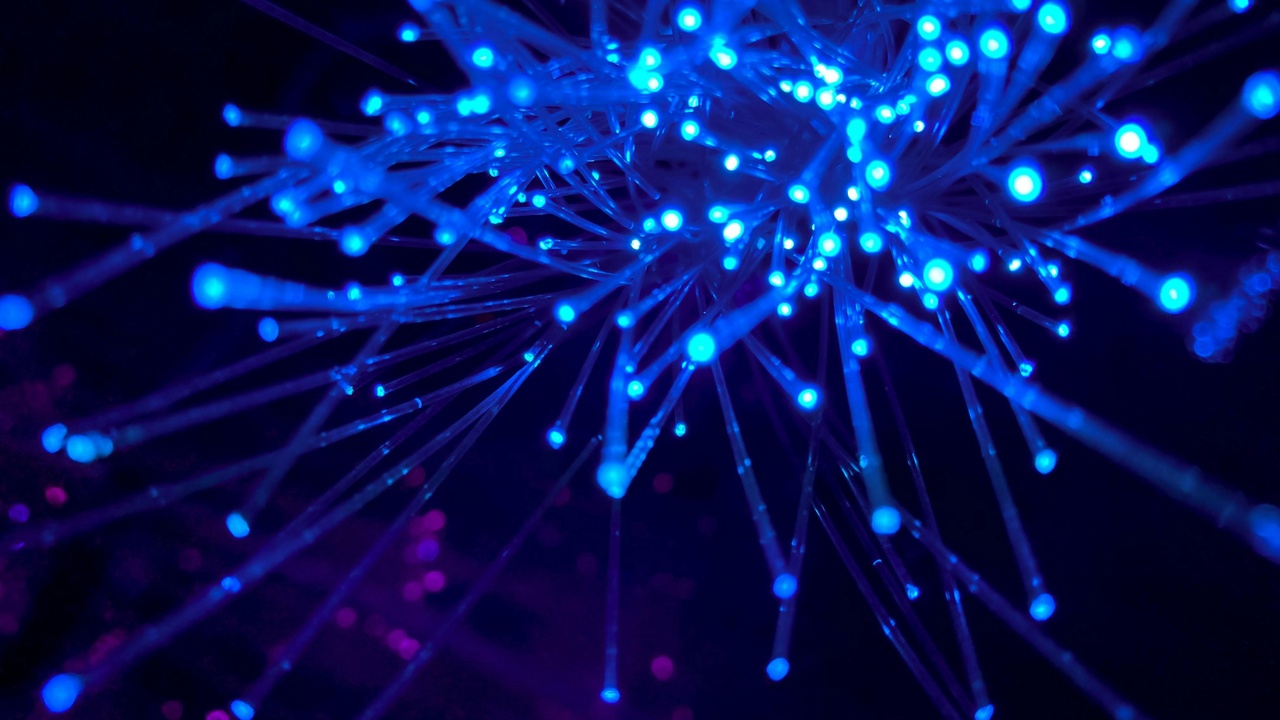
Optical science drives modern networks, imaging systems in phones and factories, and lasers in manufacturing. Below are three ways optics delivers practical, measurable impact.
4. Fiber optics underpin the internet’s high-speed backbone
Most long‑distance internet traffic rides on fiber‑optic cables that transmit light with very low loss. Modern fibers use dense wavelength‑division multiplexing (DWDM) so a single fiber pair can carry many terabits per second.
Undersea systems like MAREA (a 2017 project co‑owned by Microsoft and Facebook) and vast cable networks link continents with optical repeaters every ~50–100 km. Manufacturers such as Corning supply much of the glass and fiber used worldwide.
For consumers that means smooth video streaming and cloud services; for operators it means planning capacity in terms of wavelengths and modulation formats rather than raw copper bandwidth.
5. Lenses and sensors turned photography into ubiquitous imaging
Advances in multi‑element lens design and tiny CMOS sensors made cameras small and powerful. Typical smartphone sensors (Sony IMX series) often range from 12 to 48 MP with pixel sizes measured in microns and sensor formats like 1/2.55″.
Computational photography combines optics with algorithms to extend dynamic range, simulate shallow depth of field, and correct aberrations—features Apple and Samsung highlight in their camera systems.
Machine‑vision cameras from companies like Basler and industry optics enable automated inspection on production lines, while AR/VR headsets rely on compact lens assemblies and eye‑tracking optics.
6. Lasers provide precise cutting, measurement, and sensors
Lasers are coherent light sources used for cutting, welding, sensing, and measurement. Common industrial types include CO2, fiber, and diode lasers, with powers from tens to thousands of watts in manufacturing systems.
Companies like Trumpf manufacture laser‑cutting machines used in automotive and aerospace production. LIDAR systems for mapping and autonomy (Velodyne, Luminar) use pulsed lasers with pulse rates from kHz up to MHz depending on the sensor.
Smaller diode lasers appear in consumer devices for pointers, depth sensors, and optical drives, while precision laboratories use stabilized lasers for metrology and frequency standards.
Optics in Medicine, Science, and Daily Life
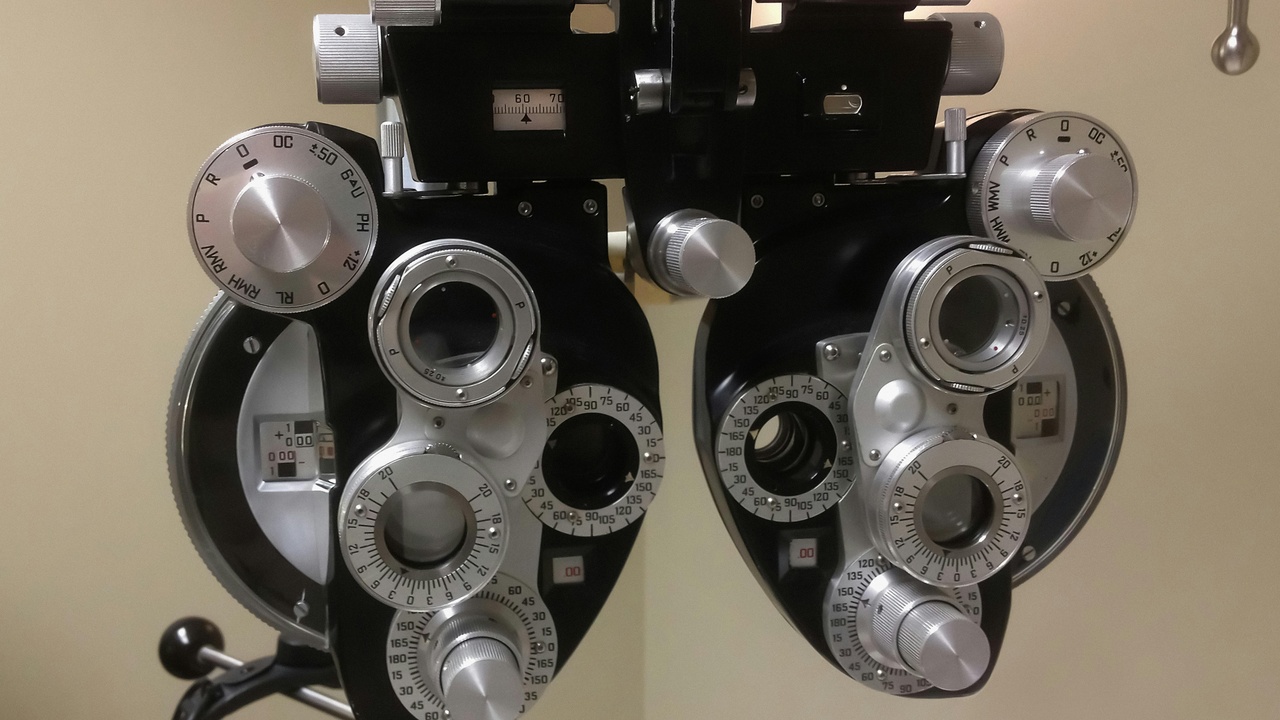
Optical tools touch healthcare, research, and everyday comfort—from sight correction to microscopes and coated lenses. These applications show measurable benefits in diagnostics and usability.
7. Optics is essential to eye care and many medical imaging techniques
Ophthalmology and medical imaging rely heavily on optics. LASIK, developed in the 1980s and widely adopted since the 1990s, has been performed millions of times globally to correct refractive errors.
Optical coherence tomography (OCT) provides ~5–10 μm axial resolution for retinal imaging and is a standard diagnostic tool from companies like Heidelberg Engineering. Fiber‑optic endoscopes allow minimally invasive inspection inside the body.
Medical optics reduces invasive procedures, improves early diagnosis of retinal disease, and supports surgical guidance in operating rooms worldwide.
8. Optical coatings, polarization, and AR/VR show optics in everyday products
Anti‑reflective and hard coatings (from makers such as Essilor and Hoya) improve contrast and durability for eyeglasses and camera lenses. Polarized sunglasses (Ray‑Ban and others) filter horizontally polarized glare for driving and water sports.
AR and VR headsets—Microsoft HoloLens and Meta Quest among them—rely on compact lenses, waveguides, and coatings to deliver bright, lightweight displays. Designers often target headset weights under ~500 g to improve comfort.
These small engineering choices reduce eye strain, sharpen images, and enable new interfaces that blend physical and digital content.
Summary
Key takeaways condense the most practical and surprising points about optics and how it influences modern life.
- Light’s dual wave–particle nature guides both everyday lens design and advanced quantum experiments.
- Fiber‑optic networks carry terabits per second across undersea cables, powering streaming and cloud services.
- Medical optics—OCT, endoscopes, and refractive surgery—has improved diagnostics and enabled millions of vision‑correction procedures.
- Everyday comforts like anti‑reflective coatings, polarized sunglasses, smartphone cameras, and AR/VR displays all depend on careful optical engineering.
Next time you slide on sunglasses, tap a photo, or stream a video, notice the centuries of optical insight at work—and consider visiting a planetarium or local optics lab to see more up close.