Australia has produced a surprising variety of researchers — from field biologists studying remote ecosystems to physicists working in international labs. The list below is meant to show that breadth without getting bogged down in detail, so you can quickly see who these people were and what they worked on.
There are 17 Scientists born in Australia, ranging from Barry Marshall to William Lawrence Bragg. For each entry you’ll find below data organized as Years (birth–death),Birthplace,Field to make comparisons easy and quick to scan; you’ll find below.
How were these 17 scientists chosen?
The list includes individuals who were born on Australian soil and who made notable contributions in scientific fields; selections focus on historical importance, recognition (awards, major discoveries), and influence in their disciplines, not on current nationality or where they worked later in life.
Does “born in Australia” mean they lived or worked here their whole careers?
No — “born in Australia” refers only to birthplace; several on the list, such as William Lawrence Bragg, pursued careers overseas, while others like Barry Marshall conducted influential work in Australia. Each entry notes birthplace and field so you can see those distinctions.
Scientists Born in Australia
| Name | Years (birth–death) | Birthplace | Field |
|---|---|---|---|
| Howard Florey | 1898–1968 | Adelaide, South Australia | Pharmacology/Pathology |
| William Lawrence Bragg | 1890–1971 | Adelaide, South Australia | Physics/Crystallography |
| Elizabeth Blackburn | 1948– | Hobart, Tasmania | Molecular Biology/Cell Biology |
| John Eccles | 1903–1997 | Melbourne, Victoria | Neurophysiology |
| Frank Macfarlane Burnet | 1899–1985 | Traralgon, Victoria | Immunology |
| Barry Marshall | 1951– | Kalgoorlie, Western Australia | Microbiology/Gastroenterology |
| Robin Warren | 1937– | Adelaide, South Australia | Pathology/Microbiology |
| Peter Doherty | 1940– | Brisbane, Queensland | Immunology |
| Frank Fenner | 1914–2010 | Ballarat, Victoria | Virology/Ecology |
| John Cornforth | 1917–2013 | Sydney, New South Wales | Chemistry |
| Dorothy Hill | 1907–1997 | Brisbane, Queensland | Geology/Paleontology |
| Fiona Stanley | 1946– | Perth, Western Australia | Epidemiology/Public Health |
| Graeme Clark | 1935– | Camden, New South Wales | Biomedical Engineering/Otolaryngology |
| Tim Flannery | 1956– | Melbourne, Victoria | Paleontology/Climate Science |
| Robert May | 1936–2020 | Sydney, New South Wales | Theoretical Ecology/Mathematical Biology |
| Ruth Bishop | 1933– | Newcastle, New South Wales | Virology/Pediatrics |
| Sir Ian Clunies Ross | 1899–1959 | Brisbane, Queensland | Veterinary Science/Scientific Leadership |
Images and Descriptions
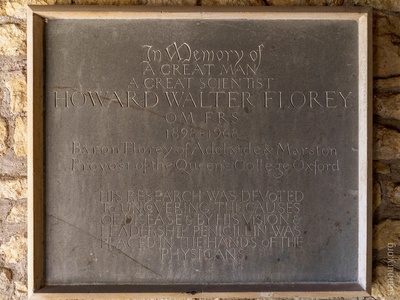
Howard Florey
A key figure in developing and mass-producing penicillin, Florey’s work transformed modern medicine by turning Alexander Fleming’s discovery into a life-saving antibiotic; his leadership in clinical trials and pharmacology reshaped infectious disease treatment worldwide.

William Lawrence Bragg
Co-recipient of the 1915 Nobel Prize in Physics, Bragg pioneered X-ray crystallography to determine crystal structures, laying foundations for modern materials science and molecular biology; born in Adelaide, he later led influential research and teaching in Britain.
Elizabeth Blackburn
Born in Hobart, Blackburn won the 2009 Nobel Prize for discovery of telomerase and telomeres’ role in chromosome protection; her molecular biology research advanced understanding of aging, cancer and cellular replication.
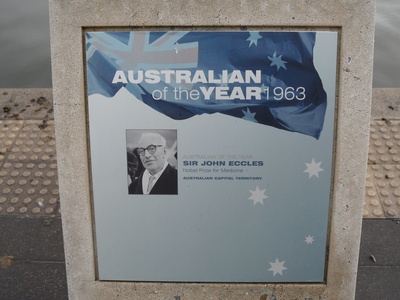
John Eccles
A Nobel laureate for work on synaptic transmission, Eccles mapped how neurons communicate and shaped modern neurophysiology; his experiments and theoretical contributions advanced understanding of brain signaling and neurological disorders.
Frank Macfarlane Burnet
Burnet’s theory of clonal selection and work on acquired immunological tolerance transformed immunology, earning him the Nobel Prize; his research influenced vaccine development and transplant biology, establishing him as a foundational 20th-century immunologist.
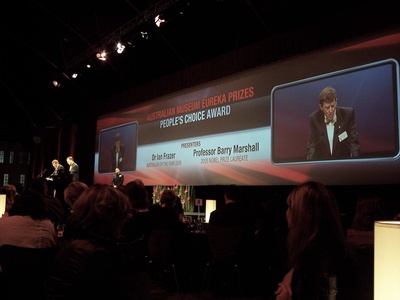
Barry Marshall
Marshall famously proved Helicobacter pylori causes peptic ulcers by self-experimentation, overturning medical dogma; his work earned a Nobel Prize and changed ulcer diagnosis and treatment worldwide.
Robin Warren
Co-discoverer of Helicobacter pylori with Barry Marshall, Warren’s pathology observations led to a paradigm shift in understanding and treating peptic ulcer disease, contributing to their shared Nobel Prize-winning work.
Peter Doherty
Doherty shared the Nobel Prize for discoveries about how T cells recognize virus-infected cells, clarifying cellular immune response; his research has had broad influence on immunology, vaccines and infectious disease studies.
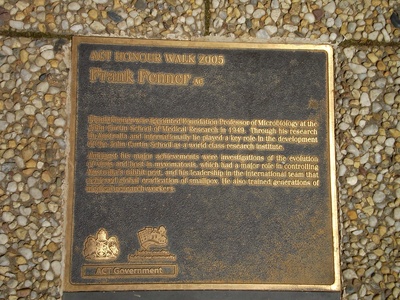
Frank Fenner
A virologist and ecologist, Fenner led smallpox eradication efforts in the Asia–Pacific and studied environmental impacts on disease; his work bridged epidemiology and ecology and informed global public-health strategies.
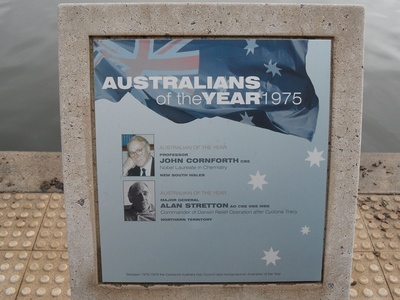
John Cornforth
Cornforth won the Nobel Prize for elucidating mechanisms of enzyme-catalyzed reactions and stereochemistry in organic chemistry; born in Sydney, his meticulous work on catalyst behavior advanced biochemical and pharmaceutical chemistry.
Dorothy Hill
Australia’s first female professor and a leading paleontologist, Hill mapped coral reefs and ancient life, especially trilobites; she advanced geological science and opened academic leadership roles for women in Australia.
Fiona Stanley
A leading epidemiologist focused on maternal and child health, Stanley’s research improved public health policy and disease prevention in Australia; she founded key institutions and influenced national health programs.
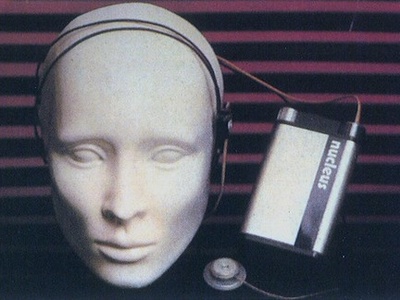
Graeme Clark
Pioneer of the multi-channel cochlear implant, Clark’s engineering and clinical work restored hearing to thousands; his blend of physiology and technology transformed audiology and implantable hearing devices.
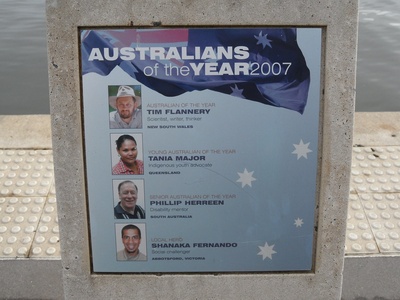
Tim Flannery
A mammalogist and palaeontologist turned climate scientist and communicator, Flannery’s research on fossil mammals and his public advocacy on climate change have made him a prominent scientific voice in Australia and internationally.
Robert May
An influential theoretical ecologist, May applied mathematics to population dynamics, biodiversity and risk, shaping modern ecological modeling and advising governments on science policy and environmental risks.
Ruth Bishop
An Australian virologist who co-identified rotavirus as a major cause of infant diarrhea, Bishop’s work led to global vaccine development and dramatically reduced child mortality from gastroenteritis.
Sir Ian Clunies Ross
A veterinary scientist who led CSIRO, Clunies Ross promoted coordinated scientific research for national development, strengthening Australia’s research institutions and applied agricultural and veterinary science.