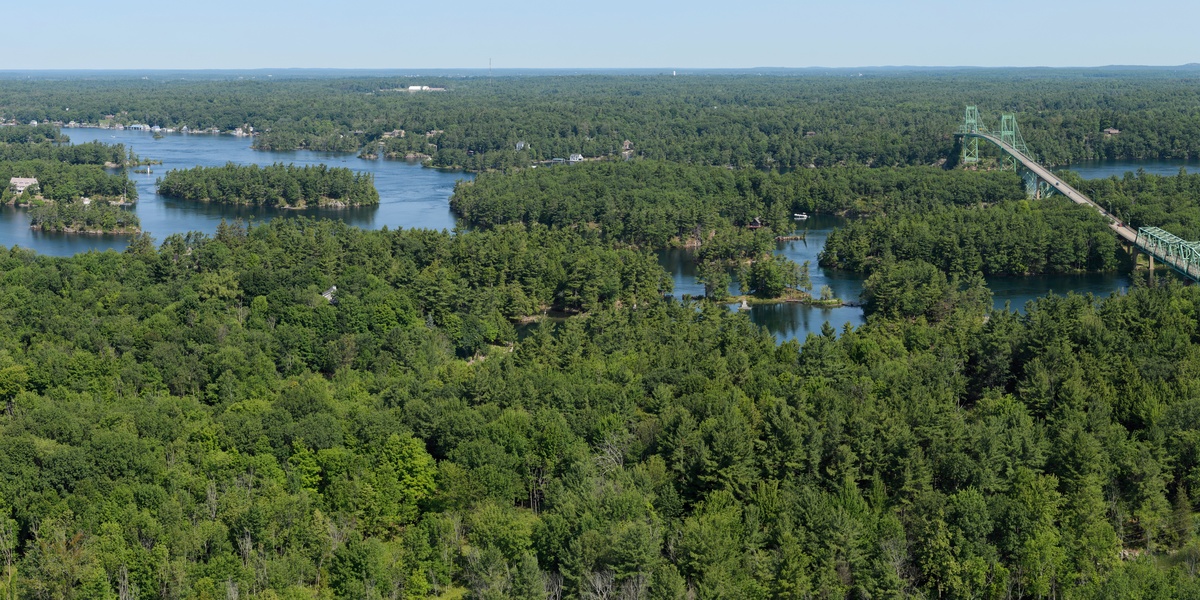
When Christopher Columbus landed in the Caribbean in 1492, he and later mapmakers began shaping images of islands as exotic, untouched paradises.
Those images persist, yet islands are home to millions of people, unique ecosystems, and deep cultural histories that rarely match postcard shorthand. Islands are often framed through tidy myths—isolated, unchanging, idyllic places—but the reality is more complex: islands are culturally diverse, geologically varied, ecologically fragile, and economically entwined with the wider world.
This piece tackles 10 myths about islands and uses concrete examples, dates, and numbers to show what island reality means for people and policy. The myths fall into three broad buckets: cultural and historical myths; scientific and geographic myths; and practical, economic and safety myths.
Cultural and Historical Myths
Outsiders have often simplified island peoples and pasts into single stories—friendly natives, static traditions, isolation from global currents. That framing obscures three realities: islands host great cultural and linguistic diversity; they have long been connected by navigation and exchange; and modern technologies and trade have changed island life rapidly in the last 50–100 years (and faster still in the last decade).
1. Islands are culturally homogenous
Myth: every island has one language, one culture, one history. Counter: many islands are mosaics of peoples and tongues.
Take Papua New Guinea: it has over 800 languages across a single landmass, a reminder that islands and archipelagos can be linguistic hotspots (UNESCO documents this diversity). Vanuatu alone hosts roughly 80 languages on a territory smaller than many countries.
Caribbean islands likewise show layered identities from Indigenous, African, European, and Asian migrations—consider Trinidad & Tobago’s Indo-Caribbean and Afro-Caribbean communities. For policy and education, assuming homogeneity risks excluding whole groups and misdirecting resources.
2. Islanders were isolated from global history
Myth: islands were cut off until Europeans “discovered” them. Counter: seafaring connected islands centuries or millennia earlier.
Archaeology shows the Lapita culture (c. 1600–500 BCE) spread pottery and people across the western Pacific. Polynesian voyaging techniques enabled long-distance settlement across thousands of kilometres. Biological transfers occurred too—the sweet potato appears in Polynesia centuries before 1492, implying contact or exchange with South America.
Recognizing indigenous navigation expertise changes how we view island histories: these were active participants in regional networks, not isolated backwaters.
3. Island cultures are unchanged or ‘timeless’
Myth: island societies are frozen in time. Counter: modern infrastructure and migration have reshaped island life rapidly.
In the last decade many Pacific islands gained undersea cable links that dramatically improved internet access. Smartphones and social media now influence language use and youth aspirations. Remittances from diasporas (for example, Samoa and Tonga) are major household income sources that alter local economies and migration patterns.
These changes often produce hybrid identities: traditional practices persist alongside new economic opportunities and digital connections, so policies should both support connectivity and safeguard cultural heritage.
Scientific and Geographic Myths
Physical origins determine soils, freshwater, vulnerability to hazards, and the kinds of ecosystems islands support. Islands form in several ways, their sizes and elevations vary wildly, and their biotas can be both unique and vulnerable. Famous dates help illustrate this: Surtsey emerged in 1963, Madagascar split from Africa roughly 88 million years ago, and Darwin visited the Galápagos in 1835.
4. All islands are formed by volcanism
Myth: every island is a volcano. Counter: islands arise from volcanism, tectonic uplift, coral growth, and sedimentation.
Surtsey (Iceland) formed in 1963 during a volcanic eruption and is a classic new-volcano example. By contrast, the Maldives are coral atolls built from reef growth atop subsiding platforms. Japan’s main islands owe much to tectonic uplift, while river deltas and barrier islands (think parts of Louisiana) form from sediment deposition.
Those origins matter: volcanic soils can be fertile but freshwater may be limited on limestone atolls. Hazard planning must reflect formation—low coral atolls face different risks than uplifted, mountainous islands.
5. Islands are always small and low-lying
Myth: islands are tiny specks. Counter: island size ranges from micro-atolls to massive landmasses.
Greenland covers about 2,166,086 km² and is the world’s largest island. New Guinea is roughly 785,753 km². At the other extreme, countries like the Maldives average around 1.5 m in elevation, making them especially vulnerable to sea-level rise.
Large islands often contain interior regions with distinct economies and governance challenges, while small low-lying islands face existential threats from rising seas—so “island” is not a one-size-fits-all label.
6. Island ecosystems are biologically simple
Myth: islands have dull biotas. Counter: isolation often produces high endemism and unusual evolutionary paths.
Madagascar’s roughly 88 million years of isolation produced extraordinary endemism—think lemurs—while Darwin’s 1835 observations in the Galápagos helped shape evolutionary theory (Galápagos finches remain emblematic of speciation). Many islands host species found nowhere else on Earth.
Because those species are range-restricted, conserving island biodiversity has global significance: local extinctions are global losses.
7. Island ecosystems quickly recover from disturbance
Myth: islands bounce back fast. Counter: limited area, small population sizes, and invasive species make recovery slow or incomplete.
Invasive rats, cats, and plants have driven numerous island extinctions. Conservationists have had notable successes—South Georgia completed a rat eradication in 2018—but seabird colonies and vegetation can take decades to recover, and some extinctions are irreversible.
Effective conservation requires long-term biosecurity, monitoring, and community engagement rather than one-off interventions.
Practical, Economic, and Safety Myths
“Paradise” pictures obscure messy realities: many islands depend on volatile revenue streams, pay higher prices for basics, and confront amplified climate risks. These practical myths shape public expectations and policy—and sometimes hamper effective support when disasters hit, such as the December 2004 Indian Ocean tsunami.
8. Islands are islands of wealth thanks to tourism
Myth: beaches equal prosperity. Counter: tourism generates revenue but also inequality, environmental stress, and boom‑and‑bust risk.
Countries like the Maldives and many Caribbean states depend heavily on tourism receipts. When the COVID-19 travel collapse hit in 2020–2021, those economies suffered sharp GDP declines and job losses. Tourism can concentrate wealth in foreign-owned resorts and leave local services vulnerable to external shocks.
Policy responses include economic diversification, community-based tourism, and regulations that protect ecosystems while keeping local benefits high.
9. Living on an island is cheap and carefree
Myth: island life is inexpensive and easy. Counter: remoteness often raises the cost of imports, fuel, and food, and services like advanced healthcare and higher education can be limited.
Places such as Hawaii illustrate high living costs compared with many mainland regions. Supply-chain complexities and shipping add logistical expenses. Residents respond with practical solutions—community gardening to boost food security, renewable microgrids to cut fuel bills, and cooperative shipping arrangements to reduce per-unit costs.
Those local strategies help, but structural investments in infrastructure and fairer trade terms are also essential.
10. Islands are safe from climate change and extreme hazards
Myth: islands are sheltered from global warming and disasters. Counter: many face acute climate and hazard risks and are active in international advocacy (for example, the Alliance of Small Island States).
Sea-level rise, stronger storm surge, and coastal erosion threaten low-lying states such as the Maldives and Kiribati. Island nations were prominent voices during the Paris Agreement negotiations in 2015, arguing that global emissions trajectories have direct implications for their futures. Historical events like the December 2004 Indian Ocean tsunami show how acute hazards can devastate island communities.
Adaptation measures range from coastal defenses and ecosystem-based approaches to managed retreat and international diplomacy. Both local action and global emissions reductions matter for island resilience.
Summary
- Islands are diverse—socially, linguistically, and geographically—so simple stereotypes rarely match reality.
- Geology and isolation produce unique ecosystems, but those systems are often fragile and slow to recover from disturbance.
- Economic images of paradise hide vulnerability: tourism dependence, high import costs, and exposure to extreme events (e.g., December 2004 tsunami; COVID-19 impacts in 2020–2021).
- Support for island communities should pair respect for local knowledge with targeted policy and global cooperation—consult reputable organizations such as UNESCO, IUCN, and UNFCCC for further information.