Liberia’s coastlines, rivers and lowland rainforests host a varied mix of resident and migratory birds, shaped by West Africa’s rainy and dry seasons. Local wetlands and forest edges are especially good for spotting species across different habitats and elevations.
There are 20 Birds of Liberia, ranging from African Fish Eagle to Yellow-casqued Hornbill. For each species, you’ll find below the entries organized as Scientific name,IUCN (status),Occurrence & habitat, so you can quickly see identity, conservation standing and where to look, which you’ll find below.
Where in Liberia are these species most likely to be seen?
Most are tied to specific habitats: eagles and waterbirds around rivers and coastlines, hornbills and forest species in intact lowland and gallery forests, and some migrants in open wetlands; check the Occurrence & habitat column for site-specific tips.
How should I interpret the IUCN (status) on this list?
IUCN status shows global conservation risk (e.g., Least Concern, Vulnerable); use it to gauge how rare or threatened a species is, but combine that with local occurrence notes to plan realistic sightings and conservation-minded visits.
Birds of Liberia
| Common name | Scientific name | IUCN (status) | Occurrence & habitat |
|---|---|---|---|
| African Grey Parrot | Psittacus erithacus | EN | Resident; lowland rainforest, Gola region |
| White-necked Rockfowl | Picathartes gymnocephalus | VU | Resident; rocky forest gorges, streamside cliffs |
| Yellow-casqued Hornbill | Ceratogymna elata | VU | Resident; primary forest canopy, large fruiting trees |
| Great Blue Turaco | Corythaeola cristata | LC | Resident; upper canopy of primary rainforest |
| Palm-nut Vulture | Gypohierax angolensis | LC | Resident; mangroves, coastal lagoons, palm groves |
| African Fish Eagle | Haliaeetus vocifer | LC | Resident; rivers, large lakes, coastal estuaries |
| Hooded Vulture | Necrosyrtes monachus | CR | Resident; towns, savanna edges, coastal areas |
| Crowned Eagle | Stephanoaetus coronatus | NT | Resident; large tracts of mature forest, rare |
| African Harrier-Hawk | Polyboroides typus | LC | Resident; forest edges, plantations, towns |
| Pied Hornbill | Lophoceros fasciatus | LC | Resident; secondary forest, forest edges, gardens |
| Yellow-billed Kite | Milvus aegyptius | LC | Resident; widespread near water, towns, open country |
| Pied Kingfisher | Ceryle rudis | LC | Resident; rivers, lagoons, coastal mudflats |
| Malachite Kingfisher | Corythornis cristatus | LC | Resident; small streams, ponds, marshes |
| Woodland Kingfisher | Halcyon senegalensis | LC | Resident/migrant; woodlands, gallery forest, gardens |
| Little Bee-eater | Merops pusillus | LC | Resident; savanna edges, forest clearings, open country |
| Common Bulbul | Pycnonotus barbatus | LC | Resident; gardens, secondary growth, woodland edges |
| Village Weaver | Ploceus cucullatus | LC | Resident; wetlands, riversides, village trees |
| Red-billed Firefinch | Lagonosticta senegala | LC | Resident; cultivated areas, scrub, gardens |
| Violet-backed Starling | Cinnyricinclus leucogaster | LC | Resident/migrant; forest edges, fruiting trees |
| African Golden Oriole | Oriolus auratus | LC | Resident; forest canopy, plantations, large trees |
Images and Descriptions
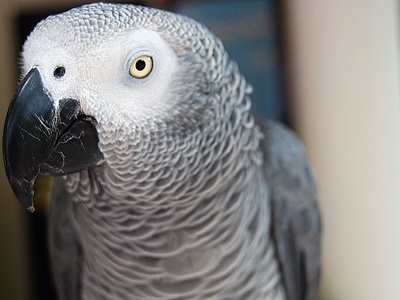
African Grey Parrot
Iconic, highly intelligent forest parrot often targeted by trade. Look for noisy flocks in tall primary forest canopy; grey body, bright red tail. Declining due to trapping and habitat loss, prized by birders seeking forest wildlife.
White-necked Rockfowl
Striking, long-legged forest bird that nests on bare rock faces with mud cups. Pale head, bare yellow face and neck banded plumage; secretive and local—one of Liberia’s most sought-after specialty species.

Yellow-casqued Hornbill
Large, social hornbill with a curved bill topped by a yellow casque. Feeds on fruit in tall canopy; important seed disperser. Less common due to hunting and logging, seen in intact forest tracts.
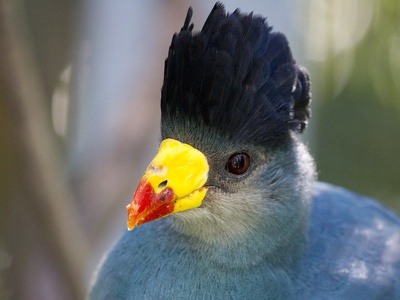
Great Blue Turaco
A spectacular, large green-blue turaco with a dramatic crest and deep calls. Moves quietly through canopy in small groups, often near fruiting trees—easy to spot by size and color in mature forest.
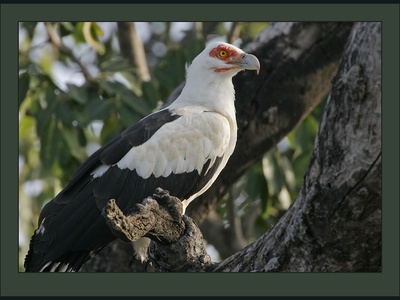
Palm-nut Vulture
Unusual vulture that feeds heavily on palm fruit and crabs as well as carrion. Pale-headed with dark body; common along coast and lagoon forests where oil palms are present.
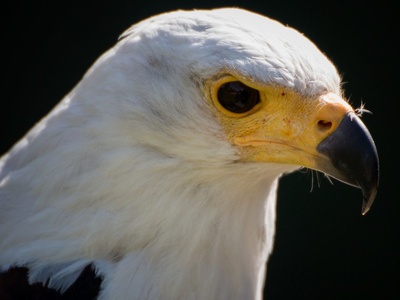
African Fish Eagle
Iconic fishing raptor with loud, whistling cry. White head and breast contrast with rich brown body; perches near water to hunt fish. Widely distributed and familiar to visitors.
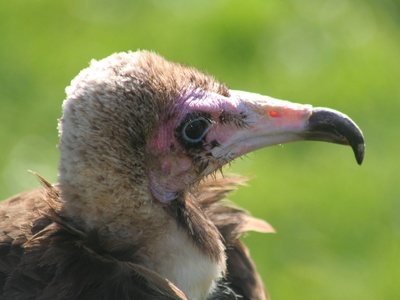
Hooded Vulture
Small vulture with a hooded brown neck and pale head, often scavenging near settlements. Critically endangered with steep declines from poisoning and trade—now uncommon compared with past numbers.
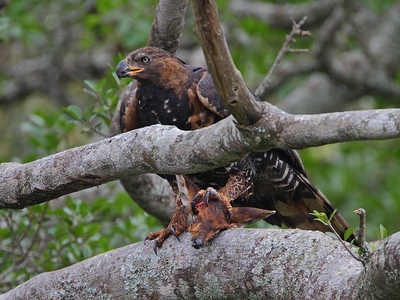
Crowned Eagle
Powerful forest raptor, heavy-bodied with barred underparts and striking crown. Preys on mammals and large birds; secretive and infrequently seen, favors intact forest—a highlight for serious forest birders.
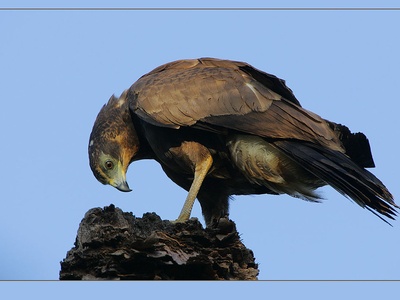
African Harrier-Hawk
Also called Gymnogene; versatile predator that extracts nestlings from tree cavities with flexible legs. Grey body, barred underparts and distinctive double-jointed legs; often seen around villages and edge habitats.
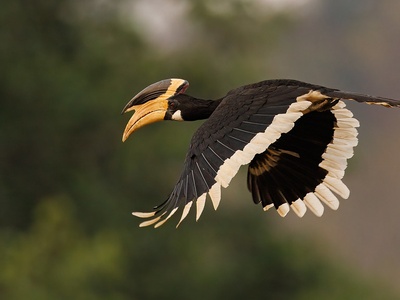
Pied Hornbill
Medium-sized hornbill with black-and-white patterning and long casque. Noisy and conspicuous, eats fruit and small animals; tolerates disturbed forest and is commonly seen along forest edges.
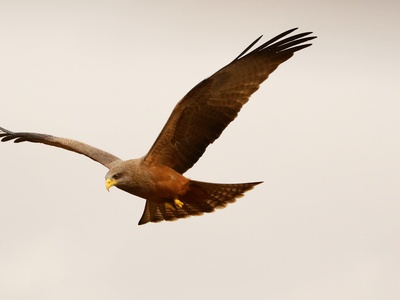
Yellow-billed Kite
Common, agile raptor often seen soaring or perched on telephone poles. Dark body with pale head and a yellow bill; scavenges and hunts small prey, ubiquitous in many habitats.
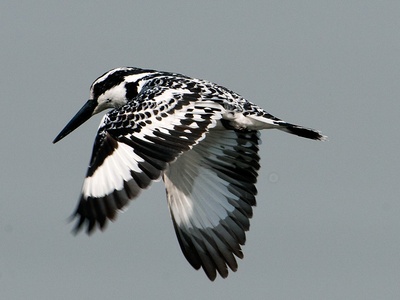
Pied Kingfisher
Black-and-white hover-hunting kingfisher frequently seen over open water. Hunts fish by hovering and plunging; bold and always a favorite to watch at rivers and coastal estuaries.
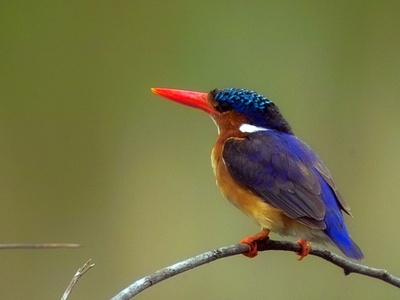
Malachite Kingfisher
Tiny, vividly colored kingfisher with bright blue upperparts and orange underparts. Perches low over quiet water and darts out to snatch small fish and insects—easy to miss but striking when seen.
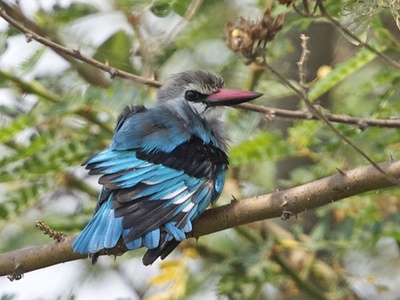
Woodland Kingfisher
Bright blue kingfisher with white underparts and staccato call. Often found perched conspicuously along forest edges and in open woodland, hunting insects and small vertebrates.
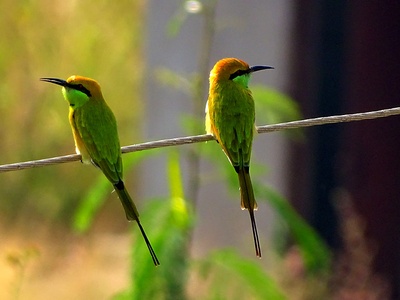
Little Bee-eater
Small fast-moving bee-eater with green upperparts and yellow throat. Perches on exposed twigs to hawk flying insects; often in loose flocks and a delight to watch in open landscapes.

Common Bulbul
Familiar, chatty songbird of villages and forest edges. Plain olive-brown with a lightly crested head; highly adaptable and often the most common small bird around human settlements.
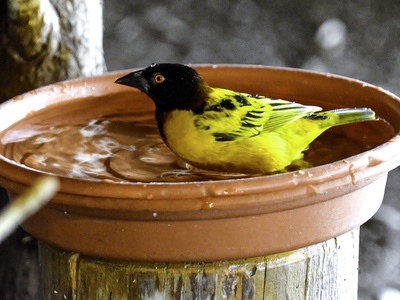
Village Weaver
Bold, social weaver that nests in colonies in palms and riverside trees. Males in breeding plumage show bright yellow and black; common and easy to observe in open areas near water.
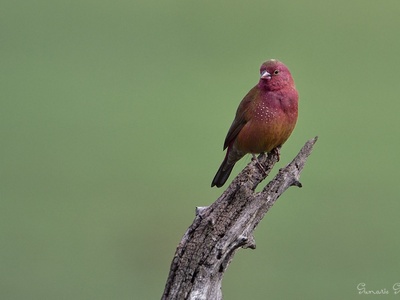
Red-billed Firefinch
Tiny, active finch with rich red plumage in males and streaked brown females. Feeds on ground or low vegetation; common around human habitation and farmland.
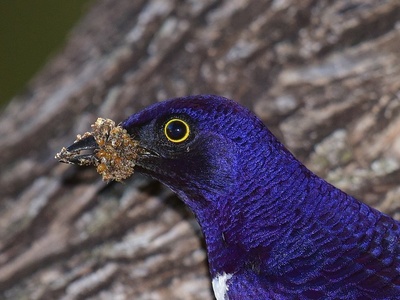
Violet-backed Starling
Male has dazzling metallic violet back and white belly; females are streaky brown. Often visits fruiting trees and is a colorful, eye-catching species for birders.
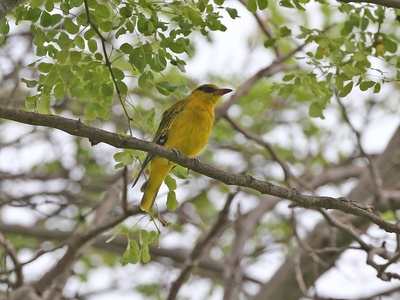
African Golden Oriole
Bright yellow and black oriole with a mellow flute-like song. Found singly or in pairs in canopy; attracted to fruiting trees and noticeable by color and voice.